Shu Han · Chancellor
Zhuge Liang
courtesy name 孔明 · also called 武侯 · 181–234
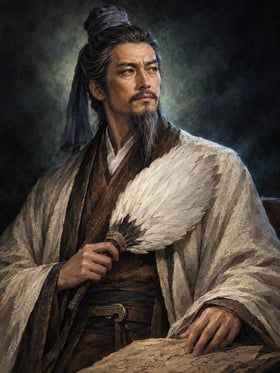
Zhuge Liang stood eight chi tall, his face like polished jade. He wore a silk kerchief and a crane-feather cloak, drifting along with the air of an immortal; in plain shoes and a black sash, his lips as if painted vermilion, his brows clear and his eyes bright.

Life
In the novel: 73 chapters · In the Records: 35 volumes
Life181–234
202 CE (Jian'an 7)
- Fire Attack at BowangBowangCommander
207 CE (Jian'an 12)
59 more events
208 CE (Jian'an 13)
- Zhuge Liang Summons the Wind at the Seven-Star AltarSeven-Star AltarInstigator
- Liu Bei's Seizure of the Four Southern Jing CommanderiesChangshaCommander
- Liu Bei's Retreat with Refugees across the RiverDangyangAdvisor
- Huarong RoadHuarong RoadInstigator
- Burning of XinyeXinyeCommander
- Zhuge Liang's Debate with the Scholars of JiangdongChaisangAdvisor
- Borrowing Arrows with Straw BoatsChibi (Red Cliffs)Instigator
- Zhuge Liang's Mission to Eastern WuChaisangAdvisor
- Battle of Red CliffsChibi (Red Cliffs)Advisor
- Lu Su Meets Liu Bei at DangyangChangbanAdvisor
209 CE (Jian'an 14)
- Guan Yu Fights Huang Zhong and Takes ChangshaChangshaAdvisor
- Liu Bei's Marriage into Eastern WuJingkouAdvisor
- Liu Bei's Escape from WuLiulangpuAdvisor
- Kongming's Three Sealed-Envelope StratagemsJingkouInstigator
- Zhang Fei Takes WulingWulingAdvisor
- Zhao Yun Seizes NanjunJianglingInstigator
- Zhao Yun Takes GuiyangGuiyangWitness
- Wei Yan Kills Han Xuan and SurrendersChangshaAdvisor
210 CE (Jian'an 15)
212 CE (Jian'an 17)
213 CE (Jian'an 18)
214 CE (Jian'an 19)
218 CE (Jian'an 23)
- Peng Yang AffairChengduAdvisor
219 CE (Jian'an 24)
221 CE (Huangchu 2)
223 CE (Huangchu 4)
224 CE (Huangchu 5)
- Qin Mi's Debate with Zhang WenChengduInstigator
225 CE (Huangchu 6)
- Seven Captures of Meng HuoNanzhongCommander
227 CE (Taihe 1)
228 CE (Taihe 2)
- Latter Memorial on Sending Out the TroopsChengduInstigator
- Tianshui RevoltsJichengCommander
- Kongming Scolds Wang Lang to DeathMount QiInstigator
- Execution of Ma SuHanzhongInstigator
- Empty Fort StrategyXi CountyInstigator
- First Northern ExpeditionMount QiCommander
- Zhuge Liang's Second Northern ExpeditionChencangCommander
- Battle of JietingJietingCommander
- Zhuge Liang's Northern ExpeditionsMount QiCommander
- Battle for ChencangChencangCommander
229 CE (Taihe 3)
230 CE (Taihe 4)
- Cao Zhen's Invasion of ShuHanzhongCommander
231 CE (Taihe 5)
234 CE (Qinglong 2)
234 CE (Qinglong 2)
Appearances
By chapter (108)
Outlined chapters have spoken lines; tap one to read them.
Novel
- Liu Bei's faction
- Shu Han
- Yuan Shu's Faction· Undated
- Life event
- Death
List all 12 stops
- Langya181Birthplace
- Changsha208Liu Bei's Seizure of the Four Southern Jing Commanderies
- Jingkou209Liu Bei's Marriage into Eastern Wu+1 more
- Chengdu214–218Liu Zhang's Surrender+2 more
- Shangyong219Meng Da Defects to Wei and Liu Feng Is Executed
- Wudan Hill221Liu Bei Proclaims Himself Emperor
- Wuchang223Deng Zhi's Mission to Wu
- Chengdu223–224Liu Shan's Accession to the Throne+2 more
- Nanzhong225Seven Captures of Meng Huo
- Mount Qi228Kongming Scolds Wang Lang to Death+2 more
- Wuchang229The Wu-Shu Alliance Oath to Divide the Realm in Three+1 more
- Wuzhang Plains234Died here
On the boards
Compare with someone →Where this person ranks on each board.
- Saw Through the Most: #1Romance
- Master Strategists: #1Romance
- Plans That Worked: #1Romance
- Most Talkative: #1Romance
- Most Battles Won: #2Romance
- Best Connected: #3Romance
- Stratagem Success Rate: #3Romance
- Most Battles: #3Both
- Most Advisors: #4Records
- Novel Embellished: #4Both
- Most Executions Ordered: #6Both
- Most Betrayed: #8Romance
- Most Battles Lost: #10Records
Who they were
Character profile
- Appearance
- Zhuge Liang stood eight chi tall, his face like polished jade. He wore a silk kerchief and a crane-feather cloak, drifting along with the air of an immortal; in plain shoes and a black sash, his lips as if painted vermilion, his brows clear and his eyes bright.
- Character
- He compared himself to Guan Zhong and Yue Yi; his resolve could not be bent, he was composed and adaptable, skilled at goading generals into action, unrivaled in debate, clear about the larger situation, and able to bend or stand firm as the moment required. His schemes were divinely clever, he foretold events as if by magic, perceived opportunities before they arose, made good use of astronomy, laid plans both open and hidden, and, benevolent and generous of heart, held that winning over men's minds came first.
- Manner of speech
- Zhuge Liang spoke pointedly and decisively, with sweeping literary flair, fond of metaphor. He commonly referred to himself as 'I,' would smile as he laid bare a hidden mystery, often explained himself in terms of 'clever calculation' and 'assailing the heart,' and frequently gave his generals secret instructions with the words 'thus and so.'
- Life
- In his early years Zhuge Liang tilled the fields himself; later he left seclusion to follow Liu Bei, becoming General and Military Advisor, and assisted Liu Bei in founding Shu Han, rising to the office of Chancellor. Entrusted with the orphaned heir by the former sovereign, he campaigned south to pacify four commanderies and mounted repeated northern expeditions, at last dying of illness in camp on the Wuzhang Plains at the age of fifty-four.
- Weapons
- When directing his battle formations, Zhuge Liang often held a feather fan and oversaw the fighting seated in a four-wheeled carriage.
- Anecdotes
- Zhuge Liang wrote a treatise in twenty-four chapters, containing the methods of the Eight Duties, Seven Cautions, Six Fears, and Five Dreads, and he invented a repeating crossbow that could loose ten bolts at a single shot. His posthumous title was Marquis Zhongwu; he was buried at Mount Dingjun without walls, brick, stone, or sacrificial offerings, and a temple was built at Mianyang for sacrifices in the four seasons.
Historical Record
Zhuge Liang, courtesy name Kongming, was the chancellor of Shu Han. After Liu Bei proclaimed himself emperor in the first year of Zhangwu, he appointed Zhuge Liang chancellor; when Liu Bei was gravely ill, he entrusted his heir, Liu Shan, to Zhuge Liang. After Liu Shan ascended the throne, Zhuge Liang took charge of state affairs. In the third year of Jianxing, he led an expedition south and pacified the four commanderies of Nanzhong; in the fifth year of Jianxing, he moved his troops to Hanzhong and thereafter launched several northern expeditions against Cao Wei.
In the sixth year of Jianxing, Zhuge Liang marched against Mount Qi but failed to win; in winter, he again advanced through the San Pass and besieged Chencang, but withdrew when his provisions ran out. The Wei general Wang Shuang pursued him. Zhuge Liang engaged him, defeated him, and killed Wang Shuang, then returned to Hanzhong. Later, he again sent troops to Mount Qi, Tianshui, and other places. In the Battle of Jieting, Shu forces were defeated by Zhang He, and three commanderies were pacified; Zhuge Liang then besieged Chencang again but failed to capture it because Wei forces were already prepared.
In the twelfth year of Jianxing, Zhuge Liang led troops out through the Xie Valley and stationed them south of the Wei River, where he faced off against Sima Yi. Wei forces held their fortified positions and did not emerge, while Zhuge Liang issued challenges several times. After the two sides had been locked in a prolonged standoff, Zhuge Liang died of illness in camp, and the Shu army subsequently withdrew. Wei accounts also note that he managed military affairs diligently and cautiously, and ate little in his daily life.
In the Novel
Romance of the Three Kingdoms portrays Zhuge Liang as the “Crouching Dragon” living in seclusion at Longzhong, emphasizing his high regard for himself as a man of the caliber of Guan Zhong and Yue Yi, his exceptional talent and strategy, and his reluctance to enter official service. The novel depicts Liu Bei visiting his thatched cottage three times. Drawing on the circumstances of Cao Cao, Sun Quan, Jing Province, and Yi Province, Zhuge Liang proposes a strategic vision of first taking Jing and Yi, allying with Wu to resist Cao Cao, and waiting for an opportunity to advance. These conversations and scenes are literary inventions; historical accounts do not record them in the same way.
The novel also depicts Zhuge Liang receiving Liu Bei’s favor after leaving seclusion and directing the generals with a sword and seal. At Bowang Slope, he sets an ambush and uses fire to rout the forces of Xiahou Dun. Such specific tactical arrangements and dramatic scenes belong to the novel’s narrative and should not be conflated with the battles at Jieting, Chencang, and elsewhere recorded in historical accounts.
Key Relationships
Liu Bei was the ruler Zhuge Liang served. Historical accounts record that after Liu Bei proclaimed himself emperor, he appointed Zhuge Liang chancellor and, on his deathbed, entrusted his heir to him. After Liu Shan succeeded to the throne, Zhuge Liang shouldered the heavy responsibility of overseeing state affairs and managing Shu Han’s government and military.
Sima Yi was an important opponent during Zhuge Liang’s northern expeditions. The two armies faced off south of the Wei River, where Wei forces were ordered to hold their fortified positions and refuse battle, until Zhuge Liang died of illness and the Shu army withdrew. In the novel, Xu Shu and Sima Hui help introduce and comment on Zhuge Liang; Liu Bei’s three visits to the thatched cottage and the Longzhong Plan are episodes unique to the novel.
Signature Scenes
According to historical accounts, Zhuge Liang died of illness in camp south of the Wei River, marking the end of his northern expeditions. The Shu army then withdrew, bringing the prolonged standoff between Wei and Shu to a temporary close.
The most representative scene in the novel is the Longzhong Plan: Zhuge Liang analyzes the circumstances of Cao Cao, Sun Quan, Jing Province, and Yi Province, and proposes to Liu Bei a plan to establish a tripartite balance of power. This scene crystallizes his literary stature as a strategist; the specific conversation and the three visits to the thatched cottage are unique to the novel.
Another signature scene is the fire attack at Bowang Slope. The novel depicts Zhuge Liang taking command of the army for the first time and ordering Guan Yu, Zhang Fei, and others to lie in ambush at separate points. After luring the enemy in, they set fires and attack, demonstrating Zhuge Liang’s ability to direct forces and anticipate events. This entire sequence is unique to the novel.
Quotes
704 lines in the books · 3 featured
「臣亮五出祁山,未得寸土,負罪非輕!今臣復統全師,再出祁山,誓竭力盡心,剿滅漢賊,恢復中原,鞠躬盡瘁,死而後已!」
The line 'I gave my utmost until my heart stopped beating' is a symbol of Zhuge Liang's loyalty and is widely renowned.
「自董卓造逆以來,天下豪傑並起。曹操勢不及袁紹,而竟能克紹者,非惟天時,抑亦人謀也。今操已擁百萬之眾,挾天子以令諸侯,此誠不可與爭鋒。孫權據有江東,已歷三世,國險而民附,此可用為援,而不可圖也。荊州北據漢、沔,利盡南海,東連吳會,西通巴、蜀,此用武之地,非其主不能守。是殆天所以資將軍,將軍豈可棄乎?益州險塞,沃野千里,天府之國,高祖因之以成帝業。今劉璋闇弱,民殷國富,而不知存恤,智能之士,思得明君。將軍既帝室之冑,信義著於四海,總攬英雄,思賢如渴,若跨有荊、益,保其巖阻,西和諸戎,南撫彝、越,外結孫權,內修政理;待天下有變,則命一上將,將荊州之兵,以向宛、洛;將軍身率益州之眾,以出秦川,百姓有不簞食壼漿以迎將軍者乎?誠如是,則大業可成,漢室可興矣。此亮所以為將軍謀者也。惟將軍圖之。」
The 'Longzhong Plan' laid the foundation of Shu Han and displayed Zhuge Liang's outstanding strategic vision.
「吾以為漢朝大老元臣,必有高論,豈期出此鄙言!吾有一言,諸軍靜聽:昔桓、靈之世,漢統陵替,宦官釀禍;國亂歲凶,四方擾攘。黃巾之後,董卓、傕、汜等接踵而起,遷劫漢帝,殘暴生靈。因廟堂之上,朽木為官;殿陛之間,禽獸食祿。狼心狗行之輩,滾滾當朝;奴顏婢膝之徒,紛紛秉政。以致社稷丘墟,蒼生塗炭。吾素知汝所行!世居東海之濱,初舉孝廉入仕。理合匡君輔國,安漢興劉;何期反助逆賊,同謀篡位!罪惡深重,天地不容!天下之人,願食汝肉!今幸天意不絕炎漢,昭烈皇帝繼統西川。吾今奉嗣君之旨,興師討賊。汝既為諂諛之臣,只可潛身縮首,苟圖衣食;安敢在行伍之前,妄稱天數耶!皓首匹夫!蒼髯老賊!汝即日將歸於九泉之下,何面目見二十四帝乎!老賊速退!可叫反臣與吾共決勝負!」
In Zhuge Liang's Debate with the Scholars of Jiangdong, his rebuttal of Wang Lang showcased his extraordinary eloquence and bold spirit.
- Family
- Lord & vassal
- Friends
- Enemies
- Teacher & student
- Other
History vs. novel
8 points · 4 novel-only
| History | Novel |
|---|---|
| The Three Visits (to the Thatched Cottage)Novel embellishes | |
Historical records state that Xu Shu called Zhuge Liang the “Hidden Dragon.” Liu Bei went to visit him in person and only met him on his third visit. The two discussed the overall situation in the realm. vol. 35 | The novel also depicts Liu Bei making three visits to Zhuge Liang, and adds Mr. Shuijing’s prophecy that gaining one of the “Hidden Dragon” and “Young Phoenix” could bring peace to the realm, enhancing the story’s legendary quality. ch. 36 |
| Zhuge Liang's Debate with the Scholars of JiangdongNovel only | |
| — | During Zhuge Liang's Mission to Eastern Wu, the novel has him debate Cheng Deshu in court, arguing by contrasting the Confucian gentleman with the petty Confucian, and showcasing his eloquence. ch. 43 |
| Borrowing Arrows with Straw BoatsNovel only | |
| — | The novel depicts Zhuge Liang taking a boat through dense fog to obtain arrows from Cao Cao’s forces. This became a famous scene in the Chibi story, highlighting his extraordinary foresight; the cited Records of the Three Kingdoms does not record this event. ch. 46 |
| Borrowing the East WindNovel only | |
| — | The novel makes Zhuge Liang’s borrowing of the east wind to help Zhou Yu launch a fire attack part of the Chibi narrative. Although the cited historical accounts record the Sun-Liu allied forces defeating Cao Cao, they contain no episode involving the wind. ch. 49 |
| Persuading Sun QuanNovel embellishes | |
Historical records state that Zhuge Liang went on a mission to Sun Quan and argued for Wu and Shu joining forces against Cao Cao. Sun Quan resolved to send out troops and dispatched Zhou Yu and others to lead the navy in joining forces with Liu Bei to resist Cao Cao. vol. 35 | The novel expands the negotiations during Zhuge Liang's Mission to Eastern Wu into multiple debates and stratagems. Zhuge Liang answers the assembled officials of Eastern Wu with eloquent arguments and advances the alliance against Cao Cao. ch. 43 |
| Seven Captures of Meng HuoNovel embellishes | |
Pei Songzhi’s annotation cites the Han-Jin Chunqiu as recording that Zhuge Liang captured and released Meng Huo seven times, after which Meng Huo declared that the people of the south would no longer rebel. vol. 35 | The novel expands the Seven Captures of Meng Huo into repeated contests of wits and battles, and adds fantastical episodes involving Lady Zhurong, King Mulu, and fierce beasts fighting in battle. ch. 89 |
| Execution of Ma SuNovel embellishes | |
Historical records state that after Jieting fell, Zhuge Liang considered Ma Su responsible and also demoted himself, accepting blame. The materials do not record that he personally executed Ma Su. vol. 35 | The novel depicts Zhuge Liang having Ma Su executed in accordance with the law, then weeping as he recalls Liu Bei’s warning that Ma Su’s words exceeded his deeds, highlighting both his enforcement of the law and his grief. ch. 96 |
| Empty-City Stratagem to Repel ZhongdaNovel only | |
| — | The novel depicts Zhuge Liang playing the zither atop the city wall and using the empty-city stratagem to make Sima Yi withdraw his troops; the cited Records of the Three Kingdoms does not record this event. ch. 100 |
- The Three Visits (to the Thatched Cottage)Novel embellishes
- History
Historical records state that Xu Shu called Zhuge Liang the “Hidden Dragon.” Liu Bei went to visit him in person and only met him on his third visit. The two discussed the overall situation in the realm.
vol. 35
- Novel
The novel also depicts Liu Bei making three visits to Zhuge Liang, and adds Mr. Shuijing’s prophecy that gaining one of the “Hidden Dragon” and “Young Phoenix” could bring peace to the realm, enhancing the story’s legendary quality.
ch. 36
- Zhuge Liang's Debate with the Scholars of JiangdongNovel only
- Novel
During Zhuge Liang's Mission to Eastern Wu, the novel has him debate Cheng Deshu in court, arguing by contrasting the Confucian gentleman with the petty Confucian, and showcasing his eloquence.
ch. 43
- Borrowing Arrows with Straw BoatsNovel only
- Novel
The novel depicts Zhuge Liang taking a boat through dense fog to obtain arrows from Cao Cao’s forces. This became a famous scene in the Chibi story, highlighting his extraordinary foresight; the cited Records of the Three Kingdoms does not record this event.
ch. 46
- Borrowing the East WindNovel only
- Novel
The novel makes Zhuge Liang’s borrowing of the east wind to help Zhou Yu launch a fire attack part of the Chibi narrative. Although the cited historical accounts record the Sun-Liu allied forces defeating Cao Cao, they contain no episode involving the wind.
ch. 49
- Persuading Sun QuanNovel embellishes
- History
Historical records state that Zhuge Liang went on a mission to Sun Quan and argued for Wu and Shu joining forces against Cao Cao. Sun Quan resolved to send out troops and dispatched Zhou Yu and others to lead the navy in joining forces with Liu Bei to resist Cao Cao.
vol. 35
- Novel
The novel expands the negotiations during Zhuge Liang's Mission to Eastern Wu into multiple debates and stratagems. Zhuge Liang answers the assembled officials of Eastern Wu with eloquent arguments and advances the alliance against Cao Cao.
ch. 43
- Seven Captures of Meng HuoNovel embellishes
- History
Pei Songzhi’s annotation cites the Han-Jin Chunqiu as recording that Zhuge Liang captured and released Meng Huo seven times, after which Meng Huo declared that the people of the south would no longer rebel.
vol. 35
- Novel
The novel expands the Seven Captures of Meng Huo into repeated contests of wits and battles, and adds fantastical episodes involving Lady Zhurong, King Mulu, and fierce beasts fighting in battle.
ch. 89
- Execution of Ma SuNovel embellishes
- History
Historical records state that after Jieting fell, Zhuge Liang considered Ma Su responsible and also demoted himself, accepting blame. The materials do not record that he personally executed Ma Su.
vol. 35
- Novel
The novel depicts Zhuge Liang having Ma Su executed in accordance with the law, then weeping as he recalls Liu Bei’s warning that Ma Su’s words exceeded his deeds, highlighting both his enforcement of the law and his grief.
ch. 96
- Empty-City Stratagem to Repel ZhongdaNovel only
- Novel
The novel depicts Zhuge Liang playing the zither atop the city wall and using the empty-city stratagem to make Sima Yi withdraw his troops; the cited Records of the Three Kingdoms does not record this event.
ch. 100
Combat
On the field
Duels, kills and executions as the texts tell them, counted separately for the Records and the Romance.
- RecordsJuan 17Struck downZhang HeWon「飛矢中郃右膝,薨」
- RecordsJuan 33Struck downWang ShuangWon「亮與戰,破之,斬雙」
- RecordsJuan 35ExecutionMa SuWon「戮謖以謝眾」
- RecordsJuan 43ExecutionZhang XiuWon「丞相亮既誅馬謖及將軍張休、李盛」
- RecordsJuan 43ExecutionLi ShengWon「丞相亮既誅馬謖及將軍張休、李盛」
- RomanceCh. 64ExecutionZhang RenWon「孔明命斬之以全其名」
All encounters (13)
Loading…
Battles in command
Battles this person commanded in, with the outcome as each text tells it.
- Records
- 1W 1L 0D 5 undecided
- Romance
- 10W 1L 0D 5 undecided
- Romance202Fire Attack at BowangWonvs Cao forcesCh. 39「曹家人馬,自相踐踏,死者不計其數」
- Romance208Burning of XinyeWonvs Cao forcesCh. 40「又衝殺一陣,曹仁大敗,奪路而走」
- Romance208Borrowing Arrows with Straw BoatsUndecidedvs Cao forcesCh. 46「已放回二十餘里,追之不及,曹操懊悔不已」
- Romance213Liu Bei's Takeover of Yi ProvinceWonvs Liu Zhang's armyCh. 65「親齎印綬文籍,與簡雍同車出城投降」
- Romance213Battle of LuochengWonvs Sichuan armyCh. 64「玄德軍馬入雒城,劉循開西門走脫」
- Romance218Hanzhong CampaignWonvs Cao troopsCh. 73「申耽等聞操已棄漢中而走」
All battles (23)
Loading…
Stratagems
Plans this person devised or saw through, as the texts tell them.
- Records
- 4 carried out · 3 worked · 0 turned down · 1 seen through
- Romance
- 107 carried out · 98 worked · 0 turned down · 22 seen through
- RecordsMake a Sound in the East, Strike in the WestFeintSeen throughagainst government troopsJuan 26「淮獨以爲此見形於西,欲使官兵重應之,必攻陽遂耳」
- RecordsAlly with Wu to Resist CaoPersuasionWorkedagainst Cao CaoJuan 35「今將軍誠能命猛將統兵數萬,與豫州協規同力,破操軍必矣」
- RecordsDeploy Decoy Troops at Jigu ValleyFeintWorkedagainst WeiJuan 35「揚聲由斜谷道取眉,使趙雲、鄧芝為疑軍,據箕谷」
- RecordsFeign Alarm to Evade BlameDeceptionSaw throughagainst ChancellorJuan 40「平聞軍退,乃更陽驚,說「軍糧饒足,何以便歸」」
- RecordsPersuade to SurrenderPersuasionWorkedagainst WeiJuan 41「達得亮書,數相交通,辭欲叛魏」
- RomanceLure the EnemyLureWorkedagainst Cao forcesCh. 39「雲詐敗而走」
All stratagems (134)
Loading…
Events
Events (84)
Battles and events the texts place this person in, by date.
Battles
- 202Fire Attack at BowangCommander
- 208Huarong RoadInstigator
- 208Battle of Jiangling
- 208Burning of XinyeCommander
- 208Borrowing Arrows with Straw BoatsInstigator
- 208Battle of Red CliffsAdvisor
- 208Battle of Changban
- 213Liu Bei's Takeover of Yi ProvinceCommander
All 21
- 218Hanzhong Campaign
- 219Guan Yu's Northern Campaign
- 219Battle of Han River
- 222Battle of Xiaoting
- 223Zhuge Liang Repels the Five ArmiesInstigator
- 228First Northern ExpeditionCommander
- 228Zhuge Liang's Second Northern ExpeditionCommander
- 228Battle of JietingCommander
- 228Zhuge Liang's Northern ExpeditionsCommander
- 229Zhuge Liang's Third Northern ExpeditionCommander
- 230Cao Zhen's Invasion of ShuCommander
- 231Zhuge Liang's Fourth Northern ExpeditionCommander
- 234Battle of Wuzhang PlainsCommander
Other events
- 201Liu Bei Takes Refuge in Jing Province
- 207The Three Visits (to the Thatched Cottage)Advisor
- 207Cheng Yu's Forged Letter Lures Xu Shu
- 207Xu Shu Recommends Zhuge LiangWitness
- 208Zhuge Liang Summons the Wind at the Seven-Star AltarInstigator
- 208Liu Bei's Seizure of the Four Southern Jing CommanderiesCommander
- 208Liu Bei's Retreat with Refugees across the RiverAdvisor
- 208Zhao Yun Rescues His Lord on a Single Horse
All 63
- 208Sun Quan's Decision to Resist Cao Cao
- 208Zhuge Liang's Debate with the Scholars of JiangdongAdvisor
- 208Zhuge Liang's Mission to Eastern WuAdvisor
- 208Lu Su Meets Liu Bei at DangyangAdvisor
- 209Guan Yu Fights Huang Zhong and Takes ChangshaAdvisor
- 209Liu Bei's Marriage into Eastern WuAdvisor
- 209Liu Bei's Escape from WuAdvisor
- 209Kongming's Three Sealed-Envelope StratagemsInstigator
- 209Zhang Fei Takes WulingAdvisor
- 209Zhao Yun Seizes NanjunInstigator
- 209Zhao Yun Takes GuiyangWitness
- 209Wei Yan Kills Han Xuan and SurrendersAdvisor
- 210Zhou Yu's Stratagem of Borrowed Road to Destroy GuoAdvisor
- 210Zhou Yu Dies of Illness at BaqiuWitness
- 210Pang Tong Joins Shu and Receives a CommandAdvisor
- 210Lu Su's Demand for the Return of Jing ProvinceAdvisor
- 211Zhang Song Presents the Map and Plots to Cede Shu
- 212Liu Bei's Takeover of Yi Province
- 212Pang Tong Presents Three Strategies
- 212Seizing Liu Shan on the RiverWitness
- 213Zhang Fei Captures Yan Yan at JiangzhouCommander
- 214Liu Zhang's SurrenderAdvisor
- 214Death of Pang Tong at Luofengpo
- 214Promulgation of the Shu Legal CodeInstigator
- 214Zhang Ren Captured at Golden Goose BridgeAdvisor
- 215Eastern Wu Seizes the Three Commanderies of Jingzhou
- 218Peng Yang AffairAdvisor
- 219Liu Bei's Elevation to King of HanzhongInstigator
- 219Meng Da Defects to Wei and Liu Feng Is ExecutedAdvisor
- 219Lü Meng's River Crossing in White
- 219Retreat to Mai Castle
- 221Liu Bei's Eastern Campaign (Battle of Xiaoting)
- 221Liu Bei Proclaims Himself EmperorInstigator
- 223Liu Shan's Accession to the ThroneInstigator
- 223Nanzhong RebellionCommander
- 223Deng Zhi's Mission to WuInstigator
- 223Liu Bei's Deathbed Entrustment at BaidiWitness
- 224Qin Mi's Debate with Zhang WenInstigator
- 225Seven Captures of Meng HuoCommander
- 227Former Memorial on Sending Out the TroopsInstigator
- 228Latter Memorial on Sending Out the TroopsInstigator
- 228Tianshui RevoltsCommander
- 228Kongming Scolds Wang Lang to DeathInstigator
- 228Execution of Ma SuInstigator
- 228Empty Fort StrategyInstigator
- 228Battle for ChencangCommander
- 229The Wu-Shu Alliance Oath to Divide the Realm in ThreeInstigator
- 229Chen Zhen's Mission to WuInstigator
- 229Death of Zhao Yun
- 231Wooden Ox and Flowing HorseInstigator
- 231Zhang He Shot Dead at MumendaoInstigator
- 231Li Yan Dismissed for Failing to Deliver Supplies on TimeVictim
- 234Fire Attack at Shangfang ValleyCommander
- 234Kongming Sends a Woman's Headdress to Sima YiInstigator
- 258Huang Hao's Usurpation of Power
Famous objects
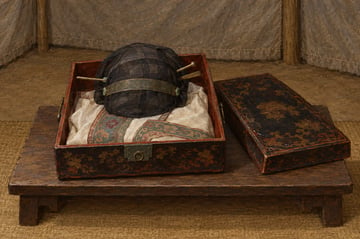
Gear and dressRecordsRomance
Woman's Headdress
gave → Sima YiRecordsgave → Sima YiRomance

Devices and inventionsRecordsRomance
Wooden Ox and Flowing Horse
madeRecordsmadeRomanceusedRecordsusedRomance

WritingsRecordsRomance
Longzhong Plan
madeRecordsmadeRomance

WritingsRecordsRomance
Memorial on Sending Out the Troops
madeRecordsmadeRomancegave → Liu ShanRomance
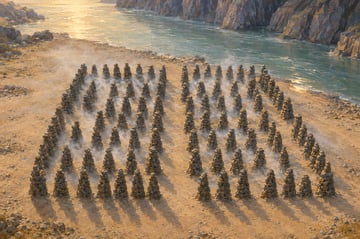
FormationsRecordsRomance
Stone Sentinel Maze
madeRecordsmadeRomanceusedRomance
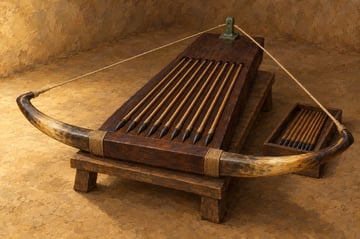
Devices and inventionsRecordsRomance
Zhuge Crossbow
madeRecordsmadeRomancegave → Jiang WeiRomance

WritingsRecordsRomance
Liu Bei's Final Edict
heldRecordsheldRomance
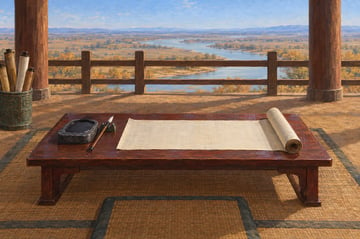
WritingsRecordsRomance
Rhapsody on the Bronze Bird Terrace
usedRomance
5 more
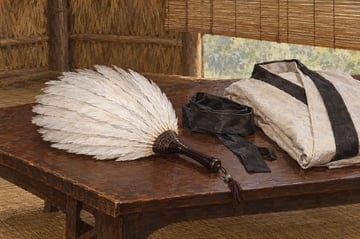
Gear and dressRomance
Feather Fan
wieldedRomance
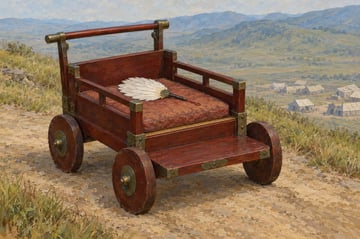
Gear and dressRomance
Four-Wheeled Carriage
rodeRomancemadeRomance
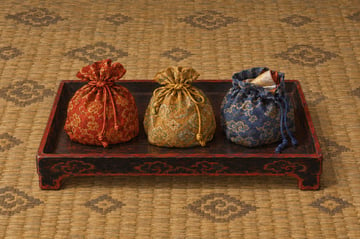
OtherRomance
Brocade Bag
madeRomancegave → Zhao YunRomancegave → Jiang WeiRomancegave → Yang YiRomance
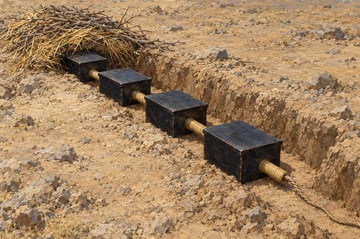
Devices and inventionsRomance
Land Mine
madeRomance

Treasures and regaliaRomance
Seven-Star Lamp
usedRomance
Those who met it
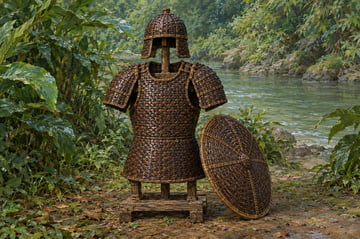
Places
- Native of
- LangyaRecords
- Was at
- Wuzhang PlainsRecords
- ChengduRecords
- Jing ProvinceRecords
- NanzhengRecords
- HanzhongRecords
- LongzhongRecords
- NanyangRecords
- MianyangRecords
- Nan CommanderyRecords
- Governed
- Yi ProvinceRecords
- ChangshaRecords
- LinglingRecords
- Died at
- Wuzhang PlainsRecords
Continue
Lived · walk through his life
They say your plans never miss a thing. At those turning points, in his place, what would you choose?
Relationship timeline152 entries ▸
History · vol. 32
- Sun Quan§13
Advises
Served as an envoy for the Former Lord, going to Sun Quan to form an alliance and swear an oath.
- Liu Bei§45
Witnesses
Liang submitted a memorial concerning the mourning edict (recounting the late emperor’s far-reaching benevolence and cultivation of virtue, and his illness and final days)
History · vol. 35
- Xu Shu§3
Friend
Were on friendly terms (both were in Jing Province; this was said to be true)
- Liu Bei§4
Student
only met him on the third visit; his relations with Liang grew closer by the day; the late lord appointed Liang Commandant of the Household as Army Adviser and then General of the Army; in the third year of Zhangwu, at Yongan, he entrusted the young ruler to him: “Your ability is ten times that of Cao Pi … you may take the throne yourself.”
- Liu Bei§4
Advises
sent everyone away and offered counsel, discussing Cao Cao, Sun Quan, and the situation in Jing and Yi (the Longzhong dialogue); urged the Former Lord to assume the imperial title
- Sun Quan§6
Advises
was ordered to seek help at Chaisang, saying that Quan was resisting Cao
Commands
led troops with Zhang Fei, Zhao Yun, and others along the river to divide and pacify the commanderies and counties, and jointly besieged Chengdu
- Zhao Yun§7
Commands
led troops with Zhang Fei and others along the river to divide and pacify the commanderies and counties, and jointly besieged Chengdu
- Guan Yu§7
Commands
in Jian'an 16, guarded Jing Province with Guan Yu
- Liu Shan§8
Student
Was entrusted with the regency to assist the young ruler; in the first year of Jianxing, was enfeoffed as Marquis of Wuxiang, established an office to handle government affairs, and also served as governor of Yi Province; submitted the Memorial on the Sending Out of the Army; the Later Ruler posthumously granted him the insignia of a chancellor and the posthumous title Marquis Zhongwu
- Meng Huo§10
Commands
during the southern campaign, reached Dian Lake and captured and released Meng Huo seven times, after which Meng Huo finally stopped leaving (the details follow Pei Songzhi's annotation, the Annals of Han and Jin; the main biography only says, "led the forces on a southern campaign … that autumn, all was pacified")
- Ma Su§17
Commands
was ordered to command the various armies in the vanguard and fight Zhang He at Jieting; Su disobeyed orders and acted improperly, and was decisively defeated; Liang executed Su to answer to the troops
- Wang Shuang§20
Fights
Defeated Wang Shuang in the battle at San Pass and beheaded him
- Zhang He§21
Fights
in the ninth year, advanced from Mount Qi and shot Zhang He dead
- Wei Yan§21
Commands
when he set out for Mount Qi, sent Wei Yan, Gao Xiang, and Wu Ban to resist them and routed them
- Sima Yi§22
Rival
faced each other at Wuzhang Plains for over a hundred days; Liang died of illness in the army, and King Xuan inspected his camps and exclaimed, “A rare genius in all the land!”
- Sima Yi§22
Dies at
faced each other at Wuzhang Plains; Liang died in the army
- Zhuge Jun§27
Sibling
brothers (both were Liang's younger brothers and rose to the office of Colonel of the Changshui)
- Zhuge Jin§46
Sibling
brothers (Jin was Liang's elder brother and served Wu)
- Zhuge Zhan§50
Child
father and son (Zhan was Liang’s son and was eight years old in the twelfth year of Jianxing; he later inherited the title of Marquis of Wuxiang)
All 152
Loading…
Inner monologues · AI-generated3 monologues ▸
- The lamplight wavers in the tent; I cannot speak for much longer. I recall how the late emperor entrusted me with the st
- I stand within the command tent, listening as the bronze drums and gongs outside gradually fall silent. I know that this
- I remember when I worked the fields in Longzhong, often comparing myself to Guan Zhong and Yue Yi, though the people of