Wutugu
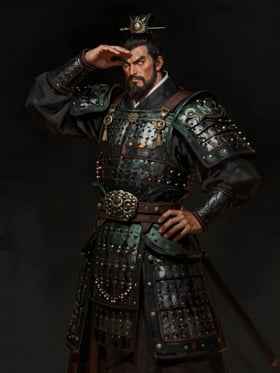
Wutugu led Meng Huo’s reinforcements and died with 30,000 rattan-armored troops in a fire attack; absent from Records of the Three Kingdoms.
Historical Record
The Records of the Three Kingdoms does not mention Wutugu. He appears only in the literary narrative of Romance of the Three Kingdoms, and events from the novel cannot be treated as historical fact.
In the Novel
In chapter 90 of Romance of the Three Kingdoms, Wutugu is portrayed as ruler of Wuguo, an ally who comes to Meng Huo’s aid, and an enemy commander in the southern campaign who is both fantastical and tragic. The novel says he stood twelve chi tall, ate no grains but fed on live snakes and ferocious beasts, and wore scale armor impervious to blades and arrows. The soldiers of Wuguo, meanwhile, wore rattan armor soaked in oil, which was hard to damage with blades or arrows, did not sink in water, and stayed dry when wet. At Meng Huo’s request, Wutugu therefore led thirty thousand rattan-armored troops into battle, becoming a formidable foe whom the Shu army could not defeat head-on. These descriptions of his stature, diet, scale armor, and rattan-armored troops were inventions of the novel, not facts recorded in the Records of the Three Kingdoms.
During the fighting, Wutugu discussed how to guard against Zhuge Liang’s ambushes with Meng Huo, saying that he would charge and fight at the front while Meng Huo directed operations from behind. He led his troops across the Taohua ferry and repeatedly pursued Wei Yan, capturing Shu army camps. Although he also heeded Meng Huo’s warning that the woods in the valleys might conceal an ambush, his successive victories gradually dulled his vigilance. Wei Yan’s retreats and the Shu army’s repeated abandonment of camps convinced him that they had no tactics left. The novel thus depicts him as brave, formidable, and overconfident: he was alert to danger, but a string of victories and a plan to lure him in drew him onward until he entered Panshe Valley.
Key Relationships
Wutugu and Meng Huo were allies bound by a request for aid. After Meng Huo was driven back, he followed Dailai Dongzhu’s advice and went to Wuguo for help. Wutugu agreed to send troops, ordering Tu An and Xini to lead thirty thousand rattan-armored soldiers alongside him, while he took command in person. Meng Huo was both the one seeking aid and Wutugu’s partner in assessing the Shu army’s tactics. Their alliance briefly enabled the Shu army to lure the enemy through a series of defeats, but ultimately led Wuguo’s forces into a desperate trap.
Wutugu and Zhuge Liang are opponents in the novel. Zhuge Liang realized that the oil-soaked rattan would inevitably catch fire, so he arranged for Wei Yan to feign defeat and draw Wutugu and his rattan-armored troops into Panshe Valley, then sealed the valley entrance and attacked with fire. The novel also has Zhuge Liang lament the destruction of Wuguo’s army, believing that although the stratagem served the state, it diminished his virtue. This portrayal makes Wutugu not merely a defeated enemy commander, but also a victim of the devastating consequences of the fire attack.
Signature Scene
The most representative scene is Wutugu charging on an elephant and pursuing the enemy into Panshe Valley. On the sixteenth day, wearing a hat adorned with sun, moon, and wolf whiskers and draped in gold-beaded tassels, with scale armor visible at his sides, he led his troops in pursuit of Wei Yan. Seeing no trees or grass in the valley, he judged that it was unlikely to contain an ambush. He then mistook the black-oil carts along the road for supply wagons abandoned by the Shu army and urged his troops onward. After the Shu army blocked the valley entrance with logs and boulders, carts loaded with firewood, gunpowder, and land mines in the valley caught fire one after another. The rattan armor ignited, and Wutugu and his thirty thousand rattan-armored troops perished together in the valley. This is the conclusion of Wutugu’s story, and a dramatic reversal built on the rattan armor’s quality of being “hard to damage with blades and arrows, yet easily set alight.” Wutugu riding an elephant, wearing scale armor, and perishing with his entire army are all unique to the novel.
This defeat was not the result of a simple head-on clash, but was brought about by Zhuge Liang’s exploitation of the rattan armor’s weakness, Wei Yan’s repeated feigned retreats, and an ambush set in the terrain. Zhuge Liang later explains the plan in the novel: first, use decoys and a string of defeats to strengthen the enemy’s resolve to pursue; then seal the valley, cut off the route, and set it ablaze. Wutugu’s bravery led him to venture deep into the valley with his troops, while the overconfidence bred by victory kept him from turning back in time. His death in Panshe Valley thus both demonstrates the strength of the rattan-armored army and marks the culmination of its weakness being precisely exploited.
In the sources
Where the books name Wutugu
Novel · ch. 90Romance of the Three Kingdoms
…國主兀突骨,身長丈二,不食五谷,以生蛇惡獸為飯;身有鱗甲,刀箭不能侵。…
Read the whole paragraph
卻說敗殘蠻兵有千餘人,大半中傷而逃,正遇蠻王孟獲。獲收了敗兵,心中稍喜,卻與帶來洞主商議曰:「吾今洞府已被蜀兵所佔,今投何地安身?」帶來洞主曰:「止有一國可以破蜀。」獲喜曰:「何處可去?」帶來洞主曰:「此去東南七百里,有一國,名烏戈國。國主兀突骨,身長丈二,不食五谷,以生蛇惡獸為飯;身有鱗甲,刀箭不能侵。其手下軍士,俱穿籐甲;其籐生於山澗之中,盤於石壁之上;國人採取,浸於油中,半年方取出曬之;曬乾復浸,凡十餘遍,卻纔造成鎧甲;穿在身上,渡江不沉,經水不濕,刀箭皆不能入:因此號為籐甲軍。今大王可往求之。若得彼相助,擒諸葛亮如利刀破竹也。」孟獲大喜,遂投烏戈國,來見兀突骨。其洞無宇舍,皆居土穴之內。孟獲入洞,再拜哀告前事。兀突骨曰:「吾起本洞之兵,與汝報仇。」獲欣然拜謝。於是兀突骨喚兩個領兵俘長:一名土安,一名奚泥,起三萬兵,皆穿籐甲,離烏戈國望東北而來。行至一江,名桃花水,兩岸有桃樹,歷年落葉於水中,若別國人飲之盡死,惟烏戈國人飲之,倍添精神。兀突骨兵至桃花渡口下寨,以待蜀兵。
Novel · ch. 90Romance of the Three Kingdoms
至第十六日,魏延引敗殘兵,來與籐甲軍對敵,兀突骨騎象當先,頭戴日月狼須帽,身披金珠纓絡,兩肋下露出生鱗甲,眼目中微有光芒,手指魏延大罵。…
Read the whole paragraph
至第十六日,魏延引敗殘兵,來與籐甲軍對敵,兀突骨騎象當先,頭戴日月狼須帽,身披金珠纓絡,兩肋下露出生鱗甲,眼目中微有光芒,手指魏延大罵。延撥馬便走。後面蠻兵大進。魏延引兵轉過了盤蛇谷,望白旗而走。兀突骨統引兵眾,隨後追殺。兀突骨望見山上並無草木,料無埋伏,放心追殺。趕到谷中,見數十輛黑油櫃車在當路。蠻兵報曰:「此是蜀兵運糧道路,因大王兵至,撇下糧車而走。」兀突骨大喜,催兵追趕。將出谷口,不見蜀兵,只見橫木亂石滾下,壘斷谷口。兀突骨令兵開路而進,忽見前面大小車輛,裝載乾柴,盡皆火起。兀突骨忙教退兵,只聞後軍發喊,報說谷口已被乾柴壘斷,車中原來皆是火藥,一齊燒著。兀突骨見無草木,心尚不慌,令尋路而走。只見山上兩邊亂丟火把,火把到處,地中藥線皆著,就地飛起鐵砲。滿谷中火光亂舞,但逢籐甲,無有不著。將兀突骨並三萬籐甲軍,燒得互相擁抱,死於盤蛇谷中。孔明在山上往下看時,只見蠻兵被火燒的伸拳舒腿,大半被鐵砲打的頭臉粉碎,皆死於谷中,臭不可聞。孔明垂淚而嘆曰:「吾雖有功於社稷,必損壽矣!」左右將士,無不感嘆。
Novel · ch. 90Romance of the Three Kingdoms
卻說孟獲與烏戈國主兀突骨曰:「諸葛亮多有巧計,只是埋伏。今後交戰,分付三軍:但見山谷之中,林木多處,不可輕進。」…
Read the whole paragraph
卻說孟獲與烏戈國主兀突骨曰:「諸葛亮多有巧計,只是埋伏。今後交戰,分付三軍:但見山谷之中,林木多處,不可輕進。」兀突骨曰:「大王說的有理。吾已知道中國人多行詭計。今後依此言行之。吾在前面廝殺;汝在背後教道。」兩人商議已定。忽報蜀兵在桃花渡口北岸立起營寨。兀突骨即差二俘長引籐甲軍渡了河,來與蜀兵交戰。不數合,魏延敗走。蠻兵恐有埋伏,不趕自回。次日,魏延又去立了營寨。蠻兵哨得,又引眾軍渡過河來戰。延出迎之。不數合,延敗走。蠻兵追殺十餘里,見四下並無動靜,便在蜀寨中屯住。次日,二俘長請兀突骨到寨,說知此事。兀突骨即引兵大進,將魏延追一陣。蜀兵皆棄甲拋戈而走,只見前有白旗。延引敗兵,急奔到白旗處,早有一寨,就寨中屯住。兀突骨驅兵追至,魏延引兵棄寨而走。蠻兵得了蜀寨。次日,又望前追殺。魏延回兵交戰,不三合又敗,只看白旗處而走,又有一寨,延就寨屯住。次日,蠻兵又至。延略戰又走。蠻兵佔了蜀寨。
Quotes
3 lines in the books · 2 featured
「吾起本洞之兵,與汝報仇。」
This line shows Wutugu's loyalty and valor, a vivid portrayal of his character.
「大王說的有理。吾已知道中國人多行詭計。今後依此言行之。吾在前面廝殺;汝在背後教道。」
This line reflects Wutugu's understanding of Central Plains culture and the shift in his military strategy.
- Enemies
- Other
Who is Wutugu connected to?
Pick someone to see how many steps lie between them and Wutugu.
Combat
On the field
Duels, kills and executions as the texts tell them, counted separately for the Records and the Romance.
Romance
- Duels
- 0W 0L 0D
DeathKilled by Zhuge LiangStruck down · Ch. 90
- RomanceCh. 90Struck downZhuge LiangLost「將兀突骨並三萬籐甲軍,燒得互相擁抱,死於盤蛇谷中」
Famous objects
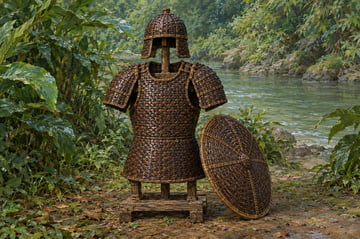
Those who met it
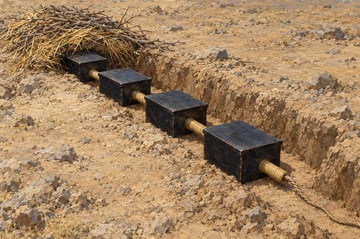
Places
- Died at
- Panshe ValleyRomance
On the boards
Compare with someone →Where this person ranks on each board.
Continue
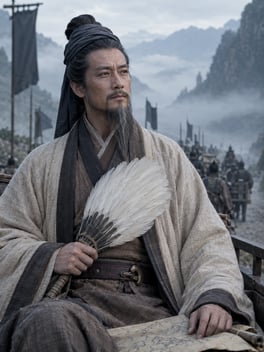
Zhuge Liang
Enemy
Relationship timeline1 entry ▸
Novel · ch. 90
- Meng Huo§10
Commands
Heeded his tearful plea, promised to help him take revenge, and joined forces with the rattan-armored army to fight the Shu troops
Inner monologues · AI-generated1 monologue ▸
- I, Wutugu, dwell in the Kingdom of Wuge. Meng Huo came to see me, lamented what had happened before, and begged me to he