Shu Han · Emperor
Liu Bei
courtesy name 玄德 · 161–223
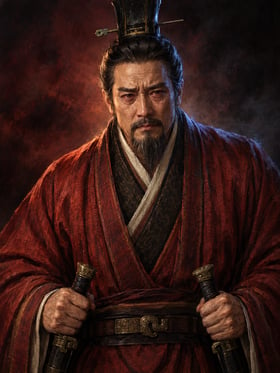
Seven chi five cun tall, with ears hanging to his shoulders and hands reaching past his knees; his eyes could look back upon his own ears, his face like capped jade, his lips as if rouged.

Life
In the novel: 78 chapters · In the Records: 43 volumes
Life161–223
184 CE (Zhongping 1)
- Oath of the Peach GardenZhuo CountyInstigator
- Battle of GuangzongGuangzongParticipant
190 CE (Chuping 1)
71 more events
190 CE (Chuping 1)
- Campaign against Dong ZhuoSuanzaoWarrior
- Battle of SishuiguanSishui PassCommander
192 CE (Chuping 3)
- Battle of JieqiaoJieqiaoWarrior
193 CE (Chuping 4)
194 CE (Xingping 1)
196 CE (Jian'an 1)
197 CE (Jian'an 2)
198 CE (Jian'an 3)
- Battle of XiapiXiapiWitness
- Lü Bu Raids XiaopeiXiaopeiCommander
199 CE (Jian'an 4)
200 CE (Jian'an 5)
- Guan Yu Surrenders to Cao CaoXiapiWitness
- Reunion of Brothers at GuchengGuchengCommander
- Girdle EdictXuchangInstigator
201 CE (Jian'an 6)
202 CE (Jian'an 7)
- Fire Attack at BowangBowangCommander
206 CE (Jian'an 11)
207 CE (Jian'an 12)
208 CE (Jian'an 13)
- Liu Bei's Seizure of the Four Southern Jing CommanderiesChangshaCommander
- Liu Bei's Retreat with Refugees across the RiverDangyangCommander
- Cao Cao's Southern Campaign Against Jing ProvinceJing ProvinceCommander
- Battle of JianglingJianglingCommander
- Burning of XinyeXinyeCommander
- Battle of Red CliffsChibi (Red Cliffs)Commander
- Battle of ChangbanChangbanCommander
- Lu Su Meets Liu Bei at DangyangChangbanCommander
209 CE (Jian'an 14)
- Guan Yu Fights Huang Zhong and Takes ChangshaChangshaCommander
- Liu Bei's Marriage into Eastern WuJingkouCommander
- Liu Bei's Escape from WuLiulangpuCommander
- Kongming's Three Sealed-Envelope StratagemsJingkouWitness
- Zhao Yun Takes GuiyangGuiyangWitness
- Wei Yan Kills Han Xuan and SurrendersChangshaCommander
210 CE (Jian'an 15)
211 CE (Jian'an 16)
- Zhang Song Presents the Map and Plots to Cede ShuChengduCommander
- Meeting at FuchengFuInstigator
212 CE (Jian'an 17)
213 CE (Jian'an 18)
- Liu Bei's Takeover of Yi ProvinceYi ProvinceCommander
- Battle of LuochengLuoCommander
214 CE (Jian'an 19)
215 CE (Jian'an 20)
218 CE (Jian'an 23)
- Peng Yang AffairChengduInstigator
- Hanzhong CampaignHanzhongCommander
219 CE (Jian'an 24)
221 CE (Huangchu 2)
222 CE (Huangchu 3)
- Battle of XiaotingXiaotingCommander
223 CE (Huangchu 4)
Allegiance
Appearances
By chapter (121)
Outlined chapters have spoken lines; tap one to read them.
Novel
List all 12 stops
- Zhuo County161–184BirthplaceOath of the Peach Garden
- Sishui Pass190Battle of Sishuiguan+1 more
- Duchang194Relief of the Siege of Beihai
- Xuchang196Stratagem of Two Tigers Fighting over Food
- Jing Province201Liu Bei Takes Refuge in Jing Province
- Jingkou209Liu Bei's Marriage into Eastern Wu+1 more
- Chengdu214Liu Zhang's Surrender+2 more
- Jing Province215Eastern Wu Seizes the Three Commanderies of Jingzhou
- Chengdu218Peng Yang Affair
- Shangyong219Meng Da Defects to Wei and Liu Feng Is Executed
- Wudan Hill221Liu Bei Proclaims Himself Emperor
- Baidicheng223Died hereLiu Bei's Deathbed Entrustment at Baidi
On the boards
Compare with someone →Where this person ranks on each board.
- Most Battles Lost: #1Records
- Most Defections: #1Records
- Most Advisors: #2Romance
- Most Battles Won: #2Records
- Best Connected: #2Romance
- Counsel Ignored: #2Romance
- Most Battles: #2Both
- Most Betrayed: #3Records
- Most Executions Ordered: #3Romance
- Plans That Worked: #3Records
- Most Talkative: #3Romance
- Master Strategists: #4Records
- Saw Through the Most: #10Romance
- Stratagem Success Rate: #11Records
- Novel Embellished: #12Both
Who they were
Character profile
- Appearance
- Seven chi five cun tall, with ears hanging to his shoulders and hands reaching past his knees; his eyes could look back upon his own ears, his face like capped jade, his lips as if rouged.
- Character
- Liu Bei spoke little, was good at humbling himself before others, showed neither joy nor anger on his face, delighted in forming ties with bold and chivalrous men, and was magnanimous, resolute, generous, a fine judge of men, and gracious to the worthy. He valued righteousness and observed propriety, put good faith and duty first, and was modest and self-restrained. In the face of adversity he could be deep and forbearing, adapting to circumstances, and held up benevolence and righteousness as his standard.
- Manner of speech
- Liu Bei's speech was sparing and restrained, often expressing himself with phrases like 'I cannot bear it' and 'how could I bear to abandon them'. He was adept at invoking his imperial-clan status and the grand cause of loyalty and righteousness in his words, self-effacing and composed, resting his words upon his 'aspiration'.
- Life
- Liu Bei was a descendant of Prince Jing of Zhongshan, son of Emperor Jing of Han. Orphaned young, he and his mother made a living selling shoes and weaving mats, and at fifteen, by his mother's command, he went to study under Lu Zhi. He rose in the campaign against the Yellow Turbans, serving in turn as Commandant of Anxi and Chancellor of Pingyuan, then relied on Gongsun Zan, Tao Qian, Cao Cao, Yuan Shao, and Liu Biao; after Red Cliffs he held Jing Province and entered Yi Province to seize Shu. In the twenty-fourth year of Jian'an he set himself up as King of Hanzhong, in the first year of Zhangwu he ascended the throne at Chengdu, and in the third year of Zhangwu he passed away at the Yong'an Palace at the age of sixty-three.
- Weapons
- Liu Bei's weapon was a pair of twin swords.
- Anecdotes
- Liu Bei called himself a descendant of Emperor Jing of Han, and, supported by his followers, first became King of Hanzhong and then ascended the throne. He achieved several merits in succession—serving as Zhu Jun's second in the campaign against Zhang Bao, shooting Sun Zhong dead at the Battle of Wancheng, and blunting Zhang Chun's edge at Yuyang—yet received only the post of Commandant of Anxi County. He once served as Governor of Yu Province and later became the founding sovereign of Shu Han, Emperor Zhaolie of Shu Han.
Historical Record
Liu Bei, courtesy name Xuande, early in his career attached himself to Gongsun Zan and was ordered to garrison Gaotang. Later, after Tao Qian died, Liu Bei took over Xu Province and became the leader of a regional power. During the Xingping era, Cao Cao campaigned east against Tao Qian. Liu Bei once joined Tao Qian’s subordinate Cao Bao in stationing troops east of Tan to resist him, but was defeated by Cao Cao. Later, Cao Cao sent Liu Bei to Xu Province to intercept Yuan Shu. After Yuan Shu died of illness, Liu Bei killed Che Zhou, the Inspector of Xu Province, raised troops, and stationed them in Pei. Cao Cao personally led a campaign against him; Liu Bei was defeated and sought refuge with Yuan Shao.
During the Battle of Guandu, Yuan Shao ordered Liu Bei to operate in Runan, where local forces rallied to him. After Cao Cao campaigned south, Liu Bei turned to Liu Biao. Although Liu Biao treated him generously, he did not put him to use. In the thirteenth year of Jian’an, Cao Cao advanced south. Liu Biao died of illness, and his son Liu Cong surrendered Jing Province to Cao Cao; Liu Bei withdrew to Xiakou. Cao Cao and Liu Bei then fought at Chibi and suffered defeat. The Cao army withdrew because of an epidemic, and Liu Bei thereby gained Jing Province and several commanderies south of the Yangtze. Thereafter, Liu Bei advanced into Hanzhong and faced off against Xiahou Yuan. Xiahou Yuan was attacked by Liu Bei’s forces near Yangping and killed in battle.
Liu Bei later became ruler of Shu Han. Sun Quan defeated Liu Bei, who had advanced east, at Yiling, marking a major military setback in Liu Bei’s later years. These accounts portray Liu Bei as enduring dependence on others, loss of territory, repeated campaigns, and expansion, gradually establishing his own regime amid the struggles among warlords. His political allegiances and circumstances shifted with events; he was not always on the same side.
In the Novel
Romance of the Three Kingdoms portrays Liu Bei as a hero who identifies himself with the imperial clan, is generous and benevolent, and values the bonds of sworn brotherhood. The novel says that, while poor, he sold straw sandals and wove mats; as a child, he once pointed to a mulberry tree and said that one day he would ride beneath a canopied imperial carriage. Descriptions of his appearance, such as “seven chi and five cun tall,” also give the character a vivid, legendary quality. These details about his origins, words, and appearance belong to the novel’s characterization and should not be confused with facts from historical accounts.
The Oath of the Peach Garden is a key episode in establishing his core character and his alliance in founding a regime: Liu Bei, Guan Yu, and Zhang Fei burn incense and swear to work together to succor the distressed and aid those in danger, serve the state above, and bring peace to the common people below, with Liu Bei as the eldest. The novel also depicts him using an ambush to lift the siege of Qing Province during the Yellow Turban conflict, and proposing a strategy during the fighting at Wancheng: withdraw from the east and south sides and concentrate the attack on the northwest. These episodes present his battlefield resourcefulness and his judgment that needless casualties should be avoided.
Compared with the relatively brief accounts of his military and political career in historical records, the novel particularly heightens Liu Bei’s image of benevolence and righteousness. When the county inspector mistreats a county official and demands bribes, Zhang Fei whips the inspector, but Liu Bei stops him from continuing the assault, hangs the official seal around the inspector’s neck, and leaves his post. This is an episode from the novel; the historical accounts provided contain no corresponding record. The novel also uses Three Heroes Fight Lü Bu at Hulao Gate to highlight Liu Bei’s heroic image fighting alongside Guan Yu and Zhang Fei. Liu Bei joins the fray with a pair of double swords, and the three men together force Lü Bu to retreat. This scene, too, is unique to the novel.
Key Relationships
- Guan Yu and Zhang Fei: Historical accounts record Liu Bei’s military relationship with Guan Yu, including how Guan Yu once surrendered to Cao Cao and later escaped to rejoin Liu Bei. The novel, by contrast, portrays the two as sworn brothers who share a life-and-death bond with Liu Bei, bound by an oath to found a regime together.
- Tao Qian: Liu Bei took over the power base Tao Qian left in Xu Province; historical accounts briefly state that Liu Bei succeeded him after Tao Qian’s death.
- Cao Cao: The two fought one another many times. Liu Bei was once defeated and fled to Yuan Shao, and later turned to Liu Biao. After the Battle of Red Cliffs, Liu Bei’s power expanded in Jing Province and the regions south of the Yangtze.
- Liu Biao: After Liu Bei sought refuge in Jing Province, Liu Biao treated him generously but did not put him to use. After Liu Biao’s death, Liu Bei withdrew to Xiakou as Liu Cong surrendered to Cao Cao.
- Gongsun Zan: Early on, he once appointed Liu Bei to garrison Gaotang. The novel also depicts Gongsun Zan associating with Liu Bei and inviting him to join the alliance against Dong Zhuo.
- Sun Quan: At Chibi, he joined Liu Bei in resisting Cao Cao; later, Sun Quan defeated Liu Bei at Yiling.
Signature Scenes
- The Transfer of Xu Province: After Tao Qian died, Liu Bei took over Xu Province, an important starting point for the growth of his power.
- Che Zhou’s Death and the Raising of Troops in Pei: After being ordered to go to Xu Province, Liu Bei killed Che Zhou and stationed troops in Pei, then came into direct conflict with Cao Cao. This choice also made his opposition to Cao Cao more openly manifest.
- After Chibi: Cao Cao and Liu Bei fared poorly in battle, and Cao Cao’s army withdrew as an epidemic spread through its ranks. Liu Bei consequently gained Jing Province and several commanderies south of the Yangtze. This was an important turning point in his shift from wandering in search of survival to expanding his regional power.
- The Battle at Yangping: Liu Bei held the strategic terrain and faced off against Cao Cao’s army. Xiahou Yuan was killed by Liu Bei’s forces in battle, showing that Liu Bei’s army could now contend with Cao Cao’s forces on the Hanzhong battlefield.
- The Oath of the Peach Garden (unique to the novel): Through the oath and the brothers’ order of seniority, the novel establishes the bond among Liu Bei, Guan Yu, and Zhang Fei, making it the symbolic beginning of Liu Bei’s story of founding a regime.
- Three Heroes Fight Lü Bu at Hulao Gate (unique to the novel): Liu Bei joins Guan Yu and Zhang Fei in fighting Lü Bu. The three attack together, and Lü Bu ultimately retreats. This battle among the warlords portrays Liu Bei as a leader willing to stand shoulder to shoulder with his allies against the enemy.
Quotes
654 lines in the books · 3 featured
「古人云:『兄弟如手足,妻子如衣服。衣服破,尚可縫;手足斷,安可續?』吾三人桃園結義,不求同生,但願同死。今雖失了城池家小,安忍教兄弟中道而亡?況城池本非吾有;家眷雖被陷,呂布必不謀害,尚可設計救之。賢弟一時之誤,何至遽欲捐生耶!」
This saying embodies Liu Bei's core value of prizing bonds of loyalty above his own life and household, and is widely renowned.
「為汝這孺子,幾損我一員大將!」
This line is a classic expression of Liu Bei cherishing his people as his own children and valuing men of talent, shaping his image as a benevolent ruler.
君才十倍曹丕,必能安邦定國,終定大事。若嗣子可輔,則輔之;如其不才,君可自為成都之主。
The entrusting of his orphan at Baidicheng reflects Liu Bei's trust in Zhuge Liang and the bond between lord and minister, with far-reaching influence.
- Family
- Lord & vassal
- Friends
- Enemies
- Teacher & student
- Other
History vs. novel
8 points · 3 novel-only
| History | Novel |
|---|---|
| Oath of the Peach GardenNovel only | |
| — | The novel says that Liu Bei, Guan Yu, and Zhang Fei burned incense and swore brotherhood in the Peach Garden, pledging to live and die together. This became the defining starting point of their relationship; the cited Records of the Three Kingdoms makes no mention of the event. ch. 1 |
| Beating the Postal InspectorNovel embellishes | |
The historical account says Liu Bei personally barged into the postal inspector’s lodgings, had him bound and beaten with a staff, then resigned his post. Another account cited in the Records of the Three Kingdoms adds that he struck him more than a hundred times. vol. 32 | The novel instead has Zhang Fei bind and beat the postal inspector for making things difficult for Liu Bei. Liu Bei then hangs up his seal and resigns, highlighting Zhang Fei’s hot temper and Liu Bei’s restraint. ch. 2 |
| Three Heroes Fight Lü Bu at Hulao GateNovel only | |
| — | The novel depicts Liu Bei, Guan Yu, and Zhang Fei joining forces to fight Lü Bu before Hulao Gate, making it a celebrated scene from Liu Bei’s early campaigns; the cited Records of the Three Kingdoms contains no record of this battle. ch. 1 |
| Taking Charge of Xu ProvinceNovel embellishes | |
After Tao Qian fell gravely ill, the people of Xu Province welcomed Liu Bei to succeed him. Chen Deng, Kong Rong, and others urged him to accept, and only then did Liu Bei take charge of Xu Province. vol. 22 | The novel portrays Tao Qian as yielding the post repeatedly, while Liu Bei declines it several times before finally taking charge of Xu Province temporarily at everyone’s urging, emphasizing his modesty. ch. 11 |
| Discussing Heroes Over WineNovel embellishes | |
The historical account says Cao Cao once told Liu Bei that the only heroes under heaven were the two of them. Liu Bei dropped his chopsticks in dismay; the source does not mention a wine scene. vol. 32 | The novel expands this exchange into a conversation over warmed wine, in which Cao Cao and Liu Bei discuss heroes. Liu Bei comments on the figures of the day one by one, until Cao Cao declares that the two of them are heroes. ch. 21 |
| Xu Shu’s DepartureNovel only | |
| — | The novel says Liu Bei refuses to keep Xu Shu from reuniting with his mother, insisting that Xu Shu leave. He drinks with him as they part, underscoring Liu Bei’s benevolence and righteousness. ch. 36 |
| The Three Visits (to the Thatched Cottage)Novel embellishes | |
The historical account says Liu Bei went in person to visit Zhuge Liang three times before finally meeting him, then sought his advice on the affairs of the realm. vol. 35 | The novel also depicts Liu Bei visiting Zhuge Liang three times, elaborating on how he missed him on the first two visits, met him on the third, and earnestly sought his counsel. ch. 38 |
| Retreat at ChangbanNovel embellishes | |
The historical account says that when Liu Bei retreated south to Dangyang, he slowed his advance because he could not bear to abandon the people who had joined him. After Cao Cao caught up, Liu Bei left his wife and children behind and fled with Zhuge Liang, Zhang Fei, Zhao Yun, and several dozen cavalrymen. vol. 32 | The novel says Liu Bei led more than a hundred thousand people slowly toward Jiangling, assigning Zhao Yun to protect his family and Zhang Fei to guard the rear, highlighting his image as one who would not abandon the people. ch. 41 |
- Oath of the Peach GardenNovel only
- Novel
The novel says that Liu Bei, Guan Yu, and Zhang Fei burned incense and swore brotherhood in the Peach Garden, pledging to live and die together. This became the defining starting point of their relationship; the cited Records of the Three Kingdoms makes no mention of the event.
ch. 1
- Beating the Postal InspectorNovel embellishes
- History
The historical account says Liu Bei personally barged into the postal inspector’s lodgings, had him bound and beaten with a staff, then resigned his post. Another account cited in the Records of the Three Kingdoms adds that he struck him more than a hundred times.
vol. 32
- Novel
The novel instead has Zhang Fei bind and beat the postal inspector for making things difficult for Liu Bei. Liu Bei then hangs up his seal and resigns, highlighting Zhang Fei’s hot temper and Liu Bei’s restraint.
ch. 2
- Three Heroes Fight Lü Bu at Hulao GateNovel only
- Novel
The novel depicts Liu Bei, Guan Yu, and Zhang Fei joining forces to fight Lü Bu before Hulao Gate, making it a celebrated scene from Liu Bei’s early campaigns; the cited Records of the Three Kingdoms contains no record of this battle.
ch. 1
- Taking Charge of Xu ProvinceNovel embellishes
- History
After Tao Qian fell gravely ill, the people of Xu Province welcomed Liu Bei to succeed him. Chen Deng, Kong Rong, and others urged him to accept, and only then did Liu Bei take charge of Xu Province.
vol. 22
- Novel
The novel portrays Tao Qian as yielding the post repeatedly, while Liu Bei declines it several times before finally taking charge of Xu Province temporarily at everyone’s urging, emphasizing his modesty.
ch. 11
- Discussing Heroes Over WineNovel embellishes
- History
The historical account says Cao Cao once told Liu Bei that the only heroes under heaven were the two of them. Liu Bei dropped his chopsticks in dismay; the source does not mention a wine scene.
vol. 32
- Novel
The novel expands this exchange into a conversation over warmed wine, in which Cao Cao and Liu Bei discuss heroes. Liu Bei comments on the figures of the day one by one, until Cao Cao declares that the two of them are heroes.
ch. 21
- Xu Shu’s DepartureNovel only
- Novel
The novel says Liu Bei refuses to keep Xu Shu from reuniting with his mother, insisting that Xu Shu leave. He drinks with him as they part, underscoring Liu Bei’s benevolence and righteousness.
ch. 36
- The Three Visits (to the Thatched Cottage)Novel embellishes
- History
The historical account says Liu Bei went in person to visit Zhuge Liang three times before finally meeting him, then sought his advice on the affairs of the realm.
vol. 35
- Novel
The novel also depicts Liu Bei visiting Zhuge Liang three times, elaborating on how he missed him on the first two visits, met him on the third, and earnestly sought his counsel.
ch. 38
- Retreat at ChangbanNovel embellishes
- History
The historical account says that when Liu Bei retreated south to Dangyang, he slowed his advance because he could not bear to abandon the people who had joined him. After Cao Cao caught up, Liu Bei left his wife and children behind and fled with Zhuge Liang, Zhang Fei, Zhao Yun, and several dozen cavalrymen.
vol. 32
- Novel
The novel says Liu Bei led more than a hundred thousand people slowly toward Jiangling, assigning Zhao Yun to protect his family and Zhang Fei to guard the rear, highlighting his image as one who would not abandon the people.
ch. 41
Combat
On the field
Duels, kills and executions as the texts tell them, counted separately for the Records and the Romance.
Duel them- RecordsJuan 1AssassinationChe ZhouWon「遂殺徐州刺史車冑」
- RecordsJuan 1Struck downXiahou YuanWon「夏侯淵與劉備戰於陽平,爲備所殺」
- RecordsJuan 6Struck downYang FengWon「暹、奉不能奉王法,各出奔,寇徐、揚閒,爲劉備所殺」
- RecordsJuan 6Struck downHan XianWon「暹、奉不能奉王法,各出奔,寇徐、揚閒,爲劉備所殺」
- RecordsJuan 32Struck downCai YangWon「曹公遣蔡陽擊之,為先主所殺」
- RecordsJuan 32ExecutionYang HuaiWon「召璋白水軍督楊懷,責以無禮,斬之」
All encounters (19)
Loading…
Battles in command
Battles this person commanded in, with the outcome as each text tells it.
- Records
- 6W 4L 0D 0 undecided
- Romance
- 6W 4L 0D 0 undecided
- Records201Battle of RangshanLostvs Cao forcesJuan 1「備聞公自行,走奔劉表,都等皆散」
- Romance201Battle of RangshanLostvs Cao troopsCh. 31「玄德敗軍不滿一千,狼狽而奔」
- Records202Fire Attack at BowangWonvs Cao forcesJuan 32「惇等追之,為伏兵所破」
- Romance202Fire Attack at BowangWonvs Cao forcesCh. 39「曹家人馬,自相踐踏,死者不計其數」
- Records208Cao Cao's Southern Campaign Against Jing ProvinceLostvs Cao forcesJuan 1「公到新野,琮遂降,備走夏口」
- Records208Battle of Red CliffsWonvs Cao Cao's armyJuan 54「人馬燒溺死者甚眾,軍遂敗退,還保南郡」
All battles (20)
Loading…
Stratagems
Plans this person devised or saw through, as the texts tell them.
- Records
- 9 carried out · 7 worked · 0 turned down · 0 seen through
- Romance
- 9 carried out · 6 worked · 1 turned down · 2 seen through
- RecordsFire AttackFire attackWorkedJuan 17「其後備於走馬谷燒都圍,淵救火,從他道與備相遇」
- RecordsBlock the Maming Plank RoadOtherSeen throughJuan 17「備遣陳式等十餘營絶馬鳴閣道,晃別征破之」
- RecordsAmbushAmbushWorkedJuan 18「惇等果入賊伏里,戰不利」
- RecordsPersuade Yuan Shao to Submit Repeated Memorials and LeaveDeceptionWorkedJuan 32「先主還紹軍,陰欲離紹,乃說紹南連荊州牧劉表」
- RecordsLure the EnemyLureWorkedagainst Xiahou Dun and othersJuan 32「先主設伏兵,一旦自燒屯偽遁,惇等追之,為伏兵所破」
- RecordsPersuade to SurrenderPersuasionWorkedagainst ChengduJuan 38「後先主圍成都,遣雍往說璋,璋遂與雍同輿而載,出城歸命」
All stratagems (21)
Loading…
Events
Events (99)
Battles and events the texts place this person in, by date.
Battles
- 184Battle of Guangzong
- 190Campaign against Dong ZhuoWarrior
- 190Battle of SishuiguanCommander
- 192Battle of JieqiaoWarrior
- 197Battle of Wancheng
- 198Battle of XiapiWitness
- 199Battle of Yijing
- 200Battle of Guandu
All 23
- 201Battle of RangshanCommander
- 202Fire Attack at BowangCommander
- 208Huarong Road
- 208Cao Cao's Southern Campaign Against Jing ProvinceCommander
- 208Battle of JianglingCommander
- 208Burning of XinyeCommander
- 208Battle of Red CliffsCommander
- 208Battle of ChangbanCommander
- 213Liu Bei's Takeover of Yi ProvinceCommander
- 213Battle of LuochengCommander
- 218Hanzhong CampaignCommander
- 219Guan Yu's Northern Campaign
- 219Battle of Mount DingjunCommander
- 219Battle of Han RiverCommander
- 222Battle of XiaotingCommander
Other events
- 184Oath of the Peach GardenInstigator
- 184Yellow Turban Rebellion
- 189Assassination of He Jin
- 189Dong Zhuo's Coup
- 190Three Heroes Fight Lü Bu at Hulao GateWarrior
- 193Cao Cao's Campaign Against Xu ProvinceCommander
- 194Lü Bu's Seizure of Yanzhou
- 194Liu Bei Takes Control of Xu ProvinceCommander
All 76
- 194Relief of the Siege of BeihaiCommander
- 194Tao Qian's Three Cessions of XuzhouWitness
- 196Stratagem of Two Tigers Fighting over FoodVictim
- 196Lü Bu Seizes Xu ProvinceVictim
- 196Cao Cao Escorts the Emperor and Moves the Capital to Xu
- 196Lü Bu Shoots the Halberd at the Camp GateVictim
- 197Cao Cao's Campaign Against Yuan ShuWarrior
- 197Yuan Shu Proclaims Himself Emperor
- 198Lü Bu Raids XiaopeiCommander
- 198Zang Ba Submits to Cao Cao
- 199Emperor Xian Recognizes Liu Bei as Imperial Uncle
- 199Liu Bei's Defeat of Yuan Shu at XuzhouCommander
- 199Trial at White Gate TowerAdvisor
- 199Defeat and Death of Yuan ShuCommander
- 199Cao Cao and Liu Bei Discuss Heroes over Plum WineWitness
- 200Guan Yu Slays Yan Liang
- 200Guan Yu Passes Five Passes and Slays Six Generals
- 200Guan Yu Surrenders to Cao CaoWitness
- 200Reunion of Brothers at GuchengCommander
- 200Girdle EdictInstigator
- 201Liu Bei Takes Refuge in Jing ProvinceCommander
- 206The Succession Dispute of Liu BiaoAdvisor
- 206Liu Bei's Horse Leaps the Tan StreamVictim
- 207The Three Visits (to the Thatched Cottage)Commander
- 207Xu Shu (Shan Fu) Breaks the Eight Gates Golden Lock FormationCommander
- 207Xu Shu Serves Liu BeiCommander
- 207Cheng Yu's Forged Letter Lures Xu Shu
- 207Xu Shu Recommends Zhuge LiangWitness
- 208Zhuge Liang Summons the Wind at the Seven-Star Altar
- 208Liu Bei's Seizure of the Four Southern Jing CommanderiesCommander
- 208Liu Bei's Retreat with Refugees across the RiverCommander
- 208Liu Cong's Surrender to Cao Cao
- 208Zhao Yun Rescues His Lord on a Single Horse
- 208Zhuge Liang's Mission to Eastern Wu
- 208Lu Su Meets Liu Bei at DangyangCommander
- 209Guan Yu Fights Huang Zhong and Takes ChangshaCommander
- 209Liu Bei's Marriage into Eastern WuCommander
- 209Liu Bei's Escape from WuCommander
- 209Kongming's Three Sealed-Envelope StratagemsWitness
- 209Zhao Yun Seizes Nanjun
- 209Zhao Yun Takes GuiyangWitness
- 209Wei Yan Kills Han Xuan and SurrendersCommander
- 210Liu Bei Borrows Jing ProvinceInstigator
- 210Zhou Yu's Stratagem of Borrowed Road to Destroy GuoCommander
- 210Pang Tong Joins Shu and Receives a CommandCommander
- 210Lu Su's Demand for the Return of Jing ProvinceCommander
- 211Zhang Song Presents the Map and Plots to Cede ShuCommander
- 211Meeting at FuchengInstigator
- 212Liu Bei's Takeover of Yi ProvinceCommander
- 212Pang Tong Presents Three StrategiesCommander
- 212Liu Bei Executes Yang Huai and Gao PeiInstigator
- 214Liu Zhang's SurrenderCommander
- 214Jian Yong Persuades Liu Zhang to SurrenderCommander
- 214Death of Pang Tong at LuofengpoCommander
- 214Zhang Ren Captured at Golden Goose BridgeCommander
- 214Ma Chao's Surrender to Liu BeiInstigator
- 215Eastern Wu Seizes the Three Commanderies of JingzhouCommander
- 218Peng Yang AffairInstigator
- 219Liu Bei's Elevation to King of HanzhongInstigator
- 219Meng Da Defects to Wei and Liu Feng Is ExecutedInstigator
- 219Lü Meng's River Crossing in White
- 219Wei Yan Appointed Administrator of HanzhongInstigator
- 219Retreat to Mai Castle
- 221Liu Bei's Eastern Campaign (Battle of Xiaoting)Commander
- 221Liu Bei Proclaims Himself EmperorInstigator
- 221Assassination of Zhang FeiWitness
- 223Liu Bei's Deathbed Entrustment at BaidiInstigator
- 228Execution of Ma Su
Famous objects
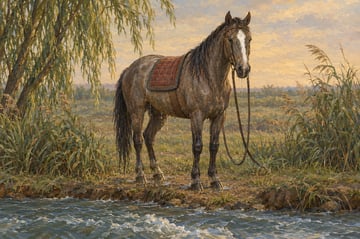
HorsesRecordsRomance
Dilu
rodeRecordsrodeRomancegave → Liu BiaoRomance

WritingsRecordsRomance
Liu Bei's Final Edict
madeRecordsmadeRomancegave → Zhuge LiangRomance

WritingsRecordsRomance
Longzhong Plan
heldRecordsheldRomance
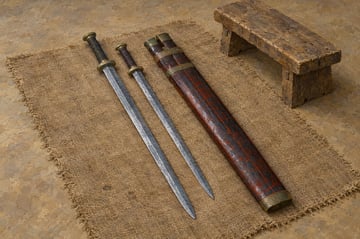
WeaponsRomance
Twin Swords
wieldedRomancemadeRomance

WritingsRecordsRomance
Girdle Edict
usedRomance
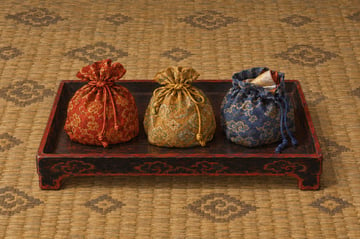
OtherRomance
Brocade Bag
heldRomance
Places
- Native of
- Lousang VillageRomance
- Zhuo CountyRecords
- Was at
- Governed
- Xu ProvinceRecords
- ChengduRecords
- Yi ProvinceRecords
- Jing ProvinceRecords
- Yu ProvinceRecords
- XiapiRecords
- PingyuanRecords
- HanzhongRecords
- FuRecords
- Fushui PassRomance
- Pingyuan CountyRecords
- Gong'anRecords
- Died at
- BaidichengRecords
Continue
Lived · walk through his life
They say you lose every battle and barely have time to flee. At those moments, had it been up to you, what would you have chosen?
Relationship timeline134 entries ▸
History · vol. 1
- Dong Cheng§44
Friend
Secretly plotted rebellion with Dong Cheng and the others
- Che Zhou§44
Enemy
killed Che Zhou, the Inspector of Xu Province, raised troops, and garrisoned them at Pei
History · vol. 18
Enemy
once burned the camp and lured Xiahou Dun into pursuing into an ambush; Xiahou Dun fought at a disadvantage
History · vol. 22
History · vol. 31
- Liu Zhang§13
Betrayer
Provided supplies to the Former Lord so he could campaign against Zhang Lu; later, after the troops returned, they attacked each other
History · vol. 32
- Liu Hong§3
Kin
father and son (Hong was the father of the Former Lord)
Kin
Grandfather and grandson (Xiong was the Former Lord's ancestor)
Kin
a paternal uncle of the same clan; regularly received provisions from him
Sworn brother
Were classmates from a young age; Zan was older and treated him as an elder brother
- Lu Zhi§4
Teacher
studied under him (studied under Lu Zhi together with Liu Deran and Gongsun Zan)
- Zou Jing§5
Fights
led his dependents in following him to attack the Yellow Turbans
Fights
went with him as far as Xiapi; when they encountered bandits, fought bravely and rendered meritorious service
- Tao Qian§6
Friend
Went to Xu Province's aid, and Tao Qian added four thousand Danyang troops; after Tao Qian's death, succeeded him in leading Xu Province
- Lü Bu§6
Enemy
the former lord and Lü Bu became entangled in a conflict after an opportunity arose: Lü Bu attacked Xiapi and captured his wife and children; the former lord sought peace, and Bu returned his wife and children
- Yuan Shu§6
Enemy
resisted Yuan Shu at Xuyi and Huaiyin; Yuan Shu traveled north through Xu Province to join Yuan Shao, but died of illness before arriving
- Yuan Shu§6
Fights
resisted Yuan Shu at Xuyi and Huaiyin
- Cao Cao§7
Enemy
Duke Cao was at times an enemy and at times an ally: first he memorialized him for appointment as General of the Left and treated him with increasing respect; later he campaigned eastward, defeated him, and captured his wife and children, along with Guan Yu
Friend
conspired together to kill Cao Gong (Girdle Edict)
- Yuan Tan§10
Student
Yuan Tan had formerly been recommended as a Mao Cai by the Former Lord
- Yuan Shao§10
Friend
in Jian'an 5, fled to Qing Province and went over to Yuan Shao; Shao personally traveled 200 li from Ye to meet him
- Liu Biao§11
Friend
attached himself to him for several years, treated him generously, but suspected his intentions
- Cao Cao§13
Fights
fought alongside the Wu forces at Chibi and burned their ships; advanced by land and water and pursued them as far as Nan Commandery
- Sun Quan§14
Friend
in Jian'an 13, sent Zhuge Liang to establish relations with Sun Quan; Quan offered his younger sister to cement the good relations and bind them in mutual affection
- Liu Zhang§18
Friend
when the former lord first entered Shu, he and Zhang met with great warmth and each deferred to the other's official rank
- Liu Zhang§20
Enemy
Later developed a rift, attacked and captured Yi Province, and surrendered to him after Luocheng fell
- Lady Wu§41
Spouse
husband and wife (in the first year of the Zhangwu era, she was established as empress)
- Liu Shan§41
Child
father and son (made crown prince in the first year of Zhangwu)
- Liu Yong§41
Child
father and son (appointed King of Lu in the first year of Zhangwu)
- Liu Li§41
Child
father and son (appointed King of Liang in the first year of Zhangwu)
- Sun Quan§41
Enemy
Sun Quan attacked and killed Guan Yu and seized Jing Province; the Former Lord, angered by this, prepared to campaign east against Wu
- Zhuge Liang§43
Witnesses
entrusted the orphaned heir while gravely ill
- Li Yan§43
Witnesses
Entrusted him with the care of the heir, with the Shangshu Ling as deputy.
All 134
Loading…
Inner monologues · AI-generated3 monologues ▸
- Within Baidicheng, after our defeat, the night wind blew into my tent, and I could still almost hear the shouts and crie
- I often reflect that, as a kinsman of the Han imperial house, I did not seek to seize another’s territory through expedi
- I was orphaned young and, with my mother, sold shoes and wove mats. Our household lived modestly. In the southeastern co