

Background
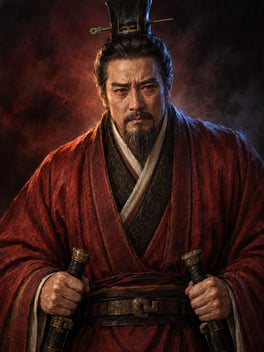
Liu Bei entered Yi Province ostensibly at Liu Zhang’s invitation to resist Zhang Lu in the north, but in reality he had intended from the outset to replace him. When Liu Zhang met Liu Bei at Fu County, Pang Tong urged Liu Bei to seize Liu Zhang during the banquet. Liu Bei refused, citing that he had only just entered another state and had not yet established trust or goodwill. Afterward, Liu Bei stationed his forces at Jiameng in the north and took no action, generously dispensing favors while waiting for an opportunity.
In 212 (the seventeenth year of Jian’an), Cao Cao campaigned east against Sun Quan, who appealed to Liu Bei for help. Liu Bei seized the opportunity to demand ten thousand troops and a large quantity of supplies from Liu Zhang, intending to return east. Liu Zhang provided only four thousand troops and halved the supplies. Zhang Song, who had remained in Chengdu, wrote to urge Liu Bei not to leave. His brother, Zhang Su, the governor of Guanghan, feared being implicated and reported him to Liu Zhang. Liu Zhang had Zhang Song executed, and the hostility between the two sides became open. Liu Zhang then ordered the commanders at all the passes to cut off correspondence with Liu Bei. Liu Bei’s position was now precarious: Zhang Lu lay ahead, while the passes behind him were controlled by Liu Zhang. Unless he quickly broke the deadlock, he would be trapped at Jiameng with no way to advance or retreat.
Key Figures
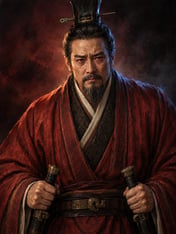
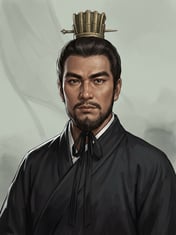
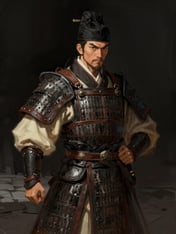
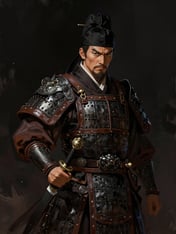
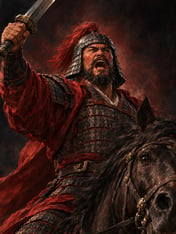
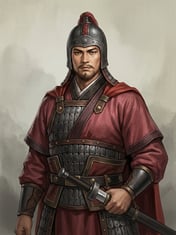
Liu Bei was the decision-maker, while Pang Tong devised the plan. Pang Tong described Yang Huai and Gao Pei as Liu Zhang’s renowned generals; each commanded elite troops and guarded a pass, and both had repeatedly urged Liu Zhang to send Liu Bei back to Jing Province. The Biography of the Former Lord identifies Yang Huai as commander of the Whitewater Army, indicating that he guarded Baishui Pass, north of Jiameng and controlling the northern route into Yi Province. The Records of the Three Kingdoms does not record Gao Pei’s garrison location. After Yang Huai was killed, Liu Bei sent Huang Zhong and Zhuo Ying with troops to press toward Liu Zhang. This marked the beginning of Huang Zhong’s military achievements on the Yi Province battlefield.
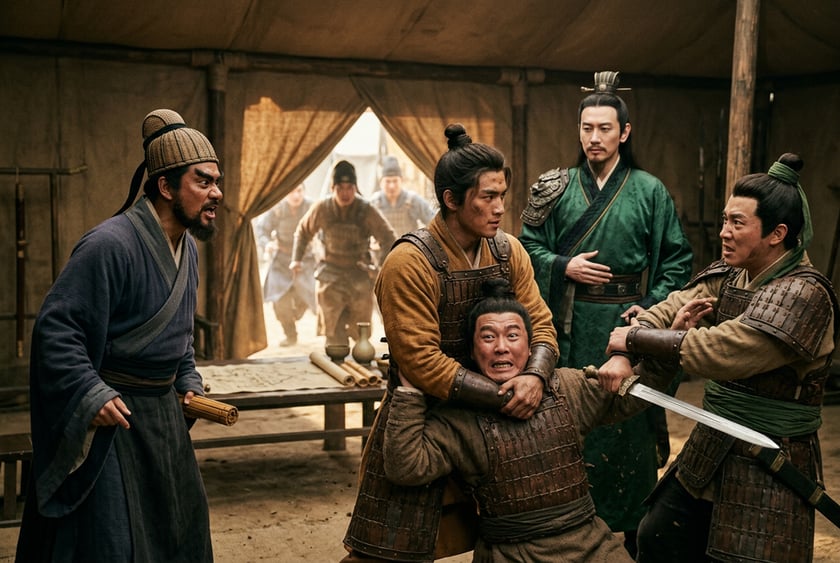
The Romance of the Three Kingdoms arranges the characters differently: Liu Feng and Guan Ping capture Yang and Gao; Huang Zhong and Wei Yan control their attendants; Pang Tong orders the execution; and Liu Bei himself appears hesitant. This division of roles shifts responsibility for taking action onto Pang Tong, preserving the novel’s portrayal of Liu Bei as generous and benevolent.
Central Issue
The central issue is how Liu Bei could seize Yi Province without an official pretext for sending in troops. Pang Tong offered three strategies. The best was to select elite troops and make a forced march day and night straight for Chengdu. The middle option was to lure and capture Yang Huai and Gao Pei, take over their troops, and then advance on Chengdu. The least favorable was to withdraw to Baidi, make contact with Jing Province, and pursue their ambitions gradually. The first option offered the greatest reward, but Liu Bei had limited forces in Yi Province; if the attack met resistance, he would have no way to retreat, and it would amount to a blatant surprise attack on an ally. The third option would mean abandoning all the ground he had gained so far. The middle option struck a balance between risk and legitimacy: since Yang and Gao already advocated driving Liu Bei out, moving against them was easier to justify than directly taking up arms against Liu Zhang.
The differing emphases of the two biographies are also worth comparing. The Biography of Pang Tong presents the killing of Yang and Gao as the execution of a plan already laid out, whereas the Biography of the Former Lord depicts it as Liu Bei’s forceful response after Liu Zhang severed relations, on the grounds that Liu Zhang had shown “discourtesy.” The two accounts are not contradictory: the plan had already been prepared, and Liu Zhang’s order provided a convenient reason to act. After Yang Huai was killed, Liu Bei entered the pass and took the families of the commanders and soldiers there hostage. This ensured that the Whitewater garrison would not dare to resist; it was this step that truly turned the forces guarding the pass into Liu Bei’s own strength.
The Romance of the Three Kingdoms adds the detail that the two men were concealing sharp blades and intended to assassinate Liu Bei, making Liu Bei’s action appear to be self-defense and greatly easing the moral tension.
Political Consequences
The killing of Yang Huai and Gao Pei was a defining moment in Liu Bei and Liu Zhang’s transition from allies to enemies. Liu Bei then advanced south and occupied Fu County. Liu Zhang sent Liu Gui, Leng Bao, Zhang Ren, Deng Xian, and others to meet him in battle, but they were defeated and retreated to Mianzhu. Li Yan, who had been ordered to command the forces at Mianzhu, also led his troops in surrender. Liu Bei divided his forces to pacify the counties, while Zhuge Liang, Zhang Fei, and Zhao Yun sailed upriver and pacified Baidi, Jiangzhou, and Jiangyang. They eventually encircled Luocheng, which they besieged for nearly a year.
The moral cost of this campaign was already apparent at the victory banquet in Fucheng. Liu Bei said at the banquet that the gathering that day could be considered joyful. Pang Tong pointed out to him that taking pleasure in conquering another state was not the conduct of a benevolent army. Liu Bei, drunk and angry, ordered him to leave the table, but later regretted it and invited him back. Pang Tong merely replied that both ruler and minister had erred. Liu Bei laughed, and the banquet resumed as before. Pei’s annotations preserve two comments: Xi Zaochi praised Pang Tong for correcting his ruler before everyone, while Pei Songzhi argued that the fault lay entirely with Liu Bei, and that Pang Tong’s remark, “both ruler and minister have erred,” merely shared the blame with his lord. The Romance of the Three Kingdoms retains the core of this exchange but changes the scene so that Pang Tong laughs as he leaves, and Liu Bei, sober the next day, goes to his hall to apologize to him. This shows how important the episode was to the novel’s portrayal of Liu Bei.
Counterfactual Scenarios
If Liu Bei had chosen the best strategy and made a rapid advance on Chengdu with a light force, success or failure would have depended on whether Liu Zhang was truly as unprepared as Pang Tong claimed. Liu Zhang’s later resistance at Luocheng and Mianzhu shows that Yi Province could not be brought down in a single blow. If the surprise attack had been checked, Liu Bei’s main force would have been stranded deep in enemy territory, with its retreat cut off at Baishui Pass, leaving him in a more dangerous position than he faced historically.
If Liu Bei had chosen the least favorable strategy and withdrawn to Baidi, Liu Zhang would have regained the initiative between Jing Province and Yi Province, while neither Cao Cao nor Sun Quan would have stood by as Yi Province remained contested indefinitely. Liu Bei’s faction was able to establish control over both Jing and Yi in the following years precisely because he acted decisively at this moment.
Consider, too, what might have happened if Yang Huai had not answered the summons and had instead closed the pass and held his position. Liu Bei would have been caught between Zhang Lu and Baishui Pass, unable to advance north or move south, with no choice but to attack the pass by force. A forced assault would have cost him the appearance of being a “guest general who had been wronged” in the eyes of Yi Province’s people. From this perspective, the success of the attack on Yang and Gao depended to a considerable extent on the two men’s underestimation of Liu Bei and on Liu Zhang’s failure to reinforce the northern defenses immediately after severing relations.