
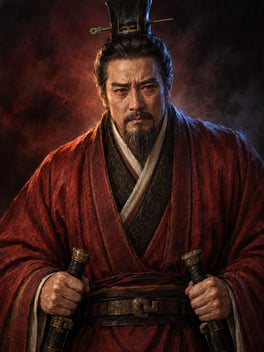
Background to the Meeting
In 211 (the sixteenth year of Jian’an), Liu Zhang, governor of Yi Province, was beset by troubles both inside and out. Externally, Zhang Lu of Hanzhong had been at odds with him for generations, while Cao Cao launched a western campaign into Guanzhong that same year, making Hanzhong a potential springboard for a southward advance by Cao’s forces at any moment. Internally, senior officers in the province, including Pang Xi and Li Yi, had grown arrogant on the strength of their achievements, and Liu Zhang had little effective control over them. Zhang Song, an aide-de-camp, seized the opportunity to urge Liu Zhang to invite Liu Bei, a fellow member of the imperial house, into Shu. Liu Bei’s forces could be used to attack Zhang Lu and intimidate the provincial generals. Liu Zhang therefore sent Fa Zheng to Jing Province with four thousand men to escort him.
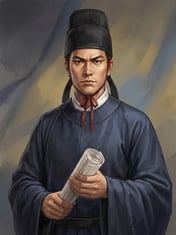
But Zhang Song and Fa Zheng had in fact already secretly thrown in their lot with Liu Bei, revealing to him everything about Yi Province’s mountains, roads, troops, horses, government stores, and treasury. Liu Bei left Zhuge Liang, Guan Yu, and others to guard Jing Province, while he himself led tens of thousands of infantry into Shu. Around the time of his departure, opposition among Liu Zhang’s advisers was fierce. Huang Quan, a chief clerk, laid out the dangers at length, while Wang Lei, an attendant officer, hung himself upside down from the provincial gate to remonstrate with Liu Zhang. Liu Zhang ignored them all. The novel makes Huang Quan’s protest especially impassioned: he clung to Liu Zhang’s robe until his front teeth fell out, heightening the tragic force of the theme that loyal counsel is hard to hear.
The Course of the Meeting
Liu Bei’s route took him first to a point north of Jiangzhou, then north along the Dianjiang River to Fuxian, 360 li from Chengdu. Liu Zhang led more than thirty thousand infantry and cavalry to meet him at Fucheng, accompanied by brightly decorated carriages and canopies. The novel also says he brought more than a thousand carts loaded with provisions, money, and silk. The Biography of Liu Zhang says Liu Zhang ordered supplies to be provided all along the route, so that Liu Bei’s entry into the province was like coming home. The novel goes further, portraying Liu Bei as maintaining strict discipline throughout the journey and taking nothing from the people. Local residents came out to watch, bringing their elderly and young with them. This gave Liu Bei an initial advantage in winning the hearts of the people of Yi Province.
The two men met at Fucheng and were delighted to see one another. The histories say that their officers and soldiers visited back and forth and feasted together for more than a hundred days. Yet under the banquets, currents of intrigue were already stirring. Zhang Song had Fa Zheng convey a message to Liu Bei, while the strategist Pang Tong also advised him in person to attack Liu Zhang at the meeting place and seize Yi Province in one stroke. Liu Bei replied that this was a major matter and could not be undertaken in haste.
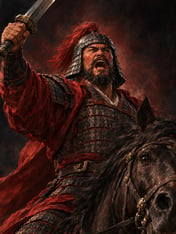
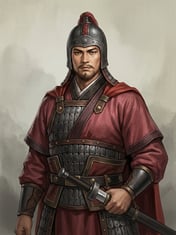
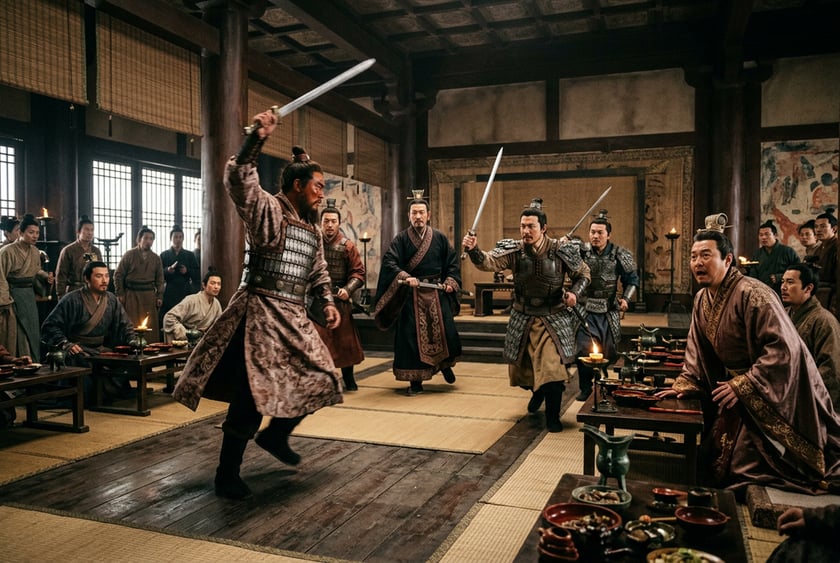
Romance of the Three Kingdoms gives this undercurrent concrete form in a “Hongmen Banquet” scene. Pang Tong has Wei Yan use a sword dance as cover to seek an opportunity to assassinate Liu Zhang, while Liu Feng also draws his sword and joins the dance. Seeing this, Liu Zhang’s subordinates Liu Gui, Leng Bao, and Deng Xian likewise draw their swords and begin dancing. Liu Bei is alarmed; he draws his sword, stands up at the banquet, and orders everyone to put their weapons aside. Liu Zhang also orders his guards to remove their swords, and the crisis is averted. Liu Zhang takes Liu Bei’s hand and weeps with gratitude. After returning to camp, Liu Bei reproaches Pang Tong for trying to put him in an unjust position. Later, Liu Zhang’s generals urge him to return to Chengdu promptly, but Liu Zhang believes Liu Bei is unlike other men and continues to feast with him day after day.
The Outcome
The immediate result of the meeting at Fucheng was a political exchange: Liu Zhang submitted a memorial recommending Liu Bei as Grand Marshal and acting Governor of Sili Province, while Liu Bei submitted a memorial recommending Liu Zhang as General Who Guards the West and acting governor of Yi Province. Liu Zhang also provided Liu Bei with additional troops and ordered him to command the garrison at Baishui Pass and advance north to attack Zhang Lu. Liu Bei’s force thus grew to more than thirty thousand men, with ample carts, armor, weapons, equipment, and supplies. After the meeting, Liu Zhang returned to Chengdu, while Liu Bei headed north to Jiameng.
But after reaching Jiameng, Liu Bei did not immediately attack Zhang Lu. Instead, he widely dispensed favors and cultivated support. In other words, the troops and supplies Liu Zhang had given him ultimately became the resources Liu Bei would use in his later counterattack against Chengdu. The following year, the two sides broke with one another. Liu Bei turned his forces south, captured Fucheng—the site of their former banquets—and made it a base for his advance on Chengdu.
Historical Significance
From the perspective of political history, the meeting at Fucheng was a pivotal moment in Liu Bei's faction’s strategy to “hold both Jing and Yi.” Liu Bei’s refusal to seize Liu Zhang at the meeting place was not simply a matter of moral scruple. On the one hand, he had only just entered Yi Province and was unfamiliar with its people and terrain. If he had suddenly attacked at the banquet, even if he had captured Liu Zhang, he would have found it difficult to bring all of Yi Province under control quickly; instead, he might have provoked fierce resistance from Shu’s clans and military officers. On the other hand, he needed time to establish his reputation in Yi Province and make the most of his status as a member of the imperial house who had come at their invitation. Pang Tong’s later proposal of three strategies—upper, middle, and lower—was a continuation of this approach.
For Liu Zhang, the meeting brought his weaknesses as a regional ruler into sharp focus. He was unable to deal with external threats on his own, could not discern the loyalties of those around him, and turned a deaf ear to loyal advice. He believed that generous gifts and official titles could make Liu Bei a dependable ally, overlooking the fact that Liu Bei himself was a contender with ambitions to rule the realm.
The novel’s adaptation of this history, especially the “sword dance” episode, borrows the classic structure of the Hongmen Banquet to portray Liu Bei as magnanimous and faithful to his principles, while placing more of the moral responsibility for the seizure of Yi Province on strategists such as Pang Tong. This treatment accords with the novel’s broader pro-Liu stance and helps readers find Liu Bei’s later seizure of Yi Province somewhat more understandable as an act he was “forced” to undertake.