







Background
Death of Pang Tong at Luofengpo is usually understood in the context of Liu Bei’s campaign to seize Yi Province and the siege of Luo County. Based on the surviving sources, the most reliable historical starting point is not the fully detailed ambush in the novel, but the account in the Records of the Three Kingdoms: Liu Bei’s forces advanced to besiege Luo County, Pang Tong led troops in an assault on the city, and he was struck by a stray arrow and killed at the age of thirty-six. This brief account confirms the campaign, his role, the cause of death, and his age, but does not say whether the specific location was the Valley of the Fallen Phoenix, nor does it give details of the fighting.
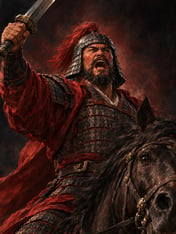
Chapter 63 of Romance of the Three Kingdoms recasts his death as a highly dramatic battlefield tragedy: Pang Tong chooses a narrow road for the advance; Liu Bei and Pang Tong exchange mounts; Zhang Ren lays an ambush in advantageous terrain; the ambushers mistake Pang Tong for Liu Bei because he is riding a white horse; and Pang Tong is ultimately killed by a hail of arrows. Thus, “Valley of the Fallen Phoenix” is not merely a place name, but a narrative setting in which name, omen, and death converge. The difference between the historical account and the novel reminds us that we may discuss how the novel gives the event political significance, but must not treat its ambush details as historical fact.
Main Figures
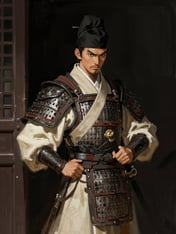
Pang Tong is at the center of this event and was the general tasked with assaulting Luo County during Liu Bei’s campaign. The Records of the Three Kingdoms summarizes his role on the battlefield as “leading troops in an assault on the city” and records that Liu Bei “mourned deeply, and whenever he spoke of him, tears flowed.” The appointment of his father, and Pang Tong’s posthumous grant of the title Marquis Within the Passes and the posthumous name Jinghou, show that this was not the loss of an ordinary officer, but the death of an important adviser and general in Liu Bei’s faction. The Records of the Three Kingdoms does not describe his specific strategic plans, so it would be inappropriate to infer his full command intentions in the actual campaign solely from the novel’s episode in which he “took the narrow road.”
In the historical account, Liu Bei responds with grief and expresses his care through appointing Pang Tong’s father and posthumously honoring Pang Tong himself. The novel goes further, portraying Liu Bei as trying to dissuade Pang Tong and exchanging mounts with him, giving the death the personal tragedy of a lord who could not save his adviser. In the novel, Zhang Ren is depicted as the ambusher, serving the tactical role of identifying the enemy and exploiting the terrain; however, the cited passage from the Records of the Three Kingdoms does not mention any direct connection between Zhang Ren and Pang Tong’s death.
In the novel’s arrangements for the advance, Huang Zhong and Wei Yan lead troops ahead on separate routes, with Wei Yan taking the southern road and Huang Zhong the northern one. The relevant passage also mentions that Wei Yan had earlier captured Leng Bao and that Huang Zhong had sent troops to support him. After news of Pang Tong’s death arrives, Guan Ping carries Liu Bei’s letter to Jing Province; his role is to deliver the news, not to take part in the fighting at the Valley of the Fallen Phoenix in this account. The materials provided do not depict Liu Feng or Liu Xun taking action at the site of the death; in particular, their battlefield actions should not be invented merely because they are listed among the participants.
Key Issues
The first issue is battlefield risk and command responsibility. The historical account says only that Pang Tong was struck by a stray arrow during the assault on the city, indicating that frontline commanders could be exposed to the considerable dangers of siege warfare even when they were not personally leading a charge. The novel, by contrast, rearranges an accidental death into a series of recognizable warnings: Zhuge Liang sends a letter of caution; Liu Bei is struck in a dream; the mount behaves strangely; the place is called the “Valley of the Fallen Phoenix”; and finally, the ambush fulfills the omen. This approach turns the chance events of war into a chain of fate that readers can anticipate but cannot prevent.
The second issue is information and trust. The novel has Pang Tong suspect that Zhuge Liang’s warning stems from a desire to claim credit, and portrays Liu Bei’s anxiety as possibly influenced by a dream and a letter. This brings the relationship between the two advisers into the narrative foreground. But these suspicions belong to the novel’s plot and cannot establish that Zhuge Liang historically intended to prevent Pang Tong from earning merit. The more reliable question for political history is how Liu Bei’s faction relied on different talents on the battlefield in Yi Province, and how the sudden death of a central figure might have changed its decision-making and command structure.
The third issue is the shaping of reputation. The Records of the Three Kingdoms establishes Pang Tong’s standing through a concise account of his death and posthumous honors. Romance of the Three Kingdoms, in contrast, uses the juxtaposition of “Young Phoenix” and “Fallen Phoenix” to portray his death as an event imbued with symbolism and a sense of destiny. Both accounts emphasize the gravity of the loss, but the former focuses on facts and posthumous honors, while the latter emphasizes omens, personal bonds, and tragic effect. Distinguishing between these two forms of expression helps prevent later literary memory from being conflated with the events on the battlefield.
Political Consequences
The consequences that can be directly confirmed from the historical sources begin with Liu Bei’s faction losing an important general and adviser. Liu Bei himself felt deep grief and immediately expressed his mourning and remembrance by appointing Pang Tong’s father and posthumously granting Pang Tong a title and posthumous name. These measures both honored Pang Tong personally and show how a military group used posthumous honors to affirm the standing of meritorious officials and maintain political ties with their families. The surviving accounts provide no specific information about succession arrangements or changes in troop strength, so no subsequent strategic shift should be attributed simply to Pang Tong’s death.
The novel extends the political consequences to the defense of Jing Province: after news of Pang Tong’s death reaches Jing Province, Zhuge Liang decides to go to Liu Bei and entrusts Guan Yu with the important task of defending Jing Province, while also proposing the policy of “resisting Cao Cao in the north and maintaining peace with Sun Quan in the east.” This passage links a frontline loss to the allocation of power in the rear, showing how the novel understands crisis management: the loss of a commander on one battlefield can force a group to reassign key personnel and reaffirm its external relationships. But this is a narrative arrangement in Romance of the Three Kingdoms; the cited historical accounts cannot establish that the transfer and its causes unfolded exactly this way.
Counterfactual Speculation
If Pang Tong had not died during the siege of Luo County, the most cautious speculation is not to claim that Liu Bei would necessarily have taken Yi Province more quickly or easily, but to point out that his decision-making circle might have retained another key figure capable of contributing to planning and frontline command. Pang Tong’s continued service might have affected Liu Bei’s judgment about the pace of the siege, the allocation of troops, and battlefield risks. But the existing Records of the Three Kingdoms does not provide enough information to quantify such an effect or prove that Pang Tong would have changed the outcome of the campaign. Historical counterfactuals should describe possibilities, rather than extrapolate the novel’s single course of events into inevitable history.
If Zhang Ren did indeed use a narrow road to lay an ambush as the novel describes, better reconnaissance, verification of the route, and coordination between the vanguard and main force might in theory have reduced the risk of the commander being ambushed. However, this hypothesis depends on specific tactical details supplied by the novel but absent from the Records of the Three Kingdoms. The counterfactual boundary that can be established is this: Pang Tong’s death did indeed inflict a major personal and political loss on Liu Bei. As for whether the ambush at the Valley of the Fallen Phoenix could have been avoided, or how the campaign in Yi Province would have developed if it had been, the evidence is insufficient for a definite answer.