


Background
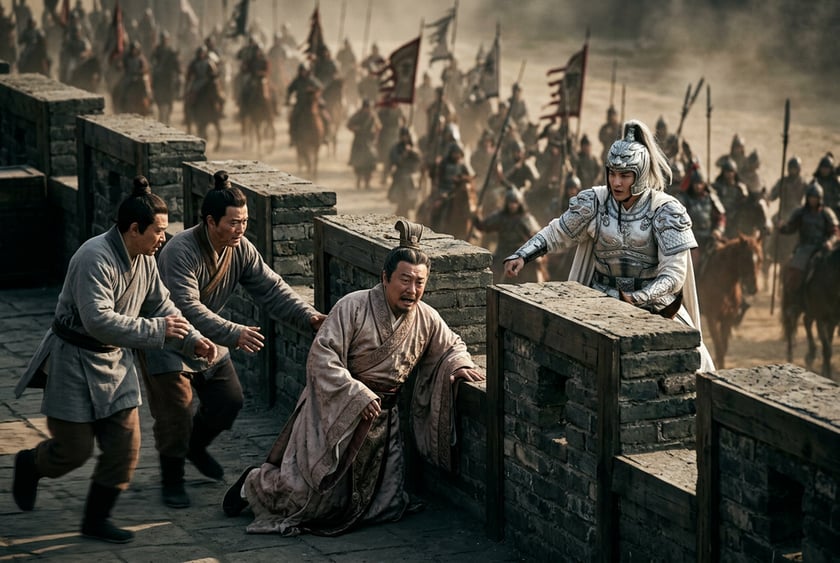
Liu Zhang's Surrender is placed near the end of Liu Bei's Takeover of Yi Province: Liu Bei’s forces had already closed in on Chengdu, and the pattern of outside support had also changed. The novel recounts that after fleeing soldiers entered the city with news, Liu Zhang shut himself away and would not come out; only after learning that Ma Chao and Ma Dai had arrived with troops did he go up to the city wall to look. Ma Chao declared that he had originally taken the field for Zhang Lu but later joined Liu Bei, and threatened to attack the city. This passage compresses military pressure and shifting alliances into a single political crisis: Chengdu’s defenders had not yet vanished, but Liu Zhang could no longer be sure that outside reinforcements would prove reliable.
His surrender is therefore presented not simply as the result of the city’s defenses collapsing, but as a ruler’s weighing of the costs of war. Dong He argues that the city still has more than thirty thousand soldiers and enough provisions and money to last a year, suggesting that continued resistance is materially possible. Liu Zhang, however, points to the fact that his family has governed Shu for more than twenty years “without extending kindness or virtue,” and to the dead and wounded from three years of fighting; he believes he has no right to make the people suffer any longer. The novel distinguishes whether the city can still be defended militarily from whether Liu Zhang has the political standing to continue defending it. This makes “protecting the people” the public justification for his choice and turns that choice into a self-judgment of his responsibilities as a ruler.
Principal Figures
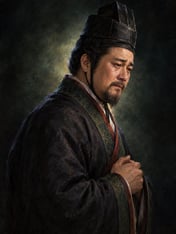
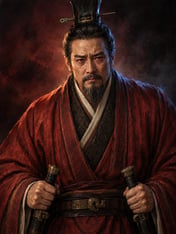
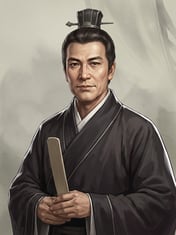
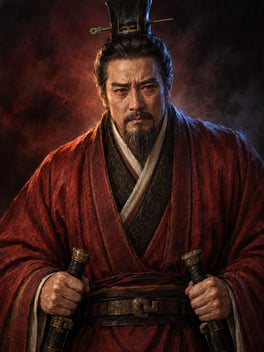
Liu Zhang is at the center of the decision and is also the one under siege. The narrative does not portray him as a hero stubbornly defending the city to the death; instead, it emphasizes his fear, regret, and concern for the people’s suffering. This characterization both explains his surrender and lends his decision moral legitimacy. Liu Bei, by contrast, is in the position of the victor, yet he is shown weeping as he welcomes Liu Zhang and saying, “It is not that I would refuse to act with benevolence and righteousness; circumstances have left me no choice.” Their meeting is therefore not merely an exchange between victor and vanquished, but a transfer of power couched in the language of benevolence and righteousness: Liu Bei gains Yi Province while playing down his responsibility for the war through which he took it.
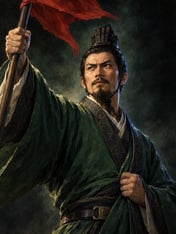
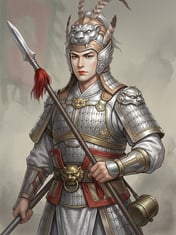
Ma Chao serves as the one applying pressure at the gates, while Jian Yong turns military advantage into political assurances that Liu Zhang can accept. The novel says that Jian Yong entered the city and explained that Liu Bei was “magnanimous and had no intention of harming him”; only then did Liu Zhang decide to surrender. This makes persuasion and assurances of safety part of the surrender process. In the subsequent arrangements, Zhuge Liang is named as military adviser and Fa Zheng is appointed Administrator of Shu Commandery, indicating that they occupy central roles in the new regime’s strategy and local governance, respectively. Xu Jing, Li Yan, Huang Quan, Liu Ba, Fei Guan, Qiao Zhou, and others appear in the text among the surrendered officials and on the roster of officials in the new order; this passage alone does not justify inventing specific acts of persuasion for any of them.
Core Issues
The first issue is whether “protecting the people” can be equated with preserving a regime. Liu Zhang presents surrender as a way to stop the killing and bring stability to the people inside the city. Dong He’s counterargument points to another possibility: since soldiers and provisions remain, resistance might continue. The novel gives no direct account from the city’s residents and does not quantify the actual losses that continued fighting or surrender would entail. Liu Zhang’s motive is therefore both his own explanation of his decision and the moral position the narrative assigns him. Analysis should distinguish between “how the text justifies the decision” and “whether the actual motives of the parties have been established as historical fact.”
The second issue is how surrender is formalized. Jian Yong enters the city and conveys assurances; Liu Zhang then leaves the city carrying his seals of office and administrative records, after which power is handed over. Together, these acts form a continuous ceremony of transition from military victory to administrative takeover. Seals of office symbolize the authority to appoint officials, while the records contain administrative information needed for governance. Liu Bei’s receipt of both signifies that the victor has not only occupied the city but also taken over the machinery of the former regime. Through this procedure, the text emphasizes an orderly transfer of power rather than depicting the fall of Chengdu as indiscriminate plunder.
The third issue is how the victor incorporates the former officials. Liu Bei addresses Liu Zhang as “Jiyu” and conveys personal affection by clasping his hand and weeping; he then assigns titles and ranks and grants offices to the officials who surrendered. Personal courtesies and institutional integration work together to create a political language that brings the defeated into the new order. But rewards do not mean that the parties hold equal power: Liu Zhang is relocated to Gong’an in Nan Commandery, Liu Bei becomes the new ruler, and the former officials are retained within a framework in which the victor reallocates positions.
Political Consequences
In the novel, the immediate result is that Liu Bei assumes the position of Governor of Yi Province, while Liu Zhang hands over his seals of office and administrative records and moves to Gong’an. Yi Province’s officials enter the new regime through appointments and rewards. This arrangement both avoids completely dismantling the existing administrative network and binds officials’ careers to the new ruler. Liu Bei’s broad promotion of officials who surrender reflects a strategy of recruiting talent and stabilizing local order. But this shows only the political program constructed by the novel; it cannot establish that every official in reality made the transition of power in the same way or with the same willingness.
The narrative also places relief for the people and rewards for the army after the transfer of power: opening the granaries to provide relief is presented as an effort to win popular support, while the closing words, “the army and people were all delighted,” provide a sense of successful integration under the new rule. This, however, is the novel’s summarizing judgment, not independent testimony from different social groups. The material is also insufficient to establish whether postwar governance remained effective or what Liu Zhang and his family’s circumstances were after their relocation. In particular, although the list of participants includes several former officials, the cited passage does not explain the specific fate of Wang Lei and others; information beyond the list should not be treated as fact confirmed by this passage.
Counterfactual
If Liu Zhang had followed Dong He’s advice and continued resisting, the soldiers and provisions still in the city might have prolonged the siege. But “enough to last a year” is only Dong He’s estimate; it does not mean that provisions could necessarily be distributed smoothly, that reinforcements would arrive, or that Liu Bei would halt his attack. A prolonged war might have increased military and civilian casualties and raised the likelihood of factional division within the city or intervention by outside forces. Conversely, if the defenders received new reinforcements, their terms for negotiation might have improved. The text does not provide complete information about the defenses, supply lines, or the forces on each side, so it supports only conditional possibilities, not any outcome as inevitable.
If Liu Bei had not used Jian Yong to convey assurances of safety, Liu Zhang might have found it harder to accept an arrangement that involved surrendering his seals of office and administrative records as well as his personal freedom; that does not mean he would necessarily have fought to the end. The key to the counterfactual is not simply whether the city fell, but whether the victor could turn military advantage into credible political guarantees. The novel’s answer is to depict a relatively smooth takeover through a welcoming reception, appointments, relief for the people, and relocation. Whether this model proceeded just as smoothly in actual history cannot be determined from the passages cited here. The outcome of the event should therefore remain uncertain at the level of historical evidence: what can be established is how the novel narrates the surrender and its political significance, not the full reality of the process on the basis of these three passages alone.