Background
In the narrative of Romance of the Three Kingdoms, the Death of Empress Fu is not an isolated case of palace punishment but a concentrated eruption of the unequal power relationship between Emperor Xian of Han and Cao Cao. Cao Cao is portrayed as the Duke of Wei, commanding the court’s military and political power. Although Emperor Xian still occupies the throne, after learning that Cao Cao intends to proclaim himself king, he can only weep in private to Empress Fu. She proposes writing to her father, Fu Wan, to contact Sun and Liu for outside support, attempting to resist Cao Cao through the network of family ties within the palace. The key issue here is not simply whether Empress Fu contemplated political action, but that the imperial couple already believed most of those around them to be Cao Cao’s informants. Even sending a letter required the services of the eunuch Mu Shun, revealing the vast gap between the emperor’s nominal authority and his actual power to rule.
The leak of the secret letter brings the story to its immediate turning point. Cao Cao learns of the message in advance and intercepts Mu Shun at the palace gate. After the letter is discovered, he extends the operation to Fu Wan’s residence, arrests members of the Fu family, and orders Xi Lü to enter the palace and take the empress’s seal and insignia. The novel thus links private plotting, the involvement of family members, a search at the palace gate, and the seizure of an imperial symbol into a single chain of cause and effect. It is important to stress that the cited passages provide the literary narrative of Romance of the Three Kingdoms. These details cannot all be treated as independently verified historical facts on the basis of these passages alone. Any analysis of the Death of Empress Fu should therefore distinguish between the novel’s portrayal of events and the historical facts themselves.
Main Figures
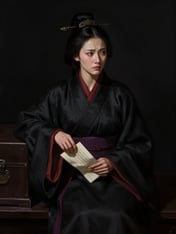
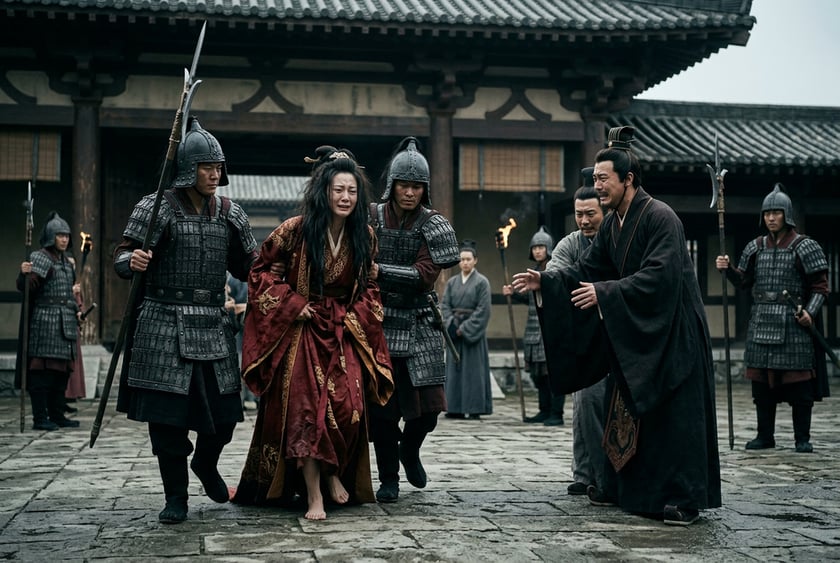
Empress Fu occupies two roles at once: victim and political actor. She does not merely wait passively for fate to overtake her. Faced with the growing power of Cao Cao, she takes the initiative in proposing that she contact Fu Wan and regards Mu Shun as someone she can trust with the secret letter. Yet the novel immediately shows the limits of her room for action: the letter is discovered, her family is arrested, and she is forcibly dragged from hiding. In the end, she conceals herself behind a partition in the pepper chamber and still begs Hua Xin to spare her life. Her shift from proposing resistance to pleading for survival is not simply a reversal in character; it is a dramatic portrayal of how the imbalance of power forces an individual to change course in a moment of crisis.
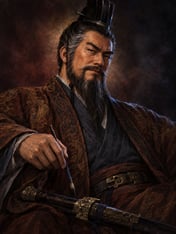
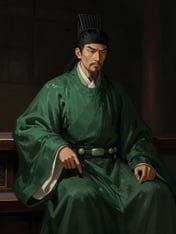
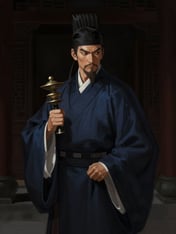
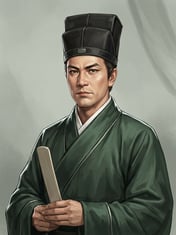
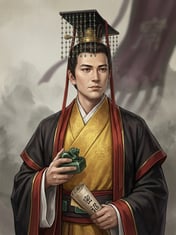
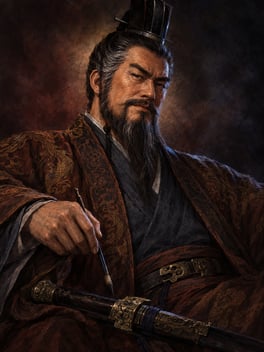
In these passages, Cao Cao is the organizer of events and the center of power. His advantage lies not only in ordering soldiers to surround the residence and sending men into the palace, but also in his control of the channels of information: Mu Shun is searched as soon as he leaves the palace, the Fu household is promptly arrested, and Xi Lü is ordered to take the empress’s seal and insignia. Xi Lü and Hua Xin carry out different parts of the operation: the former enters the palace to take the seal and insignia, while the latter leads soldiers in a search of the palace and brings Empress Fu out. Emperor Xian of Han is an important witness, but he has almost no ability to alter events. He embraces Empress Fu and weeps, then challenges Xi Lü, but after she is taken away, he can only continue to endure his helplessness. Although Fu Wan does not appear directly in the cited passages, as Empress Fu’s father and the intended recipient of her letter, he remains central to the crisis and its repercussions.
Central Issues
The first issue is the separation of the symbols of imperial authority from the actual power to compel obedience. Emperor Xian can still speak and express his grief, but he cannot prevent troops from entering the palace or protect the empress. Cao Cao, meanwhile, does not need to prove his authority in these scenes by openly deposing the emperor. By controlling the army, the palace gates, the attendants, and the officials charged with carrying out orders, he directly determines whether the empress may remain in the palace. Taking the seal and insignia is therefore not merely the seizure of a ceremonial object; it turns the empress’s status into a political matter that the Duke of Wei can dispose of at will. The novel presents a paradox: the emperor remains the nominal center of the state, yet cannot ensure the safety of members of the imperial family.
The second issue is how family ties can become a political liability. Empress Fu’s attempt to use her father, Fu Wan, to establish outside contacts shows that family networks are both a resource in palace power struggles and a channel through which vulnerabilities are exposed. Once the secret letter falls into Cao Cao’s hands, the reprisals expand from the person who wrote it to the Fu family as a whole. The third issue is the conflict between loyalty and surveillance. Mu Shun prides himself on his loyalty, but the novel has Cao Cao already supplied with informants and able to trace the letter, showing that private pledges cannot withstand systematic surveillance. The tragedy of the episode lies not only in the failure of the plot, but also in the rebels’ near-total lack of reliable access to information and safe political alliances.
Political Consequences
Among the immediate consequences depicted in the novel, Empress Fu loses her seal and insignia, is hunted down, and is taken away from Emperor Xian. Fu Wan and members of the Fu family are also implicated because of the letter. The emperor is left with nothing but tears and protests, showing that there is no effective counterweight to power within the palace. In narrative terms, the Death of Empress Fu makes Cao Cao’s domination of the Han imperial house concrete: it is no longer an abstract balance of power, but the direct disposition of the empress, the emperor, and the family of an imperial consort. It also further establishes Emperor Xian as a witness rather than a decision-maker. However, the passages provided do not describe in full what happens to Empress Fu after she is taken away; the outcome is marked as “unclear.” The analysis should not fill in the details of her death or treat explanations outside the novel as conclusions established by the cited passages.
In Chapter 78, Cao Cao dreams that Empress Fu, Fu Wan, and the others appear before him covered in blood and demanding vengeance; the hall shakes, and Cao Cao falls ill. This scene turns political violence into a moral and psychological consequence. It does not provide empirical evidence about the circumstances of Empress Fu’s death, but instead offers a symbolic portrayal of violence’s aftermath: even when the oppressed can no longer speak in real politics, they enter the ruler’s dreams as vengeful spirits. Cao Cao’s words when he refuses to hold a Daoist ritual—“Having offended Heaven, there is no point in praying”—also shift the narrative from the contest for power to questions of guilt, fear, and Heaven’s will. The political consequences, then, are not limited to the elimination of opponents; they also include the moral shadow that the ruler must face. But this is literary expression and cannot be equated directly with the actual psychological state of a historical figure.
Counterfactual Analysis
If Mu Shun had succeeded in delivering the letter, Empress Fu might have given Fu Wan and outside forces more time to establish contact, and Cao Cao’s actions might have faced more complex political resistance. But this counterfactual can show only that keeping the information secret might have changed the pace of the crisis. It cannot prove that Sun and Liu would necessarily have responded, or that the Fu family’s plan would have been enough to overturn the balance of power. The novel provides no details of Fu Wan’s concrete preparations, promises of support from allies, or available troops. Empress Fu’s proposal in the letter to join forces with Sun and Liu confirms only what she hoped to do; it does not establish that an alliance had already been formed.
If Emperor Xian had possessed an independent force capable of restraining the palace troops and protecting his attendants and the empress, the cost of Cao Cao’s search of the palace and seizure of the seal and insignia might have been higher. If Xi Lü and Hua Xin had refused to carry out the orders, the operation might have been delayed or contested. Yet the text shows precisely the opposite: orders are swiftly translated into armed action, and the emperor’s protests cannot change the outcome. These counterfactuals therefore reveal the absence of institutional checks, rather than reducing responsibility to the hesitation of any one individual. Taken together, the Death of Empress Fu in Romance of the Three Kingdoms is both a failed palace revolt and a symbol of the Han court’s nominal authority being overwhelmed by actual coercive power. The specific historical circumstances and outcome must still be treated within the limits of the evidence and should not be determined on the basis of the novel’s plot alone.