Cao Wei · Emperor
Emperor Xian of Han
courtesy name 伯和 · also called 汉献帝 · 181–234
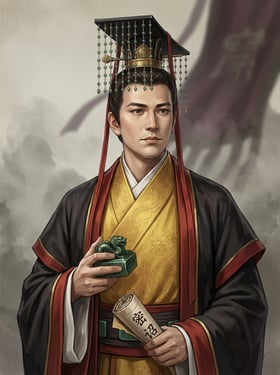
Emperor Xian of Han was suspicious by nature—toward Cao Cao he felt 'as though a thorn were at his back'—yet he pinned his hopes on Liu Bei, thinking 'now I have help.' He was fearful and anxious but capable of secret scheming, though in the face of overwhelming power he often showed the timid helplessness of one who trembles, beats his breast in grief, and collapses weeping to the ground, so that in the end he could only say, 'How dare I not obey.'

Life
In the novel: 24 chapters · In the Records: 10 volumes
Life181–234
196 CE (Jian'an 1)
199 CE (Jian'an 4)
213 CE (Jian'an 18)
2 more events
213 CE (Jian'an 18)
214 CE (Jian'an 19)
- Death of Empress FuXuchangWitness
216 CE (Jian'an 21)
220 CE (Huangchu 1)
Allegiance
- Cao Wei
- Hatched: dated by chapter
- Life event
- Death
List all 5 stops
On the boards
Compare with someone →Where this person ranks on each board.
Who they were
Character profile
- Character
- Emperor Xian of Han was suspicious by nature—toward Cao Cao he felt 'as though a thorn were at his back'—yet he pinned his hopes on Liu Bei, thinking 'now I have help.' He was fearful and anxious but capable of secret scheming, though in the face of overwhelming power he often showed the timid helplessness of one who trembles, beats his breast in grief, and collapses weeping to the ground, so that in the end he could only say, 'How dare I not obey.'
- Manner of speech
- Emperor Xian's manner of speech was respectful and courteous in court deliberations, but in his inner monologues it was full of indignation. He was adept at winning men over with words like 'We recall your merit, sir, in rescuing the imperial carriage at the western capital,' and he once invoked the ancestral enterprise of Gaozu, who rose in revolt by slaying the serpent, and declared that 'auspicious omens and prophetic charts are all empty and false things.'
- Life
- Emperor Xian was the youngest son of Emperor Ling, the Prince of Chenliu, and was later installed by Dong Zhuo as Emperor Xian. In the first year of the Huangchu era he abdicated in favor of Cao Pi and was enfeoffed as Duke of Shanyang; he died in the third month of the second year of the Qinglong era, and was given the posthumous title Filial and Presented Emperor of Han.
- Anecdotes
- In the course of his flight Emperor Xian several times answered on behalf of the young emperor; on first meeting Dong Zhuo he was neither flustered nor afraid, and Dong Zhuo, marking his cleverness and composure, 'secretly wondered at him, and already harbored the intent to depose and replace.' He suffered hunger and hardship and sighed, 'Long have I been bullied by these two traitors,' and in the first year of the Jian'an era he moved the capital to Xu. He issued a secret decree, promulgated the girdle edict, and witnessed the murder of Consort Dong without being able to save her, until at last, pressed by his ministers, he abdicated in favor of Cao Pi.
Historical Record
Liu Xie was a son of Emperor Ling of Han. After Dong Zhuo entered the capital, he deposed the young emperor and installed Liu Xie, the Prince of Chenliu, as emperor; he became known as Emperor Xian. After Dong Zhuo’s death, warlords including Li Jue and Guo Si fought among themselves, and Emperor Xian was for a time at their mercy. When Li Jue and Guo Si turned against each other, the court fell into turmoil. After Zhang Ji brokered a settlement, the emperor was able to leave Chang'an, but was pursued at Caoyang. He crossed the river to Anyi and eventually made his way back to Luoyang. The accounts portray not an emperor able to govern independently, but a ruler repeatedly held captive by armies and driven from place to place.
In the first year of the Jian'an era, Emperor Xian returned to Luoyang from Hedong. Cao Cao heeded Xun Yu’s proposal to welcome and serve the emperor, traveled to Luoyang in person to receive him, and escorted him to move the capital to Xu County. The emperor appointed Cao Cao Grand General, enabling him to wield political influence by controlling the court. Thereafter, Emperor Xian successively granted Cao Cao titles including Chancellor, Duke of Wei, and King of Wei. Cao Cao was authorized to enter court without hurrying and to wear his sword and shoes in the palace, and was eventually elevated to King of Wei. In the first year of the Huangchu era, Emperor Xian abdicated in favor of Cao Pi, King of Wei, and became the Duke of Shanyang. The Duke of Shanyang died in the second year of the Qinglong era. Emperor Ming of Wei posthumously honored him as Emperor Xiaoxian of Han and buried him according to Han rites.
In the Novel
Romance of the Three Kingdoms portrays Liu Xie as a perceptive young emperor, constrained by the chaos of the age. The novel says he was the second son of Emperor Ling, with the courtesy name Bohe; after He Jin’s death, eunuchs seized him and the young emperor and forced them to flee. While traveling by night on Beimang, Liu Xie judged that they should not linger, led his elder brother by the light of fireflies, and then openly identified the young emperor at Cui Yi’s manor, showing presence of mind in a crisis. Historical accounts record that he was the Prince of Chenliu, the younger son of Emperor Ling, and that Dong Zhuo deposed one emperor and installed another. But the firefly-guided journey and the exchange at the manor are specific scenes added by the novel.
The novel emphasizes Liu Xie’s courage when he first meets Dong Zhuo. When Dong Zhuo asks whom he has encountered on the road, Liu Xie asks in return whether he has come to protect the emperor or seize him, and orders him to dismount. Dong Zhuo is secretly astonished and begins to consider deposing the emperor. Later, Dong Zhuo reads an edict in court, deposing the young emperor and installing Liu Xie; the novel gives Liu Xie the courtesy name Bohe and says he is nine years old. Compared with the historical accounts’ brief record that Dong Zhuo deposed one emperor and installed Emperor Xian, the novel adds a dramatic scene in which Liu Xie questions Dong Zhuo to his face and displays his intelligence through his words.
During the turmoil caused by Li Jue and Guo Si, the Liu Xie of the novel is repeatedly controlled by the armies. Although he still issues edicts and appoints officials as emperor, he is unable to determine the course of events. At Meiwu, facing a lack of food and rotten provisions, he angrily denounces Li Jue for deceiving the emperor. On the way out of Chang'an, he personally identifies himself at Baling Bridge and orders the guards to let him pass. The novel thus emphasizes an image of Liu Xie in whom dignity and helplessness coexist. The specific dialogue and bridge episode are literary inventions; historical accounts describe the emperor being driven from place to place amid conflicts among warlords.
Key Relationships
Liu Xie’s relationship with his elder brother, Liu Bian, spans the period before and after his accession. Historical accounts say that Dong Zhuo deposed the young emperor and installed Emperor Xian; the novel gives a more detailed account of the brothers fleeing together and Liu Xie looking after his elder brother.
Dong Zhuo was pivotal in changing Liu Xie’s fate. Historical accounts record that Dong Zhuo deposed the young emperor and installed Emperor Xian. The novel goes further, saying that Liu Xie’s calm response prompted Dong Zhuo to consider deposing the emperor, highlighting the contrast between Liu Xie’s personal bearing and Dong Zhuo’s power.
After Cao Cao welcomed Emperor Xian and moved the court to Xu County, the court’s nominal appointments became bound up with Cao Cao’s power. Emperor Xian successively granted him important offices and titles, and ultimately abdicated in favor of Cao Pi. The Liu Xie depicted in historical accounts was thus both a ruler of the Han dynasty and the central figure in name in the transition from the Han to Wei.
Defining Scenes
Flight by night on Beimang. The novel depicts Liu Xie and the young emperor hiding by a river and using fireflies to find their way, before identifying themselves at Cui Yi’s manor. This episode reworks the historical backdrop of Dong Zhuo restoring the emperor and the imperial household’s dispersal amid turmoil into a story of a young emperor maintaining his composure in adversity. (Unique to the novel)
Questioning Dong Zhuo by the roadside. Liu Xie asks Dong Zhuo whether he has come to protect the emperor or seize him, and orders him to dismount. The novel uses this question to show Liu Xie’s quick wit and gives Dong Zhuo’s intentions to depose the emperor a striking dramatic beginning. (Unique to the novel)
The winding return to Luoyang and the move to Xu County. Historical accounts say that Emperor Xian endured the turmoil in Chang'an and moved east to Luoyang; in the first year of the Jian'an era, Cao Cao welcomed him and escorted him to Xu County. The journey from Luoyang to Xu County continued the displacements caused by war and marked a shift in the balance of power at court.
Abdication and posthumous honors. After abdicating, Emperor Xian became the Duke of Shanyang. After his death, Emperor Ming of Wei posthumously honored him as Emperor Xiaoxian of Han and buried him according to Han rites. His passage from emperor to Duke of Shanyang, followed by the posthumous title of a Han emperor, brought his life to a close.
Quotes
60 lines in the books · 3 featured
「方離狼窩,又逢虎口,如之奈何?」
It vividly depicts Emperor Xian of Han's tragic fate—drifting and helpless amid an age of chaos.
「朕自即位以來,奸雄並起:先受董卓之殃,後遭傕、汜之亂。常人未受之苦,吾與汝當之。後得曹操,以為社稷之臣;不意專國弄權,擅作威福。朕每見之,背若芒刺。今日在圍場上,身迎呼賀,無禮已極!早晚必有異謀,吾夫婦不知死所也!」
It profoundly reveals Emperor Xian of Han's resentment and helplessness toward Cao Cao's monopoly of power, a portrait of his inner struggle.
「朕願將天下禪於魏王,幸留殘喘,以終天年。」
It marks the end of the Han dynasty—Emperor Xian of Han's reluctant act of abdicating the throne to Cao Wei.
- Family
- Lord & vassal
- Enemies
- Other
History vs. novel
6 points · 5 novel-only
| History | Novel |
|---|---|
| Flight to Be mang MountainNovel only | |
| — | The novel depicts the young emperor and the Prince of Chenliu, Emperor Xian of Han, fleeing to Be mang Mountain, where they suffer from hunger and cold, embrace one another and weep, then follow the glow of fireflies to find a way forward, before Cui Yi rescues them. ch. 3 |
| Dong Zhuo Deposes and Installs EmperorsNovel only | |
| — | In the novel, when Emperor Xian of Han faces Dong Zhuo’s questions, he answers calmly. Dong Zhuo is secretly astonished and begins to consider deposing the emperor and installing another; later, Dong Zhuo deposes the young emperor and enthrones the nine-year-old Emperor Xian of Han. ch. 3 |
| Humiliated at MeiwuNovel only | |
| — | The novel depicts Li Jue moving Emperor Xian to Meiwu and cutting him off from his attendants, leaving him without enough food. When the emperor asks for grain, he is angrily rebuked and can only lower his head and weep. ch. 13 |
| Hunting at XutianNovel only | |
| — | The novel depicts Cao Cao hitting a deer while hunting at Xutian. The assembled officials mistake it for a shot by the Son of Heaven and shout “Long live!” Cao Cao rides his horse in front of Emperor Xian to receive their cheers, leaving everyone aghast. ch. 20 |
| Girdle EdictNovel only | |
| — | The novel depicts Emperor Xian biting his fingertip and writing a secret edict in blood, then secretly sewing it into a jade girdle and using it to deliver the edict to Dong Cheng as part of a plot against Cao Cao. ch. 20 |
| Pressured to AbdicateNovel embellishes | |
Historical records state that, because public opinion favored Wei, Emperor Xian summoned the high officials, announced the matter at the High Temple, and sent Zhang Yin, bearing an imperial tally, to present the imperial seal and ribbons, formally abdicating in favor of Cao Pi, King of Wei. vol. 2 | The novel portrays the abdication as a scene in which officials urge and pressure the emperor while Wei troops are present. Emperor Xian weeps and says he is willing to yield the realm in order to preserve his life, then orders someone to draft an edict and present the imperial seal. ch. 80 |
- Flight to Be mang MountainNovel only
- Novel
The novel depicts the young emperor and the Prince of Chenliu, Emperor Xian of Han, fleeing to Be mang Mountain, where they suffer from hunger and cold, embrace one another and weep, then follow the glow of fireflies to find a way forward, before Cui Yi rescues them.
ch. 3
- Dong Zhuo Deposes and Installs EmperorsNovel only
- Novel
In the novel, when Emperor Xian of Han faces Dong Zhuo’s questions, he answers calmly. Dong Zhuo is secretly astonished and begins to consider deposing the emperor and installing another; later, Dong Zhuo deposes the young emperor and enthrones the nine-year-old Emperor Xian of Han.
ch. 3
- Humiliated at MeiwuNovel only
- Novel
The novel depicts Li Jue moving Emperor Xian to Meiwu and cutting him off from his attendants, leaving him without enough food. When the emperor asks for grain, he is angrily rebuked and can only lower his head and weep.
ch. 13
- Hunting at XutianNovel only
- Novel
The novel depicts Cao Cao hitting a deer while hunting at Xutian. The assembled officials mistake it for a shot by the Son of Heaven and shout “Long live!” Cao Cao rides his horse in front of Emperor Xian to receive their cheers, leaving everyone aghast.
ch. 20
- Girdle EdictNovel only
- Novel
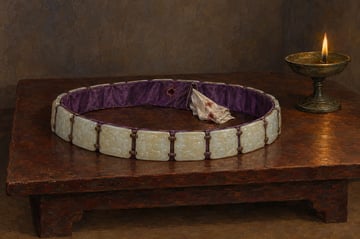
The novel depicts Emperor Xian biting his fingertip and writing a secret edict in blood, then secretly sewing it into a jade girdle and using it to deliver the edict to Dong Cheng as part of a plot against Cao Cao.
ch. 20
- Pressured to AbdicateNovel embellishes
- History
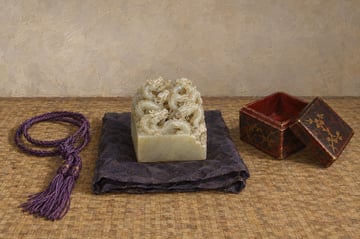
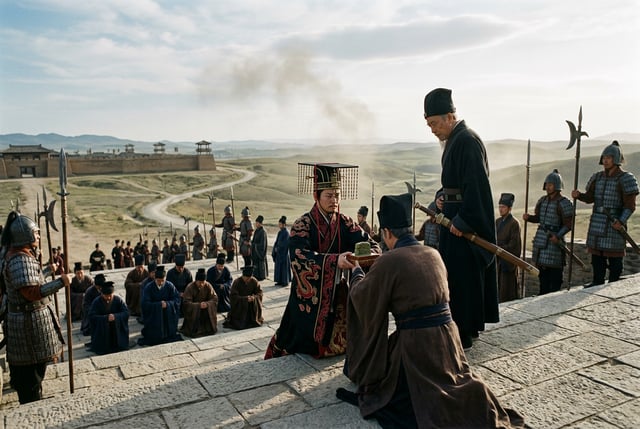
Historical records state that, because public opinion favored Wei, Emperor Xian summoned the high officials, announced the matter at the High Temple, and sent Zhang Yin, bearing an imperial tally, to present the imperial seal and ribbons, formally abdicating in favor of Cao Pi, King of Wei.
vol. 2
- Novel
The novel portrays the abdication as a scene in which officials urge and pressure the emperor while Wei troops are present. Emperor Xian weeps and says he is willing to yield the realm in order to preserve his life, then orders someone to draft an edict and present the imperial seal.
ch. 80
Combat
On the field
Duels, kills and executions as the texts tell them, counted separately for the Records and the Romance.
Stratagems
Plans this person devised or saw through, as the texts tell them.
- Records
- 1 carried out · 1 worked · 0 turned down · 0 seen through
- RecordsFeign Flight to Lure the Enemy into an AmbushDeceptionWorkedJuan 8「使和偽逃卓,潛出武關詣虞」
Events
Events (18)
Battles and events the texts place this person in, by date.
Other events
- 189Assassination of He Jin
- 189Dong Zhuo's Coup
- 192Turmoil of Li Jue and Guo Si
- 195Li Jue and Guo Si's Armed Conflict
- 195The Emperor's Return to the East
- 196Cao Cao Escorts the Emperor and Moves the Capital to XuWitness
- 198Duan Wei and Wu Xi Execute Li Jue and Guo Si
- 198Mi Heng Beats the Drum and Reviles Cao Cao
All 18
- 199Emperor Xian Recognizes Liu Bei as Imperial Uncle
- 200Guan Yu Surrenders to Cao Cao
- 200Girdle Edict
- 213Establishment of the Wei StateVictim
- 213Cao Cao Elevated to Duke of WeiWitness
- 214Death of Empress FuWitness
- 216Cao Cao Created King of WeiWitness
- 220Cao Pi Supplants the HanVictim
- 220Cao Cao Dies and Emperor Wen of Wei Ascends the Throne
- 220Abdication of Emperor Xian of Han
Famous objects
Places
- Was at
- Hedong CommanderyRecords
Continue
Cao Pi Supplants the Han
Relationship timeline10 entries ▸
History · vol. 1
- Cao Cao§97
Kin
Installed Lord Gong’s middle daughter as empress
Novel · ch. 3
- Dong Zhuo§13
Rival
Scolded him and asked, “Have you come to protect the emperor, or to abduct him?”; from beginning to end, he did not say anything inappropriate
Novel · ch. 4
- Liu Bian§7
Sibling
brothers; the Prince of Chenliu succeeded the Young Emperor to the throne
Novel · ch. 13
- Li Jue§11
Betrayer
Seized the Son of Heaven and brought him to camp, then moved him to Meiwu and placed him under house arrest; supplied him with rotten meat and spoiled grain
- Guo Si§11
Betrayer
He entered the palace, abducted palace women, and set fire to the palace buildings; he also abducted the high ministers
Novel · ch. 20
- Fu Shou§12
Spouse
returned to the palace, wept before the empress, and complained of Cao’s tyranny
- Dong Cheng§14
Friend
Led Cheng into the Hall of Meritorious Officials at the Imperial Ancestral Temple to view the portrait of Gaozu; bestowed a robe and belt and whispered, “When you return, examine them closely; do not disappoint my wishes”
Novel · ch. 24
- Fu Shou§11
Spouse
The emperor privately discussed the matter of Dong Cheng with Empress Fu in the inner palace
Spouse
The emperor visited her; she was already five months pregnant
All 10
Loading…
Inner monologues · AI-generated3 monologues ▸
- On the day of the abdication, the officials stood before me and armored soldiers stood at my side. I held the jade seal
- I often reflect that, as Son of Heaven, I ought to honor the ancestral temples and bring peace to the people. Yet the li
- When I was young, I lived in the palace and could not have known all that went on in the world. I remember the night at