Overview
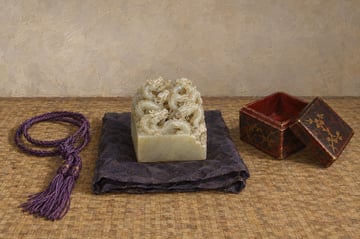
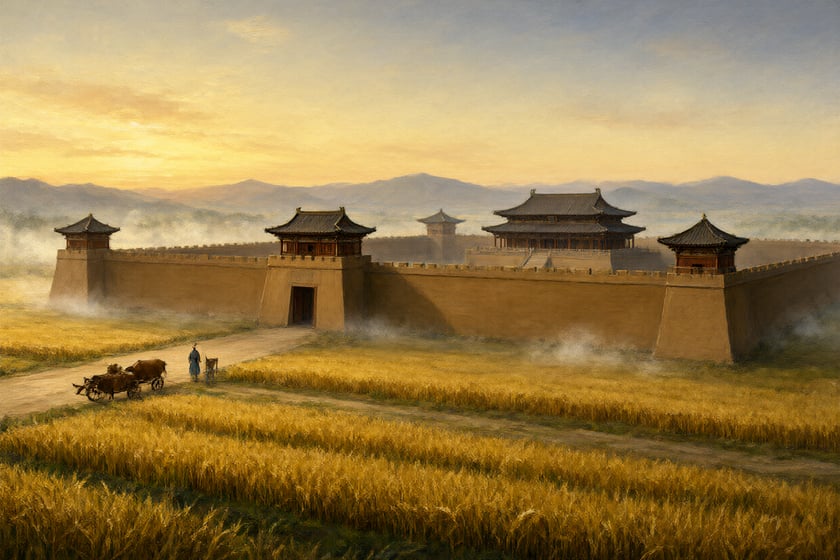
Xu County, in Yingchuan Commandery of the Eastern Han, lay east of present-day Xu Chang in Henan Province. In the first year of Jian’an (196), Cao Cao received Emperor Xian of Han and established the capital there. From then on it was commonly called “Xu,” and remained the seat of the Han court for more than twenty years, until the abdication of Han in favor of Wei. The area around the city was broadly known as “the environs of Xu”; Cao Cao’s earliest tuntian farming colonies were established there. In the second year of Huangchu (221), Emperor Wen of Wei renamed Xu County Xu Chang County, which, together with Chang'an, Qiao, Ye, and Luoyang, was counted among the Five Capitals. Xu was both the emperor’s residence and Cao Cao’s strategic heartland; after the founding of Wei, it also long served as a station for imperial tours to the east and military campaigns in the southeast.
History
In the first year of Jian’an, Cao Cao first defeated the Yellow Turbans in the Xu area. In the seventh month of that year, Emperor Xian returned to Luoyang, but the city lay in ruins, and Dong Zhao and others urged Cao Cao to move the capital to Xu. Xun Yu, citing how Duke Wen of Jin had received King Xiang of Zhou and won the allegiance of the feudal lords, also urged Cao Cao to welcome the emperor. Dong Zhao then proposed reassuring Yang Feng, whose troops were stationed at Liang: they could claim that the capital lacked grain and that the court needed to move temporarily to nearby Luyang for provisions. In this way, the imperial carriage was transferred to Xu. In the ninth month, the imperial carriage traveled east through Huanyuan Pass, and Cao Cao was appointed General-in-Chief. Since the emperor’s move west, court affairs had fallen into disorder; only then were the institutions of the imperial ancestral temples and state altars reestablished.
That same year, Cao Cao adopted the proposal of Zao Zhi and Han Hao to recruit commoners for tuntian farming in the environs of Xu. The farms yielded a million hu of grain in a year, and from then on agricultural offices were established throughout the commanderies and states. The official in charge was Ren Jun, the Director of Agriculture. Years later, Deng Ai recalled that it was the grain accumulated through tuntian farming at Xu that had enabled Cao Cao to bring the whole realm under control.
As the seat of the Han court, Xu drew people from all quarters. In the third year of Jian’an (198), after Liu Bei returned to Xu with Cao Cao following the defeat of Lü Bu, he was appointed General of the Left. Cao Cao treated him as an equal, sharing his carriage when they went out and the same mat when they sat together. In the fourth year of Jian’an (199), Zhang Hong arrived at the palace in Xu bearing a memorial from Sun Ce and was retained as Attendant Censor. The General of Chariots and Cavalry Dong Cheng claimed to have received a secret edict from Emperor Xian hidden in the emperor’s girdle, ordering Cao Cao’s death; Liu Bei took part in the plot. Cao Cao once told Liu Bei that the only heroes in the realm were the two of them. In the first month of the fifth year of Jian’an (200), the plot by Dong Cheng and the others was exposed, and they were executed. That same year, while the armies faced off at Guandu, Liu Pi of Runan rebelled in support of Yuan Shao and raided the environs of Xu. Yuan Shao sent Liu Bei to assist him, but Cao Ren defeated them. After Cao Cao pacified Jizhou, he sent Zhu Ling with five thousand newly recruited troops from Jizhou to garrison south of Xu. The renowned physician Hua Tuo repeatedly refused summonses. Cao Cao had him imprisoned and interrogated in Xu County, and eventually put him to death.
In the first month of the twenty-third year of Jian’an (218), Cao Cao was in Ye, leaving his chief clerk Wang Bi in charge of the troops and affairs in Xu. The Court Physician Ji Ben, along with the Minister of the Household Geng Ji, the Director of Retainers Wei Huang, and Jin Yi of Jingzhao, plotted to kill Wang Bi, seize the emperor, attack Wei, and support Liu Bei from the south. Ji Ben’s son Ji Miao and others led over a thousand men in a nighttime assault, setting fire to the gates as they attacked. Jin Yi sent agents inside to aid them, and an arrow struck Wang Bi in the shoulder. At dawn, the attackers scattered. Wang Bi and Yan Kuang, the Director of Agriculture for Yingchuan, put down the rebellion and executed Geng Ji and the others. Wang Bi died of his wounds more than ten days later. The following year, when Guan Yu besieged Fancheng and drowned Yu Jin’s seven armies, shaking all of China, Cao Cao briefly discussed moving the court away from Xu to avoid his advance. He abandoned the plan after Sima Yi and Jiang Ji advised against it.
After Wei replaced Han, Xu County was renamed Xu Chang. In the fifth year of Huangchu (224), when Emperor Wen campaigned east, Empress Guo remained at Yongshi Terrace in Xu Chang. It rained continuously for more than a hundred days, and many of the city towers collapsed, yet she refused to move. In the first month of the seventh year of Huangchu (226), as Emperor Wen was about to arrive at Xu Chang, the city’s southern gate collapsed for no apparent reason. Displeased, he turned back to Luoyang without entering the city; he died that May. In the sixth year of Taihe of Emperor Ming (232), he had the palace at Xu Chang repaired and the Jingfu and Chengguang Halls built. When he went to Xu Chang to receive the New Year’s greetings of his officials, the city was too small to accommodate him, so a felt tent was erected south of the city to serve as a hall. Lu Yu submitted a memorial urging him not to burden the people with the construction. At imperial command, Liu Shao composed “Rhapsody on the Capital at Xu” and “Rhapsody on the Capital at Luoyang” as indirect remonstrances against extravagant palace building. In the third year of Qinglong (235), Empress Dowager Guo died at Xu Chang.
During the Incident at the Gaoping Tombs in the first year of Jiaping (249), Huan Fan urged Cao Shuang to take the emperor to Xu Chang and summon troops from outside the capital. Cao Shuang and his brothers hesitated and ultimately did not accept his advice. That same year, Wang Ling and Linghu Yu secretly plotted to depose King Qi, Cao Fang, and intended to enthrone Cao Biao, King of Chu, and establish the capital at Xu Chang. Thereafter, Xu Chang became a stronghold from which the Sima clan controlled the southeast. In the sixth year of Jiaping (254), Sima Zhao was appointed General Who Pacifies the East and stationed at Xu Chang. In the second year of Zhengyuan (255), Sima Shi died at Xu Chang after campaigning east against Guanqiu Jian and Wen Qin. The court ordered Sima Zhao to remain stationed at Xu Chang, but he instead marched directly back with Fu Gu and Zhong Hui and encamped south of the Luo River. He was then appointed General-in-Chief and placed in charge of the government.
People
Place of origin: Chen Qun was from Xu County in Yingchuan. His grandfather Chen Shi and father Chen Ji were both renowned in their time.
Administration and garrison: When Cao Cao Receives the Emperor and Establishes the Capital at Xu, he already held the post of Director of the Chancellery; he was subsequently appointed General-in-Chief. Xun Yu served as Palace Attendant and Acting Director of the Chancellery, overseeing the court in the capital while Cao Cao campaigned outside it. Man Chong served as Magistrate of Xu. He disregarded Cao Hong’s pleas and executed a lawbreaking retainer; he also investigated former Grand Commandant Yang Biao according to the law and, finding no evidence, asked Cao Cao to release him. Ren Jun oversaw the tuntian farms in the environs of Xu. Wang Bi was an old official who had served Cao Cao since the beginning of Cao Cao Raises an Army. Cao Cao described him as “having a heart of iron and stone.” He later remained in Xu as Chief Clerk to the Chancellor, supervising affairs there.
Residing there: While serving at court as Attendant Censor, Zhang Hong became close to Kong Rong and others.
Died there: In addition to Geng Ji, Wei Huang, and Ji Ben, who were executed after their failed attack on Xu, and Wang Bi, who died of his wounds, those who died there included Hua Tuo, Empress Dowager Guo, and the General-in-Chief Sima Shi.
Differences Between Historical Accounts and the Novel
Reason for moving the capital: The Records of the Three Kingdoms says the capital was moved because Luoyang lay in ruins, and that Xun Yu persuaded Cao Cao by appealing to the greater cause. The Romance of the Three Kingdoms instead says Xun Yu invoked the theory of the Five Phases, arguing that Han corresponded to Fire and Xu to Earth, and that prosperity was certain to follow there. A Pei Songzhi commentary to the Records of the Three Kingdoms, citing the Shu Ji, says that while Liu Bei was in Xu, he went hunting with Cao Cao and Guan Yu urged him to take the opportunity to kill Cao Cao, but Liu Bei refused. The novel recasts the episode: Cao Cao invites Emperor Xian to a hunt at Xu Fields, arrogates to himself the congratulations of the assembled officials, and only after the banquet, on the way back to Xu, does Guan Yu voice the idea.
Place name: Xu County was not renamed Xu Chang until the second year of Huangchu, but the novel often calls it “Xu Chang” even in the Jian’an era—for example, when it says that Cao Cao left Xun Yu and others to guard Xu Chang during his southern campaign. The novel also says that after Cao Pi accepted the abdication, he grew suspicious of supernatural occurrences in the palaces at Xu Chang and moved to Luoyang to build grand palaces. The “Annals of Emperor Wen” in the Records of the Three Kingdoms, by contrast, records that although Emperor Wen began building the Luoyang palaces in the year he took the throne, he continued to visit the palace at Xu Chang on numerous occasions.
The Ji Ben Rebellion: A Pei Songzhi commentary in the Records of the Three Kingdoms says that the Court Physician Ji Ben personally joined his two sons, Ji Miao and Ji Mu, in plotting the uprising. The novel calls him the court physician Ji Tai (known as Ji Ping) and says that Cao Cao had already killed him over the Girdle Edict, while his two sons secretly returned to Xu to take part. In the histories, the rebellion was put down by Wang Bi and Yan Kuang; in the novel, it is Xiahou Dun, who patrols outside the city with thirty thousand troops, surrounds the city, and captures Geng Ji and Wei Huang.
The Death of Hua Tuo: The Records of the Three Kingdoms says Hua Tuo died after being imprisoned and interrogated in Xu County. The novel places the episode in Luoyang, after Cao Cao has buried Guan Yu. It says Hua Tuo proposed opening Cao Cao’s skull to treat his headaches, but Cao Cao suspected him of plotting to harm him and had him imprisoned; Hua Tuo died in prison.
Other episodes in the novel: The novel says that after Xu Shu’s Mother died, Xu Shu buried her on the southern plain of Xu Chang and guarded her tomb. After Zhang Liao was struck by an arrow, he returned to Xu Chang, where his wound burst open and he died (the “Biography of Zhang Liao” in the Records of the Three Kingdoms records that he died of illness in Jiangdu). In the first month of the third year of Jingchu (239), Emperor Ming of Wei, Cao Rui, was critically ill at Xu Chang. After summoning Sima Yi to entrust him with the young heir, he died (the “Annals of Emperor Ming” in the Records of the Three Kingdoms records that the emperor died at Jiafu Hall in Luoyang).
Today
The ruins of the old city of Xu lie in the area around Gucheng Village, Zhangpan Town, Jian’an District, Xu Chang, southeast of the city center. The site, known as the “Old City of Xu of the Han and Wei” (also called the Old City of Zhangpan), was designated a Major Historical and Cultural Site Protected at the National Level in 2013. Yuxiu Terrace, still standing in the southwestern part of the site, is said to be the high platform where Emperor Xian of Han offered sacrifices to Heaven and Earth.