Wei Huang
–218
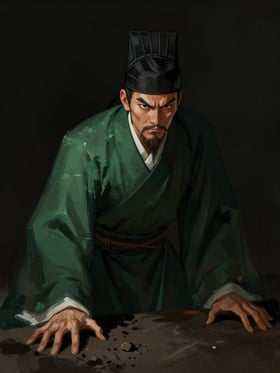
Wei Huang, a Han court official, joined Geng Ji’s revolt against Wei; the novel depicts his anguish before execution, while history records his beheading.

Life
In the novel: 1 chapter · In the Records: 1 volume
Life?–218
218 CE (Jian'an 23)
Appearances
- Life event
- Death
On the boards
Compare with someone →Where this person ranks on each board.
Historical Record
In the spring, first month of Jian’an 23 (218), Ji Ben, the Han court’s Chief Imperial Physician, Shaofu Geng Ji, and Sizhichu Wei Huang, among others, rose in revolt, attacked Xu, and set fire to the camp of Wang Bi, Chief Clerk to the Chancellor. Wang Bi and Yan Kuang, the Yingchuan Agricultural Commandant, led troops to suppress them, and Wei Huang and the others were executed. Pei Songzhi’s annotation, citing the Annotations to the Records of the Three Commanderies, adds that Wei Huang and the others conspired with Jin Yi, Ji Miao, and Ji Mu to kill Wang Bi, seize the emperor and use him to attack Wei, and support Liu Bei in the south. After being wounded, Wang Bi escaped; the rebels dispersed and were ultimately defeated. Pei’s annotation also cites the Spring and Autumn Annals of Emperor Xian, which records that after being captured, Wei Huang repeatedly struck his face with his forehead until he died. The Records of the Three Kingdoms gives few details of Wei Huang’s life and does not record the specific dialogue or actions before his execution found in the novel.
In the Novel
Chapter 69 of Romance of the Three Kingdoms portrays Wei Huang as a close associate of Geng Ji and a conspirator devoted to restoring the Han. In the novel, he first discusses rebellion against Cao with Geng Ji, then joins him in sounding out Jin Yi. Only after Jin Yi declares his position do Wei Huang and the others reveal their true plan to oppose Cao. Wei Huang is not merely involved in the conspiracy: he is also assigned roles in coordination and the uprising itself. The group plans to coordinate from within and without, kill Wang Bi, seize military command, then welcome the emperor and have him issue orders, while also contacting Liu Bei. This fully developed plan and its dialogue are literary elaborations; the Records of the Three Kingdoms only gives a general account of the uprising and its aims, without these details.
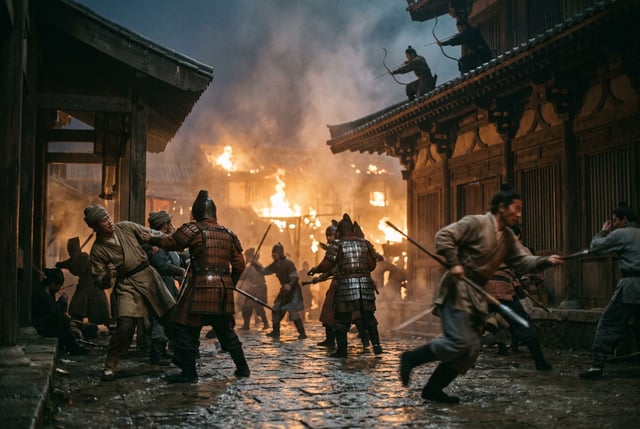
The novel places the uprising on the night of the Lantern Festival. Wei Huang and the others act with their household retainers; Wang Bi is struck by an arrow and escapes, while the plans of Jin Yi and the other inside conspirators are exposed. With no outside reinforcements arriving, the uprising ultimately fails. Wei Huang and Geng Ji are captured by Xiahou Dun’s troops as they try to break through, then taken to the execution ground. At the moment of execution, the novel depicts Wei Huang striking the ground with his face and repeatedly crying out in anguish, then grinding his teeth to pieces before dying. This highly dramatic death, as well as the specific details of the Lantern Festival uprising, the use of fire, and the capture, are unique to the novel. The historical accounts record only that Wei Huang rose in revolt, was suppressed and executed, and—according to Pei’s annotation—was subjected to punishment before his death.
Key Relationships
Wei Huang was a co-conspirator of Shaofu Geng Ji. The historical accounts list the two together as rebels; Pei’s annotation further names Jin Yi, Ji Ben, Ji Miao, and Ji Mu as conspirators, and explains that their intention was to kill Wang Bi, seize the emperor to attack Wei, and support Liu Bei in the south. The novel, by contrast, emphasizes Wei Huang’s friendship with Geng Ji and depicts him recommending Jin Yi and jointly planning an operation coordinated from within and without. These private interactions and scene details are inventions of the novel.
Wang Bi was the target the rebels sought to eliminate. The historical accounts say that Wang Bi was shot in the shoulder and escaped, but later died of his wounds; Wang Bi and Yan Kuang led the suppression of Wei Huang and the others. The novel depicts Wei Huang personally taking part in the attack on Wang Bi’s camp and encountering him as he flees, but this specific confrontation does not appear in the historical accounts and is unique to the novel.
Signature Scenes
The scene that best encapsulates Wei Huang’s fate in the historical accounts is the suppression of the failed uprising in Xu: Wang Bi and Yan Kuang lead out troops, and Wei Huang and the others are executed. The account cited in Pei’s annotation also says that, before his death, Wei Huang struck his face with his forehead.
The novel’s most striking scenes are the attack on the camp on the night of the Lantern Festival and the execution at the market ground. After the fire breaks out, Wang Bi escapes and the inside plot is exposed; reinforcements fail to turn the tide, and Wei Huang is eventually captured. At his execution, he strikes the ground with his face and grinds his teeth to pieces, with the novel using this to emphasize his defiance and anguish. The scene’s details and this manner of death are unique to the novel and should not be conflated with the historical accounts.
In the sources
Where the books name Wei Huang
History · vol. 1Records of the Three Kingdoms
二十三年春正月,漢太醫令吉本與少府耿紀、司直韋晃等反,攻許,燒丞相長史王必營,〈《魏武故事》載令曰:「領長史王必,是吾披荊棘時吏也。…
Read the whole paragraph
二十三年春正月,漢太醫令吉本與少府耿紀、司直韋晃等反,攻許,燒丞相長史王必營,〈《魏武故事》載令曰:「領長史王必,是吾披荊棘時吏也。忠能勤事,心如鐵石,國之良吏也。蹉跌久未辟之,捨騏驥而弗乘,焉遑遑而更求哉?故教辟之,已署所宜,便以領長史統事如故。」〉必與潁川典農中郎將嚴匡討斬之。〈《三輔決錄注》曰:時有京兆金禕字德禕,自以世爲漢臣,自日磾討莽何羅,忠誠顯著,名節累葉。覩漢祚將移,謂可季興,乃喟然發憤,遂與耿紀、韋晃、吉本、本子邈、邈弟穆等結謀。紀字季行,少有美名,爲丞相掾,王甚敬異之,遷侍中,守少府。邈字文然,穆字思然,以禕慷慨有日磾之風,又與王必善,因以閒之,若殺必,欲挾天子以攻魏,南援劉備。時關羽彊盛,而王在鄴,留必典兵督許中事。文然等率雜人及家僮千餘人夜燒門攻必,禕遣人爲內應,射必中肩。必不知攻者爲誰,以素與禕善,走投禕,夜喚德禕,禕家不知是必,謂爲文然等,錯應曰:「王長史已死乎?卿曹事立矣!」必乃更他路奔。一曰:必欲投禕,其帳下督謂必曰:「今日事竟知誰門而投入乎?」扶必奔南城。會天明,必猶在,文然等衆散,故敗。後十餘日,必竟以創死。《獻帝春秋》曰:收紀、晃等,將斬之,紀呼魏王名曰:「恨吾不自生意,竟爲羣兒所誤耳!」晃頓首搏頰,以至於死。《山陽公載記》曰:王聞王必死,盛怒,召漢百官詣鄴,令救火者左,不救火者右。衆人以爲救火者必無罪,皆附左;王以爲「不救火者非助亂,救火乃實賊也」。皆殺之。〉
Novel · ch. 69Romance of the Three Kingdoms
…舊為丞相府掾,後遷侍中少府,與司直韋晃甚厚;見曹操進封王爵,出入用天子車服,心甚不平。…
Read the whole paragraph
時有一人姓耿,名紀,字季行,洛陽人也;舊為丞相府掾,後遷侍中少府,與司直韋晃甚厚;見曹操進封王爵,出入用天子車服,心甚不平。建安二十三年春正月,耿紀與韋晃密議曰:「操賊奸惡日甚,將來必為篡逆之事。吾等為漢臣,豈可同惡相濟?」韋晃曰:「吾有心腹人,姓金,名褘,乃漢相金日磾之後,素有討操之心;更兼與王必甚厚。若得同謀,大事濟矣。」耿紀曰:「他既與王必交厚。豈肯與我同謀乎?」韋晃曰:「且往說之,看是如何。」
Novel · ch. 69Romance of the Three Kingdoms
…耿紀、韋晃見褘果有忠義之心,乃以實情相告曰:「吾等本欲討賊,來求足下。…
Read the whole paragraph
於是二人同至金褘宅中。褘接入後堂,坐定。晃曰:「德偉與王長史甚厚,吾三人特來告求。」褘曰:「所求何事?」晃曰:「吾聞魏王早晚受禪,將登大寶,公與王長史必高遷。望不相棄,曲賜提攜,感德非淺!」褘拂袖而起。適從者奉茶至,便將茶潑於地上。晃佯驚曰:「德偉故人,何薄情也?」褘曰:「吾與汝交厚,為汝等是漢朝臣宰之後;今不思報本,欲輔造反之人,吾有何面目與汝為友!」耿紀曰:「奈天數如此,不得不然耳!」褘大怒。耿紀、韋晃見褘果有忠義之心,乃以實情相告曰:「吾等本欲討賊,來求足下。前言特相試耳。」褘曰:「吾累世漢臣,安能從賊?公等欲扶漢室,有何高見?」晃曰:「雖有報國之心,未有討賊之計。」褘曰:「吾欲裏應外合,殺了王必,奪其兵權,扶助鑾輿,更結劉皇叔為外援,操賊可滅矣。」二人聞之,撫掌稱善。
Quotes
7 lines in the books · 3 featured
「吾聞魏王早晚受禪,將登大寶,公與王長史必高遷。望不相棄,曲賜提攜,感德非淺!」
This line displays Wei Huang's strategy of trying to win Jin Yi over, reflecting the complexity of the political struggle of the time.
「雖有報國之心,未有討賊之計。」
This line reveals Wei Huang's predicament: though he harbored a wish to oppose Cao, he was at a loss for any plan, a manifestation of his core trait.
「可恨!可恨!」
Concise and forceful, it expresses Wei Huang's anger and helplessness, with strong dramatic power.
- Friends
- Enemies
Who is Wei Huang connected to?
Pick someone to see how many steps lie between them and Wei Huang.
Combat
On the field
Duels, kills and executions as the texts tell them, counted separately for the Records and the Romance.
Records
- Duels
- 0W 0L 0D
DeathKilled by Wang BiStruck down · Juan 1
Romance
- Duels
- 0W 0L 0D
DeathKilled by Xiahou DunExecution · Ch. 69
- RecordsJuan 1Struck downWang BiYan KuangLost「必與潁川典農中郎將嚴匡討斬之」
- RomanceCh. 69ExecutionXiahou DunLost「咬牙皆碎而死」
Events
Events (1)
Battles and events the texts place this person in, by date.
Other events
- 218Rebellion of Geng Ji and Wei Huang at XuInstigator
Places
- Died at
- XuchangRecords
Continue
Rebellion of Geng Ji and Wei Huang at Xu
Relationship timeline1 entry ▸
Novel · ch. 69
- Cao Cao§28
Enemy
Openly opposed him; after the affair failed, died grinding his teeth and stamping the ground
Inner monologues · AI-generated1 monologue ▸
- I am Wei Huang; my courtesy name is unknown. Serving at the Han court, I watched as the Wei King, Cao Cao, grew ever mor