Sun Quan's Faction · Lord of Jiangdong
Sun Ce
courtesy name 伯符 · 175–200
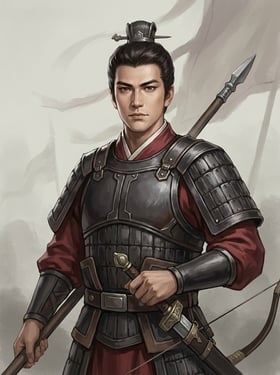
Sun Ce was of handsome countenance; when the surrendered troops heard 'Master Sun is here!' they all took fright and threw down their weapons.

Life
In the novel: 16 chapters · In the Records: 21 volumes
Life175–200
191 CE (Chuping 2)
195 CE (Xingping 2)
- Sun Ce's Pacification of JiangdongCommander
9 more events
195 CE (Xingping 2)
- Battle of NiuzhuNiuzhuCommander
- Duel at ShentingShentingWarrior
196 CE (Jian'an 1)
197 CE (Jian'an 2)
199 CE (Jian'an 4)
- Sun Ce's Seizure of LujiangWanCommander
200 CE (Jian'an 5)
200 CE (Jian'an 5)
- Sun Quan Succeeds to PowerWu CountyInstigator
- Death of Sun CeJingkouKilled in action
Allegiance
- Sun Quan's Faction
- Yuan Shu's Faction
- Cao Wei
- Eastern Wu· Undated
- Hatched: dated by chapter
- Life event
- Death
List all 10 stops
- Mount Xian191Sun Jian Falls at Xianshan+1 more
- Niuzhu195Battle of Niuzhu
- Shenting195Duel at Shenting
- Kuaiji196Sun Jing's Stratagem to Attack Kuaiji+1 more
- Jing County196Taishi Ci Joins Sun Ce
- Shouchun197Cao Cao's Campaign Against Yuan Shu+1 more
- Wan199Sun Ce's Seizure of Lujiang
- Xuchang200Hua Xin Leaves Wu and Enters Xu (Capital)
- Wu County200Sun Quan Succeeds to Power
- Jingkou200Death of Sun Ce
On the boards
Compare with someone →Where this person ranks on each board.
- Stratagem Success Rate: #1Both
- Most Advisors: #7Records
- Best Connected: #7Records
- Most Generals Slain: #7Romance
- Died Youngest: #11Records
- Most Executions Ordered: #12Romance
- Most Foes Defeated: #13Romance
- Most Betrayed: #14Romance
- Most Talkative: #15Romance
- Plans That Worked: #17Records
- Most Battles Won: #19Romance
Who they were
Character profile
- Appearance
- Sun Ce was of handsome countenance; when the surrendered troops heard 'Master Sun is here!' they all took fright and threw down their weapons.
- Character
- Sun Ce was broad-minded and receptive, fond of jest and laughter, skilled at employing men, heroic in spirit and outstanding in ability, his ferocity and keenness peerless in his age. He was valiant, courteous to the worthy and deferential to men of talent, and faithful to his word, forbidding his troops to plunder at will—yet at times he was frivolous, hasty and impetuous, most impatient by nature, rash and unprepared, obstinate and intolerant.
- Manner of speech
- Sun Ce's speech was fervent and boldly self-assuming, confident and heroic, calling his troops 'an army of benevolence and righteousness.'
- Life
- In his youth Sun Ce already formed ties with the renowned, and was a friend of Zhou Yu, who was born the same year. After his father died, he went to Yuan Shu to reclaim his father's troops, crossed the river and pacified the Jiangdong region, defeating Liu Yao, Yan Baihu, and Wang Lang, and taking for himself the post of Administrator of Kuaiji. Later he broke with Yuan Shu and, on Cao Cao's memorial, was made General Who Chastises the Rebellious and enfeoffed as Marquis of Wu, having by then secured the several commanderies of Jiangdong. In the fifth year of Jian'an he was assassinated by retainers of Xu Gong; gravely wounded and resting to recover, he died when his sword-wound burst open, at the age of twenty-six, entrusting his younger brother Sun Quan to Zhang Zhao on his deathbed.
- Weapons
- The weapons Sun Ce used were a spear, a sword worn at his side (its broken blade leaving only the hilt), and a bow.
- Anecdotes
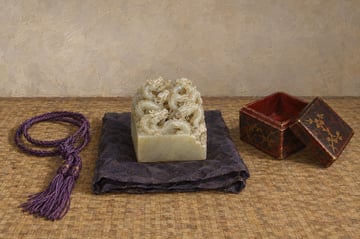
- Sun Ce was the eldest son of Sun Jian and the founder of the enterprise in Jiangdong, known to men as the 'Little Conqueror,' and later honored posthumously as King Huan of Changsha. He once pledged the Imperial Hereditary Seal to Yuan Shu to borrow troops, later refused to aid Yuan Shu, and was likened by Cao Cao to one of the 'foxes and hares.'
Historical Record
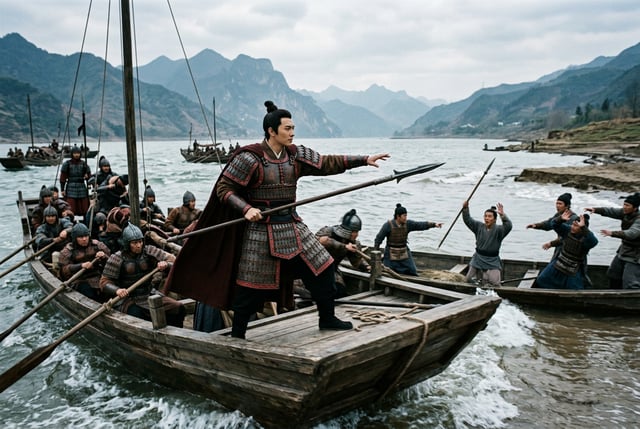
Sun Ce, courtesy name Bofu, was Sun Jian’s eldest son. From a young age, he befriended well-known men. He and Zhou Yu were the same age and became close friends; he gathered scholars and officials around him, and many people in the Jianghuai region rallied to his cause. After Sun Jian’s death, Sun Ce successively relied on his maternal uncle Wu Jing and Yuan Shu in seeking to reclaim his father’s former troops. Yuan Shu returned Sun Jian’s remaining soldiers to him, but failed to honor his promise to appoint him Administrator of Jiujiang. Sun Ce then asked to assist Wu Jing in pacifying Jiangdong. He was appointed Cavalry Commandant and Acting General Who Quells Bandits, and led over a thousand troops across the river, fighting as he advanced. Historical accounts say that he enforced strict military discipline and won victories wherever he went, winning the people’s allegiance as a result.
He defeated Liu Yao and his subordinates, occupied Kuaiji, and pacified forces such as Yan Baihu. He assumed the post of Administrator of Kuaiji and appointed relatives and followers to govern the various commanderies. Sun Ce was handsome and broad-minded, good at taking advice and appointing talented people, and thus officials and commoners were glad to serve him. However, historical accounts also describe him as frivolous and impetuous. After Yuan Shu usurped the imperial title, Sun Ce wrote to rebuke him and severed their ties. He later defeated Liu Xun, incorporated Yuan Shu’s former troops, and further expanded his power in Jiangdong. Cao Cao recommended Sun Ce for the title General Who Attacks Rebels and enfeoffed him as Marquis of Wu. Sun Ce also treated Hua Xin with courtesy and appointed Xu Yi, who had fled turmoil in Jiangdong.
In the fifth year of Jian’an, while Cao Cao and Yuan Shao were deadlocked, Sun Ce secretly prepared to attack Xu and escort the Han emperor. Before he could set out, he was wounded by retainers of Xu Gong, the former Administrator of Wu Commandery. As he lay dying, he handed the seals and ribbons of office to his younger brother Sun Quan and compared their strengths: he himself excelled at making decisions in the midst of battle, while Sun Quan was better at selecting worthy men and preserving Jiangdong. Sun Ce died that night, aged twenty-six. After his death, Sun Quan took up his cause, with Zhang Zhao, Zhou Yu, and others continuing to assist the Sun family.
In the Novel
The Romance of the Three Kingdoms portrays Sun Ce as a brave, confident, and charismatic young hero who gathers worthy men and is surrounded by a legendary aura. The novel depicts him campaigning alongside his father, Sun Jian, and shooting Chen Sheng dead. After his father is killed in battle, Sun Ce retrieves his coffin, withdraws to Jiangnan, and recruits heroes. He later offers the Imperial Heirloom Seal left by Sun Jian as collateral to borrow troops from Yuan Shu, then crosses the river with Zhu Zhi, Lü Fan, and others, and reunites with Zhou Yu. The specific plot of borrowing troops with the seal and using them to launch his campaign is a literary embellishment; historical accounts do not record it this way.
The novel’s Sun Ce moves troops swiftly and is also adept at recruiting talent: he personally invites Zhang Zhao and Zhang Hong to join him and takes Jiang Qin and Zhou Tai into his service. During his conquest of Jiangdong, he often forbids looting and seeks to reassure the people, highlighting his benevolence and popular appeal. As in the historical accounts, he pacifies Jiangdong and treats Taishi Ci with courtesy. But the novel expands their encounter at Shenting into a fifty-round battle, followed by a fall from horseback and a bare-handed struggle; Sun Ce then frees Taishi Ci and places his trust in him, emphasizing the mutual admiration between the two heroes. Historical accounts say that the two fought and that Sun Ce freed Taishi Ci and consulted with him; the lengthy, fierce battle in the novel is a literary depiction.
The Romance of the Three Kingdoms also presents Sun Ce’s astonishing strength through the tale of “crushing Yu Mi to death and shouting Fan Neng to death,” and says that from then on the army called him “Little Conqueror.” Both exaggerated methods of killing enemies and the origin of the epithet are unique to the novel. On the other hand, the novel also shows his recklessness: ignoring warnings, he goes alone beyond the camp to inspect Liu Yao’s stronghold and nearly gets caught in the fighting. The ending recorded in the Records of the Three Kingdoms is that retainers of Xu Gong wounded Sun Ce; the novel’s material does not provide the same complete account of his final instructions as the historical record.
Key Relationships
- Sun Jian and Sun Quan: Sun Ce was Sun Jian’s eldest son and Sun Quan’s elder brother. After Sun Jian’s death, Sun Ce made restoring his father’s legacy his goal, and on his deathbed entrusted the cause in Jiangdong to Sun Quan.
- Zhou Yu: They were the same age and became close friends. Zhou Yu was a close companion of Sun Ce and an important partner in pacifying Jiangdong. The novel goes further, depicting the two as sworn brothers who launch their campaign together.
- Zhang Zhao, Zhang Hong, and Taishi Ci: Zhang Zhao and Zhang Hong took part in Sun Ce’s enterprise. Taishi Ci first fought Sun Ce, then won his trust and was ordered to pacify Liu Yao’s former followers. The novel turns these relationships into a heroic tale of recruiting worthy men and winning people over through trust and honor.
- Yuan Shu, Cao Cao, and Xu Gong’s retainers: Sun Ce once served Yuan Shu, but severed ties with him after he usurped the imperial title. Cao Cao recommended him as General Who Attacks Rebels and Marquis of Wu. Xu Gong’s retainers became his enemies and assassins.
Signature Scenes
- Crossing the river to build a following: Using the troops provided by Yuan Shu as his base, Sun Ce crossed the river from Liyang and fought a series of battles, gradually bringing Jiangdong under his control. His military discipline and policies for reassuring the people increased the number who rallied to him.
- The clash at Shenting: Historical accounts say Sun Ce and Taishi Ci encountered and fought each other, each with only a few followers. Their horses and weapons were damaged, and both sides dispersed when reinforcements arrived. The novel expands this into a hundred-round battle and a bare-handed struggle. (Unique to the novel)
- Handing over the seal on his deathbed: After being attacked, Sun Ce entrusted his affairs to Sun Quan, contrasting his own skill at fighting with his brother’s ability to employ talented people. This shows that he understood that preserving what had been won required not only military force but also talent and unity.
- Borrowing troops with the Imperial Seal: The novel depicts Sun Ce offering the Imperial Heirloom Seal as collateral to obtain troops and horses from Yuan Shu. This is a dramatic opening to the story of “making his father’s legacy his goal and borrowing strength to launch a campaign”; this specific episode is unique to the novel.
Quotes
61 lines in the books · 3 featured
「吾得公瑾,大事諧矣。」
This line reveals the deep bond between Sun Ce and Zhou Yu, and is the origin of the allusion "Zhou lang turns his head."
「汝賴吾玉璽,僭稱帝號,背反漢室,大逆不道!吾方欲加兵問罪,豈肯反助叛賊乎?」
This line embodies Sun Ce's loyalty to the House of Han and his disdain for Yuan Shu's usurping act of proclaiming himself emperor.
「若舉江東之眾,決機於兩陣之間,與天下爭衡,卿不如我;舉賢任能,使各盡力以保江東,我不如卿。卿宜念父兄創業之艱難,善自圖之!」
This line is Sun Ce's dying charge to Sun Quan, summarizing the two men's respective strengths; it is the prototype of "for internal affairs, consult Zhang Zhao; for external affairs, consult Zhou Yu."
- Family
- Lord & vassal
- Friends
- Enemies
- Teacher & student
- Other
History vs. novel
8 points · 3 novel-only
| History | Novel |
|---|---|
| Borrowing Troops with the Imperial Jade SealNovel only | |
| — | Dissatisfied with his prospects under Yuan Shu, Sun Ce followed Lü Fan’s advice and offered the Imperial Jade Seal, inherited from his father, as collateral in exchange for troops from Yuan Shu. This pivotal episode is unique to the novel. ch. 15 |
| Dueling with Taishi Ci at Shenting RidgeNovel embellishes | |
The Records of the Three Kingdoms recounts that Sun Ce fought Taishi Ci while subduing Liu Yao, but gives no detailed account of a one-on-one duel between them. vol. 46 | The novel depicts Sun Ce and Taishi Ci clashing at Shenting Ridge. They fight fifty bouts to a draw, then both fall from their horses and grapple, even tearing each other’s battle robes. ch. 15 |
| Raising an Army in JiangdongSources disagree | |
Sun Ce asked Yuan Shu for help in bringing Wu Jing and the others to pacify Jiangdong. Yuan Shu appointed him Commandant and General, and gave him over a thousand troops and several dozen horses. By the time he reached Liyang, his force had grown to five or six thousand. vol. 46 | The novel says Sun Ce offered the Jade Seal as collateral to borrow troops from Yuan Shu, who assigned him three thousand soldiers and five hundred horses. ch. 15 |
| Shooting Chen ShengNovel only | |
| — | When Sun Jian attacked Huang Zu, Sun Ce saw Chen Sheng come to Zhang Hu’s aid. He drew his bow and shot Chen Sheng from his horse, helping Han Dang kill Zhang Hu. ch. 7 |
| Pacifying JiangdongNovel embellishes | |
After crossing the river, Sun Ce won battle after battle, enforced strict military discipline, and won the people’s allegiance. After Liu Yao fled in defeat, Sun Ce went on to seize several more places and reorganize the commanderies and counties. vol. 46 | The novel gives Sun Ce’s campaigns a more legendary character: he captures Yu Mi alive, frightens Fan Neng into retreat, and routs the enemy with the cry, “Sun Lang is here!” ch. 15 |
| Gan Ji’s ApparitionNovel only | |
| — | After Sun Ce executes Gan Ji, the novel depicts him repeatedly seeing Gan Ji’s apparition. Beset by fear and rage, his illness worsens, and he eventually dies of his wounds. ch. 29 |
| Death of Sun CeNovel embellishes | |
In the fifth year of Jian’an, Sun Ce plotted to attack Xu and welcome the Han emperor. Before he could set out, he was killed by retainers of Xu Gong, the former Grand Administrator of Wu Commandery. vol. 46 | The novel says Sun Ce was ambushed by Xu Gong’s retainers while hunting and struck by several spears. It also adds Gan Ji’s apparition and the fear and illness it provoked to its account of his death. ch. 29 |
| Final ChargeNovel embellishes | |
The Records of the Three Kingdoms provided here records that Sun Ce was killed at the age of twenty-six, but does not mention him handing over his seal and ribbons of office or entrusting Sun Quan with his final wishes. vol. 46 | The novel depicts Sun Ce handing his seal and ribbons of office to Sun Quan on his deathbed and instructing him to consult Zhang Zhao on domestic affairs and Zhou Yu on external affairs, emphasizing the brothers’ succession and the scene of entrusting his heir. ch. 29 |
- Borrowing Troops with the Imperial Jade SealNovel only
- Novel
Dissatisfied with his prospects under Yuan Shu, Sun Ce followed Lü Fan’s advice and offered the Imperial Jade Seal, inherited from his father, as collateral in exchange for troops from Yuan Shu. This pivotal episode is unique to the novel.
ch. 15
- Dueling with Taishi Ci at Shenting RidgeNovel embellishes
- History
The Records of the Three Kingdoms recounts that Sun Ce fought Taishi Ci while subduing Liu Yao, but gives no detailed account of a one-on-one duel between them.
vol. 46
- Novel
The novel depicts Sun Ce and Taishi Ci clashing at Shenting Ridge. They fight fifty bouts to a draw, then both fall from their horses and grapple, even tearing each other’s battle robes.
ch. 15
- Raising an Army in JiangdongSources disagree
- History
Sun Ce asked Yuan Shu for help in bringing Wu Jing and the others to pacify Jiangdong. Yuan Shu appointed him Commandant and General, and gave him over a thousand troops and several dozen horses. By the time he reached Liyang, his force had grown to five or six thousand.
vol. 46
- Novel
The novel says Sun Ce offered the Jade Seal as collateral to borrow troops from Yuan Shu, who assigned him three thousand soldiers and five hundred horses.
ch. 15
- Shooting Chen ShengNovel only
- Novel
When Sun Jian attacked Huang Zu, Sun Ce saw Chen Sheng come to Zhang Hu’s aid. He drew his bow and shot Chen Sheng from his horse, helping Han Dang kill Zhang Hu.
ch. 7
- Pacifying JiangdongNovel embellishes
- History
After crossing the river, Sun Ce won battle after battle, enforced strict military discipline, and won the people’s allegiance. After Liu Yao fled in defeat, Sun Ce went on to seize several more places and reorganize the commanderies and counties.
vol. 46
- Novel
The novel gives Sun Ce’s campaigns a more legendary character: he captures Yu Mi alive, frightens Fan Neng into retreat, and routs the enemy with the cry, “Sun Lang is here!”
ch. 15
- Gan Ji’s ApparitionNovel only
- Novel
After Sun Ce executes Gan Ji, the novel depicts him repeatedly seeing Gan Ji’s apparition. Beset by fear and rage, his illness worsens, and he eventually dies of his wounds.
ch. 29
- Death of Sun CeNovel embellishes
- History
In the fifth year of Jian’an, Sun Ce plotted to attack Xu and welcome the Han emperor. Before he could set out, he was killed by retainers of Xu Gong, the former Grand Administrator of Wu Commandery.
vol. 46
- Novel
The novel says Sun Ce was ambushed by Xu Gong’s retainers while hunting and struck by several spears. It also adds Gan Ji’s apparition and the fear and illness it provoked to its account of his death.
ch. 29
- Final ChargeNovel embellishes
- History
The Records of the Three Kingdoms provided here records that Sun Ce was killed at the age of twenty-six, but does not mention him handing over his seal and ribbons of office or entrusting Sun Quan with his final wishes.
vol. 46
- Novel
The novel depicts Sun Ce handing his seal and ribbons of office to Sun Quan on his deathbed and instructing him to consult Zhang Zhao on domestic affairs and Zhou Yu on external affairs, emphasizing the brothers’ succession and the scene of entrusting his heir.
ch. 29
Combat
On the field
Duels, kills and executions as the texts tell them, counted separately for the Records and the Romance.
Duel themRecords
- Duels
- 0W 0L 0D
By their troops 1Executions 1
DeathKilled by an unnamed handAssassination · Juan 1
Romance
- Duels
- 1W 0L 0D
Executions 3
- RecordsJuan 1AssassinationLost「爲刺客所殺」
- RecordsJuan 46ExecutionXu GongWon「先是,策殺貢」
- RecordsJuan 49DuelTaishi CiBroken off「策刺慈馬,而攬得慈項上手戟,慈亦得策兜鍪」
- RecordsJuan 51Struck downZhou XinWon「策破昕等,斬之,遂定會稽」
- RomanceCh. 7DuelZhang HuChen ShengWon30 bouts「扯弓撘箭,正射中陳生面門,應弦落馬」
- RomanceCh. 7DuelZhang HuChen ShengWon30 bouts「被韓當一刀,削去半個腦袋」
All encounters (13)
Loading…
Battles in command
Battles this person commanded in, with the outcome as each text tells it.
- Romance
- 1W 0L 0D 0 undecided
- Romance195Battle of NiuzhuWonvs Zhang Ying's armyCh. 15「孫策引軍前來,乘勢掩殺。張英棄了牛渚」
Stratagems
Plans this person devised or saw through, as the texts tell them.
- Records
- 3 carried out · 3 worked · 0 turned down · 0 seen through
- Romance
- 3 carried out · 3 worked · 0 turned down · 0 seen through
- RecordsLure the Tiger Out of the MountainLureWorkedagainst Liu XunJuan 14「勳不從。興兵伐上繚,策果襲其後」
- RecordsLure the Tiger Out of the MountainDeceptionWorkedagainst LujiangJuan 46「勳旣行,策輕軍晨夜襲拔廬江,勳衆盡降」
- RecordsFeigned TroopsFeintWorkedagainst Wang LangJuan 51「至昏暮,羅以然火誑朗,便分軍夜投查瀆道」
- RomanceBorrowing Troops with the Imperial SealDeceptionWorkedagainst Yuan ShuCh. 15「假名救吳璟,實圖大業」
- RomanceFeign Death to Lure the EnemyLureWorkedagainst Xue Li's armyCh. 15「策令軍中詐稱主將中箭身死」
- RomanceFalsely Invite Someone to Discuss AffairsDeceptionWorkedagainst Xu GongCh. 29「遣人假意請許貢議事。貢至,策出書示之」
Events
Events (17)
Battles and events the texts place this person in, by date.
Battles
- 195Battle of NiuzhuCommander
- 200Battle of Guandu
- 208Battle of Red Cliffs
Other events
- 191Sun Jian's Campaign Against Liu BiaoWarrior
- 191Sun Jian Falls at XianshanWitness
- 195Sun Ce's Pacification of JiangdongCommander
- 195Duel at ShentingWarrior
- 196Taishi Ci Joins Sun CeCommander
- 196Sun Jing's Stratagem to Attack KuaijiCommander
- 196Wang Lang's Failed Resistance Against Sun CeCommander
- 197Cao Cao's Campaign Against Yuan ShuWarrior
All 14
- 197Yuan Shu Proclaims Himself EmperorWitness
- 199Sun Ce's Seizure of LujiangCommander
- 200Hua Xin Leaves Wu and Enters Xu (Capital)Witness
- 200Sun Quan Succeeds to PowerInstigator
- 200Death of Sun CeKilled in action
- 229Sun Quan Proclaims Himself Emperor and Founds Wu
Famous objects
Places
Continue
Sun Ce's Pacification of Jiangdong
Relationship timeline30 entries ▸
History · vol. 12
- Xu Yi§33
Student
Treated Xu Yi with courtesy and appointed him
History · vol. 46
- Zhou Yu§15
Friend
was friends with Zhou Yu, their loyalty like metal cut in two; Yu advised Ce to move his residence to Shu
- Yuan Shu§16
Lord
Sun Ce asked Yuan Shu for the remaining troops of his father; Yuan Shu returned Sun Jian’s troops to Sun Ce; later, Sun Ce broke with Yuan Shu because he had usurped the title
- Lu Kang§16
Enemy
At Yuan Shu’s command, Sun Ce attacked Lu Kang and captured the commandery
- Liu Yao§17
Enemy
Sun Ce crossed the river to pacify Jiangdong and defeated Liu Yao, forcing him to abandon his army and flee
- Yan Baihu§18
Enemy
Sun Ce crossed the Zhejiang and occupied Kuaiji, defeating Yan Baihu and others
- Cao Cao§20
Lord
Cao Gong recommended Sun Ce for appointment as General Who Attacks Rebels and enfeoffed him as Marquis of Wu; he gave his younger brother’s daughter in marriage to Sun Kuang, and also obtained Ben’s daughter as a wife for his son
- Huang Zu§21
Enemy
in Jian'an 4, Ce campaigned west against Huang Zu and decisively defeated him at Shaxian (the biography says, “advanced to Xiakou and attacked Huang Zu”)
- Xu Gong§22
Enemy
Sun Ce strangled Xu Gong, and was later stabbed by Xu Gong's retainers
- Sun Quan§23
Sibling
As Sun Ce was dying, he handed his seal and ribbon to Sun Quan and entrusted Jiangdong to him
All 30
Loading…
Inner monologues · AI-generated3 monologues ▸
- My strength has ebbed, and the wound from my old battle injury has burst open. I know this body will never rise again. T
- The lands east of the Yangtze are now in my hands. The commanderies heed my orders, boats ply back and forth, and my arm
- My courtesy name was Bofu. I recall that when my father, Sun Jian, raised an army in the name of righteousness, I was st