Cao Wei · Advisor
Chen Jiao
courtesy name 季弼 · –237
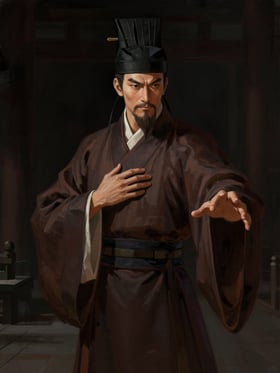
Chen Jiao, a senior Cao Wei official, helped Cao Pi take the throne promptly; the novel also depicts him setting an ambush for Cao Ren that wounded Zhou Yu.

Life
In the novel: 3 chapters · In the Records: 4 volumes
Life?–237
220 CE (Huangchu 1)
- Cao Wei
- Hatched: dated by chapter
- Life event
List all 3 stops
On the boards
Compare with someone →Where this person ranks on each board.
Historical Record
Chen Jiao, courtesy name Jibi, was from Dongyang, Guangling. During the unrest, he took refuge in Jiangdong and Dongcheng. Sun Ce and Yuan Shu both once summoned him to serve, but he declined and later returned to his home commandery. Chen Deng recommended him for the post of Assistant Administrator and sent him to Xu to gauge public opinion. Chen Jiao frankly reported that local people considered Chen Deng arrogant and conceited. Chen Deng explained his own discernment by citing figures he respected, and from then on the two held one another in high regard. When Sun Quan besieged Kuangqi, Chen Deng ordered Chen Jiao to seek aid from Cao Cao. Chen Jiao set out the strategic importance of the commandery and the benefits of making it an outer bulwark and advancing Wang Ye; he also made clear that he had not forgotten his duty to his former state. Cao Cao thereupon sent troops to its relief.
Chen Jiao held various posts, including Chancellor, Chief Clerk to the General Who Attacks the South, Administrator of Pengcheng and Leling, and Commandant of the Western Part of Wei Commandery. While serving as Administrator of Wei Commandery, he believed that keeping prisoners in custody for a long time violated the principle of proportionate punishment. After personally reviewing their charges, he ruled on their cases together. On another occasion, he pleaded for the pardon of a commoner who had prayed for his father’s recovery by offering an ox, calling him a filial son. When Cao Cao campaigned east, Chen Jiao entered the central government as Chief Clerk to the Chancellor and later became a Secretariat Director. After Cao Cao died in Luoyang, the officials believed that the heir could not assume the throne without an imperial edict. Chen Jiao, however, pointed out that the king had died away from the capital and that the realm was alarmed; the heir should ascend as soon as possible to calm the people. He quickly assembled the officials and prepared the rites. The next day, following the Queen’s order, he formally installed the heir, Cao Pi, and declared a general amnesty. Cao Pi praised him for his resolve in a time of great consequence and his exceptional judgment.
After Cao Pi ascended the throne, Chen Jiao was appointed acting Director of the Department of Officials, enfeoffed as Marquis of Gaoling Pavilion, and promoted to Director of the Secretariat. After Emperor Ming’s accession, he was advanced to Marquis of Dongxiang, later received the additional titles of Attendant-in-Ordinary and Grand Master of Guanglu, and was promoted to Minister over the Masses. Emperor Ming once made a sudden visit to the Secretariat gate. Chen Jiao knelt and asked the purpose of his visit, then pointed out that handling documents was the duty of his subordinates and urged the emperor to return to the palace. The emperor, embarrassed, went back. Chen Jiao was renowned for his forthrightness. In the sixth month of the first year of the Jingchu era, he was appointed Minister over the Masses; he died in the seventh month of that year and was posthumously titled Marquis Zhen.
In the Novel
Romance of the Three Kingdoms portrays Chen Jiao as an adviser to Cao Ren during the battles at Nan Commandery, chiefly involving the crisis at Yiling and an ambush designed to lure the enemy in. He judges that if Yiling falls, Nan Commandery will also be difficult to hold, and advises Cao Ren to rush to its aid. When Zhou Yu enters the city of Nan Commandery, Chen Jiao watches from the battlements, then, as the novel tells it, signals with a wooden clapper, triggering an ambush of bows and crossbows that wounds Zhou Yu and knocks him from his horse. Historical accounts record that Chen Jiao once served as Cao Ren’s Chief Clerk, and describe the defense of Jiangling, Niu Jin’s encirclement, and Cao Ren’s breakout to rescue him. They do not, however, say that Chen Jiao planned the ambush at Nan Commandery depicted in the novel; these specific stratagems are literary inventions.
The novel also places Chen Jiao in the scenes surrounding the succession and abdication after Cao Cao’s death. In his capacity as Minister of War, he strongly urges Cao Pi to succeed to the throne that very day, then draws his sword and cuts off a sleeve of his robe to cow those who object. He is also listed among the officials who petition Emperor Xian of Han to abdicate in favor of Cao Pi. The core account in the Records of the Three Kingdoms is that Chen Jiao urged Cao Pi to take the throne promptly and arranged the ceremony in accordance with the Queen’s order; it does not mention his cutting off a robe sleeve to intimidate others or taking part in the petition for abdication.
Key Relationships
Chen Deng both recommended Chen Jiao for office and was a trusted friend who respected him. Acting on Chen Deng’s orders, Chen Jiao went to Cao Cao to seek aid, bringing relief to the commandery’s counties, which were under siege by Sun Quan. Their relationship combined local collegiality, mutual recognition, and shared service.
Chen Jiao served Cao Cao, Cao Pi, and Cao Rui under Cao Wei. His career took him from local office into the central government, ultimately reaching the post of Minister over the Masses. His most important connection to Cao Pi was his insistence, after Cao Cao’s death, that the heir ascend immediately. He also spoke frankly to Cao Rui about his duties, urging the emperor not to visit the Secretariat gate in person. These historical episodes portray him as a man who had the courage to uphold his responsibilities and offer remonstrance.
The novel additionally depicts Chen Jiao assisting Cao Ren in defending Nan Commandery, setting an ambush that wounds Zhou Yu, and taking part in Cao Pi’s succession and the abdication. The ambush, the severed sleeve, and the petition for abdication are all unique to the novel and should not be confused with the historical accounts.
Signature Scenes
Seeking aid at Kuangqi: Chen Deng sent Chen Jiao to ask Cao Cao for help. Chen Jiao did more than describe the immediate crisis: he presented the relief effort as an opportunity to strengthen the outer bulwark, stabilize Xu, and advance Wang Ye. Cao Cao sent troops after hearing him, and the Wu forces withdrew. The episode shows how adeptly Chen Jiao could turn local concerns in a crisis into a political argument.
Settling the succession at Luoyang: Cao Cao died in Luoyang, and the court officials fixated on waiting for an edict. Chen Jiao pointed out that hesitation over the succession could lead to upheaval. He urged the heir to set aside his grief and ascend the throne, then rapidly prepared the rites. Cao Pi was ultimately installed by the Queen’s order. This is the historical account’s clearest illustration of Chen Jiao’s resolve in a time of great consequence and his quick decision-making.
The ambush against Zhou Yu at Nan Commandery (novel only): In the novel, Chen Jiao sees Zhou Yu ride into the barbican from the battlements and gives the signal. Bows and crossbows fire from all sides within the city, and Zhou Yu is struck by an arrow and falls from his horse. The subsequent story has Zhou Yu obtain the military tally, while Jing Province and Xiangyang fall in succession, driving a turn in the course of the war. This episode is a dramatized portrayal of Chen Jiao’s military stratagems; the Records of the Three Kingdoms contains no account of this ambush at Nan Commandery.
Quotes
12 lines in the books · 3 featured
「即今日便請世子嗣位。眾官有異議者,以此袍為例!」
This line displays Chen Jiao's decisive move to enthrone Cao Pi and stabilize the situation, a manifestation of his political wisdom.
「王薨于外,天下惶惧。太子宜割哀即位,以系遠近之望。且又爱子在侧,彼此生变,則社稷危矣。」
This remark points straight at the crisis of the power transfer after Cao Cao's death, reflecting Chen Jiao's far-reaching concern for the safety of the state.
「此自臣职分,非陛下所宜臨也。若臣不称其职,則请就黜退。陛下宜還。」
This line shows Chen Jiao keeping strictly to his duties as a minister and remonstrating with his sovereign, reflecting his loyalty and principle.
- Family
- Lord & vassal
- Friends
- Enemies
- Other
Who is Chen Jiao connected to?
Pick someone to see how many steps lie between them and Chen Jiao.
History vs. novel
7 points · 2 novel-only
| History | Novel |
|---|---|
| Relief for Yiling in Nan CommanderyNovel only | |
| — | When Zhou Yu attacked Nan Commandery, Cao Ren consulted with Chen Jiao. Chen Jiao judged that if Yiling fell, Nan Commandery would be difficult to defend, and recommended sending troops to its relief at once. ch. 51 |
| The Military Tally Is SeizedNovel only | |
| — | After Zhuge Liang captured Nan Commandery, Jing Province, and Xiangyang, Cheng Pu said that Zhuge Liang had captured Chen Jiao and thereby obtained the military tally, which he used to issue false orders to Cao Cao's troops. ch. 51 |
| Cao Pi Ascends the ThroneNovel embellishes | |
When Cao Cao died, the assembled officials believed that they should wait for an edict before naming his heir. Chen Jiao argued that Cao Pi should ascend the throne immediately, and had the rites prepared within a day. The following day, Cao Pi was formally installed by order of the Queen. vol. 22 | After Cao Cao's death, Chen Jiao drew his sword and cut off a sleeve of his robe, intimidating those who opposed him and pressing for Cao Pi to ascend the throne. Hua Xin then brought the Han emperor's edict. ch. 78 |
| Kuangqi Seeks AidHistory only | |
When Sun Quan besieged Kuangqi in Guangling, Chen Deng sent Chen Jiao to ask Cao Cao for aid. Chen Jiao explained the strategic importance of sending relief and refused Cao Cao's attempts to detain him, whereupon Cao Cao dispatched troops to help. vol. 22 | — |
| Debate in XuHistory only | |
Chen Deng sent Chen Jiao to Xu to observe the discussions there. On his return, Chen Jiao bluntly reported that most people considered Chen Deng arrogant and conceited. Chen Deng explained that those he respected were all outstanding men. vol. 22 | — |
| Trials Decided in Wei CommanderyHistory only | |
While serving as Administrator of Wei Commandery, Chen Jiao faced a large backlog of criminal cases that had accumulated over many years. He personally reviewed the charges and decided the cases in a single session. vol. 22 | — |
| Friendship Forged in TaishanHistory only | |
While serving as a commandery clerk, Chen Jiao passed through Taishan. The Administrator, Xue Ti, took a liking to him, and they became close friends. Xue Ti later succeeded Chen Jiao in posts Chen Jiao had held: Administrator of Wei Commandery and Director of the Secretariat. vol. 22 | — |
- Relief for Yiling in Nan CommanderyNovel only
- Novel
When Zhou Yu attacked Nan Commandery, Cao Ren consulted with Chen Jiao. Chen Jiao judged that if Yiling fell, Nan Commandery would be difficult to defend, and recommended sending troops to its relief at once.
ch. 51
- The Military Tally Is SeizedNovel only
- Novel
After Zhuge Liang captured Nan Commandery, Jing Province, and Xiangyang, Cheng Pu said that Zhuge Liang had captured Chen Jiao and thereby obtained the military tally, which he used to issue false orders to Cao Cao's troops.
ch. 51
- Cao Pi Ascends the ThroneNovel embellishes
- History
When Cao Cao died, the assembled officials believed that they should wait for an edict before naming his heir. Chen Jiao argued that Cao Pi should ascend the throne immediately, and had the rites prepared within a day. The following day, Cao Pi was formally installed by order of the Queen.
vol. 22
- Novel
After Cao Cao's death, Chen Jiao drew his sword and cut off a sleeve of his robe, intimidating those who opposed him and pressing for Cao Pi to ascend the throne. Hua Xin then brought the Han emperor's edict.
ch. 78
- Kuangqi Seeks AidHistory only
- History
When Sun Quan besieged Kuangqi in Guangling, Chen Deng sent Chen Jiao to ask Cao Cao for aid. Chen Jiao explained the strategic importance of sending relief and refused Cao Cao's attempts to detain him, whereupon Cao Cao dispatched troops to help.
vol. 22
- Debate in XuHistory only
- History
Chen Deng sent Chen Jiao to Xu to observe the discussions there. On his return, Chen Jiao bluntly reported that most people considered Chen Deng arrogant and conceited. Chen Deng explained that those he respected were all outstanding men.
vol. 22
- Trials Decided in Wei CommanderyHistory only
- History
While serving as Administrator of Wei Commandery, Chen Jiao faced a large backlog of criminal cases that had accumulated over many years. He personally reviewed the charges and decided the cases in a single session.
vol. 22
- Friendship Forged in TaishanHistory only
- History
While serving as a commandery clerk, Chen Jiao passed through Taishan. The Administrator, Xue Ti, took a liking to him, and they became close friends. Xue Ti later succeeded Chen Jiao in posts Chen Jiao had held: Administrator of Wei Commandery and Director of the Secretariat.
vol. 22
Events
Events (6)
Battles and events the texts place this person in, by date.
Battles
Places
- Native of
- GuanglingRecords
- Was at
- GuanglingRecords
- Wei CommanderyRecords
- Governed
- Wei CommanderyRecords
Continue
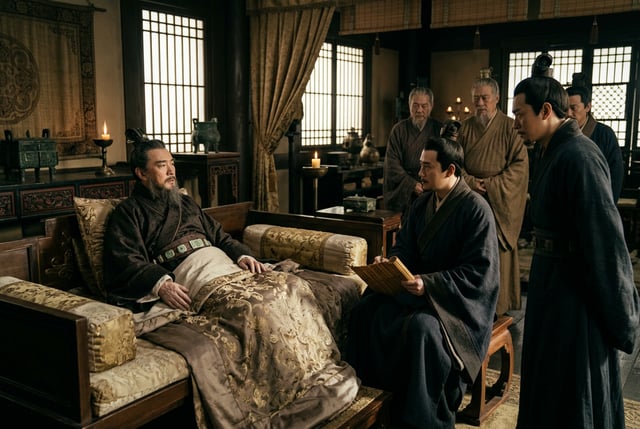
Cao Cao Dies and Emperor Wen of Wei Ascends the Throne
Relationship timeline7 entries ▸
History · vol. 22
- Sun Ce§45
Enemy
Declined Sun Ce's appointment
- Yuan Shu§45
Enemy
Declined Yuan Shu's appointment
- Chen Deng§45
Friend
Chen Deng requested appointment as chief clerk; deeply respected as a friend
- Cao Cao§46
Lord
sought help from the Grand Ancestor, who found this extraordinary
- Cao Pi§47
Advised
Strongly advocated that the crown prince set aside his grief and take the throne; Emperor Wen praised him for facing a moment of great consequence
- Xue Ti§49
Friend
became relatives and friends
Novel · ch. 51
- Cao Ren§12
Advised
Discussed rescuing Yiling, saying, “If Yiling is lost, Nan Commandery cannot be held either”
Inner monologues · AI-generated1 monologue ▸
- I was appointed Minister over the Masses, my rank and title rising suddenly, yet what occupied my thoughts was not carri