Overview
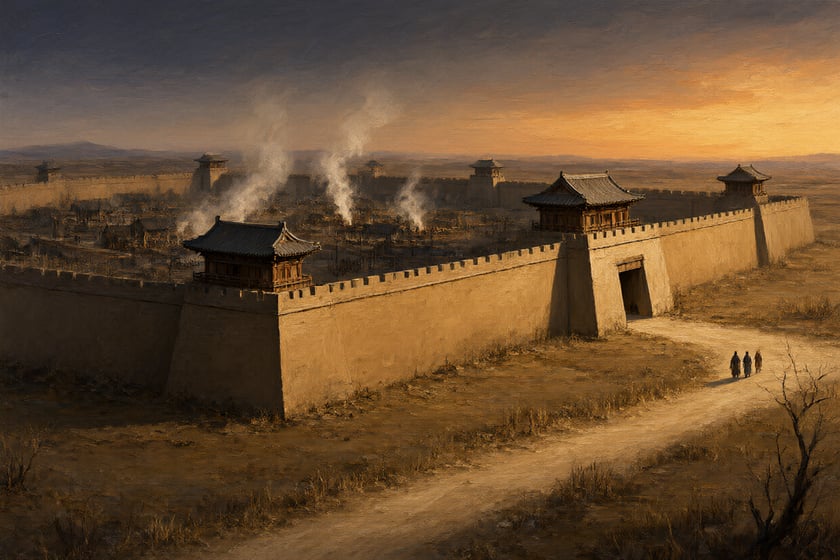
Luoyang was the capital of the Eastern Han, and belonged to Henan Commandery in Sili Province. During the Eastern Han, its name was written as “雒阳”; the old city lies about fifteen kilometers east of present-day Luoyang in Henan Province, at the site of the old Han-Wei Luoyang City. After Cao Wei was founded, an edict ordered that the character “雒” be changed back to “洛”. At the end of the Eastern Han, the struggle between eunuchs and imperial relatives, and Dong Zhuo’s entry into the capital and deposition and enthronement of emperors, all took place here. When Dong Zhuo moved west, he burned the city to ruins. After Emperor Xian of Han Returns East, the emperor could only stay there temporarily before Cao Cao escorted him to Xu. In the first year of Huangchu (220), Cao Pi built palaces here and made it the capital. Thereafter, Luoyang was the capital of Cao Wei; The Sima Clan's Seizure of Power and the Wei-Jin Dynastic Transition were completed within the city, and the last rulers of Shu and Wu were also brought here in turn.
History
In the sixth year of Zhongping (189), Emperor Ling of Han died. He Jin, General-in-Chief, and Yuan Shao, Colonel-Director of Retainers in Sili Province, plotted to eliminate the eunuchs, but Empress Dowager He refused. He Jin then summoned Dong Zhuo to bring troops to the capital, using this to pressure the empress dowager. Ding Yuan, Inspector of Bing Province, also led troops to Luoyang and took part in the planning; he was appointed Commander of the Capital. Before Dong Zhuo arrived, He Jin had already been killed by the eunuchs. The Regular Attendant Duan Gui and others seized the young emperor and fled toward Xiaopingjin, but Dong Zhuo met the Son of Heaven at Be mang and escorted him back to the palace. Dong Zhuo immediately demoted the young emperor to Prince of Hongnong and enthroned Emperor Xian instead. The capital fell into chaos, and Cao Cao changed his name and fled east.
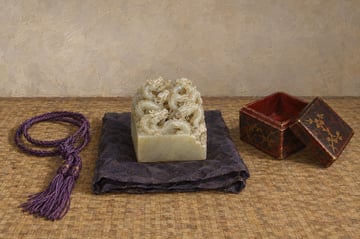
In the second month of the first year of Chuping (190), after hearing that the lords of the east had raised troops, Dong Zhuo moved the Son of Heaven to Chang'an and remained garrisoned at Luoyang, where he burned the palaces and excavated tombs to seize their treasures. Sun Jian subsequently advanced into the city, repaired the imperial tombs, and filled in the excavations made by Dong Zhuo. Pei Songzhi’s annotation quotes the Jiangbiao Zhuan as saying that the old capital was then deserted, with no smoke from cooking fires to be seen for hundreds of li; Sun Jian entered the city in sorrow and wept. It also quotes the Wu Shu as saying that Sun Jian found the Han imperial jade seal in a well at Zhen Guan in the south of the city.
In the seventh month of the first year of Jian’an (196), Yang Feng and Han Xian escorted Emperor Xian back to Luoyang. The emperor first stayed in the former residence of the late Regular Attendant Zhao Zhong. Zhang Yang had the palaces repaired, and in the eighth month the emperor moved into the new palace, named Yang’an. Cao Cao then came to Luoyang to guard the capital and was granted the imperial insignia and axe and appointed to oversee the Secretariat. Because Luoyang lay in ruins, Dong Zhao and others urged him to move the capital to Xu. In the ninth month, the imperial cortege set out east through Huanyuan. Dong Zhao told Cao Cao that moving the capital again might not accord with the people’s wishes, but only extraordinary deeds could bring extraordinary accomplishments. When Zhong Yao served as Colonel-Director of Retainers in Sili Province, his headquarters were also in Luoyang.
After returning from Hanzhong to Luoyang, Cao Cao, King of Wei, built the Jian Shi Hall. He died in Luoyang in the first month of the twenty-fifth year of Jian’an (220), aged sixty-six. At the time, the heir apparent Cao Pi was in Ye, and the army was in turmoil. The ministers wanted to keep the death secret, but Jia Kui, Grand Master for Remonstrance, advocated announcing it openly and calming the various armies; he then escorted the coffin back to Ye. That same year, Cao Pi Usurps the Han Throne and Proclaims Himself Emperor. In the twelfth month, construction began on the Luoyang palace, and Cao Pi soon moved to Luoyang. At first he resided in the North Palace and received the ministers in the Jian Shi Hall. In the second year of Huangchu (221), Chang'an, Qiao, Xu Chang, Ye, and Luoyang were collectively known as the Five Capitals.
During the reign of Emperor Ming, extensive construction was undertaken in Luoyang. In the third year of Taihe (229), the ancestral temple in Luoyang was completed, and the spirit tablets of four temples were brought from Ye. In the third year of Qinglong (235), Emperor Ming extensively renovated the Luoyang palace and built Zhaoyang Hall, Taiji Hall, and the Zongzhang Observatory, which stood more than ten zhang high. The people missed the farming season, and Yang Fu, Gaotang Long, and others repeatedly remonstrated. In the seventh month of that same year, Chonghua Hall caught fire; after it was rebuilt, it was renamed Jiulong Hall. In the first year of Jingchu (237), a circular mound altar was built on Yisu Mountain south of the city. Cao Pi’s Dianlun was engraved on stone and erected at the Imperial University; when Pei Songzhi later came to Luoyang, he still saw the stele. During these years, the severed heads of Meng Da and Gongsun Yuan were both sent to Luoyang for public display. In the first month of the third year of Jingchu (239), Emperor Ming entrusted the regency to Sima Yi and Cao Shuang, and died that same day in Jiafu Hall.
In the first month of the first year of Jiaping (249), the young emperor Cao Fang left the city to pay respects at Gaoping Tomb, ninety li away, accompanied by the Cao Shuang brothers. Taking advantage of this, Grand Tutor Sima Yi raised troops in the city, first seizing the arsenal and then encamping at the Luoshui pontoon bridge, where he submitted a memorial calling for the Cao Shuang brothers’ dismissal. After Cao Shuang laid down his arms and returned to his residence, Luoyang County conscripted eight hundred laborers to surround and guard his home. Not long afterward, Cao Shuang, He Yan, Deng Yang, and the others were executed, along with their three clans. From then on, the Sima clan held power at court. In the tenth month of the first year of Zhengyuan (254), after the Deposition of Cao Fang, Cao Mao, Duke of Gaogui Township, entered Luoyang and was enthroned in the Front Hall of Taiji Palace. The following year, Sima Shi died on campaign in the east. Fu Gu and Sima Zhao returned directly to Luoyang, and Sima Zhao thereby took charge of the regency. In the fifth month of the fifth year of Ganlu (260), Cao Mao, unwilling to remain under another’s control, led several hundred attendants out of the palace to attack Sima Zhao. He was killed by Cheng Ji beneath the Southern Gate and was buried with the rites of a commoner on the banks of the Chan and Jian, thirty li northwest of Luoyang. Cao Huan, Duke of Changdao Township, immediately entered Luoyang and was enthroned.
In the fifth year of Jingyuan (264), after the Execution of Deng Ai and His Son, all of Deng Ai’s other sons who remained in Luoyang were also executed. That same year, Liu Shan, the last ruler of Shu, moved east to Luoyang with his entire family and was enfeoffed as Duke of Anle County. He received a fief of ten thousand households, and more than fifty of his descendants were enfeoffed as marquises. In the first year of Fenghuang of Wu (272), Bu Chan, Commandant of Xiling, surrendered to Jin and sent his nephews Bu Ji and Bu Xuan to Luoyang as hostages. In the first year of Taikang (280), Wu fell, and Sun Hao moved west with his entire family. In the fifth month he arrived at Luoyang, now the Jin capital, and was enfeoffed as Marquis Who Submits to His Fate. Earlier, after Lu Kang had defeated Bu Chan, Sun Hao had someone perform a divination, which yielded the words, “The blue-canopied carriage is destined to enter Luoyang.” From then on, he often harbored ambitions to conquer the north, yet in the end entered Luoyang as a surrendered ruler.
Figures
- Native place: Meng Guang was from Luoyang in Henan and belonged to the clan of Meng Yu, Grand Commandant of the Eastern Han. When Emperor Xian moved west, Meng Guang fled to Shu. Well versed in the old institutions of the Han, he later rose to Grand Minister of Agriculture in Shu Han.
- Luoyang magistrate: Liu Yan served as magistrate of Luoyang during the Eastern Han, before later taking control of Yi Province. Sima Lang, Sima Fang, Zhi Fu of Sima Yi, and Zhou Yi, Zhi Fu of Zhou Yu, also served as magistrates of Luoyang. Deng Yang, during the reign of Emperor Ming of Wei, and Li Sheng, during Cao Shuang's Regency, held the same post; both belonged to Cao Shuang’s faction.
- Service and residence: After Cao Cao was recommended as a Filial and Incorruptible at the age of twenty, he served as Commandant of the Northern Section of Luoyang. He hung five-colored cudgels outside his office and had anyone who violated the prohibitions beaten to death, regardless of rank—even the uncle of the favored eunuch Jian Shuo was not spared. After completing his period of mourning, Yuan Shao lived in retirement in Luoyang, where he became a close friend of Zhang Miao, He Yong, Xu You, and others. Wang Chang and Guanqiu Jian served successively as Agricultural Commandants of Luoyang. Wang Chang reclaimed wasteland and cultivated an especially large area; Guanqiu Jian submitted a memorial opposing the conscription of farmers to build palaces.
- Relocation: Those who moved east with Liu Shan included Empress Zhang, Liu Yong, and Liu Ji. Among Shu officials, only Xi Zheng and Zhang Tong left their wives and children behind and accompanied him alone; Liu Shan was able to avoid mistakes in his conduct only because Xi Zheng guided him. Those who entered Luoyang with Sun Hao included Lady Teng and Xue Ying. Xue Ying entered Jin service as a Regular Mounted Attendant, and gave a cogent answer when Emperor Wu of Jin asked why Wu had fallen.
- Died here: Besides Cao Cao, Cao Zhen, Grand Marshal, died of illness in Luoyang after returning from Cao Zhen's Invasion of Shu; Emperor Ming once visited his residence to see him. Liu Shan, in the seventh year of Taishi (271), and Sun Hao, in the fifth year of Taikang (284), also died here.
Differences Between History and Romance
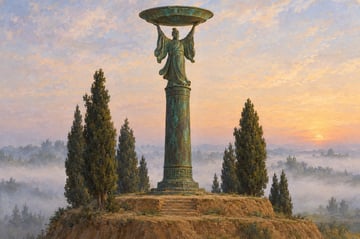
Bronze figures: In Romance of the Three Kingdoms, Emperor Ming orders Ma Jun to go to Chang'an to dismantle bronze figures and the dew-catching plate and transport them back to Luoyang, and also has a bronze pillar broken up and brought back to cast two “Wengzhong” figures. Pei Songzhi’s annotation to the Records of the Three Kingdoms, quoting the Weilüe, says instead that the dew-catching plate broke during transport, the bronze figures were too heavy to move and were left at Bacheng, and the Wengzhong figures were cast separately from newly obtained bronze.
Dong Zhao: The novel says Cao Cao appointed Dong Zhao magistrate of Luoyang after escorting the emperor to the capital. The Records of the Three Kingdoms records that Dong Zhao was promoted to Henan Intendant in the third year of Jian’an (198), and does not state that he ever served as magistrate of Luoyang.
Crossing the Five Passes: The novel says that Guan Yu rode alone for a thousand li, and after crossing Dongling Pass, came to Luoyang. Han Fu, the Grand Administrator of Luoyang, set an ambush to stop him and shot Guan Yu in the left arm with a hidden arrow, but Guan Yu killed him. Neither Guan Yu’s passage through the passes and slaying of their commanders nor Han Fu is recorded in the Records of the Three Kingdoms.
Other: The novel says that the imperial physician Ji Tai, also known as Ji Ping, was from Luoyang. The corresponding imperial physician Ji Ben, recorded in Pei Songzhi’s annotations to the Records of the Three Kingdoms, is not given a native place. The novel also says that Cao Xiu, after being defeated at Shiting, became ill from grief and indignation, and died of a carbuncle on his back in Luoyang. The Biography of Cao Xiu in the Records of the Three Kingdoms only says that he died after developing a carbuncle on his back; it does not say where he died.
Today
The ruins of the old Han-Wei Luoyang City lie about fifteen kilometers east of present-day Luoyang’s urban area, spanning the Yanshi and Mengjin area, with the Luo River to the south and Mang Mountain to the north. In 1961, they were designated a National Key Cultural Relics Protection Site in the first such group; in 2014, they were inscribed on the World Heritage List as a Silk Road heritage site. Excavations at the site have uncovered remains including the palace city, the Eastern Han Imperial University, and the Observatory.