Cao Wei · Grand Tutor
Sima Yi
courtesy name 仲达 · 179–251
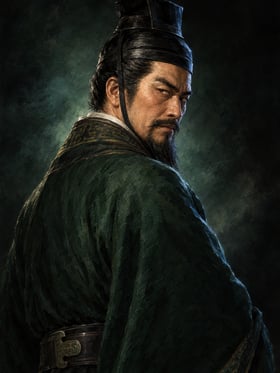
The Grand Progenitor once remarked on his 'hawk's gaze and wolf's backward glance.'

Life
In the novel: 28 chapters · In the Records: 27 volumes
Life179–251
189 CE (Zhongping 6)
208 CE (Jian'an 13)
220 CE (Huangchu 1)
20 more events
220 CE (Huangchu 1)
223 CE (Huangchu 4)
227 CE (Taihe 1)
231 CE (Taihe 5)
234 CE (Qinglong 2)
238 CE (Jingchu 2)
240 CE (Zhengshi 1)
244 CE (Zhengshi 5)
249 CE (Jiaping 1)
- The Sima Clan's Seizure of PowerLuoyangInstigator
- Incident at the Gaoping TombsLuoyangInstigator
251 CE (Jiaping 3)
- Three Rebellions in ShouchunShouchunCommander
- Wang Ling's RebellionShouchunCommander
List all 12 stops
- Liaodong Commandery189Gongsun Clan's Autonomous Rule of Liaodong
- Abdication Platform220Cao Pi Supplants the Han
- Chengdu223Five-Route Invasion of Shu
- Xincheng227Xincheng Rebellion
- Chencang228Zhuge Liang's Second Northern Expedition+1 more
- Mount Qi228–231First Northern Expedition+3 more
- Xiangping238Sima Yi's Liaodong Campaign
- Luoyang239Emperor Ming of Wei Entrusts the Regency on His Deathbed
- Shouchun240Deng Ai's Military Farming in Huainan
- Mount Xingshi244Battle of Xingshi
- Luoyang249The Sima Clan's Seizure of Power+1 more
- Shouchun251Three Rebellions in Shouchun+1 more
On the boards
Compare with someone →Where this person ranks on each board.
- Stratagem Success Rate: #1Records
- Master Strategists: #3Romance
- Plans That Worked: #3Romance
- Saw Through the Most: #4Romance
- Most Executions Ordered: #5Romance
- Most Battles Lost: #7Romance
- Most Talkative: #7Romance
- Most Battles Won: #9Romance
- Best Connected: #9Romance
- Most Battles: #9Both
- Novel Embellished: #9Both
- Most Advisors: #13Records
- Most Betrayed: #14Romance
Who they were
Character profile
- Appearance
- The Grand Progenitor once remarked on his 'hawk's gaze and wolf's backward glance.'
- Character
- Sima Yi held authority and had cunning, his merits covering all within the seas, deeply strategic while both loyalty and fear coexisted in him. Adaptable and profound, he anticipated the enemy in advance, was cautious and suspicious, skilled at calculating the initiative beforehand, and waged war matching man against man.
- Manner of speech
- Sima Yi's manner of speech was terse, weighty, and decisive; he often resolved matters by rhetorical questions and was skilled at using maxims of the art of war to analyze routes and his opponents' psychology. He commonly began with 'I reckon...,' and, full of suspicion, would exclaim, sighing, 'Strange indeed! Strange indeed!' at marvelous troop movements.
- Life
- Sima Yi was the grandson of Sima Jun, Grand Administrator of Yingchuan, the son of Sima Fang, Intendant of the Capital, and the younger brother of the Registrar Sima Lang. He held the posts of Supervisor of the Imperial Secretariat and Grand General Who Nurtures the Army, and later was promoted to Grand Commandant and Grand Tutor, and was entrusted with the orphaned heir by Cao Pi. In the third year of Jingchu he was promoted from Grand Commandant to Grand Tutor; in the first year of Jiaping he launched the Incident at the Gaoping Tombs and executed Cao Shuang's faction; and in the third year of Jiaping, after an eastern campaign against Wang Ling, he died of illness.
- Anecdotes
- Sima Yi was the military mainstay of the Wei side. He defeated Zhuge Jin and Zhang Ba at Xiangyang, campaigned against Meng Da, held off Zhuge Liang at Mount Qi and the Wuzhang Plains, and campaigned against Gongsun Yuan. He once advised Cao Cao to grant Sun Quan office and rank in order to resist Liu Bei, and saw through Eastern Wu's stratagem of shifting the disaster.
Historical Record
Sima Yi, courtesy name Xuanwang, was an important general and regent of Cao Wei. As Cao Pi lay dying, Sima Yi, Cao Zhen, Chen Qun, and Cao Xiu were all entrusted with a posthumous edict to assist the heir. After Cao Rui ascended the throne, Sima Yi was appointed General of Agile Cavalry and later served successively as Senior General, Minister of War, and Grand Tutor. For many years, he commanded troops and took part in court affairs. His early military campaigns included defeating the Wu generals Zhuge Jin and Zhang Ba, as well as, by imperial order, attacking Meng Da, the Administrator of Xincheng. He captured Xincheng and executed Meng Da.
When Zhuge Liang launched campaigns, Sima Yi was ordered to resist him. Faced with Zhuge Liang’s encampment south of the Wei River and repeated challenges, he held fast behind his fortified lines and refused to engage lightly. While the two armies were stalemated, Zhuge Liang died, and the Shu forces withdrew. Later, Sima Yi led an expedition to Liaodong, besieged Xiangping, defeated Gongsun Yuan’s forces, executed Gongsun Yuan and his sons, and pacified Liaodong and other territories. As Cao Rui lay dying, he entrusted affairs of state to Sima Yi and Cao Shuang, ordering them to assist the young ruler Cao Fang. The edict stated that Sima Yi had captured Meng Da in the south, defeated the Shu forces in the west, and destroyed Gongsun Yuan in the east, and that his achievements surpassed all others in the realm. It also promoted him from Minister of War to Grand Tutor.
After Cao Shuang took charge of the regency, Sima Yi gradually withdrew from public life. In the first year of the Jiaping era, Cao Shuang and his brothers accompanied the emperor to pay respects at the Gaoping Tombs. Sima Yi seized the opportunity to take control of the armory and the pontoon bridge over the Luo River, then submitted a memorial requesting that the Cao brothers be stripped of their offices. After Cao Shuang returned to his residence, Sima Yi’s faction executed him and his supporters on charges of treason. In the third year of the Jiaping era, Sima Yi led an eastern campaign against Wang Ling, who took his own life. Sima Yi died later that same year. In recognition of his great achievements and high rank, the court placed him first among the meritorious officials enshrined at the Temple of the Great Ancestor.
In the Novel
Romance of the Three Kingdoms portrays Sima Yi as a far-sighted and decisive Wei official, skilled at judging the situation. The novel gives his courtesy name as Zhongda. After entering service, he is said to have urged Cao Cao to seize the opportunity to conquer Shu, and to have proposed various strategies, including using Wu to contain Shu and relieving Guan Yu’s advance. These specific counsels belong to the novel’s narrative and should not be treated directly as historical fact. When Cao Cao was gravely ill, Sima Yi was among those entrusted with assisting Cao Pi. During Cao Pi’s acceptance of the Han abdication, Sima Yi also advised him to first submit a memorial declining the throne, in order to avoid criticism from the realm.
The novel also depicts Sima Yi falling victim to a Shu stratagem of sowing discord and being stripped of his post by Cao Rui, then swiftly suppressing Meng Da’s rebellion after being reinstated. These episodes overlap with historical accounts of Meng Da’s rebellion and Sima Yi’s campaign against him by imperial order, but the available Records of the Three Kingdoms do not explicitly record the tale of the disinformation plot or his dismissal. Later, the novel has him and Zhang He assess Zhuge Liang’s route of advance, seize Jieting and establish positions at Lieliu Cheng, and cut off the Shu army’s supply lines. This creates an image of a keen judge of the enemy and a cautious commander; this episode is a fictional portrayal.
Key Relationships
- Cao Pi, Cao Rui, and Cao Fang: Sima Yi was entrusted with assisting the government by Cao Pi’s posthumous edict and was charged with caring for the young ruler by Cao Rui on his deathbed. After Cao Fang ascended the throne, Sima Yi and Cao Shuang jointly governed as regents, making Sima Yi one of the central figures in Wei court politics.
- Cao Shuang: The two men were both entrusted with the regency. Cao Shuang later took power, while Sima Yi withdrew from public life. During the Incident at the Gaoping Tombs, Sima Yi forced Cao Shuang to surrender military authority; Cao Shuang and his supporters were subsequently executed.
- Zhuge Liang: The two were principal adversaries on the Wei–Shu battlefield. Historical accounts say Sima Yi held his fortified positions and refused battle, remaining stalemated with Zhuge Liang until the latter’s death. The novel expands this into repeated contests of wits and episodes such as the struggle for Jieting.
- Meng Da, Gongsun Yuan, and Wang Ling: Sima Yi successively suppressed the rebellions of Meng Da and Gongsun Yuan, and in his later years was ordered to campaign east against Wang Ling. All three episodes appear in historical accounts.
- Sima Shi and Sima Zhao: The novel presents them as Sima Yi’s sons and has them accompany their father during the Meng Da incident; the specific depiction of their actions together as father and sons is part of the novel. (Novel only)
Signature Scenes
- The Standoff at Wuzhang Plains: After Zhuge Liang encamped south of the Wei River, Sima Yi led his forces to resist him, holding fast behind his fortified lines and refusing battle. Zhuge Liang died, and the Shu forces withdrew. This scene illustrates the cautious, steady military style found in historical accounts.
- The Defeat of Gongsun Yuan at Xiangping: Sima Yi led a distant expedition, defeated the enemy and besieged the city, then ultimately executed Gongsun Yuan and his sons and sent their heads to Luoyang. The pacification of Liaodong, Daifang, Lelang, Xuantu, and other territories was an important victory in his military career.
- The Incident at the Gaoping Tombs: When Cao Shuang and his brothers left the capital with the emperor, Sima Yi led troops to occupy the armory and station forces at the pontoon bridge over the Luo River. In a memorial, he accused Cao Shuang of monopolizing power and forced him to return to his residence. Cao Shuang was eventually executed, and the Sima clan thereby took control of Wei’s court affairs.
- Predicting the Battle of Jieting: In the novel, Sima Yi asserts that Zhuge Liang will advance by way of Jieting, orders Zhang He to seize Jieting and Lieliu Cheng, and warns him not to advance recklessly but to scout along the mountains. This highlights his skill at reading the terrain and his cautious approach to warfare. (Novel only)
Quotes
177 lines in the books · 3 featured
「孔明食少事煩,其能久乎!」
This line precisely captures the image of Zhuge Liang giving his utmost to the very end, widely renowned and become a classic.
「吾能料其生,不能料其死也!」
This line displays Sima Yi's admiration for Zhuge Liang's military genius, and is likewise an expression of his own wisdom.
「吾病的耳聾了。此去保重。」
This line is the key to Sima Yi's feigning illness to deceive Cao Shuang, reflecting his forbearance and political cunning.
- Family
- Lord & vassal
- Friends
- Enemies
- Teacher & student
- Other
History vs. novel
6 points · 1 novel-only
| History | Novel |
|---|---|
| Five-Route Invasion of ShuNovel only | |
| — | When Cao Pi was preparing to attack Shu, the novel has Sima Yi take the initiative and propose joining forces with the Xianbei, the southern tribes, Eastern Wu, Meng Da, and other powers to attack along five routes, highlighting his strategic planning ability. ch. 85 |
| Meng Da’s RebellionNovel embellishes | |
Meng Da secretly corresponded with Zhuge Liang. After the Wei court discovered this, Sima Yi sent someone to investigate and urged Meng Da to come to court. Alarmed, Meng Da raised troops, and Sima Yi led a force to suppress him, ultimately putting down the rebellion. vol. 3 | The novel depicts Sima Yi as quickly taking action after seeing through Meng Da’s rebellion. He also intercepts letters between Zhuge Liang and Meng Da, declares that they share the same view and that Meng Da has no chance of victory, heightening the impression of his keen insight and swift action. ch. 94 |
| Holding the Line at Wuzhang PlainsNovel embellishes | |
Zhuge Liang camped at Wuzhang Plains and faced off against Sima Yi for more than a hundred days. The Wei court ordered Sima Yi to hold his defenses and refuse battle. When an envoy from Shu visited, Sima Yi asked only about Zhuge Liang’s sleeping and eating habits and the extent of his administrative workload. vol. 28 | The novel portrays the steadfast defense as a more vivid psychological contest between ruler and ministers, and between the opposing armies: Cao Rui orders Xin Pi to bear an imperial tally and prevent an attack; Sima Yi uses this to reassure his troops, while Zhuge Liang sees through him and realizes he never intended to fight. ch. 103 |
| The Dead Zhuge Liang Drives Away the Living ZhongdaNovel embellishes | |
After Zhuge Liang died, Jiang Wei ordered Yang Yi to raise banners and beat drums, prompting Sima Yi to retreat. The people then coined the saying, “The dead Zhuge drives away the living Zhongda.” vol. 28 | The novel depicts the Shu army using a wooden likeness of Zhuge Liang to deceive the Wei army as Sima Yi pursues them. After learning that Zhuge Liang is dead, Sima Yi laments that he could anticipate Zhuge Liang’s life but not his death. The saying is also changed to, “The dead Zhuge can drive away the living Zhongda.” ch. 104 |
| Pacification of LiaodongNovel embellishes | |
Sima Yi led troops to attack Gongsun Yuan, defeated his forces, and laid siege to Xiangping. When Gongsun Yuan and his son tried to break out, Wei troops pursued and killed them, pacifying Liaodong and other areas. vol. 8 | The novel makes Sima Yi’s anticipation of Gongsun Yuan’s escape and his ambush and capture of him more dramatic. It also has Sima Yi use celestial signs to predict when events would come to pass, and describes in detail his treatment of surrendered generals and the rewards and punishments after the campaign. ch. 106 |
| Cao Shuang CoupNovel embellishes | |
During the Gaopingling Incident, Sima Yi submitted a memorial to remove Cao Shuang and his brothers from office and ordered them to return home. After the Zhang Dang case came to light, Cao Shuang and his followers were arrested, and Sima Yi was later ordered to investigate their treason. vol. 4 | The novel elaborates on how Sima Yi feigned illness to deceive Li Sheng and launched a coup while Cao Shuang was away. It also depicts him swearing by the Luo River to induce Cao Shuang to relinquish power, before ultimately executing him. ch. 106 |
- Five-Route Invasion of ShuNovel only
- Novel
When Cao Pi was preparing to attack Shu, the novel has Sima Yi take the initiative and propose joining forces with the Xianbei, the southern tribes, Eastern Wu, Meng Da, and other powers to attack along five routes, highlighting his strategic planning ability.
ch. 85
- Meng Da’s RebellionNovel embellishes
- History
Meng Da secretly corresponded with Zhuge Liang. After the Wei court discovered this, Sima Yi sent someone to investigate and urged Meng Da to come to court. Alarmed, Meng Da raised troops, and Sima Yi led a force to suppress him, ultimately putting down the rebellion.
vol. 3
- Novel
The novel depicts Sima Yi as quickly taking action after seeing through Meng Da’s rebellion. He also intercepts letters between Zhuge Liang and Meng Da, declares that they share the same view and that Meng Da has no chance of victory, heightening the impression of his keen insight and swift action.
ch. 94
- Holding the Line at Wuzhang PlainsNovel embellishes
- History
Zhuge Liang camped at Wuzhang Plains and faced off against Sima Yi for more than a hundred days. The Wei court ordered Sima Yi to hold his defenses and refuse battle. When an envoy from Shu visited, Sima Yi asked only about Zhuge Liang’s sleeping and eating habits and the extent of his administrative workload.
vol. 28
- Novel
The novel portrays the steadfast defense as a more vivid psychological contest between ruler and ministers, and between the opposing armies: Cao Rui orders Xin Pi to bear an imperial tally and prevent an attack; Sima Yi uses this to reassure his troops, while Zhuge Liang sees through him and realizes he never intended to fight.
ch. 103
- The Dead Zhuge Liang Drives Away the Living ZhongdaNovel embellishes
- History
After Zhuge Liang died, Jiang Wei ordered Yang Yi to raise banners and beat drums, prompting Sima Yi to retreat. The people then coined the saying, “The dead Zhuge drives away the living Zhongda.”
vol. 28
- Novel
The novel depicts the Shu army using a wooden likeness of Zhuge Liang to deceive the Wei army as Sima Yi pursues them. After learning that Zhuge Liang is dead, Sima Yi laments that he could anticipate Zhuge Liang’s life but not his death. The saying is also changed to, “The dead Zhuge can drive away the living Zhongda.”
ch. 104
- Pacification of LiaodongNovel embellishes
- History
Sima Yi led troops to attack Gongsun Yuan, defeated his forces, and laid siege to Xiangping. When Gongsun Yuan and his son tried to break out, Wei troops pursued and killed them, pacifying Liaodong and other areas.
vol. 8
- Novel
The novel makes Sima Yi’s anticipation of Gongsun Yuan’s escape and his ambush and capture of him more dramatic. It also has Sima Yi use celestial signs to predict when events would come to pass, and describes in detail his treatment of surrendered generals and the rewards and punishments after the campaign.
ch. 106
- Cao Shuang CoupNovel embellishes
- History
During the Gaopingling Incident, Sima Yi submitted a memorial to remove Cao Shuang and his brothers from office and ordered them to return home. After the Zhang Dang case came to light, Cao Shuang and his followers were arrested, and Sima Yi was later ordered to investigate their treason.
vol. 4
- Novel
The novel elaborates on how Sima Yi feigned illness to deceive Li Sheng and launched a coup while Cao Shuang was away. It also depicts him swearing by the Luo River to induce Cao Shuang to relinquish power, before ultimately executing him.
ch. 106
Combat
On the field
Duels, kills and executions as the texts tell them, counted separately for the Records and the Romance.
- RecordsJuan 3Struck downZhang BaWon「撫軍大將軍司馬宣王討破之,斬霸」
- RecordsJuan 3Struck downMeng DaWon「宣王攻破新城,斬達,傳其首」
- RecordsJuan 3Struck downGongsun YuanWon「司馬宣王圍公孫淵於襄平,大破之,傳淵首于京都」
- RecordsJuan 8Struck downGongsun YuanGongsun XiuWon「大兵急擊之,當流星所墜處,斬淵父子」
- RomanceCh. 103DuelWei YanBroken off「不上三合,延撥回馬便走」
- RomanceCh. 106ExecutionChou LianWon「即命推出斬之,懸首於南門外」
All encounters (10)
Loading…
Battles in command
Battles this person commanded in, with the outcome as each text tells it.
- Records
- 0W 0L 0D 3 undecided
- Romance
- 2W 2L 0D 3 undecided
- Records228Zhuge Liang's Northern ExpeditionsUndecidedvs Shu armyJuan 35「相持百餘日。其年八月,亮疾病,卒于軍」
- Romance228First Northern ExpeditionWonvs Shu troopsCh. 95「叡曰:「今日復得隴西諸郡,皆卿之功也。」」
- Romance228Battle of JietingWonvs Shu troopsCh. 95「馬謖料守不住,只得驅殘兵殺下山西逃奔」
- Romance228Zhuge Liang's Northern ExpeditionsUndecidedvs Shu troopsCh. 104「隨傳密令,使魏延斷後,各處營寨一一退去」
- Romance229Zhuge Liang's Third Northern ExpeditionLostvs Shu armyCh. 99「司馬懿大敗一陣」
- Records230Cao Zhen's Invasion of ShuUndecidedvs Han forcesJuan 33「大雨道絕,真等皆還」
All battles (10)
Loading…
Stratagems
Plans this person devised or saw through, as the texts tell them.
- Records
- 5 carried out · 5 worked · 0 turned down · 0 seen through
- Romance
- 20 carried out · 14 worked · 0 turned down · 4 seen through
- RecordsMake a Sound in the East, Strike in the WestFeintWorkedagainst Yan and othersJuan 8「引兵東南向,而急東北,即趨襄平。衍等恐襄平無守,夜走」
- RecordsFeigning Illness and WeaknessDeceptionWorkedJuan 9「宣王稱疾困篤,示以羸形。勝不能覺,謂之信然」
- RecordsSeize the Armory While It Is UnguardedOtherWorkedagainst The Shuang brothersJuan 9「宣王部勒兵馬,先據武庫,遂出屯洛水浮橋」
- RecordsCede Territory to Lure QuanPersuasionWorkedagainst Liu BeiJuan 14「可遣人勸躡其後,許割江南以封權,則樊圍自解」
- RecordsPardon Their Crimes to Mask a Surprise AttackDeceptionWorkedagainst LingJuan 28「先下赦赦凌罪,又將尚書廣東,使為書喻凌,大軍掩至百尺逼凌」
- RomanceAlly with Wu to Attack the Enemy's RearPersuasionWorkedagainst Jing ProvinceCh. 75「孫權接得曹操書信,覽畢,欣然應允」
All stratagems (29)
Loading…
Events
Events (37)
Battles and events the texts place this person in, by date.
Battles
- 219Guan Yu's Northern Campaign
- 223Five-Route Invasion of ShuAdvisor
- 228Battle of Shiting
- 228First Northern ExpeditionCommander
- 228Zhuge Liang's Second Northern ExpeditionAdvisor
- 228Battle of Jieting
- 228Zhuge Liang's Northern ExpeditionsCommander
- 229Zhuge Liang's Third Northern Expedition
All 12
- 230Cao Zhen's Invasion of Shu
- 231Zhuge Liang's Fourth Northern ExpeditionCommander
- 234Battle of Wuzhang PlainsCommander
- 244Battle of XingshiWitness
Other events
- 189Gongsun Clan's Autonomous Rule of LiaodongCommander
- 208Cao Cao Abolishes the Three Excellencies and Appoints Himself ChancellorAdvisor
- 215Cao Cao's Campaign Against Zhang Lu
- 219Flooding of the Seven Armies
- 219Lü Meng's River Crossing in White
- 219Retreat to Mai Castle
- 220Cao Pi Supplants the HanAdvisor
- 220Cao Cao Dies and Emperor Wen of Wei Ascends the ThroneWitness
All 25
- 227Xincheng RebellionCommander
- 228Zhou Fang's Feigned Surrender to Lure Cao Xiu
- 228Empty Fort StrategyCommander
- 228Battle for ChencangAdvisor
- 231Wooden Ox and Flowing HorseWitness
- 231Zhang He Shot Dead at MumendaoWitness
- 234Fire Attack at Shangfang ValleyCommander
- 234Kongming Sends a Woman's Headdress to Sima YiCommander
- 238Sima Yi's Liaodong CampaignCommander
- 239Emperor Ming of Wei Entrusts the Regency on His DeathbedAdvisor
- 239Cao Shuang's Regency
- 240Deng Ai's Military Farming in HuainanCommander
- 249The Sima Clan's Seizure of PowerInstigator
- 249Incident at the Gaoping TombsInstigator
- 251Three Rebellions in ShouchunCommander
- 251Wang Ling's RebellionCommander
- 266Wei-Jin Dynastic Transition
Famous objects
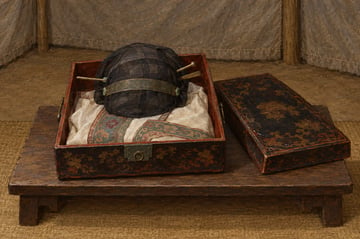

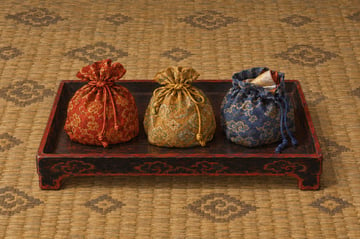
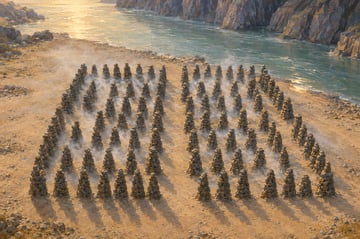
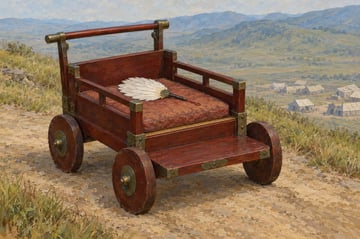
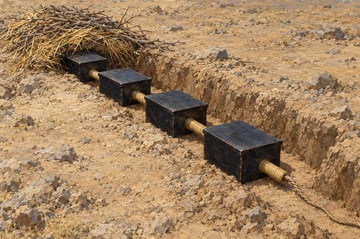
Places
- Was at
- Jing ProvinceRecords
- Yu ProvinceRecords
- Chang'anRecords
- WanRecords
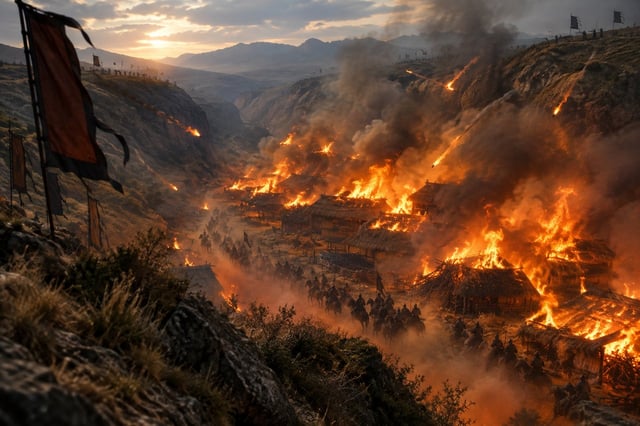
Continue
The Battle of Wuzhang Plains in 3D
Replay the Battle of Wuzhang Plains phase by phase on real terrain: troop strengths, movements and turning points at a glance, each marked as coming from the Records of the Three Kingdoms or the Romance.
Relationship timeline44 entries ▸
History · vol. 3
- Meng Da§4
Fights
issued an edict ordering General of the Agile Cavalry Sima Xuanwang to campaign against him; in the first month of the second year, captured Xincheng, executed Da, and sent his head on for display
- Zhuge Liang§13
Fights
In the fifth year of Taihe, an edict ordered Grand General Sima Yi to repel him
- Zhuge Liang§22
Fights
In the second year of Qinglong, led all the armies to resist Zhuge Liang, who came out through Xiegu and encamped south of the Wei; the siege continued for many days; Liang happened to die, and his army withdrew
- Gongsun Yuan§40
Fights
Sima Xuanwang besieged Gongsun Yuan at Xiangping and decisively defeated him; Gongsun Yuan’s head was sent to the capital
- Cao Rui§43
Advises
The emperor held his hand and entrusted the affairs after his death to you; [he] assisted the younger son together with Shuang
History · vol. 4
- Cao Shuang§20
Enemy
after the Incident at the Gaoping Tombs, submitted a memorial requesting the dismissal of the Grand General and Shuang’s younger brothers Xi, Xun, and Yan
- Wang Ling§23
Enemy
went east to campaign against Wang Ling; Ling committed suicide
History · vol. 8
- Gongsun Yuan§56
Enemy
In the second year of Jingchu, sent Sima Xuanwang to campaign against Yuan and executed Yuan and his sons
All 44
Loading…
Inner monologues · AI-generated3 monologues ▸
- Looking back on my life, the hardest part was not marching troops or arranging battle formations, but contending with ri
- I am Sima Yi, courtesy name Zhongda. At this moment, our forces are at the height of their strength, and all the armies
- My courtesy name was Zhongda, and I was from Wen County in Henei. In my youth, my family’s inheritance included both my