Cao Wei · Grand Commandant
Jiang Ji
courtesy name 子通 · –249
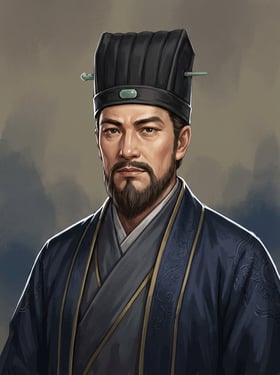
Jiang Ji was loyal, upright, and bold in remonstrance, gifted in both civil and military affairs.

Life
In the novel: 3 chapters · In the Records: 13 volumes
Life?–249
208 CE (Jian'an 13)
- Jiang Ji's False Letter Saves HefeiHefeiInstigator
230 CE (Taihe 4)
233 CE (Qinglong 1)
- Cao Wei· Undated
- Life event
On the boards
Compare with someone →Where this person ranks on each board.
Who they were
Character profile
- Character
- Jiang Ji was loyal, upright, and bold in remonstrance, gifted in both civil and military affairs.
- Life
- Jiang Ji was a man of Ping'a in the state of Chu. He began as a commandery accounts clerk and then a province mounted escort (biejia). He once forged a letter to relieve Hefei, and successively held the posts of Grand Administrator of Danyang, Mounted Escort of Yang Province, Registrar and Western Section clerk to the Chancellor, Chief Clerk to the Chancellor of State, General of the Household of the East, Cavalier Attendant-in-Ordinary, Master of Writing, Central Protector of the Army, General Who Protects the Army, and General Who Commands the Army, finally rising to Grand Commandant, with the posthumous title of Marquis Jing.
- Anecdotes
- Jiang Ji once judged Huan Fan to be "a worn-out horse pining for its manger of beans"; later, over the affair of Cao Shuang, he lost Shuang's trust and, falling ill, died. Together with Sima Yi he urged Emperor Taizu to grant a portion of Jiangnan and enfeoff Sun Quan in order to lift the siege of Fan; after the Incident at the Gaoping Tombs he was enfeoffed as Marquis of Duxiang.
Historical Record
Jiang Ji, courtesy name Zitong, was from Ping'a in the state of Chu. Early in his career, he served as a commandery accountant and provincial aide-de-camp, and entered Cao Cao’s staff on account of his perceptiveness and strategic ability. In the thirteenth year of Jian’an, when Sun Quan besieged Hefei, Cao Cao’s main forces were far away on campaign and an epidemic was spreading. Jiang Ji falsely claimed that he had received a letter saying Zhang Xi was bringing 40,000 troops as reinforcements, and arranged for the news to be delivered into the city. Believing that the reinforcements would soon arrive, Sun Quan burned his camps and withdrew, and Hefei was saved. Later, when Cao Cao planned to relocate the people of Huainan, Jiang Ji remonstrated that the people were attached to their native soil and that forcibly moving them might cause unrest. Cao Cao did not heed him, and more than 100,000 people from the Jiang-Huai region fled in panic to Wu. Jiang Ji later served as Prefect of Danyang and provincial aide-de-camp in Yangzhou, among other posts. Cao Cao said he was capable of assisting in the administration of a province, and Jiang Ji also recommended Hu Zhi to him.
When Guan Yu besieged Fancheng, Cao Cao briefly considered moving the capital. Jiang Ji and Sima Yi jointly analyzed the relationship between Sun Quan and Liu Bei, observing that they were close on the surface but estranged beneath it. They proposed sending an envoy to urge Sun Quan to attack Guan Yu, promising him territory south of the Yangtze in return, which would relieve the siege of Fancheng. Cao Cao accepted their advice, and Sun Quan indeed attacked Gong’an and Jiangling from the west; Guan Yu was defeated and killed. Jiang Ji served under the emperors of Cao Wei, from the Emperor Wen to the Emperor Ming. He held posts including General of the East, Attendant Gentleman of the Palace, Minister, Central Army Commander, General of the Guards, and General of the Central Army. In the third year of Zhengshi, he was promoted to Grand Commandant. He repeatedly spoke frankly in remonstrance. When Emperor Wen issued Xiahou Shang an edict containing the phrase “wield authority and confer favors,” Jiang Ji pointed out that this violated the teachings of the ancients, and the emperor then ordered the edict recalled. When Emperor Ming undertook extensive palace construction and imposed heavy corvée labor, Jiang Ji urged him to give the people respite and devote his efforts to suppressing the rebels.
Jiang Ji also repeatedly demonstrated sound military judgment. When Cao Ren wanted to attack the island in the middle of Ruxu, Jiang Ji warned that advancing deep onto the island risked being trapped. Cao Ren ignored him and was defeated. When Cao Xiu advanced into Wan, Jiang Ji warned that pressing deep into enemy territory was unwise and requested that reinforcements be dispatched urgently; the Wu army failed to block the retreat route at Jiashi. During the Incident at the Gaoping Tombs, he joined Sima Yi in stationing troops at the Luoshui pontoon bridge and took part in submitting a memorial to strip Cao Shuang and his brothers of their military authority. Afterward, he was enfeoffed as Marquis of Duxiang. In a memorial, he stated that he had known nothing of the plot beforehand and had not led troops in battle, so he should not be rewarded for his involvement. He firmly declined the honor, but his request was not granted. He died that same year and was given the posthumous title Marquis Jing. Pei Songzhi’s commentary says that Jiang Ji had once written to Cao Shuang, “You will only be dismissed from office,” but Cao Shuang was ultimately executed. Jiang Ji was deeply troubled by his failure to keep his word, fell ill, and died.
In the Novel
In Romance of the Three Kingdoms, Jiang Ji appears as a strategist and Grand Commandant of Cao Wei, often alongside Sima Yi. When Guan Yu’s reputation shook the realm and Cao Cao discussed moving the capital, Jiang Ji agreed with Sima Yi’s plan to ally with Wu and attack Guan Yu, and urged Cao Cao not to move the capital. The novel recasts the joint advice recorded in history as Jiang Ji’s immediate endorsement in court, emphasizing his role as a strategist in the imperial discussions. In the episode about Cao Pi’s campaign against Wu, the novel also lists Jiang Ji among the military advisers accompanying the army, though this mainly serves to establish the cast of characters.
The novel elaborates on the Incident at the Gaoping Tombs. Sima Yi orders Jiang Ji and Sima Fu to jointly submit a memorial requesting Cao Shuang’s removal. After Huan Fan leaves the capital to join Cao Shuang, Jiang Ji predicts that Cao Shuang will not heed Huan Fan’s advice, saying, “A nagging horse longs for its stable’s beans.” Sima Yi then has Jiang Ji write a letter and asks Yin Damu to convey to Cao Shuang the words “I swear by the Luoshui,” claiming that he intends only to strip Cao Shuang of his military authority and has no other designs. Cao Shuang consequently hands over his seals and surrenders, returning to the capital, where he is ultimately executed. Historical accounts do record Jiang Ji’s participation in the Incident at the Gaoping Tombs, as well as his letter saying that Sima Yi intended only to dismiss Cao Shuang from office. But the specific wording of the letter as “I swear by the Luoshui,” and the detailed portrayal of Jiang Ji declaring that Cao Shuang would not heed Huan Fan, are dramatic inventions of the novel; the Records of the Three Kingdoms does not explicitly record them.
Key Relationships
Sima Yi: Historical records say the two men jointly urged Cao Cao to entice Sun Quan with territory to attack Guan Yu. During the Incident at the Gaoping Tombs, Jiang Ji joined Sima Yi in stationing troops at the Luoshui pontoon bridge. Afterward, Jiang Ji blamed himself over Cao Shuang’s execution, showing that although he had taken part in the coup, he was deeply troubled by the broken promise. The novel, in contrast, casts Jiang Ji as an important strategist and messenger for Sima Yi, particularly in bringing about Cao Shuang’s surrender through “the oath by the Luoshui.”
Cao Cao and the rulers of Cao Wei: Cao Cao once heeded Jiang Ji’s advice during the crisis at Fancheng, but ignored his remonstrance concerning the relocation of the people of Huainan. Emperor Wen, in turn, withdrew an edict after Jiang Ji bluntly told him it was improper. These episodes show that Jiang Ji was known not only for ingenious stratagems but also for his willingness to point out the risks of decisions and the errors of rulers.
Cao Shuang: Historical records say Jiang Ji took part in submitting a memorial to strip Cao Shuang and his brothers of their authority, and once wrote to Cao Shuang that Sima Yi wanted only to dismiss him from office. Cao Shuang was ultimately executed, and Jiang Ji felt that this had broken his word; he fell ill and died. The novel recasts their relationship as a pivotal step in persuading Cao Shuang to surrender, heightening the tragedy with the oath by the Luoshui.
Signature Scenes
Lifting the Siege of Hefei with a False Letter: With no timely reinforcements available, Jiang Ji fabricated news that an army was on its way, leading Sun Quan to misjudge the situation and withdraw. The stratagem shows Jiang Ji’s skill at using information and exploiting the enemy’s assumptions to win.
Using Sun Quan to Check Guan Yu: When Fancheng was under siege and Cao Cao was considering moving the capital, Jiang Ji and Sima Yi proposed promising Sun Quan territory south of the Yangtze to spur him to attack Guan Yu from the rear. This was both a diplomatic stratagem and a notable example of Jiang Ji’s judgment that the alliance between Sun Quan and Liu Bei was fragile.
The Luoshui Pontoon Bridge and the Pain of a Broken Promise: During the Incident at the Gaoping Tombs, Jiang Ji joined the army stationed at the Luoshui pontoon bridge. Although he was enfeoffed afterward, he believed he had done nothing to deserve a reward. Pei Songzhi’s commentary says that Jiang Ji fell ill after Cao Shuang was executed, adding a glimpse of the coup’s toll on his conscience. The novel goes further, making “I swear by the Luoshui” the inducement for Cao Shuang’s surrender; this oath scene is unique to the Romance of the Three Kingdoms.
Quotes
16 lines in the books · 3 featured
「駑馬戀棧豆,必不能用也。」
A metaphor for the short-sighted; it later evolved into an idiom and became widely current.
「夫『作威作福』,書之明誡。『天子無戲言』,古人所慎。惟陛下察之!」
This line stresses that a ruler's words and deeds must be prudent, carrying a profound political admonition.
「汉祖遇亡虏爲上將,周武拔渔父爲太师;布衣厮养,可登王公,何必守文,试而後用?」
This line advocates recruiting talent without adhering to a single mold, reflecting Jiang Ji's wisdom in judging and employing men.
- Friends
- Enemies
- Other
Who is Jiang Ji connected to?
Pick someone to see how many steps lie between them and Jiang Ji.
History vs. novel
8 points · 2 novel-only
| History | Novel |
|---|---|
| The Feigned Relief of HefeiHistory only | |
When Sun Quan besieged Hefei, Jiang Ji falsely claimed that reinforcements had arrived and arranged for the news to reach the city. Believing it to be true, Sun Quan hastily lifted the siege, and Hefei was saved. vol. 14 | — |
| Resettling the People of HuainanHistory only | |
Jiang Ji believed that the people of Huainan were attached to their homeland and should not be relocated. Cao Cao ignored his advice, and as a result, more than a hundred thousand people fled in panic to Wu. Cao Cao later appointed Jiang Ji Administrator of Danyang. vol. 14 | — |
| Urging Against Moving the CapitalNovel embellishes | |
When Guan Yu besieged Fancheng and Xiangyang, Cao Cao considered moving the capital. Jiang Ji and Sima Yi urged him to ally with Sun Quan and attack Guan Yu’s rear, thereby lifting the siege of Fancheng. vol. 14 | In the novel, Jiang Ji supported Sima Yi’s proposal to send an envoy to Eastern Wu at once rather than move the capital. Cao Cao accepted their advice. ch. 75 |
| Cao Pi Recalls an EdictHistory only | |
Jiang Ji pointed out that Cao Pi’s edict to Xiahou Shang contained words portending the fall of the state, and cautioned him that an emperor’s words must not be taken lightly. After hearing this, Cao Pi changed his mind and sent someone to retrieve the edict. vol. 14 | — |
| Boats Brought into the Huai from GuanglingHistory only | |
When Cao Pi traveled to Guangling, Jiang Ji first advised him that the waterways were difficult to navigate. Later, he had a waterway dug and a dike built to channel water, allowing the stranded boats to reach the Huai. vol. 14 | — |
| The Letter During the Gaoping Tombs IncidentNovel embellishes | |
Jiang Ji accompanied Sima Yi to station troops by the Luoshui pontoon bridge, then firmly declined the rewards afterward. A separate account cited in Pei Songzhi’s commentary, the Shiyu, says that Jiang Ji once wrote to urge Cao Shuang, believing he would merely be stripped of office; Jiang Ji later died of illness after his trust was betrayed. vol. 14 | The novel says that Sima Yi ordered Jiang Ji to write a letter, which Yin Damu delivered to Cao Shuang. It also says that Sima Yi and Jiang Ji swore an oath by the Luoshui that they sought only to deprive Cao Shuang of military command. ch. 107 |
| The Metaphor of the Nag and the Stable BeansNovel only | |
| — | After Huan Fan left the city, Sima Yi worried that he would advise Cao Shuang. Jiang Ji declared, using the phrase “a nag longing for the beans in its stable,” that Huan Fan would not truly serve him. ch. 107 |
| Dealing with Cao Shuang’s Remaining FollowersNovel only | |
| — | The novel says that Jiang Ji advocated showing no mercy to Lu Zhi, Xin Chang, Yang Zong, and the others, while Sima Yi considered that they had each served their own lord and restored them to their former posts. ch. 107 |
- The Feigned Relief of HefeiHistory only
- History
When Sun Quan besieged Hefei, Jiang Ji falsely claimed that reinforcements had arrived and arranged for the news to reach the city. Believing it to be true, Sun Quan hastily lifted the siege, and Hefei was saved.
vol. 14
- Resettling the People of HuainanHistory only
- History
Jiang Ji believed that the people of Huainan were attached to their homeland and should not be relocated. Cao Cao ignored his advice, and as a result, more than a hundred thousand people fled in panic to Wu. Cao Cao later appointed Jiang Ji Administrator of Danyang.
vol. 14
- Urging Against Moving the CapitalNovel embellishes
- History
When Guan Yu besieged Fancheng and Xiangyang, Cao Cao considered moving the capital. Jiang Ji and Sima Yi urged him to ally with Sun Quan and attack Guan Yu’s rear, thereby lifting the siege of Fancheng.
vol. 14
- Novel
In the novel, Jiang Ji supported Sima Yi’s proposal to send an envoy to Eastern Wu at once rather than move the capital. Cao Cao accepted their advice.
ch. 75
- Cao Pi Recalls an EdictHistory only
- History
Jiang Ji pointed out that Cao Pi’s edict to Xiahou Shang contained words portending the fall of the state, and cautioned him that an emperor’s words must not be taken lightly. After hearing this, Cao Pi changed his mind and sent someone to retrieve the edict.
vol. 14
- Boats Brought into the Huai from GuanglingHistory only
- History
When Cao Pi traveled to Guangling, Jiang Ji first advised him that the waterways were difficult to navigate. Later, he had a waterway dug and a dike built to channel water, allowing the stranded boats to reach the Huai.
vol. 14
- The Letter During the Gaoping Tombs IncidentNovel embellishes
- History
Jiang Ji accompanied Sima Yi to station troops by the Luoshui pontoon bridge, then firmly declined the rewards afterward. A separate account cited in Pei Songzhi’s commentary, the Shiyu, says that Jiang Ji once wrote to urge Cao Shuang, believing he would merely be stripped of office; Jiang Ji later died of illness after his trust was betrayed.
vol. 14
- Novel
The novel says that Sima Yi ordered Jiang Ji to write a letter, which Yin Damu delivered to Cao Shuang. It also says that Sima Yi and Jiang Ji swore an oath by the Luoshui that they sought only to deprive Cao Shuang of military command.
ch. 107
- The Metaphor of the Nag and the Stable BeansNovel only
- Novel
After Huan Fan left the city, Sima Yi worried that he would advise Cao Shuang. Jiang Ji declared, using the phrase “a nag longing for the beans in its stable,” that Huan Fan would not truly serve him.
ch. 107
Combat
On the field
Duels, kills and executions as the texts tell them, counted separately for the Records and the Romance.
Stratagems
Plans this person devised or saw through, as the texts tell them.
- Records
- 2 carried out · 2 worked · 0 turned down · 0 seen through
- RecordsPretend to Be ReinforcementsFeintWorkedagainst WuJuan 14「權信之,遽燒圍走,城用得全」
- RecordsCede Territory to Lure QuanPersuasionWorkedagainst Liu BeiJuan 14「可遣人勸躡其後,許割江南以封權,則樊圍自解」
Events
Events (6)
Battles and events the texts place this person in, by date.
Battles
Other events
Places
Continue
Man Chong Relocates and Builds the New Hefei City
Relationship timeline6 entries ▸
History · vol. 14
- Sima Yi§100
Friend
jointly persuaded Taizu with Sima Xuanwang to agree to cede the south of the Yangtze and enfeoff Sun Quan, in order to lift the siege of Fan
- Cao Shuang§117
Enemy
Accompanied Sima Xuanwang in garrisoning at the Luoshui pontoon bridge and executing Cao Shuang
History · vol. 15
- Wen Hui§49
Advised
Taizu sent Ji to serve as Yangzhou's chief clerk and assist Wen Hui.
History · vol. 27
- Hu Zhi§10
Friend
Served as an aide-de-camp and recommended his son Hu Zhi to the Grand Ancestor.
Novel · ch. 75
- Cao Cao§8
Advised
supported Sima Yi and advised against moving the capital
Novel · ch. 107
- Lu Zhi§16
Advised
Urged Yi not to let Lu Zhi, Xin Chang, and Yang Zong go free
Inner monologues · AI-generated3 monologues ▸
- I am Jiang Ji, courtesy name Zitong. Serving at court, I often felt that the weight of a single word lay not in its eloq
- I am Jiang Ji, courtesy name Zitong. Looking back on my life at this moment, what weighs on my mind is not whether every
- My name is Jiang Ji, courtesy name Zitong, and I come from Ping’e in the state of Chu. In my youth, my native land’s mou