Cao Wei · General Who Campaigns West
Deng Ai
courtesy name 士载 · c. 197–264
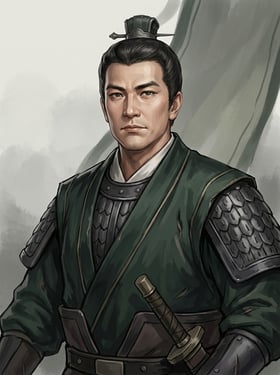
Deng Ai was proud and robust, hasty and hot-tempered, and prone to flout convention and propriety, unable to get on smoothly with his colleagues; yet he was deep and resolute and full of stratagems. Though he stammered, he was quick-witted, from boyhood deeply versed in the art of war and skilled at reading terrain, gauging the enemy as if by divine insight, rich in miraculous calculation and strategy, and able to judge the lay of the land.

Life
In the novel: 11 chapters · In the Records: 13 volumes
Life197–264
238 CE (Jingchu 2)
240 CE (Zhengshi 1)
249 CE (Jiaping 1)
- Battle of QuchengMount QuWarrior
10 more events
253 CE (Jiaping 5)
255 CE (Zhengyuan 2)
256 CE (Ganlu 1)
- Battle of DuanguDuanguCommander
258 CE (Ganlu 3)
261 CE (Jingyuan 2)
263 CE (Jingyuan 4)
- Battle of MianzhuMianzhuCommander
- Conquest of Shu by WeiChengduCommander
- Deng Ai's Surprise Attack Through YinpingYinpingCommander
264 CE (Xianxi 1)
Allegiance
- Cao Wei
- Hatched: dated by chapter
- Life event
- Death
List all 12 stops
- Mount Qi238Jiang Wei's Northern Expeditions
- Shouchun240Deng Ai's Military Farming in Huainan
- Mount Qu249Battle of Qucheng
- Mount Qi253Jiang Wei's Later Northern Expeditions
- Taoxi255Battle of Taoxi
- Lejia255Wen Yang Single-handedly Repulses the Wei Army
- Shouchun255Rebellion of Guanqiu Jian and Wen Qin
- Duangu256Battle of Duangu
- Chengdu258Huang Hao's Usurpation of Power
- Mount Qi261Great Defeat of Deng Ai at Tanshan Valley
- Chengdu263–264Conquest of Shu by Wei+1 more
- Mianzhu264Died hereExecution of Deng Ai and His Son
On the boards
Compare with someone →Where this person ranks on each board.
Who they were
Character profile
- Character
- Deng Ai was proud and robust, hasty and hot-tempered, and prone to flout convention and propriety, unable to get on smoothly with his colleagues; yet he was deep and resolute and full of stratagems. Though he stammered, he was quick-witted, from boyhood deeply versed in the art of war and skilled at reading terrain, gauging the enemy as if by divine insight, rich in miraculous calculation and strategy, and able to judge the lay of the land.
- Manner of speech
- Because of his stammer Deng Ai would refer to himself as 'Ai, Ai,' and made light of it by saying, 'Phoenix, oh phoenix—it is, after all, but one phoenix.' He analyzed matters point by point, secretly instructing his generals with 'thus and thus'; before the ranks he shouted, 'Jiang Wei, you common fellow, do not pursue my son!', combining probing stratagem with stirring, spirited exhortation.
- Life
- Deng Ai was a native of Jiyang in Yiyang. Orphaned young, on account of his stammer he was made a keeper of the brush and grass over the paddy fields, and rose through the offices of Gentleman of the Masters of Writing and Administrator of Nan'an. From the second year of Zhengyuan he acted as General Who Pacifies the West to resist Jiang Wei; in the first year of Ganlu he crushed Jiang Wei at Shanggui, and in the third year of Jingyuan he defeated Wei at Houhe. In the fourth year of Jingyuan he led his army toward Gansong and Dazhong, and by way of the Yinping road broke through Jiangyou and Mianzhu, receiving the surrender of Liu Shan; after Shu fell he became Grand Commandant. In the first year of Xianxi he was slandered by Zhong Hui, Hu Lie, Shi Zuan, and others, summoned back in a prison cart, and afterward beheaded by Tian Xu west of Mianzhu.
- Weapons
- Deng Ai spurred his horse and leveled his blade.
- Anecdotes
- Deng Ai was the general of foremost merit in resisting Jiang Wei and in the conquest of Shu, and the pivotal figure in the extraordinary feat of destroying Shu. He once fought Wen Yang for fifty bouts without a decision, later arrayed his troops at Xiangling to defeat Jiang Wei, laid an ambush at Duangu to break Jiang Wei, secretly crossed by way of Yinping, took Jiangyou, captured Fucheng, besieged Mianzhu, and received the surrender of Shu at Chengdu.
Historical Record
Deng Ai, courtesy name Shizai, was from Jiyang in Yiyang. He lost his father when he was young and grew up poor. He once raised calves for farmers, and because he stuttered, he was unable to serve as an assistant clerk. He also worked as an official tasked with clearing weeds from rice fields. Whenever he saw high mountains or large marshes, he would survey the terrain and sketch out camp formations, prompting many people to laugh at him. Later, Sima Yi recognized his talent and insight, recruited him as an assistant, and subsequently promoted him to Gentleman of the Palace Secretariat. Deng Ai excelled not only in military strategy but also valued agricultural colonies and transport. He advocated digging canals and establishing more agricultural colonies, and estimated how many troops and grain could be amassed in colonies north and south of the Huai River to supply the army. The related transport canals were later put into operation.
While serving on the western frontier, Deng Ai clashed with Jiang Wei many times. After Jiang Wei withdrew, Deng Ai judged that the Shu army might return and remained stationed at Baishui. He also saw through Liao Hua’s plan to establish a camp to hold him in place, realizing that Jiang Wei intended to attack Taocheng. He reached the city first in a night march, sparing the Wei army a defeat. He took part in Chen Tai’s siege of Qucheng, and later joined Chen Tai and others in a combined force to relieve Didao. After Jiang Wei was defeated and withdrew from Duangu, Deng Ai was appointed General Who Pacifies the West and made commander of all military affairs in Longyou. In the third year of Jingyuan, he defeated Jiang Wei again at Houhe.
In the fourth year of Jingyuan, Wei launched an invasion of Shu along several routes. Deng Ai was ordered to contain Jiang Wei and proposed a plan to advance through the treacherous route at Yinping into Fudi, bypassing Jianmen Pass. He then led his troops across more than seven hundred li of uninhabited, perilous terrain, cutting paths through the mountains and building bridges until they reached Jiangyou. The Shu commander Ma Miao surrendered. Deng Ai advanced to Mianzhu, defeated Zhuge Zhan, and Liu Shan sent envoys to surrender. Liu Shan came to the army gate bound and escorted by a carriage bearing his coffin to offer his surrender. Deng Ai freed him, burned the coffin, and spared him. He kept his troops in check, forbidding them to plunder, and pacified those who surrendered. After Shu was conquered, Deng Ai was appointed Grand Commandant.
After the victory, Deng Ai urged that Shu be pacified without delay and used expedient measures, such as appointing officials under delegated authority, to win over the newly subjugated. Sima Zhao considered his actions improper. Zhong Hui and others then accused Deng Ai of plotting rebellion, and the court ordered him brought back in a caged wagon. After Zhong Hui’s rebellion was suppressed, some of Deng Ai’s former subordinates briefly welcomed him back. Wei Guan then sent Tian Xu and others to kill him west of Mianzhu; his son Deng Zhong died with him.
In the Novel
Romance of the Three Kingdoms portrays Deng Ai as a Wei general with great ambition from an early age and a keen grasp of geography and military strategy. He lost his father when young and often studied the mountains and rivers, imagining where troops might be stationed, provisions stored, and ambushes laid. Sima Yi consequently recognized his abilities. The novel also uses his stutter and his quick-witted replies to shape his character. These youthful anecdotes, including the teasing exchange over “Ai, Ai,” belong to the novel and should not be conflated with accounts in the historical records.
The novel emphasizes the contest of wits between him and Jiang Wei. During the relief of Didao, Deng Ai frightens the Shu army into retreat with a feint. Later, by observing the enemy scouts and the terrain, he predicts that Jiang Wei will turn to attack Nanan, and lays ambushes at Wucheng Mountain and Duangu. Jiang Wei ultimately falls into the ambush and suffers a crushing defeat, allowing the novel to highlight Deng Ai’s skill at anticipating the enemy and directing troops. These battlefield details broadly accord with the historical record’s accounts of their clashes and Deng Ai’s victory at Duangu. However, the novel adds specific episodes, such as feigned signals of drums and horns and a nighttime burning of wagons and equipment, which cannot simply be treated as historical fact.
The novel also has Deng Ai use tunnels to raid a camp at Mount Qi, engage Jiang Wei in formations, and use a scheme of sowing discord to induce Jiang Wei to return to court. Jiang Wei sees through the tunnel attack, while the contest of the Eight Trigrams formation is depicted as leaving Deng Ai trapped until Sima Wang rescues him. These are all dramatic embellishments in the novel; the Records of the Three Kingdoms contain no such accounts.
Key Relationships
Jiang Wei: Deng Ai repeatedly fought Jiang Wei along the Wei–Shu border. The historical records describe his victories at Duangu and Houhe, among other places, and note that after judging Jiang Wei had withdrawn to Dazhong, he took part in the preparations for the invasion of Shu. The novel, by contrast, portrays the two as opponents who constantly read one another’s intentions and repeatedly pit their wits against each other, with numerous contests involving formations and ambushes. The episode in which the “Long Serpent Sweeping the Ground Formation” traps Deng Ai is unique to the novel.
Sima Yi and Chen Tai: Sima Yi recognized Deng Ai’s abilities and set him on his official career; Chen Tai was a Wei general who fought alongside him on the western frontier and joined him in relieving Didao. The novel additionally portrays Chen Tai and Deng Ai as friends across a great age difference, a detail unique to the novel.
Liu Shan, Zhong Hui, and Tian Xu: Liu Shan surrendered to Deng Ai, who accepted his surrender and pacified Shu. Zhong Hui and others later framed Deng Ai, however, and the court ordered him taken into custody. Tian Xu ultimately killed him west of Mianzhu.
Signature Scenes
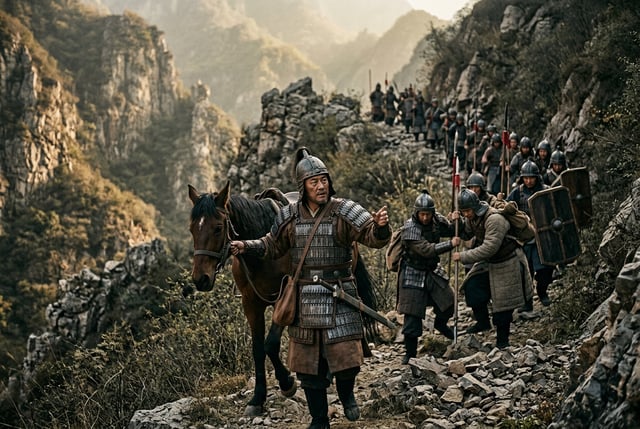
Crossing Yinping in Secret: Deng Ai proposed bypassing Jianmen Pass and advancing directly through Yinping toward Fudi. He then personally led his troops across uninhabited and perilous terrain, cutting a path through the mountains and building bridges and plank roads. Along the way, the obstacles were formidable and provisions ran desperately short. The soldiers climbed trees and edged along cliffs, while Deng Ai wrapped himself in felt and rolled down a hillside. After reaching Jiangyou, he pressed forward and ultimately defeated Zhuge Zhan at Mianzhu. This series of actions is the most iconic historical-record scene from his campaign against Shu.
Surrender and Death: Liu Shan came to the army gate bound and accompanied by a coffin-bearing carriage. Deng Ai freed him, burned the coffin, and accepted his surrender. He kept his army in check and protected Shu, even as he took pride in his achievements and exceeded his authority by implementing measures to pacify the region. Victory brought him the office of Grand Commandant, but also aroused suspicion. After being ordered back in a caged wagon, he ultimately died west of Mianzhu, linking his achievements and his tragedy.
Quotes
53 lines in the books · 3 featured
「今賊摧折,宜遂乘之,從陰平由邪徑經漢德陽亭趣涪,出劍閣西百里,去成都三百餘里,奇兵衝其腹心。劍閣之守必還赴涪,則會方軌而進;劍閣之軍不還,則應涪之兵寡矣。軍誌有之曰:『攻其無備,出其不意。』今掩其空虛,破之必矣。」
This line displays Deng Ai's military brilliance in Deng Ai's Surprise Attack Through Yinping, the crowning moment of his life.
「存亡之分,在此一舉,何不可之有?」
Deng Ai's morale-rousing words before his surprise assault on Chengdu, reflecting his do-or-die resolve.
「銜命征行,奉指授之策,元惡既服;至於承制拜假,以安初附,謂合權宜。今蜀舉眾歸命,地盡南海,東接吳會,宜早鎮定若待國命,往復道途,延引日月。春秋之義,大夫出疆,有可以安社稷,利國家,專之可也。今吳未賓;勢與蜀連,不可拘常以失事機。兵法,進不求名,退不避罪,艾雖無古人之節,終不自嫌以損於國也。」
This line embodies Deng Ai's military autonomy-'a general in the field need not obey every command of his sovereign'-and foreshadows his tragic end.
- Family
- Lord & vassal
- Friends
- Enemies
- Teacher & student
- Other
History vs. novel
8 points · 2 novel-only
| History | Novel |
|---|---|
| Wen Yang’s Battle at LejiaNovel only | |
| — | The novel says that Deng Ai arrived at Lejia and fought Wen Yang for fifty bouts without either gaining the upper hand. Wei forces then attacked from both sides, and Wen Yang broke through alone on horseback. The Records of the Three Kingdoms does not record a battle between Deng Ai and Wen Yang. ch. 110 |
| Recognizing the Ruse at TaochengNovel embellishes | |
After Jiang Wei withdrew, Deng Ai judged that the enemy might return to attack. He saw through the plan for Liao Hua to hold him off while Jiang Wei seized Taocheng, and rushed through the night to occupy the city first. vol. 28 | The novel recasts the episode: Deng Ai and Chen Tai prepare an ambush, anticipate that Jiang Wei will attack Didao, and arrange their formations, beating drums and lighting fires at night to emphasize Deng Ai’s ability to anticipate the enemy. ch. 110 |
| Ambush at DuanguNovel embellishes | |
Historical accounts say that, after Hu Ji failed to keep his appointment, Jiang Wei was defeated by Deng Ai at Duangu, and the Shu army suffered heavy casualties. They do not say that Deng Ai had anticipated Jiang Wei’s route and laid an ambush in advance. vol. 44 | The novel says that Deng Ai anticipated Jiang Wei’s attack on Nan’an and laid an ambush at Duangu in advance, declaring that Jiang Wei would certainly take that route. He then routed the Shu army, highlighting his uncanny foresight. ch. 111 |
| The Surprise Attack through YinpingNovel embellishes | |
Deng Ai marched more than seven hundred li through uninhabited territory in Yinping, cutting paths into the mountains and building bridges. Their provisions were nearly exhausted, and they repeatedly faced danger. He wrapped himself in felt and rolled down the slopes, while his men advanced by climbing trees and clinging to the cliffs. vol. 28 | The novel likewise describes the perilous march of more than seven hundred li and the descent wrapped in felt, but adds a stone stele at Motianling and a prophecy by Zhuge Liang, giving the surprise attack an air of destiny. ch. 117 |
| The Wooden Effigy of KongmingNovel only | |
| — | During the Battle of Mianzhu, the novel says that the Shu army used a wooden effigy of Zhuge Liang to deceive the Wei army, causing Shi Zuan and Deng Zhong to withdraw. When Deng Ai saw through the ruse, he rebuked them. ch. 117 |
| The Decisive Battle at MianzhuNovel embellishes | |
Historical accounts say that Deng Ai ordered Deng Zhong and Shi Zuan to attack Zhuge Zhan from two directions. Their first assault went badly, and they withdrew. After Deng Ai rebuked them, they attacked again and won; Zhuge Zhan and Zhang Zun were killed. vol. 28 | The novel expands the clash, having Zhuge Zhan and Zhuge Shang lead troops into battle, while Deng Zhong and Shi Zuan suffer two defeats. Deng Ai then uses a letter to induce their surrender, emphasizing the twists and turns of the fighting. ch. 117 |
| Surrender at ChengduNovel embellishes | |
Liu Shan went to the army gate with the crown prince, the princes, and his officials to surrender. Deng Ai had him unbound, burned the coffin, restrained his troops, and pacified the people of Shu. vol. 28 | The novel likewise describes Liu Shan and the others surrendering with their hands bound and a coffin carried on their backs. Deng Ai personally unbinds them and burns the coffin; it then elaborates on the banquet after the surrender and Deng Ai’s self-praise. ch. 118 |
| Pride After VictoryNovel embellishes | |
After entering Chengdu, Deng Ai boasted that the Shu officials owed their survival to his arrival, and said that Jiang Wei had been brought to dire straits by encountering him. Those with insight laughed at him for this. vol. 28 | The novel retains the scene of Deng Ai boasting to Shu officials. It also says that, upon hearing Jiang Wei had surrendered to Zhong Hui, Deng Ai resented Zhong Hui, further elaborating on his arrogance and growing antagonism after his victory. ch. 118 |
- Wen Yang’s Battle at LejiaNovel only
- Novel
The novel says that Deng Ai arrived at Lejia and fought Wen Yang for fifty bouts without either gaining the upper hand. Wei forces then attacked from both sides, and Wen Yang broke through alone on horseback. The Records of the Three Kingdoms does not record a battle between Deng Ai and Wen Yang.
ch. 110
- Recognizing the Ruse at TaochengNovel embellishes
- History
After Jiang Wei withdrew, Deng Ai judged that the enemy might return to attack. He saw through the plan for Liao Hua to hold him off while Jiang Wei seized Taocheng, and rushed through the night to occupy the city first.
vol. 28
- Novel
The novel recasts the episode: Deng Ai and Chen Tai prepare an ambush, anticipate that Jiang Wei will attack Didao, and arrange their formations, beating drums and lighting fires at night to emphasize Deng Ai’s ability to anticipate the enemy.
ch. 110
- Ambush at DuanguNovel embellishes
- History
Historical accounts say that, after Hu Ji failed to keep his appointment, Jiang Wei was defeated by Deng Ai at Duangu, and the Shu army suffered heavy casualties. They do not say that Deng Ai had anticipated Jiang Wei’s route and laid an ambush in advance.
vol. 44
- Novel
The novel says that Deng Ai anticipated Jiang Wei’s attack on Nan’an and laid an ambush at Duangu in advance, declaring that Jiang Wei would certainly take that route. He then routed the Shu army, highlighting his uncanny foresight.
ch. 111
- The Surprise Attack through YinpingNovel embellishes
- History
Deng Ai marched more than seven hundred li through uninhabited territory in Yinping, cutting paths into the mountains and building bridges. Their provisions were nearly exhausted, and they repeatedly faced danger. He wrapped himself in felt and rolled down the slopes, while his men advanced by climbing trees and clinging to the cliffs.
vol. 28
- Novel
The novel likewise describes the perilous march of more than seven hundred li and the descent wrapped in felt, but adds a stone stele at Motianling and a prophecy by Zhuge Liang, giving the surprise attack an air of destiny.
ch. 117
- The Wooden Effigy of KongmingNovel only
- Novel
During the Battle of Mianzhu, the novel says that the Shu army used a wooden effigy of Zhuge Liang to deceive the Wei army, causing Shi Zuan and Deng Zhong to withdraw. When Deng Ai saw through the ruse, he rebuked them.
ch. 117
- The Decisive Battle at MianzhuNovel embellishes
- History
Historical accounts say that Deng Ai ordered Deng Zhong and Shi Zuan to attack Zhuge Zhan from two directions. Their first assault went badly, and they withdrew. After Deng Ai rebuked them, they attacked again and won; Zhuge Zhan and Zhang Zun were killed.
vol. 28
- Novel
The novel expands the clash, having Zhuge Zhan and Zhuge Shang lead troops into battle, while Deng Zhong and Shi Zuan suffer two defeats. Deng Ai then uses a letter to induce their surrender, emphasizing the twists and turns of the fighting.
ch. 117
- Surrender at ChengduNovel embellishes
- History
Liu Shan went to the army gate with the crown prince, the princes, and his officials to surrender. Deng Ai had him unbound, burned the coffin, restrained his troops, and pacified the people of Shu.
vol. 28
- Novel
The novel likewise describes Liu Shan and the others surrendering with their hands bound and a coffin carried on their backs. Deng Ai personally unbinds them and burns the coffin; it then elaborates on the banquet after the surrender and Deng Ai’s self-praise.
ch. 118
- Pride After VictoryNovel embellishes
- History
After entering Chengdu, Deng Ai boasted that the Shu officials owed their survival to his arrival, and said that Jiang Wei had been brought to dire straits by encountering him. Those with insight laughed at him for this.
vol. 28
- Novel
The novel retains the scene of Deng Ai boasting to Shu officials. It also says that, upon hearing Jiang Wei had surrendered to Zhong Hui, Deng Ai resented Zhong Hui, further elaborating on his arrogance and growing antagonism after his victory.
ch. 118
Combat
On the field
Duels, kills and executions as the texts tell them, counted separately for the Records and the Romance.
Duel themRecords
- Duels
- 0W 0L 0D
DeathKilled by Tian XuStruck down · Juan 28
Romance
- Duels
- 1W 0L 2D
DeathKilled by Tian XuAssassination · Ch. 119
- RecordsJuan 28Struck downTian XuLost「瓘遣田續等討艾,遇於綿竹西,斬之」
- RecordsJuan 28Struck downTian XuLost「子忠與艾俱死」
- RomanceCh. 110DuelWen YangBroken off50 bouts「戰有五十合,不分勝敗」
- RomanceCh. 110DuelGe YongWon「不一合,被艾一刀斬之」
- RomanceCh. 115DuelJiang WeiDraw「二人交鋒數十餘合,不分勝負」
- RomanceCh. 116DuelJiang WeiDraw10 bouts「與艾戰有十餘合,不分勝負」
All encounters (7)
Loading…
Battles in command
Battles this person commanded in, with the outcome as each text tells it.
- Records
- 3W 0L 0D 1 undecided
- Romance
- 2W 0L 0D 2 undecided
- Records238Jiang Wei's Northern ExpeditionsUndecidedvs Shu armyJuan 44「維本羈旅托國,累年攻戰,功績不立」
- Romance238Jiang Wei's Northern ExpeditionsUndecidedvs Shu troopsCh. 115「維只得遵命,先令洮陽兵退,次後與張翼徐徐而退」
- Records253Jiang Wei's Later Northern ExpeditionsWonvs Shu armyJuan 44「維率眾出漢、侯和,為鄧艾所破,還住沓中」
- Romance253Jiang Wei's Later Northern ExpeditionsUndecidedvs Shu armyCh. 115「維只得遵命,先令洮陽兵退,次後與張翼徐徐而退」
- Records256Battle of DuanguWonvs Shu armyJuan 28「艾與戰於段谷,大破之」
- Romance256Battle of DuanguWonvs Shu troopsCh. 111「三路夾攻,蜀兵大敗」
All battles (8)
Loading…
Stratagems
Plans this person devised or saw through, as the texts tell them.
- Records
- 3 carried out · 2 worked · 0 turned down · 2 seen through
- Romance
- 12 carried out · 9 worked · 0 turned down · 3 seen through
- RecordsMake a Sound in the East, Strike in the WestFeintSaw throughagainst WeiJuan 28「此維使化持吾,令不得還。維必自東襲取洮城」
- RecordsConfuse the People with a LetterDeceptionSaw throughagainst the massesJuan 28「毌丘儉作亂,遣健步齎書,欲疑惑大眾,艾斬之」
- RecordsSecret Crossing at YinpingDeceptionWorkedagainst ShuJuan 28「出劍閣西百里,去成都三百餘里,奇兵衝其腹心」
- RecordsLure Zhuge Zhan into SurrenderingPersuasionFailedagainst ShuJuan 35「艾遣書誘瞻曰:「若降者,必表為琅邪王。」瞻怒,斬艾使」
- RecordsSecret Crossing at YinpingDeceptionWorkedagainst ShuJuan 44「而鄧艾自陰平由景谷道傍入,遂破諸葛瞻於綿竹」
- RomanceFeigned TroopsFeintWorkedagainst Shu troopsCh. 110「方知火鼓二十餘處,皆虛設也」
All stratagems (20)
Loading…
Events
Events (19)
Battles and events the texts place this person in, by date.
Battles
- 228Zhuge Liang's Northern Expeditions
- 231Zhuge Liang's Fourth Northern Expedition
- 238Jiang Wei's Northern ExpeditionsCommander
- 249Battle of QuchengWarrior
- 253Jiang Wei's Later Northern ExpeditionsCommander
- 255Battle of TaoxiCommander
- 256Battle of DuanguCommander
- 263Battle of MianzhuCommander
Other events
- 240Deng Ai's Military Farming in HuainanInstigator
- 249The Sima Clan's Seizure of Power
- 255Wen Yang Single-handedly Repulses the Wei ArmyWarrior
- 255Rebellion of Guanqiu Jian and Wen QinCommander
- 257Zhuge Dan's Rebellion
- 258Huang Hao's Usurpation of PowerCommander
- 261Great Defeat of Deng Ai at Tanshan ValleyCommander
- 263Conquest of Shu by WeiCommander
All 11
- 263Deng Ai's Surprise Attack Through YinpingCommander
- 264Execution of Deng Ai and His SonVictim
- 264Zhong Hui's RebellionVictim
Famous objects
Places
- Governed
- Yan ProvinceRecords
- RunanRecords
- Nan'anRecords
- Died at
- MianzhuRecords
Continue
Conquest of Shu by Wei
Relationship timeline28 entries ▸
History · vol. 4
- Jiang Wei§39
Enemy
resisted Jiang Wei; routed [him] at Shanggui; defeated [him] at Houhe
History · vol. 28
- Sima Shi§16
Commands
Led more than ten thousand troops from the various Taishan armies to Lejia, feigning weakness to lure Qin.
- Jiang Wei§41
Fights
Resisted him with Guo Huai; first occupied Taocheng and avoided defeat
- Sima Shi§45
Advises
Said Zhuge Ke would inevitably be defeated; adopted his plan concerning the Xiongnu; promoted him to Inspector of Yanzhou
- Wen Qin§47
Fights
pursued him to Qiutou
- Jiang Wei§47
Fights
Relieved Wang Jing’s encirclement at Didao; decisively defeated them at Duangu; defeated them again at Houhe
History · vol. 33
- Zhuge Zhan§43
Fights
In the winter of the sixth year of Jingyao, Deng Ai defeated Zhuge Zhan at Mianzhu
History · vol. 44
- Jiang Wei§27
Enemy
Defeated Jiang Wei at Duangu, and defeated him again at Dazhong and Yinping
All 28
Loading…
Inner monologues · AI-generated3 monologues ▸
- My surname is Deng, my given name Ai, and my courtesy name Shizai. I was poor as a child and lost my father early. I wan
- I am Deng Ai, courtesy name Shizai. Ordered to attack Shu, I reached Yinping, where the mountains and rivers were so tre
- In my youth I was poor and low-born, and I spent many years on the frontier. What struck me most was not empty fame in t