Cao Wei · Central Army Commander
Wang Su
courtesy name 子雍 · c. 195–256
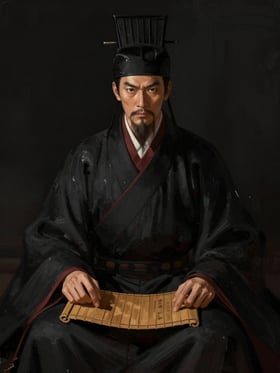
Wang Su, a Cao Wei classicist and minister, was known for his writings, opposing the Shu campaign, and aiding Sima Shi in quelling Huainan.

Life
In the novel: 3 chapters · In the Records: 6 volumes
Life195–256
255 CE (Zhengyuan 2)
Allegiance
- Cao Wei
- Hatched: dated by chapter
- Life event
List all 2 stops
- Kuaiji195Birthplace
- Shouchun255Rebellion of Guanqiu Jian and Wen Qin
On the boards
Compare with someone →Where this person ranks on each board.
Historical Record
Wang Su, whose courtesy name was Ziyong, was the son of Wang Lang. At eighteen, he studied the Taixuan under Song Zhong and also wrote a commentary on it. During the Huangchu era of Wei, he served as Attendant Gentleman of the Yellow Gate among the Regular Mounted Attendants; in the third year of Taihe, he became a Regular Mounted Attendant. Well versed in the classics, he also drew on divergent interpretations, composing commentaries on the Shangshu, Book of Songs, Analects, Three Rituals, Zuo Commentary, and other classics and commentaries. He also edited his father Wang Lang’s Commentary on the Changes. His writings were included in the curriculum of the imperial academy. He often revised Zheng Xuan’s earlier interpretations, and in doing so came into conflict with Wang Ji, who upheld Zheng Xuan’s teachings.
Wang Su was distinguished not only for his writings; he also repeatedly offered advice on military and political affairs. When Cao Zhen's Invasion of Shu encountered days of heavy rain and roads made treacherous and slippery, Wang Su submitted a memorial detailing the difficulties of transporting provisions, marching, and the soldiers’ exhaustion. He argued that the army should halt for the time being and wait for a better opportunity. Cao Zhen’s campaign was thereupon called off. Wang Su also once proposed reorganizing official posts and salaries and restoring the system by which high ministers attended court every five days. During Emperor Ming’s reign, Liu Xie, Duke of Shanyang, died. Wang Su requested that the character “Huang” be included in Liu Xie’s posthumous title, but Emperor Ming did not agree; Liu Xie was ultimately posthumously titled Emperor Xiaoxian of Han.
During the Jingchu era, Wang Su submitted a memorial addressing the burdens that palace construction placed on the people, the harm done to agriculture, the loss of trust caused by government policies, and the hasty imposition of punishments. He advocated giving the people respite, promoting agriculture, exercising caution in punishments, and earning the people’s trust. In the first year of Zhengshi, he became Administrator of Guangping, and later held such posts as Gentleman of Discussion, Palace Attendant, and Grand Minister of Ceremonies. When Cao Shuang held power, Wang Su openly criticized He Yan, Deng Yang, and others. He was dismissed from office over matters concerning the ancestral temples. While serving as Chamberlain for the Palace Revenues, he interpreted fish on the roof of the armory as an omen that things had been displaced from their proper place, and predicted that a border general might suffer defeat. Wei forces later did indeed suffer defeat at Dongguan.
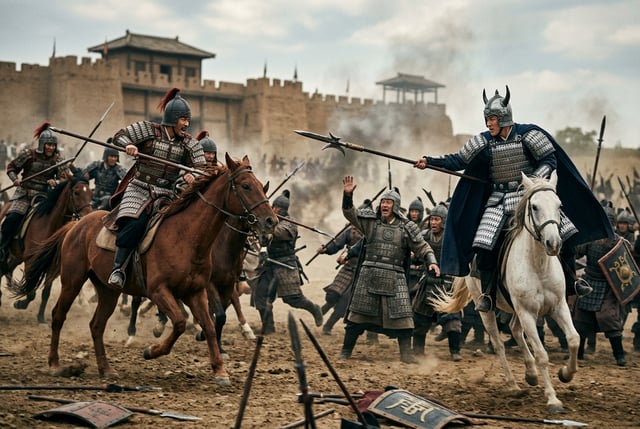
In the sixth year of Jiaping, Wang Su, holding the credentials of authority and concurrently serving as Grand Minister of Ceremonies, went in the imperial carriage to Yuancheng to welcome and install the Exalted Lord of Gaogui. The following year, Guanqiu Jian and Wen Qin raised troops. Sima Shi asked how the rebellion should be suppressed, and Wang Su cited the disintegration of Guan Yu’s forces after he lost Jing Province, recommending a rapid advance and measures to prevent the rebel soldiers from reaching their families. Sima Shi adopted this strategy and ultimately defeated the rebels. Wang Su later became General of the Central Army and was additionally appointed Regular Mounted Attendant. He died in the first year of Ganlu and was posthumously granted the title General Who Guards the Army and the posthumous name Marquis Jing. More than a hundred of his disciples observed mourning for him.
In the Novel
Romance of the Three Kingdoms portrays Wang Su as a remonstrating official and strategist at the Wei court, adept at drawing on the past to discuss the present. In Chapter 99, when Cao Zhen's Invasion of Shu is hampered by heavy rain, the novel has Wang Su, an Attendant Gentleman of the Yellow Gate, submit a memorial. His arguments, including “transporting provisions a thousand li” and “advancing deep into perilous terrain,” broadly follow the memorial in the historical accounts that urged Cao Zhen to call off his invasion of Shu. However, the novel dramatizes the Wei army’s plight in the rain, the ruler of Wei’s appeal for clear skies, and the circumstances surrounding Wang Su’s memorial. The historical accounts record that Wang Su did submit a memorial during Cao Zhen's Invasion of Shu, after which the campaign was called off; but the specific crisis at Chencang and the appeal for clear skies are literary embellishments.
In Chapter 109, Wang Su, serving as Grand Commandant, welcomes Cao Mao and advises him not to return the courtiers’ bows. Cao Mao, however, says that he too is a subject and returns their courtesy all the same. Here Wang Su is portrayed as an elder statesman who upholds the rites governing relations between ruler and subject. The Records of the Three Kingdoms contains no explicit record of this exchange or of Wang Su offering such advice at the installation ceremony. In Chapter 110, the novel has Wang Su urge Sima Shi, who is gravely ill, to quickly put down the Huainan rebellion, invoking the past example of Guan Yu’s loss of Jing Province to illustrate the importance of controlling the families of soldiers. The gist of this counsel is close to that in the historical accounts, but the novel adds dramatic details: Sima Shi having a growth removed from his eye, Zhong Hui speaking at his side, and the deployment of forces along several routes.
Key Relationships
Wang Su inherited his father Wang Lang’s scholarly tradition and made a name for himself through his writings on the classics. His revisions to Zheng Xuan’s earlier interpretations brought him into scholarly opposition with Wang Ji. Wang Ji placed particular weight on Zheng Xuan’s interpretations, and the historical accounts say that the two “often contended with one another.”
In Wei court politics, Wang Su criticized He Yan, Deng Yang, and others who had the favor of Cao Shuang. In military affairs, he urged Cao Zhen to abandon the invasion of Shu at an unfavorable time and advised Sima Shi on suppressing the Huainan rebellion. Wang Su’s daughter married Sima Zhao and bore Sima Yan, the founding emperor of Jin, and Sima You, Prince of Qi. He was therefore also related by marriage to the Sima clan.
Signature Scenes
Rain halts the invasion of Shu: Wang Su built his argument step by step, citing the long-distance transport of provisions, the dangers of mountain roads, road repairs, and the soldiers’ exhaustion. He pointed out that continuing the march would leave Wei’s forces exhausted while their enemy remained fresh, and advised postponing the campaign. The historical accounts say that Cao Zhen's Invasion of Shu was called off after Wang Su’s memorial. Romance of the Three Kingdoms instead places the episode amid relentless rain at Chencang and the soldiers’ suffering, heightening the urgency of his remonstrance.
Offering counsel through the precedent of Guan Yu: In response to the Huainan rebellion, Wang Su explained to Sima Shi how Guan Yu’s military strength had collapsed after he lost the families of his soldiers. He recommended a rapid advance and preventing the rebels from reaching their families. The historical accounts explicitly state that Sima Shi adopted this advice and defeated Guanqiu Jian and Wen Qin. The novel expands on this by depicting Sima Shi setting out despite his illness and directing the various armies.
Welcoming the Exalted Lord of Gaogui: The historical record states that Wang Su went in the imperial carriage to Yuancheng to welcome the Exalted Lord of Gaogui, marking his participation in an important Wei court succession ceremony. Romance of the Three Kingdoms additionally depicts Wang Su advising Cao Mao during the welcoming ceremony not to return the officials’ bows. Cao Mao replies that both ruler and subject should observe propriety. This specific exchange appears only in the novel.
Quotes
18 lines in the books · 3 featured
「千里饋糧,士有飢色﹔樵蘇後爨,師不宿飽。」
This line captures the hardship of supplying grain and fodder for an army in ancient times, and became a widely circulated saying.
「昔關羽率荊州之衆,降于禁於漢濵,遂有北向爭天下之志。後孫權襲取其將士家屬,羽士衆一旦瓦解。今淮南將士父母妻子皆在內州,但急往禦衞,使不得前,必有關羽土崩之勢矣。」
This stratagem, drawing on Guan Yu's loss of Jing Province as a precedent, offers Sima Shi an important strategic reference for quelling the revolt.
「大魏承百王之極,生民無幾,干戈未戢,誠宜息民而惠之以安靜遐邇之時也。夫務畜積而息疲民,在於省傜役而勤稼穡。今宮室未就,功業未訖,運漕調發,轉相供奉。是以丁夫疲於力作,農者離其南畒,種穀者寡,食穀者衆,舊穀旣沒,新穀莫繼。斯則有國之大患,而非備豫之長策也。今見作者三四萬人,九龍可以安聖體,其內足以列六宮,顯陽之殿,又向將畢,惟泰極已前,功夫尚大,方向盛寒,疾疢或作。誠願陛下發德音,下明詔,深愍役夫之疲勞,厚矜兆民之不贍,取常食廩之士,非急要者之用,選其丁壯,擇留萬人,使一朞而更之,咸知息代有日,則莫不恱以即事,勞而不怨矣。計一歲有三百六十萬夫,亦不爲少。當一歲成者,聽且三年。分遣其餘,使皆即農,無窮之計也。倉有溢粟,民有餘力:以此興功,何功不立?以此行化,何化不成?夫信之於民,國家大寶也。仲尼曰:『自古皆有死,民非信不立。』夫區區之晉國,微微之重耳,欲用其民,先示以信,是故原雖將降,顧信而歸,用能一戰而霸,于今見稱。前車駕當幸洛陽,發民爲營,有司命以營成而罷。旣成,又利其功力,不以時遣。有司徒營其目前之利,不顧經國之體。臣愚以爲自今已後,儻復使民,宜明其令,使必如期。若有事以次,寧復更發,無或失信。凡陛下臨時之所行刑,皆有罪之吏,宜死之人也。然衆庶不知,謂爲倉卒。故願陛下下之於吏而暴其罪。鈞其死也,無使汙于宮掖而爲遠近所疑。且人命至重,難生易殺,氣絕而不續者也,是以聖賢重之。孟軻稱殺一無辜以取天下,仁者不爲也。漢時有犯蹕驚乘輿馬者,廷尉張釋之奏使罰金,文帝恠其輕,而釋之曰:『方其時,上使誅之則已。今下廷尉。廷尉,天下之平也,一傾之,天下用法皆爲輕重,民安所措其手足?』臣以爲大失其義,非忠臣所宜陳也。廷尉者,天子之吏也,猶不可以失平,而天子之身,反可以惑謬乎?斯重於爲己,而輕於爲君,不忠之甚也。周公曰:『天子無戲言;言則史書之,工誦之,士稱之。』言猶不戲,而况行之乎?故釋之之言不可不察,周公之戒不可不法也。」
This remonstrance embodies Wang Su's concern for the people's hardships and his profound insight into governing the state.
- Family
- Enemies
- Teacher & student
- Other
Who is Wang Su connected to?
Pick someone to see how many steps lie between them and Wang Su.
History vs. novel
7 points · 2 novel-only
| History | Novel |
|---|---|
| Advising Against the Campaign Against ShuNovel embellishes | |
When Cao Zhen campaigned against Shu, Wang Su pointed out that the roads were treacherous, days of rain had made travel difficult, and the supply lines could not be maintained. He urged the Wei emperor to suspend the campaign temporarily, and Cao Zhen then withdrew his troops. vol. 13 | The novel retains Wang Su’s memorial advising against the campaign against Shu, and further describes thirty days of heavy rain at Chencang and the soldiers’ hardships, highlighting his foresight. ch. 99 |
| Returning the Greeting at the EnthronementNovel only | |
| — | When Cao Mao was welcomed to the throne, he returned the officials’ greetings. Wang Su spoke up to stop him, saying that a ruler should not return greetings; the novel uses this to show his strict observance of ritual. ch. 109 |
| Advice on the Huainan RebellionNovel embellishes | |
After Guanqiu Jian and Wen Qin raised troops, Wang Su advised Sima Shi to comfort the families of the Huainan soldiers and cut off the rebels’ retreat. Sima Shi followed his advice and put down the rebellion. vol. 13 | The novel also depicts Wang Su offering advice by citing Guan Yu’s loss of Jing Province as an example, and adds details of Sima Shi leading the campaign despite being ill and deploying his generals. ch. 110 |
| Granting a Title to Secure LoyaltyNovel only | |
| — | After Sima Shi’s death, Sima Zhao hesitated over whether to return to Luoyang. Wang Su advised Cao Mao to grant Sima Zhao a title to put his mind at ease, and personally carried the edict to him. ch. 110 |
| Posthumous Title for Emperor XianHistory only | |
After Emperor Xian of Han died, Wang Su submitted a memorial proposing that the character “Huang” be included in his posthumous title, and explained how this differed from the title “Di.” Emperor Ming did not accept the proposal, and he was ultimately given the posthumous title Emperor Xiaoxian of Han. vol. 13 | — |
| Construction and Relief for the PeopleHistory only | |
During the Jingchu era, palaces were being built while the people were burdened by labor service. Wang Su submitted a memorial calling for a reduction in labor duties and for workers to take turns returning to farming. He also stressed that the people must be released on schedule and that the state must not break its word. vol. 13 | — |
| Criticizing Cao ShuangHistory only | |
When Cao Shuang held power and employed men such as He Yan and Deng Yang, Wang Su rebuked him to his face, calling them the likes of Hong Gong and Shi Xian. Cao Shuang consequently warned He Yan and the others to be cautious. vol. 13 | — |
- Advising Against the Campaign Against ShuNovel embellishes
- History
When Cao Zhen campaigned against Shu, Wang Su pointed out that the roads were treacherous, days of rain had made travel difficult, and the supply lines could not be maintained. He urged the Wei emperor to suspend the campaign temporarily, and Cao Zhen then withdrew his troops.
vol. 13
- Novel
The novel retains Wang Su’s memorial advising against the campaign against Shu, and further describes thirty days of heavy rain at Chencang and the soldiers’ hardships, highlighting his foresight.
ch. 99
- Returning the Greeting at the EnthronementNovel only
- Novel
When Cao Mao was welcomed to the throne, he returned the officials’ greetings. Wang Su spoke up to stop him, saying that a ruler should not return greetings; the novel uses this to show his strict observance of ritual.
ch. 109
- Advice on the Huainan RebellionNovel embellishes
- History
After Guanqiu Jian and Wen Qin raised troops, Wang Su advised Sima Shi to comfort the families of the Huainan soldiers and cut off the rebels’ retreat. Sima Shi followed his advice and put down the rebellion.
vol. 13
- Novel
The novel also depicts Wang Su offering advice by citing Guan Yu’s loss of Jing Province as an example, and adds details of Sima Shi leading the campaign despite being ill and deploying his generals.
ch. 110
- Granting a Title to Secure LoyaltyNovel only
- Novel
After Sima Shi’s death, Sima Zhao hesitated over whether to return to Luoyang. Wang Su advised Cao Mao to grant Sima Zhao a title to put his mind at ease, and personally carried the edict to him.
ch. 110
- Posthumous Title for Emperor XianHistory only
- History
After Emperor Xian of Han died, Wang Su submitted a memorial proposing that the character “Huang” be included in his posthumous title, and explained how this differed from the title “Di.” Emperor Ming did not accept the proposal, and he was ultimately given the posthumous title Emperor Xiaoxian of Han.
vol. 13
- Construction and Relief for the PeopleHistory only
- History
During the Jingchu era, palaces were being built while the people were burdened by labor service. Wang Su submitted a memorial calling for a reduction in labor duties and for workers to take turns returning to farming. He also stressed that the people must be released on schedule and that the state must not break its word.
vol. 13
- Criticizing Cao ShuangHistory only
- History
When Cao Shuang held power and employed men such as He Yan and Deng Yang, Wang Su rebuked him to his face, calling them the likes of Hong Gong and Shi Xian. Cao Shuang consequently warned He Yan and the others to be cautious.
vol. 13
Combat
On the field
Duels, kills and executions as the texts tell them, counted separately for the Records and the Romance.
Stratagems
Plans this person devised or saw through, as the texts tell them.
- Records
- 1 carried out · 1 worked · 0 turned down · 0 seen through
- RecordsDisrupt Their MoraleOtherWorkedagainst HuainanJuan 13「今淮南將士父母妻子皆在內州,但急往禦衞,使不得前,必有關羽土崩之勢矣」
Events
Events (4)
Battles and events the texts place this person in, by date.
Battles
Other events
Places
- Native of
- KuaijiRecords
- Governed
- Henan Commandery (Henan Yin)Records
Continue
Rebellion of Guanqiu Jian and Wen Qin
Relationship timeline5 entries ▸
History · vol. 11
- Zhang Jian§71
Advised
Wang Su went to Guangping and visited Jian’s family to offer condolences, “prominently inscribed on the gate”
History · vol. 13
- Song Zhong§36
Teacher
At eighteen, studied the Taixuan under Song Zhong
- Sima Shi§41
Advised
the General-in-Chief asked Su the reason for it; Sima Jingwang followed his strategy and defeated Guanqiu Jian and Wen Qin
- Sima Zhao§41
Kin
Su's daughter married King Wen (Sima Zhao), namely Empress Wenming
Novel · ch. 99
- Cao Rui§27
Advised
Submitted a memorial remonstrating against deploying troops amid prolonged rains and in rugged, dangerous terrain
Inner monologues · AI-generated3 monologues ▸
- When a white vapor stretched across the sky, Jing Wang asked me what it meant. I replied that it was the Banner of Chiyo
- I am Wang Su, courtesy name Ziyong. I served at the Wei court, and all I hoped for was that the ruler would understand t
- I recall that when I was eighteen, I studied the Taixuan under Song Zhong and also wrote a commentary on it. Even as a y