Cao Wei · Censor-in-Chief
Wang Lang
courtesy name 景兴 · –228
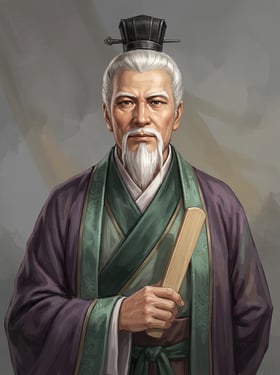
Wang Lang was then seventy-six years old, a white-bearded elder seated at the center.

Life
In the novel: 6 chapters · In the Records: 17 volumes
Life?–228
195 CE (Xingping 2)
196 CE (Jian'an 1)
2 more events
210 CE (Jian'an 15)
220 CE (Huangchu 1)
228 CE (Taihe 2)
- Kongming Scolds Wang Lang to DeathMount QiKilled in action
- First Northern ExpeditionMount QiKilled in action
- Cao Wei
- Tao Qian's Faction· Undated
- Hatched: dated by chapter
- Life event
- Death
List all 5 stops
On the boards
Compare with someone →Where this person ranks on each board.
Who they were
Character profile
- Appearance
- Wang Lang was then seventy-six years old, a white-bearded elder seated at the center.
- Character
- In judging cases Wang Lang aimed at leniency, deciding doubtful crimes toward the lighter penalty; strict yet magnanimous, respectful and frugal, he accepted no betrothal gifts from relatives by marriage. Practiced in argument and careful in speech, he was nonetheless self-assured and fond of speaking of Heaven's mandate.
- Manner of speech
- Wang Lang was skilled at citing ancient maxims, such as 'those who follow Heaven flourish, those who defy it perish,' and expounded the might of 'Great Wei with its million armored men and thousand able generals.' He once argued from 'where there is rise there must be fall, where there is flourishing there must be decline' to urge the ruler to yield in good time.
- Life
- Wang Lang, styled Jingxing, was a native of Donghai commandery. He studied under the Grand Commandant Yang Ci and, for his mastery of the classics, was appointed Gentleman of the Interior. He served as Administrator of Kuaiji, then submitted to Cao Wei, holding in succession the offices of Grand Master of Remonstrance, Privy Treasurer, Chief of Ceremonial, and Chief Judge. When Emperor Wen took the rank of king he became Grandee Secretary, later rising to Minister of Works, and after Emperor Ming's accession was transferred to Minister over the Masses; he died in the second year of Taihe with the posthumous title Cheng (the Accomplished Marquis).
- Anecdotes
- Wang Lang was originally named 'Yan' and later changed it to 'Lang.' He had an old friendship with Xu Jing, and even when he reached the rank of a high ministerial officer in the early years of Cao Wei he still sent letters recalling their bond. He once urged Tao Qian to present a memorial to Chang'an, and also wrote to Sun Ce to discuss the rites for Liu Yao after his death.
Historical Record
Wang Lang, courtesy name Jingxing, was from Donghai Commandery. Well versed in the Confucian classics, he was appointed a Gentleman of the Palace and later served as Chief of Ziqiu. He had studied under Grand Commandant Yang Ci, and after Yang Ci died, he resigned from office to observe mourning. Tao Qian, Inspector of Xu Province, recommended Wang Lang as a Maocai and appointed him as an Administrative Clerk. Wang Lang and Zhao Yu urged Tao Qian to send an envoy to Chang'an to pay homage to the Han emperor. Tao Qian followed their advice, and Wang Lang subsequently became Administrator of Kuaiji. When Sun Ce crossed the river to seize the Jiangdong region, the meritorious official Yu Fan urged Wang Lang to yield. Wang Lang believed that as a Han official he ought to defend the city, so he sent troops to resist. After being defeated, he sailed across the sea to Dongye and eventually surrendered to Sun Ce. Later, Cao Cao summoned Wang Lang. After traveling back and forth across rivers and seas for years, he finally arrived and successively held posts including Admonitions Grandee and Assistant to the Minister of Works in military affairs. After the state of Wei was founded, he served in succession as Administrator of Wei Commandery, Chamberlain for the Palace Revenues, Director of Ceremonial, and Minister of Justice. In adjudicating cases, he made leniency his guiding principle and advocated lighter punishment for doubtful offenses; he and Zhong Yao were both renowned for their handling of cases.
After Cao Pi assumed the throne, Wang Lang became the Minister of Justice and was enfeoffed as Marquis of Anling Village. After Cao Pi became emperor, Wang Lang was appointed Minister of Works and promoted to Marquis of Leping Township. He repeatedly submitted memorials on government affairs, urging the state to nurture the people and reduce punishments, lighten corvée labor, oppose military campaigns ill-suited to the times, and refrain from large-scale palace construction. After Emperor Ming ascended the throne, Wang Lang was promoted to Marquis of Lanling and transferred to the post of Minister over the Masses. Later, he was sent with an imperial tally and written instructions to present a sacrificial address at the tomb of Empress Wenzhao. He also recommended Yang Biao and submitted a memorial urging Emperor Ming to have more children. In the second year of Taihe, Wang Lang died and was posthumously awarded the title Marquis Cheng. His son, Wang Su, inherited his title.
In the Novel
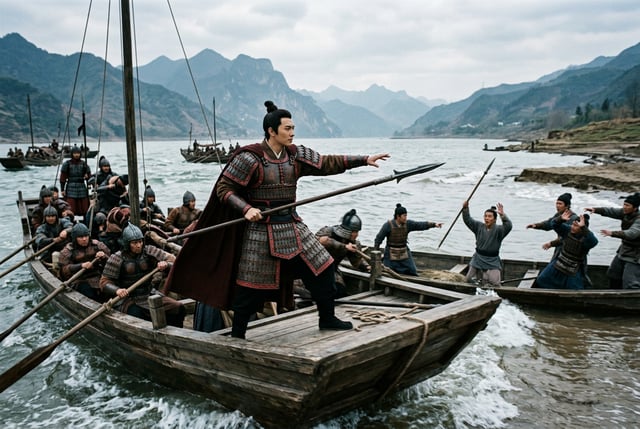
Romance of the Three Kingdoms portrays Wang Lang as an elder Wei statesman skilled in argument and eloquent in speech, while also giving him a more direct role in the transition of power under Cao Wei. In Chapter 15, he disregards Yu Fan’s advice and helps Yan Baihu resist Sun Ce. He fights Sun Ce before the forces at Shanyin, and after being defeated retreats to Kuaiji. Then, when Sun Jing attacks Chadu and defeats Zhou Xin and others, Wang Lang abandons the city and flees to the coast. This broadly corresponds to the historical account of his resistance to Sun Ce, defeat, flight by sea, and eventual surrender, but the specific battle, dialogue between the characters, and details of his escape are elaborations added by the novel.
The novel also depicts Wang Lang as taking part in supporting Cao Pi and urging the Abdication of Emperor Xian of Han, and as becoming Minister of Works after Cao Pi received the abdication. These episodes portray him as an active advocate of the transition to the new dynasty. During Zhuge Liang's Northern Expeditions, Wang Lang joins the campaign under Cao Zhen as a military advisor, boasting that a single speech from him will persuade the Shu army to retreat. Before the forces at Mount Qi, he invokes the Mandate of Heaven to urge Zhuge Liang to surrender, but Zhuge Liang publicly denounces him, and Wang Lang, enraged, falls from his horse and dies. The Records of the Three Kingdoms recounts Wang Lang’s political discussions and official career, but contains no such debate before the forces or scene in which he is berated to death; this ending is a dramatic portrayal unique to the novel.
Key Relationships
- Tao Qian and Zhao Yu: While Wang Lang served as Tao Qian’s Administrative Clerk, he and Zhao Yu, Tao Qian’s Assistant Clerk, urged Tao Qian to send an envoy to Chang'an to pay homage in accordance with the Han emperor’s authority. After this, Wang Lang became Administrator of Kuaiji.
- Sun Ce and Yu Fan: Yu Fan once urged Wang Lang to avoid Sun Ce, but Wang Lang insisted on defending the city and was defeated. The historical account records that he later surrendered to Sun Ce. The novel expands their confrontation before the forces and depicts Wang Lang helping Yan Baihu resist Sun Ce.
- Cao Wei rulers and colleagues: Wang Lang served Cao Cao, Cao Pi, and Cao Rui. He and Zhong Yao were both renowned for their handling of cases, and he also recommended Yang Biao and remonstrated with Cao Pi and Cao Rui on matters of governance.
- Zhuge Liang: Wang Lang’s attempt to persuade Zhuge Liang to surrender before the forces at Mount Qi, followed by Zhuge Liang’s denunciation of him and his death, is a relationship and ending unique to the novel.
Signature Scenes
- Fighting Sun Ce and being defeated: Wang Lang believed a Han official should defend his territory, so he raised troops to resist Sun Ce. After being defeated, he sailed across the sea to Dongye. The novel expands this episode to include his assistance to Yan Baihu, a battle before the forces at Shanyin, and his flight to the coast.
- Remonstrating out of concern for the people’s livelihood: While serving as Minister of Justice, Wang Lang submitted memorials emphasizing sound and fair adjudication, reduced corvée labor, the development of farming and sericulture, and the nurturing of the population. Under Emperor Ming, seeing that the people lacked sufficient means, he urged the court to halt excessive construction, prioritize farming, and prepare for military affairs.
- Debate before the forces at Mount Qi: The novel has Wang Lang invoke the change of dynasties under the Mandate of Heaven to urge Zhuge Liang to surrender, whereupon Zhuge Liang fiercely rebuts him and he dies on the battlefield. This scene is unique to the novel and is not recorded in the historical account.
Quotes
19 lines in the books · 3 featured
「天數有變,神器更易,而歸有德之人,此自然之理也。曩自桓、靈以來,黃巾倡亂,天下爭橫。降至初平、建安之歲,董卓造逆,傕、汜繼虐;袁術僭號於壽春,袁紹稱雄於鄴上;劉表占據荊州,呂布虎吞徐郡:盜賊蜂起,奸雄鷹揚,社稷有累卵之危,生靈有倒懸之急。我太祖武皇帝,掃清六合,席捲八荒;萬姓傾心,四方仰德:非以權勢取之,實天命所歸也。世祖文帝,神聖文武,以膺大統,應天合人,法堯禪舜,處中國以治萬邦,豈非天心人意乎?今公蘊大才,報大器,欲自比於管樂,何乃強欲逆天理,背人情而行事耶?豈不聞古人云:『順天者昌,逆天者亡。』今我大魏帶甲百萬,良將千員。諒腐草之螢光,怎及天心之皓月?公可倒戈卸甲,以禮來降,不失封侯之位。國安民樂,豈不美哉!」
This impassioned oration is Wang Lang's best-known image in the Romance of the Three Kingdoms, establishing the literary allusion of his being 'scolded to death.'
「自古以來,有興必有廢,有盛必有衰。豈有不亡之國、不敗之家乎?漢室相傳四百餘年,延至陛下,氣數已盡,宜早退避,不可遲疑;遲則生變矣。」
These words articulate the decline of the House of Han and the inevitability of Cao Wei supplanting it, reflecting Wang Lang's political stance as a senior minister of Cao Wei.
「來日可嚴整隊伍,大展旌旗。老夫自出,只用一席話,管教諸葛亮拱手而降,蜀兵不戰自退。」
This line displays Wang Lang's conceited and enemy-underestimating character, setting the stage for his later verbal duel with Zhuge Liang.
- Family
- Lord & vassal
- Friends
- Enemies
- Teacher & student
Who is Wang Lang connected to?
Pick someone to see how many steps lie between them and Wang Lang.
History vs. novel
7 points · 3 novel-only
| History | Novel |
|---|---|
| Sun Ce Attacks KuaijiNovel embellishes | |
Wang Lang believed that, as an official of the Han dynasty, he should defend the city, so he led troops against Sun Ce. After being defeated, he fled to Dongye and eventually surrendered. Sun Ce rebuked him but did him no harm. vol. 13 | Wang Lang rejected Yu Fan’s suggestion that he urge Baihu to surrender. Instead, he joined forces with Baihu to fight Sun Ce, accusing Sun Ce of forcibly annexing territory and claiming he would avenge the Yan clan. ch. 15 |
| The RetreatNovel embellishes | |
The official histories record that after losing a battle against Sun Ce, Wang Lang crossed the sea to Dongye. Sun Ce pursued and soundly defeated him, after which Wang Lang surrendered. vol. 13 | The novel describes Sun Ce setting an ambush and counterattacking. Zhou Xin was killed by Sun Ce, while Baihu broke through the encirclement and escaped; Wang Lang was unable to stop Sun Ce’s advance. ch. 15 |
| Summoned by Cao CaoHistory only | |
In the third year of Jian’an, Cao Cao submitted a memorial requesting Wang Lang’s appointment, and Sun Ce sent him to serve. Cao Cao asked how Sun Ce had risen to power. Wang Lang praised his talent, strategy, and ambition, and Cao Cao appointed him Grand Master of Remonstrance and an aide in the Secretariat’s military affairs. vol. 13 | — |
| Urging Restraint in the Campaign Against Wu and ShuHistory only | |
When Sun Quan and Liu Bei were at war, the court debated whether to send troops to ally with Wu and conquer Shu. Wang Lang urged them to wait for Wu’s forces to act and then seize an opportune moment, pointing out that the rainy season was unsuitable for a military campaign. Emperor Wen accepted his advice. vol. 13 | — |
| Remonstrating over the AbdicationNovel only | |
| — | The novel portrays Wang Lang saying, before Cao Pi accepted the abdication, that the Han dynasty’s fortune had run its course. He urged Emperor Xian of Han to abdicate without delay, warning that waiting would invite upheaval. ch. 80 |
| Debate at Mount QiNovel only | |
| — | Wang Lang accompanied Cao Zhen on campaign and urged Zhuge Liang to surrender before the battle lines at Mount Qi, claiming that Wei’s rule was the will of Heaven and promising him a marquisate. ch. 93 |
| Insulted and Thrown from His HorseNovel only | |
| — | In the novel, Zhuge Liang rebukes Wang Lang before the two armies, and Wang Lang is so overcome by the insults that he falls from his horse and dies. This famous scene is fictional, appearing only in Romance of the Three Kingdoms. ch. 93 |
- Sun Ce Attacks KuaijiNovel embellishes
- History
Wang Lang believed that, as an official of the Han dynasty, he should defend the city, so he led troops against Sun Ce. After being defeated, he fled to Dongye and eventually surrendered. Sun Ce rebuked him but did him no harm.
vol. 13
- Novel
Wang Lang rejected Yu Fan’s suggestion that he urge Baihu to surrender. Instead, he joined forces with Baihu to fight Sun Ce, accusing Sun Ce of forcibly annexing territory and claiming he would avenge the Yan clan.
ch. 15
- The RetreatNovel embellishes
- History
The official histories record that after losing a battle against Sun Ce, Wang Lang crossed the sea to Dongye. Sun Ce pursued and soundly defeated him, after which Wang Lang surrendered.
vol. 13
- Novel
The novel describes Sun Ce setting an ambush and counterattacking. Zhou Xin was killed by Sun Ce, while Baihu broke through the encirclement and escaped; Wang Lang was unable to stop Sun Ce’s advance.
ch. 15
- Summoned by Cao CaoHistory only
- History
In the third year of Jian’an, Cao Cao submitted a memorial requesting Wang Lang’s appointment, and Sun Ce sent him to serve. Cao Cao asked how Sun Ce had risen to power. Wang Lang praised his talent, strategy, and ambition, and Cao Cao appointed him Grand Master of Remonstrance and an aide in the Secretariat’s military affairs.
vol. 13
- Urging Restraint in the Campaign Against Wu and ShuHistory only
- History
When Sun Quan and Liu Bei were at war, the court debated whether to send troops to ally with Wu and conquer Shu. Wang Lang urged them to wait for Wu’s forces to act and then seize an opportune moment, pointing out that the rainy season was unsuitable for a military campaign. Emperor Wen accepted his advice.
vol. 13
- Remonstrating over the AbdicationNovel only
- Novel
The novel portrays Wang Lang saying, before Cao Pi accepted the abdication, that the Han dynasty’s fortune had run its course. He urged Emperor Xian of Han to abdicate without delay, warning that waiting would invite upheaval.
ch. 80
- Debate at Mount QiNovel only
- Novel
Wang Lang accompanied Cao Zhen on campaign and urged Zhuge Liang to surrender before the battle lines at Mount Qi, claiming that Wei’s rule was the will of Heaven and promising him a marquisate.
ch. 93
- Insulted and Thrown from His HorseNovel only
- Novel
In the novel, Zhuge Liang rebukes Wang Lang before the two armies, and Wang Lang is so overcome by the insults that he falls from his horse and dies. This famous scene is fictional, appearing only in Romance of the Three Kingdoms.
ch. 93
Combat
On the field
Duels, kills and executions as the texts tell them, counted separately for the Records and the Romance.
- RomanceCh. 15DuelTaishi CiBroken off「王朗拍馬舞刀,與慈戰」
Stratagems
Plans this person devised or saw through, as the texts tell them.
- Romance
- 1 carried out · 0 worked · 0 turned down · 0 seen through
- RomancePersuade to SurrenderPersuasionFailedagainst Shu armyCh. 93「老夫自出,只用一席話,管教諸葛亮拱手而降,蜀兵不戰自退」
Events
Events (11)
Battles and events the texts place this person in, by date.
Battles
- 228First Northern ExpeditionKilled in action
- 228Zhuge Liang's Northern Expeditions
- 230Cao Zhen's Invasion of Shu
Other events
- 195Sun Ce's Pacification of JiangdongVictim
- 196Sun Jing's Stratagem to Attack KuaijiCommander
- 196Wang Lang's Failed Resistance Against Sun CeCommander
- 210Bronze Bird Terrace Inauguration CeremonyWitness
- 220Cao Pi Supplants the HanAdvisor
- 220Cao Cao Dies and Emperor Wen of Wei Ascends the Throne
- 220Abdication of Emperor Xian of Han
- 228Kongming Scolds Wang Lang to DeathKilled in action
Places
- Native of
- DonghaiRecords
- Was at
- Xu ProvinceRecords
- Qu'eRecords
- Governed
- KuaijiRecords
- Wei CommanderyRecords
Continue
Sun Ce's Pacification of Jiangdong
Relationship timeline13 entries ▸
History · vol. 13
- Tao Qian§25
Lord
Tao Qian, Inspector of Xu Province, recognized Lang as a Maocai; Lang served as Qian’s aide
- Sun Ce§25
Rival
raised troops and fought Sun Ce, but was defeated; Sun Ce rebuked Lang for his refined, scholarly manner but did not harm him
- Zhao Yu§25
Friend
jointly persuaded Tao Qian, together with Deputy Administrator Zhao Yu and others, to send an envoy bearing a memorial to Chang'an
- Yu Fan§25
Rival
Lang's chief clerk Yu Fan advised him to avoid Sun Ce; Lang did not comply
- Yang Ci§25
Teacher
studied under Grand Commandant Yang Ci; when Ci died, resigned from office and observed mourning
- Yang Biao§29
Friend
During Huangchu, an edict called for the recommendation of men of exemplary conduct; Lang recommended Grandee of the Palace Yang Biao and pleaded illness to yield his position
- Wang Su§32
Child
father and son; his son Su succeeded him
History · vol. 17
- Yu Jin§15
Student
regarded him as exceptional; recommended him for his talent, and he was appointed General-in-Chief
All 13
Loading…
Inner monologues · AI-generated3 monologues ▸
- I am Wang Lang, courtesy name Jingxing. In my youth, I devoted myself to the study of the classics, and in Wei I rose to
- Having come this far, I have often felt that more than my own fortunes are at stake. In earlier years, when summoned to
- I am Wang Lang, courtesy name Jingxing, from Donghai Commandery. I recall that when I was young, my mastery of the class