Cao Wei · General-in-Chief Who Garrisoning the Army
Chen Qun
courtesy name 长文 · –237
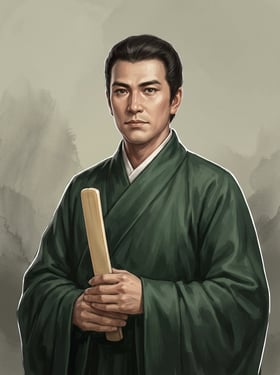
He held firmly to principle and reputation, was broadly learned yet never boastful, and did not speak of his sovereign's faults.

Life
In the novel: 6 chapters · In the Records: 10 volumes
Life?–237
219 CE (Jian'an 24)
- Wei Feng's ConspiracyYeAdvisor
220 CE (Huangchu 1)
- Nine-Rank SystemLuoyangInstigator
- Cao Pi Supplants the HanAbdication PlatformAdvisor
1 more event
220 CE (Huangchu 1)
230 CE (Taihe 4)
Allegiance
- Cao Wei
- Hatched: dated by chapter
- Life event
List all 5 stops
- XuchangBirthplace
- Ye219Wei Feng's Conspiracy
- Abdication Platform220Cao Pi Supplants the Han
- Luoyang220–230Nine-Rank System+2 more
- Hanzhong230Cao Zhen's Invasion of Shu
On the boards
Compare with someone →Where this person ranks on each board.
Who they were
Character profile
- Character
- He held firmly to principle and reputation, was broadly learned yet never boastful, and did not speak of his sovereign's faults.
- Manner of speech
- He drew on the classics and precedents, and submitted memorials that admonished tactfully and to the point.
- Life
- Chen Qun was a man of Xuchang in Yingchuan; his grandfather was Chen Shi and his father Chen Ji. When Liu Bei governed Yu Province he appointed him Aide-de-camp; later Cao Cao recruited him as an assistant in the Western Bureau of the Excellency of Works, and he held many offices thereafter. He devised the Nine-Rank System, and under Emperor Wen of Wei, Cao Pi, he served as Prefect of the Masters of Writing and Marquis of Yingxiang, and, together with Sima Yi and others, received the testamentary charge to assist the government.
- Anecdotes
- He several times reproached Guo Jia at court for his lack of self-discipline in conduct. He was a ministerial pillar of Cao Wei and the originator of the Nine-Rank System.
Historical Record
Chen Qun, courtesy name Changwen, was from Xu Chang, Yingchuan, and came from a prominent family: his grandfather Chen Shi, father Chen Ji, and uncle Chen Chen were all well known. Early on, when Liu Bei governed Yu Province, he appointed Chen Qun as his aide-de-camp. Chen Qun urged Liu Bei not to advance east into Xu Province, pointing out that Yuan Shu was still powerful and Lü Bu might exploit the opening to attack and seize Xiapi. Liu Bei did not heed him and was later attacked by Lü Bu, regretting that he had not listened. Cao Cao appointed Chen Qun as a clerk in the Western Bureau of the Minister of Works. Chen Qun subsequently held posts including county administrator, Palace Attendant Censor, military adviser to the Chancellor, and Chief Censor. Cautious in assessing people, he once returned Cao Cao’s orders appointing Wang Mo and Zhou Kui, judging them to be men of poor character. The two were later executed for crimes, and Cao Cao apologized to Chen Qun. Chen Qun also recommended Chen Jiao and Dai Qian, both of whom were appointed.
At court, Chen Qun was known for upholding principle and showing no favoritism. When Cao Cao proposed restoring corporal punishments, Chen Qun cited an earlier argument made by his father, Chen Ji, in support of his position. Cao Pi, while still Heir Apparent, held him in high regard. Chen Qun was later promoted to Minister of Works and created the nine-rank system for selecting officials. After Cao Pi ascended the throne, Chen Qun held such posts as Vice Director of the Imperial Secretariat, Director of the Imperial Secretariat, and General Who Guards the Army, while also overseeing the affairs of the Imperial Secretariat. When Emperor Wen became gravely ill, Chen Qun, Cao Zhen, Sima Yi, and others received his testamentary edict entrusting them with the regency. After Cao Rui ascended the throne, Chen Qun was enfeoffed as Marquis of Yingyin, granted the authority to establish a staff, and then appointed Minister of Works, while continuing to oversee the affairs of the Imperial Secretariat.
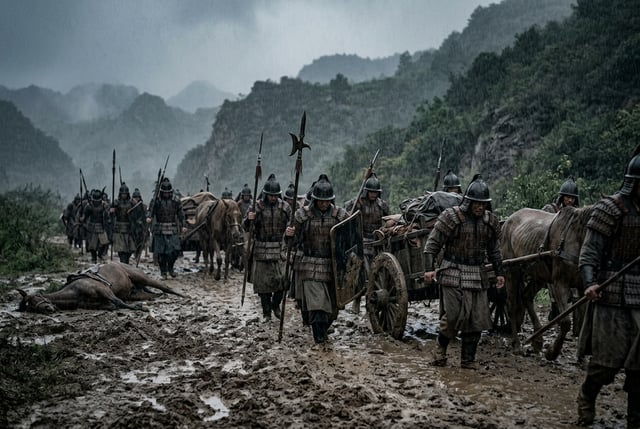
During Emperor Ming’s reign, Chen Qun repeatedly remonstrated with him. He opposed Cao Zhen’s campaign against Shu along multiple routes, arguing that the rugged Xie Valley was perilous and that supply convoys could easily be intercepted. When Cao Zhen changed course and took the Ziwu Valley, Chen Qun again explained the difficulties. After days of heavy rain, he recommended recalling Cao Zhen, and the emperor accepted his advice. During the Qinglong era, palace construction interfered with the agricultural season, so Chen Qun submitted a memorial urging restraint, and the emperor scaled back the work. Chen Qun also once pleaded on Liu Yi’s behalf, explaining that deliberations on punishment should serve the state, not personal ties. After Liu Yi was restored to office, he was grateful to Chen Qun, who did not claim credit. Whenever Chen Qun privately reported gains and losses, he often destroyed the drafts of his memorials. A comment cited in Pei’s annotations says that court officials learned of his remonstrances only later, when they came across them, and then realized how often he had spoken out. Chen Qun died in the fourth year of Qinglong and was given the posthumous title Marquis Jing. Emperor Ming remembered his merits and virtue.
In the Novel
The Romance of the Three Kingdoms portrays Chen Qun as a strategist and senior minister at the courts of Cao Cao and Cao Pi. In Chapter 58, the novel has Chen Qun, then serving as Palace Attendant Censor in the Bureau of Law, propose a strategy of first taking Jiangnan and then moving against Xichuan. Cao Cao says the proposal accords exactly with his own thinking and immediately dispatches his troops. This military counsel is an episode attributed to Chen Qun by the novel but is not recorded in the Records of the Three Kingdoms provided here.
The novel also places him in the political events surrounding Cao Wei’s replacement of the Han dynasty. After Sun Quan submitted, Chen Qun and the other officials urged Cao Cao to follow Heaven’s mandate and assume the throne without delay. As Cao Cao lay dying, Chen Qun was among those entrusted with assisting Cao Pi. When Cao Pi accepted the abdication, Emperor Xian of Han ordered Chen Qun to draft the edict transferring the empire. The Records of the Three Kingdoms records that Chen Qun received Cao Pi’s testamentary edict and served as regent, but does not describe these specific episodes of urging him to ascend the throne or drafting the edict; they should therefore be regarded as the novel’s inventions.
Key Relationships
Chen Qun’s relationship with Cao Cao involved both appointment and frank remonstrance: Cao Cao appointed him as a clerk, and later apologized to him after Wang Mo and Zhou Kui were found guilty, having ignored Chen Qun’s advice. Chen Qun also once spoke up on Liu Yi’s behalf. His relationship with Cao Pi developed from that of a court official into one of a trusted regent. Cao Pi held Chen Qun in high regard while Heir Apparent, and Chen Qun established the nine-rank system for selecting officials. When Emperor Wen became gravely ill, Chen Qun received his testamentary edict to assist the heir.
Chen Qun came from the prominent Chen family and, like his grandfather Chen Shi, father Chen Ji, and uncle Chen Chen, was renowned for his reputation. He associated with Kong Rong and was also praised for his discernment in judging people. The novel depicts him taking part in urging Cao Cao to accept the abdication and drafting the abdication edict for Cao Pi; these specific scenes are unique to the novel.
Signature Scenes
The episode that best reflects Chen Qun’s political judgment is his urging Liu Bei not to rush east into Xu Province: he foresaw that Lü Bu would attack from behind. Liu Bei ignored him, and Xiapi later fell, confirming his judgment. During Emperor Ming’s reign, Chen Qun repeatedly set out the risks of campaigning against Shu, citing the terrain, the transport of provisions, and the weather. The emperor followed his advice and recalled Cao Zhen, illustrating Chen Qun’s cautious approach to military affairs and reasoned remonstrance.
Another aspect of his character was that of a modest, upright remonstrator. When he interceded for Liu Yi, he stressed that decisions on punishment should be guided by public duty and did not claim personal credit for the favor. He generally reported his views on the ruler’s gains and losses in confidential memorials, so outsiders might never know of them. In contrast to these historical accounts, the novel’s scenes of Chen Qun being entrusted with assisting Cao Pi at Cao Cao’s deathbed, supporting Cao Rui’s accession, and drafting the abdication edict emphasize his dramatic role as a senior minister during the change of dynasties. The drafting of the edict is unique to the novel.
Quotes
7 lines in the books · 3 featured
「今劉備、孫權結為脣齒,若劉備欲取西川,丞相可命上將提兵,會合淝之眾,逕取江南,則孫權必求救於劉備。備意在西川,必無心救權;權無救則力乏兵衰,江東之地,必為丞相所得。若得江東,則荊州一鼓可平也。荊州既平,然後徐圖西川,天下定矣。」
This stratagem demonstrates Chen Qun's outstanding strategic vision, with a profound influence on the tripartite balance of the Three Kingdoms.
「漢室久已衰微,殿下功德巍巍,生靈仰望。今孫權稱臣歸命,此天人之應,異氣齊聲。殿下宜應天順人,早正大位。」
This remark is Chen Qun's key argument urging Cao Cao to claim the imperial throne, reflecting his political stance.
「陛下以聖德應運受命,創業革制,當永爲後式。案典籍之文,無婦人分土命爵之制。在禮典,婦因夫爵。秦違古法,漢氏因之,非先王之令典也。」
This remark reflects Chen Qun's commitment to ritual and legal institutions, which shaped the statutes and systems of Cao Wei.
- Family
- Lord & vassal
- Friends
- Enemies
- Teacher & student
- Other
Who is Chen Qun connected to?
Pick someone to see how many steps lie between them and Chen Qun.
History vs. novel
7 points · 4 novel-only
| History | Novel |
|---|---|
| Proposing an attack on JiangnanNovel only | |
| — | Chen Qun proposed to Cao Cao that they attack Jiangnan while Liu Bei was plotting to seize Xichuan, prompting Sun Quan to seek Liu Bei’s aid, and then make a move on Jing Province and Xichuan. Cao Cao praised the plan as fitting. ch. 58 |
| Urging Cao Cao to take the throneNovel only | |
| — | After Sun Quan submitted as a vassal, Chen Qun and others urged Cao Cao to follow the will of Heaven and the people and ascend the throne without delay. Cao Cao declined, saying that if the Mandate of Heaven were his, he would be content to be King Wen of Zhou. ch. 78 |
| Drafting the abdication edictNovel only | |
| — | Under pressure from Wei troops, Emperor Xian of Han declared that he wished to abdicate. He then ordered Chen Qun to draft the edict of abdication, and Hua Xin carried the edict and imperial seal to Cao Pi. ch. 80 |
| Cao Pi entrusts the young emperorNovel embellishes | |
When Cao Pi was gravely ill, he ordered Cao Zhen, Chen Qun, Cao Xiu, and Sima Yi to receive his final edict together and assist his successor. vol. 22 | The novel first summoned Cao Zhen, Chen Qun, and Sima Yi to entrust them with the young ruler. Cao Xiu then entered the palace, and Cao Pi also charged him to join them in providing support. The four ultimately enthroned Cao Rui. ch. 91 |
| Enthroning Cao RuiHistory only | |
After Emperor Ming ascended the throne, Chen Qun was elevated to Marquis of Yingyin. Along with Cao Xiu, Cao Zhen, Sima Yi, and others, he was granted an independent office; he was subsequently appointed Minister of Works while continuing to oversee the affairs of the Secretariat. vol. 22 | — |
| Asking about tactics at ShangyongNovel only | |
| — | During the siege of Shangyong, Chen Qun asked Sima Yi why he did not attack the city, but instead allowed the enemy to gather firewood and graze their livestock. After hearing his explanation, Chen Qun was impressed by Sima Yi’s way of conducting war. ch. 106 |
| Chen Qun recommends Bao XunHistory only | |
In the fourth year of Huangchu, Chen Qun and Sima Xuanwang jointly recommended Bao Xun for the post of Palace Prefect. Bao Xun later angered Emperor Wen with his blunt remonstrances, and Chen Qun and the others pleaded on his behalf, to no avail. vol. 12 | — |
- Proposing an attack on JiangnanNovel only
- Novel
Chen Qun proposed to Cao Cao that they attack Jiangnan while Liu Bei was plotting to seize Xichuan, prompting Sun Quan to seek Liu Bei’s aid, and then make a move on Jing Province and Xichuan. Cao Cao praised the plan as fitting.
ch. 58
- Urging Cao Cao to take the throneNovel only
- Novel
After Sun Quan submitted as a vassal, Chen Qun and others urged Cao Cao to follow the will of Heaven and the people and ascend the throne without delay. Cao Cao declined, saying that if the Mandate of Heaven were his, he would be content to be King Wen of Zhou.
ch. 78
- Drafting the abdication edictNovel only
- Novel
Under pressure from Wei troops, Emperor Xian of Han declared that he wished to abdicate. He then ordered Chen Qun to draft the edict of abdication, and Hua Xin carried the edict and imperial seal to Cao Pi.
ch. 80
- Cao Pi entrusts the young emperorNovel embellishes
- History
When Cao Pi was gravely ill, he ordered Cao Zhen, Chen Qun, Cao Xiu, and Sima Yi to receive his final edict together and assist his successor.
vol. 22
- Novel
The novel first summoned Cao Zhen, Chen Qun, and Sima Yi to entrust them with the young ruler. Cao Xiu then entered the palace, and Cao Pi also charged him to join them in providing support. The four ultimately enthroned Cao Rui.
ch. 91
- Enthroning Cao RuiHistory only
- History
After Emperor Ming ascended the throne, Chen Qun was elevated to Marquis of Yingyin. Along with Cao Xiu, Cao Zhen, Sima Yi, and others, he was granted an independent office; he was subsequently appointed Minister of Works while continuing to oversee the affairs of the Secretariat.
vol. 22
- Asking about tactics at ShangyongNovel only
- Novel
During the siege of Shangyong, Chen Qun asked Sima Yi why he did not attack the city, but instead allowed the enemy to gather firewood and graze their livestock. After hearing his explanation, Chen Qun was impressed by Sima Yi’s way of conducting war.
ch. 106
- Chen Qun recommends Bao XunHistory only
- History
In the fourth year of Huangchu, Chen Qun and Sima Xuanwang jointly recommended Bao Xun for the post of Palace Prefect. Bao Xun later angered Emperor Wen with his blunt remonstrances, and Chen Qun and the others pleaded on his behalf, to no avail.
vol. 12
Events
Events (8)
Battles and events the texts place this person in, by date.
Battles
- 230Cao Zhen's Invasion of ShuAdvisor
Other events
- 219Wei Feng's ConspiracyAdvisor
- 220Nine-Rank SystemInstigator
- 220Cao Pi Supplants the HanAdvisor
- 220Cao Cao Dies and Emperor Wen of Wei Ascends the ThroneAdvisor
- 220Abdication of Emperor Xian of Han
- 230Emperor Ming of Wei's Lavish Palace ConstructionAdvisor
- 238Sima Yi's Liaodong Campaign
Places
- Native of
- XuchangRecords
Continue
Cao Zhen's Invasion of Shu
Relationship timeline15 entries ▸
History · vol. 12
History · vol. 14
- Guo Jia§33
Rival
Repeatedly complained at court that Guo Jia did not maintain proper conduct
History · vol. 22
- Chen Ji§9
Kin
father and son
- Liu Bei§9
Advised
When serving in Yu Province, was recruited as an aide-de-camp and advised against going east
- Chen Shi§9
Kin
Grandfather
Kin
Uncle
- Cao Pi§14
Friend
When Emperor Wen was in the Eastern Palace, he deeply respected Qi and treated him with the courtesy due a friend
- Cao Pi§14
Advised
Together with Cao Zhen, Sima Yi, and others, received the testamentary edict to assist in governing
- Liu Yi§30
Friend
Told Taizu, who rescued him and restored him to his position
- Chen Tai§33
Child
father and son
All 15
Loading…
Inner monologues · AI-generated3 monologues ▸
- I am Chen Qun, courtesy name Changwen. Whenever I reflect on the duties I have held throughout my life, I dare not judge
- I am Chen Qun, courtesy name Changwen, born in Xu Chang, Yingchuan. My grandfather Chen Shi, my father Chen Ji, and my u
- I recall that in the middle of Huangchu, Emperor Wen wished to posthumously ennoble the parents of the Empress Dowager.