Cao Wei · Attendant Gentleman of the Palace; Attendant Censor; Palace Attendant; Right General of the Gentlemen of the Household; Palace Superintendent (Censor-in-Chief); Director of Legal Documents
Bao Xun
courtesy name 叔业 · –226
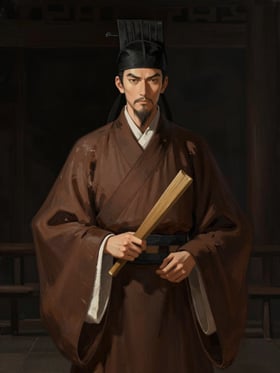
Bao Xun, a Cao Wei official, was known for upholding the law, repeatedly remonstrating with Emperor Wen, and ultimately being executed.
On the boards
Compare with someone →Where this person ranks on each board.
Historical Record
Bao Xun, courtesy name Shu Ye, was from Pingyang, Taishan. He was the son of Bao Xin and the ninth-generation descendant of Bao Xuan, who had served as Commandant of Sili Province under the Han. Bao Xin once served as Chancellor of Jibei and followed Cao Cao. He died in battle, and his achievements secured him a place in the founding history of Cao Wei. Bao Xun was appointed an aide in the chancellor’s office and became known for his integrity and lofty principles. He was even-tempered yet steadfast in his principles, and later was both incorruptible and generous. When he died, his family had no surplus wealth.
In the twenty-second year of Jian’an, when Cao Pi was made heir apparent, Bao Xun was appointed Attendant to the Heir Apparent and later promoted to Gentleman of the Yellow Gate. He was then appointed Commandant of the Western Part of Wei Commandery. The younger brother of the heir apparent’s consort, Lady Guo, served as an official in Quzhou County. He had stolen government cloth and, by law, should have been executed. Cao Pi wrote repeatedly asking that he be pardoned. Bao Xun did not dare to release him arbitrarily and reported the facts as they were. Even while serving in the Eastern Palace, Bao Xun had displeased the heir apparent by standing firm and refusing to yield; this incident further aroused Cao Pi’s resentment. Bao Xun later served as Palace Censor. After Cao Pi assumed the throne as king, Bao Xun concurrently held the posts of Commandant of the Imperial Equipage and Attendant-in-Ordinary.
After Cao Pi became emperor, Bao Xun repeatedly spoke frankly. He advocated prioritizing the reform of military and government affairs and allowing the people to recover. He opposed hunting expeditions during the mourning period and also opposed campaigns against Wu, warning that a distant expedition would deplete the state’s strength. He recalled the earlier incident in which a dragon boat had been endangered, nearly putting the ancestral temples at risk. After arguing with Liu Ye during an admonition against hunting and impeaching him for flattery, Bao Xun was sent out to serve as Right Gentleman of the Household. In the fourth year of Huangchu, on the recommendation of Chen Qun and Sima Yi, he was appointed Palace Inspector, and the officials of the court consequently conducted themselves with great solemnity and respect. In the sixth year of Huangchu, he again remonstrated against a campaign against Wu and was demoted to the post of Director of Legal Affairs.
Bao Xun ultimately fell afoul of the law over an incident involving Sun Yong, Administrator of Chenliu. The camp ramparts had not yet been completed, and when Sun Yong passed through, he did not take the proper route. Liu Yao, a clerk in the army, wanted to pursue the matter, but Bao Xun considered the circumstances inadequate and intervened to stop him. Later, when Liu Yao was impeached by Bao Xun for an offense, he secretly submitted a memorial accusing Bao Xun of having privately let Sun Yong off. The Emperor Wen had Bao Xun handed over to the廷尉 on the charge of “calling a deer a horse.” The廷尉 proposed a five-year sentence, but three reviewing officials reconsidered the case and held that, under the law, he could be fined two catties of gold. Zhong Yao, Hua Xin, Chen Qun, and others submitted memorials pleading for leniency, but the Emperor Wen refused, and Bao Xun was executed. Gao Rou had earlier refused to obey an imperial order to administer punishment unlawfully. The Emperor Wen nevertheless sent envoys directly to the廷尉 to have Bao Xun interrogated to death; only after Bao Xun died was Gao Rou permitted to return to his office. The Emperor Wen himself died twenty days later, and many people at the time lamented Bao Xun’s fate.
In the Novel
The materials provided contain no account of Bao Xun in novels such as Romance of the Three Kingdoms, so they offer no basis for describing his words, deeds, or portrayal in the novel. As far as the materials supplied here are concerned, the novel does not feature him. In the historical accounts, Bao Xun is principally portrayed as a man who upheld his principles while serving in the palace and in legal offices, repeatedly incurred his sovereign’s displeasure through remonstrance, and was ultimately killed because of old resentment and the case involving Sun Yong. These details are recorded in the Records of the Three Kingdoms and should not be mistaken for embellishments added by a novel.
Key Relationships
Bao Xin was Bao Xun’s father and an important reason others later pleaded for Bao Xun: Zhong Yao, Hua Xin, Chen Qun, and others argued that Bao Xin had rendered meritorious service to the Grand Ancestor, and asked that Bao Xun’s punishment be remitted, but they could not change the Emperor Wen’s decision. The relationship between Cao Pi and Bao Xun, shaped by old grievances from the Eastern Palace, continued after Cao Pi ascended the throne. Bao Xun refused to pardon Lady Guo’s younger brother arbitrarily, and later repeatedly opposed hunting and campaigns against Wu. The historical account explicitly states that the Emperor Wen grew increasingly angry with him and, because of their longstanding enmity, sought to deal with him unlawfully.
Chen Qun and Sima Yi jointly recommended Bao Xun for the post of Palace Inspector; they and other high officials later also took part in pleading for him. During the dispute over hunting, Liu Ye said that hunting was better than music. Bao Xun openly contradicted him and impeached him for flattery. Bao Xun’s connection with Sun Yong began when Sun passed through the camp: Bao Xun stopped the matter from being pursued, and Liu Yao later used this to frame him, setting in motion the fatal case.
Signature Scenes
Refusing a plea in the Eastern Palace. Lady Guo’s younger brother stole government cloth, and Cao Pi repeatedly sent handwritten pleas on his behalf. Bao Xun still dared not release him arbitrarily and reported the facts in full. This scene shows not merely an abstract commitment to uprightness, but a man who put the law first even under pressure from the heir apparent. The price was a deepening of Cao Pi’s resentment.
Remonstrating before the hunt. As the Emperor Wen was about to go hunting, Bao Xun stopped his carriage and submitted a memorial, urging him to observe the rites of mourning and put the people and government affairs first. The Emperor Wen tore up the memorial but went ahead with the expedition. On the way, Liu Ye said that hunting surpassed music, and Bao Xun responded by citing precedents from antiquity and arguing his case, then requested that Liu Ye be tried for his offense. The emperor flew into a rage, and Bao Xun was soon transferred from his post, showing the conflict between a remonstrating official’s frank words and a ruler’s personal preferences.
The Sun Yong case and regret after his death. Because the camp ramparts were unfinished, Bao Xun did not pursue Sun Yong, but was later accused in turn of showing him favoritism. Legal officials proposed a lighter punishment, and senior ministers jointly pleaded for leniency, yet the Emperor Wen remained determined to kill him. Bao Xun had maintained his integrity and left no surplus wealth when he died. The Emperor Wen died twenty days after Bao Xun, and the historical account closes with the sorrow and regret expressed by people at the time, highlighting the tragic end of a man who upheld the law and remonstrated frankly.
In the sources
Where the books name Bao Xun
History · vol. 12Records of the Three Kingdoms
== 鮑勛 ==
History · vol. 12Records of the Three Kingdoms
二十二年,立太子,以勛爲中庶子。徙黄門侍郎,出爲魏郡西部都尉。…
Read the whole paragraph
二十二年,立太子,以勛爲中庶子。徙黄門侍郎,出爲魏郡西部都尉。太子郭夫人弟爲曲周縣吏,斷盗官布,法应棄市。太祖時在谯,太子留鄴,數手書爲之请罪。勛不敢擅纵,具列上。勛前在東宫,守正不撓,太子固不能悦,及重此事,恚望滋甚。會郡界休兵有失期者,密敕中尉奏免勛官。久之,拜侍御史。延康元年,太祖崩,太子即王位,勛以驸馬都尉兼侍中。
History · vol. 24Records of the Three Kingdoms
帝以宿嫌,欲枉法誅治書執法鮑勛,而柔固執不從詔命。帝怒甚,遂召柔詣臺;…
Read the whole paragraph
帝以宿嫌,欲枉法誅治書執法鮑勛,而柔固執不從詔命。帝怒甚,遂召柔詣臺;遣使者承指至廷尉考竟勛,勛死乃遣柔還寺。
Quotes
5 lines in the books · 2 featured
臣聞五帝三王,靡不明本立教,以孝治天下。陛下仁聖惻隱,有同古烈。……如何在諒闇之中,修馳骋之事乎!臣冒死以聞,唯陛下察焉。
Bao Xun directly remonstrates that Cao Pi should not go hunting during the mourning period, embodying his loyal and forthright candor.
王師屡征而未有所克者,蓋以吴、蜀脣齿相依,凭阻山水,有難拔之勢故也。往年龍舟飘荡,隔在南岸,聖躬蹈危,臣下破胆。此時宗庙几至倾覆,爲百世之戒。今又勞兵襲遠,日费千金,中國虚耗,令黠虏玩威,臣竊以爲不可。
Bao Xun admonishes Cao Pi not to campaign against Wu again, pointing out that it exhausts the people and drains resources — a warning to later generations.
- Family
- Enemies
- Teacher & student
- Other
Who is Bao Xun connected to?
Pick someone to see how many steps lie between them and Bao Xun.
Combat
On the field
Duels, kills and executions as the texts tell them, counted separately for the Records and the Romance.
- RecordsJuan 12ExecutionCao PiLost「遂誅勛」
Places
- Native of
- Taishan CommanderyRecords
- Was at
- Wei CommanderyRecords
Continue
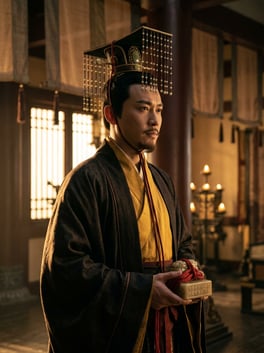
Cao Pi
Enemy
Relationship timeline2 entries ▸
Inner monologues · AI-generated1 monologue ▸
- I am Bao Xun. History does not record my courtesy name, so I dare not presume to state one. Serving at court, I held to