Cao Wei · Advisor
Xin Pi
courtesy name 佐治 · –c. 235
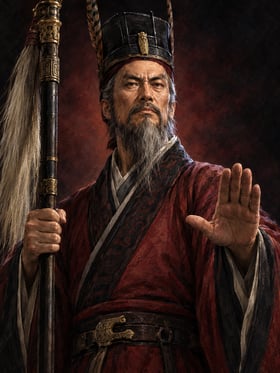
Xin Pi, a Cao Wei strategist, urged Cao Cao to take Hebei first and repeatedly remonstrated with Wei emperors.

Life
In the novel: 7 chapters · In the Records: 6 volumes
Life?–235
220 CE (Huangchu 1)
230 CE (Taihe 4)
Allegiance
- Cao Wei
- Yuan Shao's Faction· Undated
- Hatched: dated by chapter
- Life event
On the boards
Compare with someone →Where this person ranks on each board.
Historical Record
Xin Pi, courtesy name Zuo Zhi, was from Yangdi in Yingchuan. His ancestors had migrated east from Longxi during the Jianwu era of the Eastern Han. He followed his elder brother, Xin Ping, in serving Yuan Shao. When Cao Cao held the post of Minister over the Masses, he once summoned Xin Pi to serve, but Xin Pi was unable to accept. After Yuan Shao’s death, Yuan Tan and Yuan Shang fought over Jizhou. Yuan Shang besieged Yuan Tan at Pingyuan, and Yuan Tan sent Xin Pi to Cao Cao to seek peace and ask for aid. Cao Cao briefly considered attacking Jing Province first and letting the Yuan brothers wear each other down. Sensing his intent, Xin Pi pointed out that the Yuan forces were exhausted, divided within, and short of grain, and that Hebei presented an opportunity to be seized. He urged Cao Cao to first make terms with Yuan Tan and then advance into Hebei. Cao Cao took his advice, moved his army to Liyang, and the following year captured Ye. He then recommended Xin Pi for appointment as an Attendant Gentleman for Discussion.
Xin Pi subsequently took part in Cao Wei’s civil and military affairs. Cao Cao once ordered him and Cao Xiu to discuss how to pacify Xiabian, praising the two as men like Zhang Liang and Chen Ping, capable of correcting their ruler’s errors. After the campaign, Xin Pi became Chief Clerk to the Chancellor. After Cao Pi took the throne, Xin Pi was promoted to Palace Attendant. He opposed changing the calendar, arguing that Wei inherited the line of succession from Shun and Yu and should follow the “seasonal order of Xia.” Cao Pi accepted his proposal. Cao Pi planned to relocate 100,000 households of Jizhou’s gentry to enrich Henan. With locusts ravaging the land and the people going hungry, Xin Pi spoke frankly against the move, saying it would damage popular support and that there was no grain to feed the migrants. He even tugged at Cao Pi’s robes as he remonstrated, ultimately reducing the scale of the relocation by half. On another occasion, he also urged Cao Pi to stop ordering his subordinates to hunt pheasants, arguing that it was making them suffer.
When Cao Pi campaigned against Wu, Xin Pi argued that the empire had only just been pacified, the population was sparse, and the strategic calculations were incomplete. He advocated nourishing the people and opening up farmland, then fighting once the state’s strength had grown. Cao Pi nevertheless sent out his troops, but turned back upon reaching the Yangtze. After Cao Rui took the throne, Xin Pi kept his distance from Liu Fang and Sun Zi and consequently was not appointed as a Minister of the Secretariat. Instead, he became Commandant of the Guards. He also submitted a memorial opposing large-scale palace construction, and argued against building a terrace on the grounds that if Beiman were leveled, there would be no natural barrier to hold back floods. In the second year of the Qinglong era, Zhuge Liang sent troops to the south bank of the Wei River. Cao Rui appointed Xin Pi Grand General’s Military Adviser and granted him imperial authority to carry a tally, placing all six armies under his command. After Zhuge Liang’s death, Xin Pi again served as Commandant of the Guards. He was posthumously given the title Marquis Su.
In the Novel
Romance of the Three Kingdoms portrays Xin Pi as a strategist skilled at explaining the larger situation and bold enough to remonstrate directly. In Chapter 32, he is sent by Yuan Tan on a mission to Cao Cao, bearing a letter requesting aid. When Cao Cao asks whether Yuan Tan can be trusted and whether Yuan Shang can be defeated, Xin Pi does not dwell on their sincerity or trustworthiness. Instead, he argues that Hebei can be taken by pointing to the Yuan clan’s internal strife, exhausted troops, and depleted grain stores. This persuades Cao Cao to abandon his plan to attack Jing Province first and turn his army north. The substance of this counsel largely follows the historical accounts, but the novel adds dramatic details, including the exchange at the scene and Cao Cao’s lament that they had not met sooner.
The novel also gives special prominence to the family tragedy and Xin Pi’s enmity toward Shen Pei. When Cao Cao besieges Ye, Xin Pi calls on the city to surrender from outside its walls, and Shen Pei kills more than eighty members of Xin Pi’s family. After the city falls, Xin Pi points at Shen Pei with his whip and asks Cao Cao to execute him. These specific events, as well as Xin Pi’s lament after his family is killed, are inventions of the novel and have no corresponding record in the historical accounts. Later, the novel also has Xin Pi take part in urging Emperor Xian of Han to abdicate, advising Cao Pi to postpone his campaign against Wu, and carrying a tally during Zhuge Liang’s Northern Expeditions to order Sima Yi to hold his position. The remonstrance against the Wu campaign and his role as military adviser bearing a tally are supported by historical accounts, but the specific scenes of urging the abdication and delivering orders north of the Wei are the novel’s invention.
Key Relationships
Xin Pi’s early career unfolded amid the conflict between the Yuan brothers and Cao Cao’s expansion. Sent by Yuan Tan to seek aid, he later joined Cao Cao’s camp. Historical accounts state that Cao Cao adopted his strategy for Hebei and appointed him an Attendant Gentleman for Discussion. He and his elder brother, Xin Ping, both served Yuan Shao. In the novel, however, Xin Ping is portrayed as Yuan Tan’s emissary, and Cao Cao tries to retain him by pointing out that Xin Pi has already been highly honored. This episode is unique to the novel.
At the Cao Wei court, Xin Pi was known for speaking frankly and refusing to curry favor with the powerful. He refused to attach himself to Liu Fang and Sun Zi. Even when his son warned him that this might bring criticism, Xin Pi maintained that one should not compromise one’s principles in pursuit of high office. He argued face-to-face with Cao Pi and Cao Rui on several occasions, usually over the relocation of the people, military campaigns, palace construction, and the burden on the people. Cao Cao had also compared him and Cao Xiu to ministers capable of correcting their ruler’s errors. In his later years, Xin Pi was ordered to carry a tally and command the Wei army. The historical account says that all six armies were disciplined and no one disobeyed his orders; the novel turns this authority into a dramatic scene in which he delivers an order north of the Wei and restrains the generals who want to fight.
Signature Scenes
An emissary seeking aid becomes an advocate for a strategy to seize Hebei. When Xin Pi arrives on his mission, Cao Cao is preparing to turn his forces against Jing Province. Xin Pi instead seizes on the Yuan clan’s internal conflict, exhaustion, and lack of provisions to urge Cao Cao to take Hebei first. The historical account says Cao Cao followed his advice, moved his army to Liyang, and later captured Ye; the novel emphasizes Xin Pi’s eloquence with an extended speech and Cao Cao’s praise.
Grasping the emperor’s robes and insisting that the relocation be cut in half. Cao Pi angrily rejects his remonstrance and rises to go inside, but Xin Pi keeps hold of his robes, bluntly arguing that the relocation will cost him the people’s support and that there will be no grain to feed them. Cao Pi ultimately relocates only half the households. The scene encapsulates Xin Pi’s willingness to risk his ruler’s anger and his concern for the state and the people.
Using a tally to stop a battle: history and the novel differ. The historical account says Cao Rui appointed Xin Pi Grand General’s Military Adviser, granted him authority to carry a tally, and ordered him to command the six armies. The novel instead has Sima Yi use a petition requesting permission to fight to restrain his furious generals. Xin Pi then carries out his orders by going north of the Wei to announce that they must not engage, while also seeing through Sima Yi’s intentions. The latter episode is unique to the novel.
Quotes
17 lines in the books · 3 featured
「如再有敢言出戰者,即以違旨論。」
The moment these words were spoken they awed the whole army, kept Sima Yi from giving battle, and shaped the course of the campaign.
「陛下不以臣不肖,置之左右,廁之謀議之官,安得不與臣議邪!臣所言非私,乃社稷之慮也,安得怒臣!」
Xin Pi remonstrated frankly, reflecting his loyalty and willingness to take responsibility.
「吳、楚之民,險而難禦,道隆後服,道洿先叛,自古患之,非徒今也。今陛下祚有海內,夫不賔者,其能乆乎?昔尉佗稱帝,子陽僭號,歷年未幾,或臣或誅。何則,違逆之道不乆全,而大德無所不服也。方今天下新定,土廣民稀。夫廟筭而後出軍,猶臨事而懼,況今廟筭有闕而欲用之,臣誠未見其利也。先帝屢起銳師,臨江而旋。今六軍不增於故,而復循之,此未易也。今日之計,莫若脩范蠡之養民,法管仲之寄政,則充國之屯田,明仲尼之懷遠;十年之中,彊壯未老,童齓勝戰,兆民知義,將士思奮,然後用之,則役不再舉矣。」
This remark expounds on statecraft, reflecting Xin Pi's far-reaching strategic vision.
- Family
- Lord & vassal
- Friends
- Enemies
- Teacher & student
- Other
Who is Xin Pi connected to?
Pick someone to see how many steps lie between them and Xin Pi.
History vs. novel
7 points · 2 novel-only
| History | Novel |
|---|---|
| Urging Cao Cao to pacify Hebei firstNovel embellishes | |
Xin Pi analyzed the infighting within the Yuan clan, the exhaustion of Hebei, and the fact that Jing Province offered no opportunity yet, and urged Cao Cao to attack Hebei first. Cao Cao took his advice and captured Ye the following year vol. 25 | Xin Pi likewise urged Cao Cao to seize Hebei first. The novel adds Cao Cao's lament, “We meet so late,” and says that he led his troops back that very day to attack Jizhou ch. 32 |
| Xin Pi insults Shen PeiNovel only | |
| — | After Cao Cao's forces entered Jizhou, Xin Pi rode into the city and berated the captured Shen Pei to his face. Shen Pei retorted that he had betrayed the Yuan clan, and their clash heightened the dramatic tension ch. 32 |
| His family killed by Shen PeiNovel only | |
| — | Xin Pi wept and begged Cao Cao to execute Shen Pei, saying that Shen Pei had killed more than eighty members of his family. Shen Pei, in turn, denounced him as a treacherous flatterer and remained loyal to the Yuan clan even as he faced execution ch. 32 |
| Resettlement of Jizhou's gentry householdsHistory only | |
Cao Pi planned to relocate 100,000 gentry households from Jizhou. Xin Pi openly opposed the plan, even tugging at Cao Pi's robe as he explained its pros and cons. In the end, Cao Pi moved only half of them vol. 25 | — |
| Advising Cao Pi against attacking WuNovel embellishes | |
Xin Pi urged Cao Pi to nourish the people and farm the garrisons, then attack Wu only after ten years. Cao Pi did not accept his advice and sent out troops anyway, but turned back upon reaching the Yangtze River vol. 25 | Xin Pi likewise urged Cao Pi to train troops and farm the garrisons for ten years before attacking Wu. Cao Pi dismissed this as “the argument of a pedant” and insisted on sending out troops. The novel also elaborates on the army's deployments by land and water for the campaign against Wu ch. 86 |
| Given authority to restrain Sima YiNovel embellishes | |
When Zhuge Liang launched a campaign at Weinan, Cao Rui appointed Xin Pi as Grand General's military advisor and invested him with a tally, placing the six armies under his command. The Weilüe adds that he once forbade Sima Yi from attacking vol. 25 | Cao Rui ordered Xin Pi to travel to the north of the Wei River bearing a tally and deliver an edict forbidding Sima Yi from going into battle. The novel depicts Xin Pi as seeing through Sima Yi's attempt to steady morale by asking to fight, while Sima Yi also calls him a kindred spirit ch. 103 |
| Pleading for Bao XunHistory only | |
Xin Pi, Zhong Yao, Hua Xin, and others submitted a memorial pleading for Bao Xun, pointing out that his father had rendered meritorious service to Cao Cao. Cao Pi refused, however, and Bao Xun was ultimately executed vol. 12 | — |
- Urging Cao Cao to pacify Hebei firstNovel embellishes
- History
Xin Pi analyzed the infighting within the Yuan clan, the exhaustion of Hebei, and the fact that Jing Province offered no opportunity yet, and urged Cao Cao to attack Hebei first. Cao Cao took his advice and captured Ye the following year
vol. 25
- Novel
Xin Pi likewise urged Cao Cao to seize Hebei first. The novel adds Cao Cao's lament, “We meet so late,” and says that he led his troops back that very day to attack Jizhou
ch. 32
- Xin Pi insults Shen PeiNovel only
- Novel
After Cao Cao's forces entered Jizhou, Xin Pi rode into the city and berated the captured Shen Pei to his face. Shen Pei retorted that he had betrayed the Yuan clan, and their clash heightened the dramatic tension
ch. 32
- His family killed by Shen PeiNovel only
- Novel
Xin Pi wept and begged Cao Cao to execute Shen Pei, saying that Shen Pei had killed more than eighty members of his family. Shen Pei, in turn, denounced him as a treacherous flatterer and remained loyal to the Yuan clan even as he faced execution
ch. 32
- Resettlement of Jizhou's gentry householdsHistory only
- History
Cao Pi planned to relocate 100,000 gentry households from Jizhou. Xin Pi openly opposed the plan, even tugging at Cao Pi's robe as he explained its pros and cons. In the end, Cao Pi moved only half of them
vol. 25
- Advising Cao Pi against attacking WuNovel embellishes
- History
Xin Pi urged Cao Pi to nourish the people and farm the garrisons, then attack Wu only after ten years. Cao Pi did not accept his advice and sent out troops anyway, but turned back upon reaching the Yangtze River
vol. 25
- Novel
Xin Pi likewise urged Cao Pi to train troops and farm the garrisons for ten years before attacking Wu. Cao Pi dismissed this as “the argument of a pedant” and insisted on sending out troops. The novel also elaborates on the army's deployments by land and water for the campaign against Wu
ch. 86
- Given authority to restrain Sima YiNovel embellishes
- History
When Zhuge Liang launched a campaign at Weinan, Cao Rui appointed Xin Pi as Grand General's military advisor and invested him with a tally, placing the six armies under his command. The Weilüe adds that he once forbade Sima Yi from attacking
vol. 25
- Novel
Cao Rui ordered Xin Pi to travel to the north of the Wei River bearing a tally and deliver an edict forbidding Sima Yi from going into battle. The novel depicts Xin Pi as seeing through Sima Yi's attempt to steady morale by asking to fight, while Sima Yi also calls him a kindred spirit
ch. 103
Events
Events (5)
Battles and events the texts place this person in, by date.
Places
- Native of
- YingchuanRecords
- Governed
- Pingyuan CountyRomance
Continue
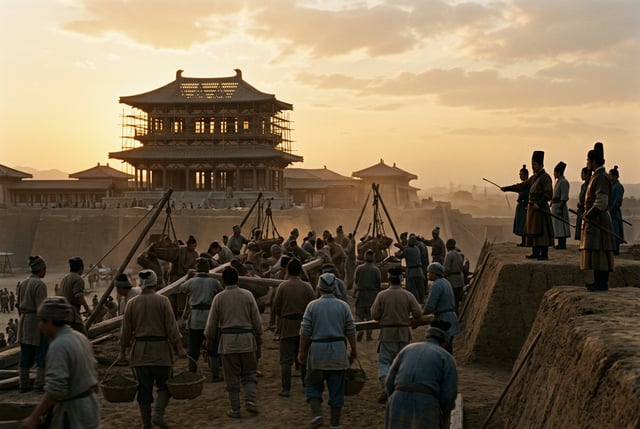
Emperor Ming of Wei's Lavish Palace Construction
Relationship timeline17 entries ▸
History · vol. 12
- Bao Xun§66
Witnessed
Memorialized a request that Bao Xun be punished
History · vol. 16
- Du Shu§25
Student
Gentleman of the Palace; those of his rank valued him
History · vol. 25
- Xin Ping§3
Sibling
brothers (Pi followed his elder brother Ping in serving Yuan Shao)
- Yuan Tan§3
Advised
was sent by Yuan Tan to seek peace with Taizu
- Cao Cao§3
Advised
Conveyed Yuan Tan's intentions to the Grand Ancestor and urged him to pacify Hebei first
- Guo Jia§3
Witnessed
saw Taizu's expression and knew that something had changed; told Guo Jia
- Cao Cao§4
Student
Ordered him to take Xin Pi and Cao Xiu as models like Zhang Liang and Chen Ping, to correct his faults
- Cao Pi§5
Advised
He proposed changing the calendar; remonstrated against moving the military households of Jizhou, holding Cao Cao’s robe and speaking at length; remonstrated against shooting pheasants.
- Cao Pi§7
Advised
urged stopping the large-scale campaign against Wu
- Liu Fang§8
Rival
Did not associate with him; Fang and Zi also did not recommend or employ him
- Sun Zi§8
Rival
Did not associate with him; Fang and Zi also did not recommend or employ him
- Cao Rui§9
Advised
Submitted a memorial remonstrating against the extensive construction of palaces; also remonstrated against the proposal to level Be Mang
All 17
Loading…
Inner monologues · AI-generated3 monologues ▸
- I am Xin Ping, courtesy name Zuozhi, from Yangzhai in Yingchuan. My ancestors moved east from Longxi during the Jianwu e
- I received the imperial edict and, bearing the tally, came to the army north of the Wei. The tally in my hand represente
- I am Xin Pi, courtesy name Zuo Zhi. Serving at the Wei court, I worried not only about gains and losses in the moment, b