Cao Wei · Colonel
Xu Huang
courtesy name 公明 · –227
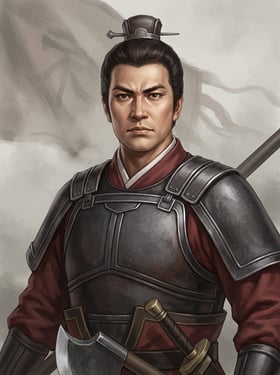
Xu Huang was frugal and careful by nature, strict and orderly in managing his troops, disliking private ties and always proving himself through merit. Both wise and resourceful, he could set aside old affections when the affairs of state demanded it.

Life
In the novel: 28 chapters · In the Records: 13 volumes
Life?–227
195 CE (Xingping 2)
196 CE (Jian'an 1)
7 more events
200 CE (Jian'an 5)
- Battle of BomaBaimaWarrior
201 CE (Jian'an 6)
- Battle of CangtingCangtingWarrior
- Cao Cao Pacifies HebeiYeWarrior
208 CE (Jian'an 13)
- Battle of JianglingJianglingWarrior
210 CE (Jian'an 15)
211 CE (Jian'an 16)
- Battle of Tong PassTong PassWarrior
219 CE (Jian'an 24)
- Guan Yu's Northern CampaignFanchengCommander
219 CE (Jian'an 24)
Allegiance
- Cao Wei
- Hatched: dated by chapter
- Life event
List all 12 stops
- Hedong CommanderyBirthplace
- Luoyang195–196The Emperor's Return to the East+1 more
- Xuchang196Cao Cao Escorts the Emperor and Moves the Capital to Xu
- Baima200Battle of Boma
- Ye201Cao Cao Pacifies Hebei
- Cangting201Battle of Cangting
- Jiangling208Battle of Jiangling
- Ye210Bronze Bird Terrace Inauguration Ceremony
- Tong Pass211Battle of Tong Pass
- Fancheng219Guan Yu's Northern Campaign
- Shangyong219Meng Da Defects to Wei and Liu Feng Is Executed
- Han River219Battle of Han River
On the boards
Compare with someone →Where this person ranks on each board.
- Stratagem Success Rate: #1Records
- Most Duel Wins: #4Romance
- Most Foes Defeated: #4Romance
- Best Duel Record: #6Romance
- Saw Through the Most: #6Records
- Most Generals Slain: #7Romance
- Plans That Worked: #7Records
- Master Strategists: #10Records
- Most Battles Won: #11Records
- Most Defections: #13Records
- Most Battles Lost: #16Romance
- Best Connected: #16Records
- Most Battles: #16Both
Who they were
Character profile
- Character
- Xu Huang was frugal and careful by nature, strict and orderly in managing his troops, disliking private ties and always proving himself through merit. Both wise and resourceful, he could set aside old affections when the affairs of state demanded it.
- Manner of speech
- Xu Huang's manner of speech was thorough and deliberate, skilled in weighing strategy and able to cite the sayings of the ancients as illustrations.
- Life
- Xu Huang was a native of Yang in Hedong. He once served as a commandery clerk, then followed Yang Feng in campaigns against bandits and urged Feng to escort the Son of Heaven back to Luoyang. After submitting to Cao Cao he won merit after merit, campaigning against Lü Bu, Yuan Shao, Liu Bei, and Guan Yu, rising to General of the Right, enfeoffed as Marquis of Yangping, with the posthumous title Zhuang (the Valiant).
- Weapons
- Xu Huang chiefly wielded a great axe and a saber, and was also skilled in mounted archery.
- Anecdotes
- Xu Huang, styled Gongming, was a fine general newly gained by Cao Cao. He once shot Sun Quan's letter into the besieged position, and at the Battle of Fancheng broke the siege, earning Cao Cao's praise as 'having the manner of Zhou Yafu.'
Historical Record
Xu Huang, courtesy name Gongming, was from Yang in Hedong. In his early years, he served as a commandery clerk and followed the chariot-and-cavalry general Yang Feng in suppressing bandits. During the turmoil in Chang'an, he urged Yang Feng to escort the Son of Heaven back to Luoyang, and later advised him to submit to Cao Cao. Yang Feng agreed for a time, but then changed his mind; when Cao Cao attacked Yang Feng at Liang, Xu Huang joined Cao Cao. Thereafter, he successively held such posts as Assistant General, Deputy General, General Who Ranges the Wilds, and General Who Pacifies Bandits, and for many years took part in the campaigns of Cao Cao and Cao Wei.
During the Battle of Guandu, Xu Huang and Shi Huan intercepted Yuan Shao’s grain convoy, routed the enemy, and burned their supplies. He was also ordered to join Shi Huan in ambushing Han Meng and cutting off his grain transport. During the siege of Ye, he persuaded Han Fan, the magistrate of Yiyang, to surrender by laying out the consequences, and advised Cao Cao to spare Yiyang as an example to other cities. When Ma Chao and Han Sui rebelled in Guanzhong, Cao Cao feared that the river crossing would be blocked. Xu Huang asked to lead elite troops across first at Puban Ford and secure the west bank to strike the enemy from the rear. He drove off Liang Xing’s forces, enabling Cao’s army to cross the river. He later took part in pacifying Guanzhong.
In the twenty-fourth year of Jian’an, Guan Yu laid siege to Fancheng. The Han River flooded, wiping out the seven armies under Yu Jin’s command, while Cao Ren was surrounded. Xu Huang initially camped at Yangling Bank with newly recruited troops, advancing only after reinforcements had assembled. First, he used feints to force the defenders of Yancheng to withdraw. Then, while announcing an attack on Weitou, he struck Sifen instead, routed the troops personally led by Guan Yu, and broke into the encirclement. The sieges of Fancheng and Xiangyang were thereby lifted. Cao Cao welcomed and congratulated Xu Huang at Mopi, saying that preserving Fancheng and Xiangyang was his achievement. He also praised the orderliness of Xu Huang’s camp, saying he had the bearing of Zhou Yafu.
Xu Huang was frugal and cautious. He habitually made defensive preparations first, ensuring that the enemy could not exploit an opening, and only then engaged in battle. He was not keen on cultivating a wide circle of personal acquaintances, saying that it was enough to serve through meritorious achievement. After Cao Pi became king, he appointed Xu Huang General of the Right. After Cao Wei was established, Xu Huang was enfeoffed as Marquis of Yang, and later transferred to the title Marquis of Yangping. During Emperor Ming’s reign, he also repelled the Wu general Zhuge Jin at Xiangyang. He died in the first year of Taihe and was posthumously titled Marquis Zhuang. Later, he was enshrined in the ancestral temple of Emperor Wu.
In the Novel
The Romance of the Three Kingdoms portrays Xu Huang as a Cao Cao general who fought with a great axe and was both brave and loyal. The novel says that in his early years he followed Yang Feng and guarded the Son of Heaven, killing Cui Yong and Li Le. When Cao Cao escorted the emperor on the move to Xu, Xu Huang stood in his way and fought Xu Chu for more than fifty bouts without a clear victor. When Man Chong entered his camp by night to urge him to surrender, Xu Huang hesitated out of regard for his former lord, but refused to make regicide his token of admission to service. He ultimately joined Cao Cao that very night. The emphasis on his “refusal to kill his lord” and his image as a man of honor are literary inventions of the novel.
The novel also places Xu Huang in episodes involving the seizure of grain at Guandu and the pursuit of Yuan Shao. He and Shi Huan intercepted Han Meng and burned the grain carts; when Yuan Shao fled after his defeat, Xu Huang pursued him alongside Zhang Liao, Xu Chu, and Yu Jin. The novel says that Xu Huang and Guan Yu were on friendly terms when Guan Yu left Cao Cao’s camp. Xu Huang also appears in the battles against Yan Liang at Guandu and in the pursuit of Wen Chou, but was defeated by Yan Liang and forced to retreat when he could not overcome Wen Chou. These duels and several dramatized episodes belong to the novel’s narrative and should not be conflated with historical accounts.
Key Relationships
- Yang Feng: Historical accounts say that Xu Huang followed Yang Feng in suppressing bandits and urged him to escort the Son of Heaven back to Luoyang and submit to Cao Cao. Later, when Cao Cao attacked Yang Feng, Xu Huang switched sides and joined Cao. The novel further depicts him meeting Man Chong at night and joining Cao only after demonstrating his loyalty by refusing to kill his former lord.
- Cao Cao: Xu Huang was one of Cao Cao’s important generals. He took part in cutting off supplies at Guandu, crossing the river at Puban Ford, and relieving the siege of Fancheng. Cao Cao personally welcomed and congratulated him at Mopi and praised his command of the troops.
- Guan Yu: In the battle for Fancheng, Xu Huang was ordered to rescue Cao Ren. He broke through Guan Yu’s encircling forces, and Guan Yu withdrew. The Shu Ji, cited in Pei Songzhi’s annotations, separately relates that the two once addressed each other as brothers, but immediately notes that they must obey military orders. This account comes from material cited in Pei Songzhi’s annotations.
- Shi Huan and Man Chong: Shi Huan and Xu Huang acted together on several occasions, including intercepting Yuan Shao’s grain convoy. In the novel, Man Chong plays the role of an old acquaintance who urges Xu Huang to join Cao; this episode appears only in the novel.
Signature Scenes
- Crossing first at Puban Ford: In the campaign around Tong Pass, Xu Huang proposed crossing first at Puban Ford and securing the west bank to cut off the enemy from the rear. After Cao Cao accepted his proposal, Xu Huang led four thousand infantry and cavalry across the river and repelled Liang Xing’s night attack, allowing Cao’s army to cross.
- Lifting the siege of Fancheng: Xu Huang used a feint to attack one place while striking another, broke through at Sifen, routed Guan Yu, and penetrated the enemy encirclement, relieving Cao Ren. Cao Cao rode seven li to welcome him and held a celebratory banquet. He later inspected the camp, found the troops in impeccable order, and praised Xu Huang as having the bearing of Zhou Yafu.
- Refusing to kill his lord at night and joining Cao Cao: In the novel, Man Chong urges Xu Huang to kill Yang Feng and Han Xian as a token of his introduction. Xu Huang refuses, saying, “For a subject to kill his lord is a grave injustice,” and then leads his men to join Cao. This episode, portraying him as a man of honor, appears only in the novel.
- Cutting off supplies at Guandu: Historical accounts say that Xu Huang and Shi Huan routed the grain convoy and burned its supplies. The novel expands the episode into an ambush in a mountain valley, with Shi Huan setting the grain carts ablaze, Xu Huang driving off Han Meng, and reinforcements arriving to conclude the scene.
Quotes
28 lines in the books · 3 featured
「今日乃國家之事,某不敢以私廢公。」
This line reflects Xu Huang's character of loyalty to the state and selfless impartiality, a classic portrait of his persona.
「古人患不遭明君,今幸遇之,常以功自效,何用私譽爲!」
This line displays Xu Huang's largeness of spirit in seeking no private renown and serving his country with loyalty, the essence of his historical image.
「以臣弒主,大不義也,吾決不為。」
This line highlights Xu Huang's moral integrity in prizing righteousness over gain and refusing to betray his former lord, laying the ground for his submission to Cao Cao.
- Family
- Lord & vassal
- Friends
- Enemies
- Other
History vs. novel
8 points · 3 novel-only
| History | Novel |
|---|---|
| Circumstances of Joining Cao CaoNovel embellishes | |
Xu Huang first urged Yang Feng to submit to Cao Cao. Yang Feng agreed for a time, then changed his mind; when Cao Cao attacked Yang Feng, Xu Huang joined Cao Cao. vol. 17 | The novel says that Man Chong visited Xu Huang by night to persuade him. Remembering old ties, Xu Huang hesitated, but ultimately defected to Cao Cao during the night. He refused to kill Yang Feng and Han Xian as a token of his submission. ch. 14 |
| Killing Cui YongNovel only | |
| — | The novel says that when Yang Feng asked, “Where is Gongming?” Xu Huang went into battle wielding a great axe and killed Cui Yong in a single bout, helping Yang Feng repel Li Jue’s forces. ch. 13 |
| Capturing Chen GongNovel only | |
| — | When Lü Bu was defeated, Chen Gong fled toward the south gate and was captured by Xu Huang. The Records of the Three Kingdoms’ account of Xu Huang’s early military exploits contains no mention of this episode. ch. 19 |
| Burning the Provisions at GuanduNovel embellishes | |
Xu Huang and Shi Huan attacked Yuan Shao’s supply convoy. The Records of the Three Kingdoms records their notable achievement, but does not mention the detail of the supply wagons being burned. vol. 17 | The novel says that Xu Huang and Shi Huan intercepted the supply wagons escorted by Han Meng. They drove Han Meng off and set fire to all the baggage and provisions. ch. 30 |
| Crossing the River at Tong PassNovel embellishes | |
Xu Huang proposed leading four thousand infantry and cavalry across Puban Ford to cut off the enemy’s retreat. Cao Cao accepted the plan, and Xu Huang repelled Liang Xing’s night raid, enabling Cao Cao’s forces to cross the river. vol. 17 | The novel also says that Xu Huang proposed secretly crossing at Puban Ford to cut off Ma Chao’s route of retreat, and adds that he and Zhu Ling led troops ahead to lie in ambush. ch. 58 |
| Defeat with His Back to the Han RiverNovel only | |
| — | Xu Huang crossed the Han River and drew up his forces with their backs to it. Ignoring Wang Ping’s warning, he was routed in a pincer attack by Huang Zhong and Zhao Yun. Wang Ping then went over to Liu Bei. ch. 72 |
| Relieving the Siege of FanchengNovel embellishes | |
Xu Huang first forced the enemy to withdraw with a feint, then attacked the Four Mounds from another direction, routed Guan Yu, and charged into the encirclement, relieving the siege of Fancheng. vol. 17 | The novel retains the outcome of Xu Huang breaking through Guan Yu’s besieging forces and relieving Fancheng, and adds that after reminiscing with Guan Yu, he declared that public duty must not be sacrificed for private ties. He then ordered generous rewards for anyone who captured Guan Yu’s head. ch. 76 |
| The Bearing of Zhou YafuNovel embellishes | |
When Cao Cao inspected the camp, he saw that Xu Huang’s troops were orderly and his men held their positions without moving, and praised him for having the bearing of Zhou Yafu. vol. 17 | The novel also says that Cao Cao praised Xu Huang’s military discipline as having the bearing of Zhou Yafu, and adds that after the siege of Fancheng was relieved, Cao Cao commended his courage and sound judgment. ch. 76 |
- Circumstances of Joining Cao CaoNovel embellishes
- History
Xu Huang first urged Yang Feng to submit to Cao Cao. Yang Feng agreed for a time, then changed his mind; when Cao Cao attacked Yang Feng, Xu Huang joined Cao Cao.
vol. 17
- Novel
The novel says that Man Chong visited Xu Huang by night to persuade him. Remembering old ties, Xu Huang hesitated, but ultimately defected to Cao Cao during the night. He refused to kill Yang Feng and Han Xian as a token of his submission.
ch. 14
- Killing Cui YongNovel only
- Novel
The novel says that when Yang Feng asked, “Where is Gongming?” Xu Huang went into battle wielding a great axe and killed Cui Yong in a single bout, helping Yang Feng repel Li Jue’s forces.
ch. 13
- Capturing Chen GongNovel only
- Novel
When Lü Bu was defeated, Chen Gong fled toward the south gate and was captured by Xu Huang. The Records of the Three Kingdoms’ account of Xu Huang’s early military exploits contains no mention of this episode.
ch. 19
- Burning the Provisions at GuanduNovel embellishes
- History
Xu Huang and Shi Huan attacked Yuan Shao’s supply convoy. The Records of the Three Kingdoms records their notable achievement, but does not mention the detail of the supply wagons being burned.
vol. 17
- Novel
The novel says that Xu Huang and Shi Huan intercepted the supply wagons escorted by Han Meng. They drove Han Meng off and set fire to all the baggage and provisions.
ch. 30
- Crossing the River at Tong PassNovel embellishes
- History
Xu Huang proposed leading four thousand infantry and cavalry across Puban Ford to cut off the enemy’s retreat. Cao Cao accepted the plan, and Xu Huang repelled Liang Xing’s night raid, enabling Cao Cao’s forces to cross the river.
vol. 17
- Novel
The novel also says that Xu Huang proposed secretly crossing at Puban Ford to cut off Ma Chao’s route of retreat, and adds that he and Zhu Ling led troops ahead to lie in ambush.
ch. 58
- Defeat with His Back to the Han RiverNovel only
- Novel
Xu Huang crossed the Han River and drew up his forces with their backs to it. Ignoring Wang Ping’s warning, he was routed in a pincer attack by Huang Zhong and Zhao Yun. Wang Ping then went over to Liu Bei.
ch. 72
- Relieving the Siege of FanchengNovel embellishes
- History
Xu Huang first forced the enemy to withdraw with a feint, then attacked the Four Mounds from another direction, routed Guan Yu, and charged into the encirclement, relieving the siege of Fancheng.
vol. 17
- Novel
The novel retains the outcome of Xu Huang breaking through Guan Yu’s besieging forces and relieving Fancheng, and adds that after reminiscing with Guan Yu, he declared that public duty must not be sacrificed for private ties. He then ordered generous rewards for anyone who captured Guan Yu’s head.
ch. 76
- The Bearing of Zhou YafuNovel embellishes
- History
When Cao Cao inspected the camp, he saw that Xu Huang’s troops were orderly and his men held their positions without moving, and praised him for having the bearing of Zhou Yafu.
vol. 17
- Novel
The novel also says that Cao Cao praised Xu Huang’s military discipline as having the bearing of Zhou Yafu, and adds that after the siege of Fancheng was relieved, Cao Cao commended his courage and sound judgment.
ch. 76
Combat
On the field
Duels, kills and executions as the texts tell them, counted separately for the Records and the Romance.
Duel them- RecordsJuan 9Struck downShang YaoWon「督徐晃擊太原賊,攻下二十餘屯,斬賊帥商曜」
- RomanceCh. 13DuelCui YongWon1 bouts「兩馬相交,只一合,斬崔勇於馬下」
- RomanceCh. 14DuelLi LeWon1 bouts「只一合,被徐晃一斧砍於馬下」
- RomanceCh. 14DuelXu ChuDraw50 bouts「刀斧相交,戰五十餘合,不分勝敗」
- RomanceCh. 24DuelZhang FeiWon「飛正殺間,逢著徐晃大殺一陣,後面樂進趕到」
- RomanceCh. 25DuelGuan YuLost「關公奮力殺退二人」
All encounters (20)
Loading…
Battles in command
Battles this person commanded in, with the outcome as each text tells it.
- Records
- 1W 0L 0D 0 undecided
- Romance
- 1W 1L 0D 0 undecided
- Records219Guan Yu's Northern CampaignWonvs Guan Yu's armyJuan 9「晃從外擊羽,仁得溃圍出,羽退走」
- Romance219Guan Yu's Northern CampaignWonvs Jing Province troopsCh. 76「與徐晃會合,兩下夾攻。荊州兵大亂」
- Romance219Battle of Han RiverLostvs Shu troopsCh. 72「曹兵大潰而逃,孔明連夜追趕」
Stratagems
Plans this person devised or saw through, as the texts tell them.
- Records
- 5 carried out · 5 worked · 0 turned down · 1 seen through
- Romance
- 3 carried out · 3 worked · 0 turned down · 2 seen through
- RecordsPersuade to SurrenderPersuasionWorkedagainst YiyangJuan 17「晃至,飛矢城中,爲陳成敗。範悔,晃輒降之」
- RecordsAmbushAmbushWorkedagainst MaochengJuan 17「別討毛城,設伏兵掩擊,破三屯」
- RecordsCutting Off the Rear at the FerryOtherWorkedagainst banditsJuan 17「精兵渡蒲坂津,爲軍先置,以截其裏,賊可擒也」
- RecordsBlock the Maming Plank RoadOtherSaw throughJuan 17「備遣陳式等十餘營絶馬鳴閣道,晃別征破之」
- RecordsFeigning an Intent to Cut Off the RearFeintWorkedagainst banditsJuan 17「晃到,詭道作都塹,示欲截其後,賊燒屯走」
- RecordsMake a Sound in the East, Strike in the WestFeintWorkedJuan 17「晃揚聲當攻圍頭屯,而密攻四冢」
All stratagems (11)
Loading…
Events
Events (27)
Battles and events the texts place this person in, by date.
Battles
- 198Battle of Xiapi
- 200Battle of Guandu
- 200Battle of BomaWarrior
- 201Battle of CangtingWarrior
- 201Battle of Rangshan
- 208Battle of JianglingWarrior
- 208Borrowing Arrows with Straw Boats
- 208Battle of Red Cliffs
All 15
- 211Battle of Tong PassWarrior
- 213Battle of Ruxukou
- 215Battle of Xiaoyao Ford
- 218Hanzhong Campaign
- 219Guan Yu's Northern CampaignCommander
- 219Battle of Han RiverWarrior
- 222Three-Pronged Campaign against Wu
Other events
- 195The Emperor's Return to the EastWarrior
- 196Stratagem of Two Tigers Fighting over Food
- 196Xu Huang Joins Cao CaoWarrior
- 196Cao Cao Escorts the Emperor and Moves the Capital to XuWarrior
- 200Guan Yu Slays Yan Liang
- 200Guan Yu Passes Five Passes and Slays Six Generals
- 200Guan Yu Takes the Robe at Ba Bridge
- 201Cao Cao Pacifies HebeiWarrior
Places
- Native of
- Hedong CommanderyRecords
- Was at
- JianglingRecords
- FanchengRecords
- Hedong CommanderyRecords
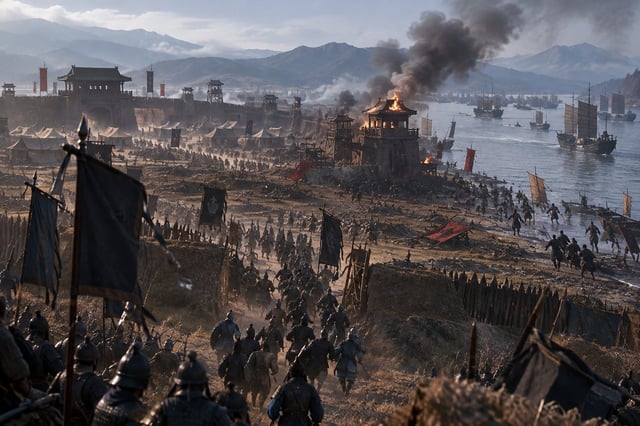
Continue
The Guan Yu's Northern Campaign in 3D
Replay the Guan Yu's Northern Campaign phase by phase on real terrain: troop strengths, movements and turning points at a glance, each marked as coming from the Records of the Three Kingdoms or the Romance.
Relationship timeline34 entries ▸
History · vol. 17
- Lü Bu§30
Enemy
Separately induced Bu’s generals Zhao Shu and Li Zou to surrender
- Sui Gu§30
Enemy
killed him in Henei together with Shi Huan
- Yan Liang§30
Enemy
joined in defeating Yan Liang and took Baima
- Wen Chou§30
Enemy
Advanced to Yanjin and defeated them
- Ma Chao§30
Enemy
in the campaign at Tong Pass, crossed the Puban ford with four thousand troops to establish a forward position; then defeated Chao and the others
- Han Sui§30
Enemy
defeated him together with Ma Chao
- Liang Xing§30
Enemy
Liang Xing attacked at night at Pubanjin, was defeated and fled; he also joined Xiahou Yuan in suppressing and killing the remaining bandits at Fu and Xiayang
- Guan Yu§30
Enemy
Fought alongside Man Chong at Hanjin; assisted Cao Ren in fighting at Fan; feinted east and struck west, defeating Yancheng and Sizhong; trapped Yu in an encirclement and took many heads and captives
- Zhou Yu§30
Enemy
fought at Jiangling with Cao Ren
- Zhang Lu§30
Enemy
accompanied the campaign against Zhang Lu and the mountain Di of Du and Qiuyi
- Xiahou Yuan§30
Friend
pacified the Di tribes of Yumi and Qian with Xiahou Yuan; also pacified the remaining bandits of Fu and Xiayang and executed Liang Xing
- Man Chong§30
Friend
jointly attacked Guan Yu at Hanjin
- Cao Ren§30
Friend
fought Zhou Yu at Jiangling; assisted Cao Ren in campaigning against Guan Yu at Fan
- Cao Hong§30
Friend
attacked the powerful bandit Zhu Bi with Cao Hong
- Shi Huan§30
Friend
killed Sui Gu in Henei together with Shi Huan; attacked Yuan Shao’s supply wagons with Shi Huan
- Han Fan§30
Enemy
shot an arrow into the city to explain the prospects of success and failure to Chen, and induced him to surrender
- Shang Yao§30
Enemy
besieged Daling, captured it, and beheaded him
- Chen Shi§31
Enemy
A separate expedition defeated him; the bandits threw themselves into the valleys, and many died
- Liu Bei§31
Enemy
Resisted at Yangping; campaigned with Xiahou Shang at Shangyong
- Zhuge Jin§32
Enemy
After Emperor Ming ascended the throne, repelled him at Xiangyang
- Xu Gai§33
Child
Son; succeeded him
All 34
Loading…
Inner monologues · AI-generated3 monologues ▸
- Throughout my life, I upheld little beyond military orders and proper restraint. When Emperor Wen took the throne, I was
- I am Xu Huang, courtesy name Gongming. The fighting is fierce now; in the army, what matters is when to advance and when
- My courtesy name was Gongming, and I was from Yang County in Hedong. I recall that when I was young, turmoil had yet to