Overview
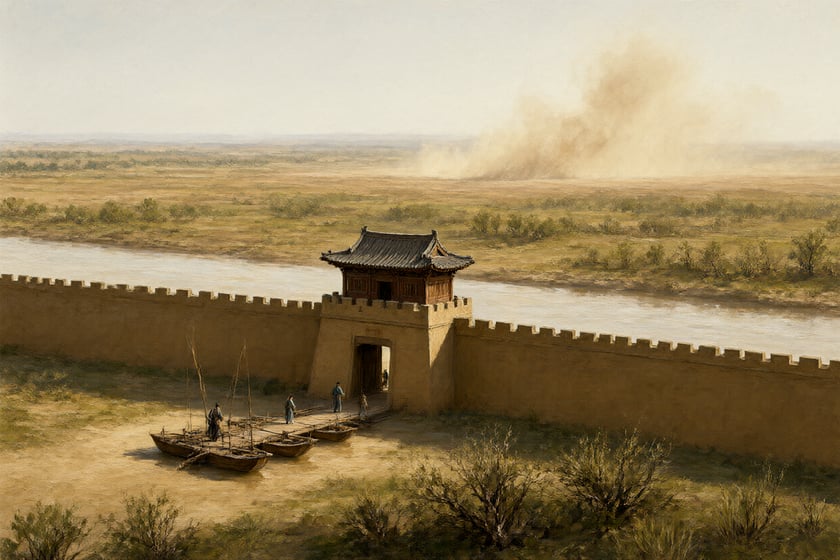
Baima was a county in Dong Commandery, Yanzhou, during the Eastern Han dynasty. It lay on the south bank of the Yellow River, facing Liyang on the north bank across the river. Its former site is in the area of present-day Hua County, Henan. In the fifth year of Jian’an (200), Yuan Shao sent Yan Liang to besiege Liu Yan, the Dong Commandery Administrator stationed at Baima. Cao Cao marched north to relieve the siege, and Guan Yu killed Yan Liang in the midst of a vast host, lifting the siege of Baima. This battle was a preliminary engagement of the Battle of Guandu, and Baima thereby became a well-known place name in stories of the Three Kingdoms.
History
During the reign of Emperor Huan of the Eastern Han, Li Yun, magistrate of Baima County, submitted a memorial speaking frankly: “An emperor must be discerning. This emperor wishes not to be discerning.” Later, Emperor Ming of Wei even asked Wang Su whether Li Yun deserved to die for this. At the outset of Cao Cao Raises an Army, Cao Cao served as Acting General Who Inspires Martial Prowess; he once appointed Xiahou Dun as his Chief Clerk and stationed him separately at Baima.
In the second month of the fifth year of Jian’an, Yuan Shao sent Guo Tu, Chunyu Qiong, and Yan Liang to attack Liu Yan, the Dong Commandery Administrator, at Baima, while he himself led troops to Liyang, preparing to cross the river. Ju Shou advised Yuan Shao that Yan Liang was narrow-minded and, though brave, should not be entrusted with a command on his own. Yuan Shao did not heed him. In the fourth month, Cao Cao marched north to relieve the siege. Xun You proposed a plan: first go to Yanjin and make it appear that they intended to cross the river and strike at Yuan Shao’s rear, inducing Yuan Shao to send troops west; then send a light force in a swift raid on Baima. Yuan Shao duly dispatched troops west in response. Cao Cao then hurried to Baima, and Yan Liang only became aware of his approach when he was little more than ten li from the city, whereupon Yan Liang hastily prepared for battle. Cao Cao placed Zhang Liao and Guan Yu at the vanguard. When Guan Yu spotted Yan Liang’s canopy, he spurred his horse into the midst of the vast host and killed Yan Liang, then returned with his head. None of the Yuan army’s generals could stop him, and the siege of Baima was lifted. Cao Cao immediately submitted a memorial recommending that Guan Yu be enfeoffed as Marquis of Hanshou Ting.
After the siege was lifted, Cao Cao moved the people of Baima away and withdrew west along the Yellow River with the baggage train. Yuan Shao crossed the river in pursuit. Xun You proposed using the baggage from Baima as bait; the Yuan army scrambled for it, throwing its ranks into disorder, and Cao Cao’s army seized the opportunity to attack and kill Wen Chou. Later, Cao Cao recalled to Jiang Ji that when he had faced off against Yuan Shao at Guandu, he had moved the people of Yan County and Baima away: the people could not escape, and the enemy could not plunder them.
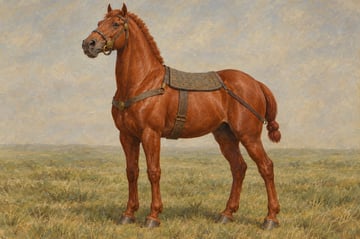
In the seventh year of Wei’s Huangchu era (226), Cao Cao’s son Cao Biao was granted the title Prince of Baima; in the sixth year of Taihe (232), his title was changed to Prince of Chu. In the first year of JiaPing (249), Wang Ling and his nephew, Linghu Yu, Inspector of Yanzhou, conspired to depose King Cao Fang of Qi and enthrone Cao Biao. Linghu Yu sent his subordinate Zhang Shi to Baima to communicate with Cao Biao. The plot was later exposed, and Cao Biao was forced to commit suicide. According to the Weilüe, there were rumors in Dong Commandery at the time that a demon horse had appeared in the Baima River, along with a song that went: “A white horse with plain reins gallops southwest; who is its rider? The mounted one is Zhu Hu.” Zhu Hu was Cao Biao’s childhood name, and Linghu Yu therefore secretly plotted to install him.
People
- Liu Yan: Administrator of Dong Commandery, besieged by Yan Liang at Baima.
- Yan Liang: A leading general of Yuan Shao, killed beneath the walls of Baima.
- Guan Yu: At the time, he was serving under Cao Cao as a General of the Household. He once told Zhang Liao that he would leave only after earning merit to repay Cao Cao. After killing Yan Liang, he returned all his rewards, left a letter of farewell, and went to join Liu Bei.
- Cao Biao: Cao Cao’s son, courtesy name Zhu Hu. He was successively enfeoffed as Marquis of Shouchun, Duke of Ruyang, Prince of Yiyang, Prince of Wu, and other titles; he was once Prince of Baima.
Differences Between Historical Record and Fiction
In the Records of the Three Kingdoms, the siege of Baima was lifted through Xun You’s diversionary plan, and Zhang Liao and Guan Yu served together at the vanguard. The Romance of the Three Kingdoms omits this stratagem. Instead, it has Cao Cao personally lead fifty thousand troops to Baima, where he camps below a hill. Seeing Yan Liang array ten thousand elite troops for battle, Cao Cao is greatly alarmed. In the novel, Yan Liang successively kills Song Xian and Wei Xu, former generals of Lü Bu, and then defeats Xu Huang. Only then does Cheng Yu recommend Guan Yu, saying that if Guan Yu defeats Yuan Shao’s army, Yuan Shao will surely grow suspicious and kill Liu Bei. When Guan Yu arrives at Baima, he climbs the hill with Cao Cao to survey the enemy formation and says Yan Liang is fit only to be “beheaded for his rank”. The deaths of Song Xian and Wei Xu at Baima and Cheng Yu’s recommendation of Guan Yu are not recorded in the Records of the Three Kingdoms; both accounts record Guan Yu killing Yan Liang in the midst of a vast host.
Today
The old city of Baima was in the area of Baimaqiang Village, southeast of present-day Hua County, Anyang, Henan Province.