Cao Wei · King of Chu
Cao Biao
195–251
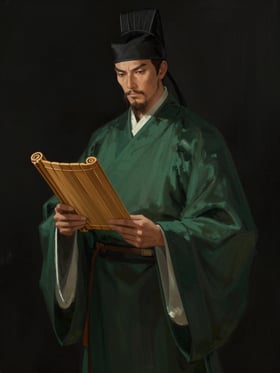
Cao Biao, son of Cao Cao and Prince of Chu of Cao Wei, was forced to commit suicide for his involvement in Wang Ling’s plot.

Life
In the Records: 4 volumes
Life195–251
251 CE (Jiaping 3)
Appearances
By chapter (4)
Records
- 4
- 20
- 28
- 29
- Cao Wei· Undated
- Life event
- Death
On the boards
Compare with someone →Where this person ranks on each board.
Historical Record
Cao Biao, courtesy name Zhu Hu, was a son of Cao Cao, and his mother was Lady Sun. He later became the Prince of Chu, a member of the Cao Wei imperial clan. In the twenty-first year of Jian'an, Cao Biao was enfeoffed as Marquis of Shouchun. He subsequently held the titles Duke of Ruyang, Prince of Yiyang, Prince of Wu, and Prince of Baima, among others; in the sixth year of Taihe, his title was changed to Prince of Chu. Historical accounts record his repeated changes of title. They also note that when he paid a visit to the capital, he violated a prohibition and had his fief and number of households reduced, but these were later restored.
In the first year of Jiaping, Linghu Yu, Inspector of Yanzhou, and Grand Commandant Wang Ling conspired together. They believed that Prince of Qi Cao Fang was unfit to occupy the imperial throne and planned to install the older and more capable Cao Biao, with the capital at Xu Chang. Linghu Yu once sent Zhang Shi to Baima to communicate with Cao Biao. The Wei Lue, cited in Pei Songzhi’s commentary, also records that Linghu Yu had someone convey a message to Cao Biao, who thanked him for his kindness. Wang Ling also sent word to his son Wang Guang. Wang Guang opposed deposing one ruler and enthroning another, and urged his father not to act rashly and invite disaster, but Wang Ling would not listen.
After Linghu Yu died of illness, Wang Ling continued with the plan. Sima Yi led an army east to Shouchun, and Zhang Shi and the others turned themselves in; the case was investigated. The court sent envoys to the princedom of Chu to investigate and take into custody those implicated. The Minister of Justice requested that Cao Biao be summoned and punished. In the end, the Wei court followed the precedent of Liu Dan, Prince of Yan under the Han, and sent an envoy bearing the imperial tally and a letter of command. The letter sternly accused Cao Biao of conspiring with Wang Ling and Linghu Yu to endanger the altars of state, and ordered him to “decide his own fate.” Cao Biao subsequently took his own life. His consort and sons were reduced to commoner status and moved to Pingyuan. Cao Biao’s subordinates and the supervising court attendant were executed for knowing of the plot but failing to admonish him. The princedom of Chu was abolished and replaced with Huainan Commandery.
In the first year of Zhengyuan, the court posthumously enfeoffed Cao Biao’s heir, Cao Jia, as Prince of Zhending in Changshan. The edict described Cao Biao as having “betrayed the state and sided with traitors,” while also expressing compassion for members of the imperial clan. This later arrangement did not restore the princedom of Chu, but it did enable Cao Biao’s son to regain a princely title. Zhu Jianping once read Cao Biao’s fate, saying that he would hold a fief as a prince and suffer a military calamity at the age of fifty-seven. The Records of the Three Kingdoms records that Cao Biao was found guilty and died for conspiring with Wang Ling, in keeping with Zhu Jianping’s prediction.
In the Novel
This person does not appear in the novel. The available material provides no account of how Romance of the Three Kingdoms or other novels portrayed Cao Biao, so his words, actions, or image in fiction cannot be supplied on that basis. The central thread found in the historical accounts is his enfeoffment as a member of the imperial clan, Wang Ling and others’ plot to enthrone him, and his forced suicide after the conspiracy was exposed. These details come from the Records of the Three Kingdoms and Pei Songzhi’s commentary, and cannot be attributed here to the novel.
Key Relationships
Cao Biao was the son of Cao Cao, and his mother was Lady Sun. After Cao Biao’s death, his heir Cao Jia was enfeoffed as Prince of Zhending in Changshan. Wang Ling and Linghu Yu were the principals in the plot to enthrone Cao Biao, with Xu Chang planned as the capital. Cao Biao was not merely a passive figure in others’ plans: the historical accounts also record his communications with their emissary and suggest that he knew their intentions.
Cao Biao’s relationship with Wang Ling ultimately proved decisive in his fate. After Wang Ling’s plot was exposed, the court pursued Cao Biao on the grounds that he had taken part in a rebellion. The edict named him alongside Wang Ling and Linghu Yu, accusing them of plotting to endanger the state. Wang Ling took his own life, while Cao Biao killed himself after receiving a sharply worded imperial letter; the princedom of Chu was then abolished. Sima Yi’s eastward campaign and his role in directing the investigation were important background to the events’ conclusion.
Notable Scenes
The plot to enthrone him at Xu Chang. Linghu Yu sent Zhang Shi to Baima to communicate with Cao Biao, while Wang Ling also dispatched his retainer Lao Jing to Luoyang to inform Wang Guang. Wang Guang warned that deposing one ruler and enthroning another could easily bring disaster, but Wang Ling ignored him. This scene presents a political choice within the Cao Wei imperial clan and shows that the plot to enthrone Cao Biao was not conducted openly, but through secret communications between the maternal uncle and nephew, Wang Ling and Linghu Yu.
The stern imperial letter and suicide. Once the case had been investigated, the Wei court did not take Cao Biao to the public execution ground to put him to death openly. Instead, invoking the precedent of Liu Dan, Prince of Yan under the Han, it sent an envoy bearing the imperial tally and a letter accusing him of betraying the state and siding with traitors, and ordered him to dispose of himself. Cao Biao ultimately took his own life; his wife and children were reduced to commoner status and exiled, his officials were executed, and his fiefdom was abolished. The episode set the leniency associated with his status as a member of the imperial clan against the severe punishment meted out in a political case, bringing Cao Biao’s life to its end.
The calamity at fifty-seven. Zhu Jianping once predicted that Cao Biao would hold a princely fief and suffer a military calamity at the age of fifty-seven. The historical accounts later related this prediction to the outcome in which Cao Biao was condemned to death over Wang Ling’s plot. The prediction provides a portentous ending to his biography, though Cao Biao’s political fate was in fact determined by the plot to enthrone him, the investigation, and the Wei court’s response.
- Family
- Enemies
Who is Cao Biao connected to?
Pick someone to see how many steps lie between them and Cao Biao.
Combat
On the field
Duels, kills and executions as the texts tell them, counted separately for the Records and the Romance.
- RecordsJuan 20ExecutionLost「彪乃自殺」
Events
Events (2)
Battles and events the texts place this person in, by date.
Other events
Places
- Was at
- BaimaRecords
Continue
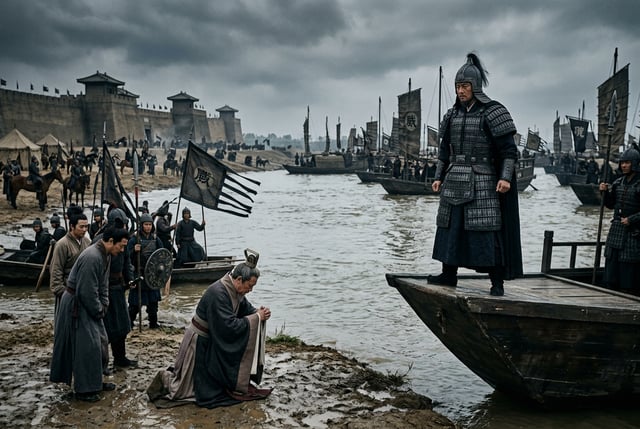
Wang Ling's Rebellion
Relationship timeline3 entries ▸
History · vol. 20
History · vol. 29
- Wang Ling§38
Betrayer
Cao Biao and Wang Ling conspired (plotting to install Biao); Cao Biao was ordered to commit suicide
Inner monologues · AI-generated1 monologue ▸
- I am Cao Biao, courtesy name Zhu Hu. The titles of princes and names of fiefs may sound exalted and distinguished, but i