Records
Cao forces won
Vol. 1「紹衆大潰,紹及譚棄軍走」
200 CE (Jian'an 5) · Guandu
In the fifth year of Jian'an (200 CE), Cao Cao and Yuan Shao — who had recently absorbed much of the Yellow River north — faced each other for months along the Guandu front (northeast of present-day Zhongmou County, Henan). Yuan Shao advanced with over a hundred thousand men, while Cao Cao held Guandu with a central force less than a tenth that size; at the opening of the campaign Cao Cao killed Yuan Shao's celebrated generals Yan Liang and Wen Chou in the successive engagements at Baima and Yanjin, severely blunting Yuan Shao's offensive edge. The two sides then dug in behind earthworks in a prolonged standoff, constructing earthen mounds, digging tunnels, and exchanging fire with siege catapults; when Cao Cao's provisions were nearly exhausted, Xun Yu urged him to hold firm. The defection of Xu You then turned the tide: Xu You proposed a night raid on Wuchao, Cao Cao personally led elite troops to burn Yuan Shao's grain depot there, and Zhang He and Gao Lan immediately surrendered to Cao Cao, sending Yuan Shao's army into rout. This engagement laid the foundation for Cao Cao's unification of the north and stands as one of the most celebrated come-from-behind victories in the history of Chinese warfare, known to history as the Battle of Guandu.
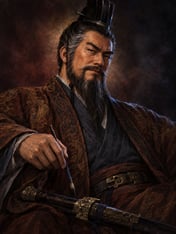 Cao CaoLivedCommanderTalk to me
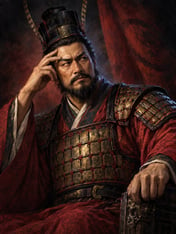 Yuan ShaoCommanderTalk to me
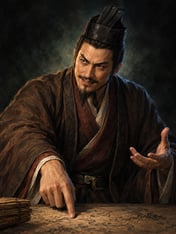 Xu YouAdvisorTalk to me
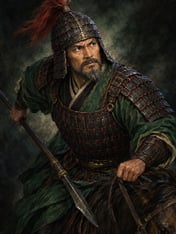 Zhang HeWarriorTalk to me
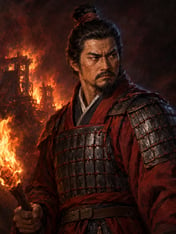 Gao LanWarriorTalk to me
Famous objectsThunder CarriageProclamation Against Cao Cao
Ask those who were there →Cao Cao, Yuan Shao, Guan Yu and others answer you togetherWho won, as each book tells it; commanders as the text names them.
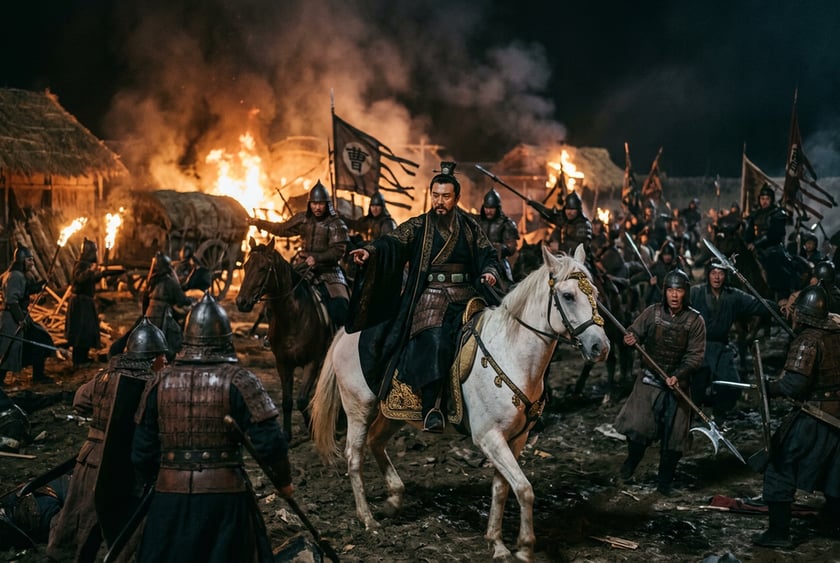
Scene
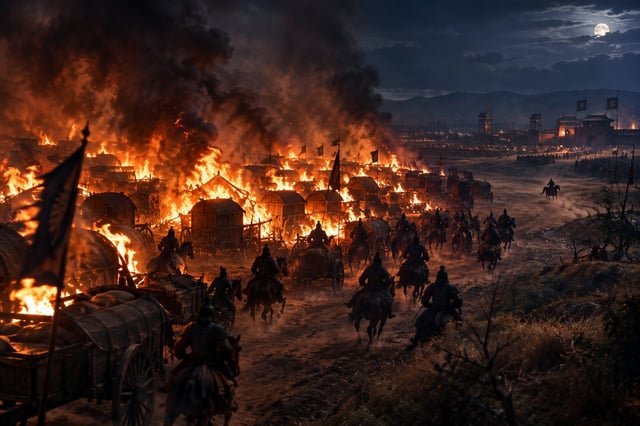
In the night, Cao Cao leads crack troops in a surprise attack on Wuchao. Flames surge skyward, consuming provisions and baggage, and Yuan’s camp descends into chaos.
Featured people: Cao Cao
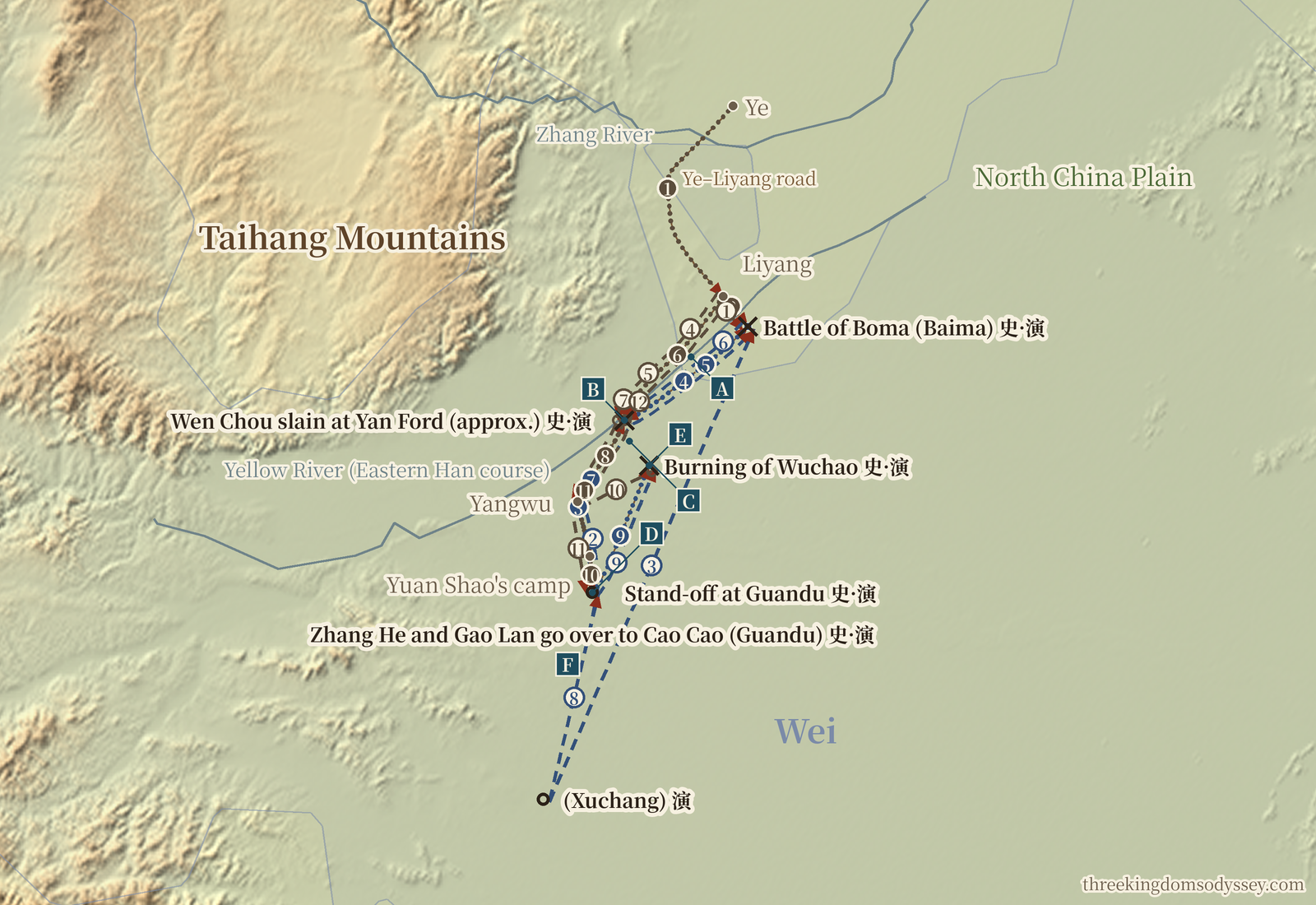
Swipe to see the whole map
In the Sanguozhi's main text Cao Cao feints at Yan Ford before striking Baima, and Wen Chou falls in the fighting; the novel drops the feint and has Guan Yu kill both Yan Liang and Wen Chou.
The books mostly say only where an army set out and arrived: a Records line is solid between the places they name and dotted where it follows a reconstructed road between them; an open ring marks an end the books don't give.
Base map: Natural Earth; terrain: AWS Terrain Tiles (SRTM and others). Roads and marches reconstructed from the sources listed; positions approximate.
Replay the battles on this map in 3D, phase by phase:▶ Battle of Guandu
The history records that although Cao Cao’s forces were clearly fewer than Yuan Shao’s, they were likely not “fewer than ten thousand”; the novel exaggerates the disparity between the two sides to 170,000 against 700,000 to heighten the theme of “the few defeating the many.”
The novel heavily dramatizes the war of public opinion and the characters' motives before the Battle of Guandu, whereas the history gives only a brief military account.
Continue
Replay the Battle of Guandu phase by phase on real terrain: troop strengths, movements and turning points at a glance, each marked as coming from the Records of the Three Kingdoms or the Romance.
2014 people in common
2013 people in common
1992 people in common
1962 people in common
1902 people in common
1902 people in common
2102 people in common
1892 people in common
The Battle of Guandu took place in the fourth and fifth years of Jian’an (199–200). At the time, Yuan Shao had just annexed Gongsun Zan’s territory and taken control of Ji, Qing, You, and Bing Provinces. Allied with the Wuhuan, he now possessed all the manpower and material resources needed to unify the lands north of the Central Plains. Cao Cao, meanwhile, had defeated Lü Bu, brought Zhang Xiu to heel, and welcomed Emperor Xian of Han as he moved the capital to Xu. He controlled Yan, Yu, and Xu Provinces, as well as part of Yang Province, and held the emperor to command the regional warlords. Though nominally in the right, he remained a middle-ranking power in practice. The decisive battle between the two sides thus had the character of a contest to “settle the north in a single battle.” Geographically, Guandu lay on the southern bank of the middle reaches of the Yellow River, at a chokepoint any southward advance by Yuan Shao toward Xu had to pass through. Cao Cao’s choice to build a forward defensive line there, fixing the battlefield within a day’s forced march of Xu so that reinforcements could arrive, was a precise decision to “trade minimal strategic depth for maximum concentration”.
In the early stages, Yuan Shao mobilized “more than a hundred thousand men” and divided his forces: Yan Liang attacked Liu Yan at Baima, Chunyu Qiong supervised the troops stationed at Yan Ford, and the main force camped at Liyang. After the vanguard was defeated, the army crossed the river and advanced to Yangwu, setting up camp along the sand mounds over a distance of dozens of li from east to west. Cao Cao, by contrast, stationed his main force at Guandu. Zang Ba entered Qing Province and captured Dong’an, Yu Jin guarded Yan Ford, Xu Huang supervised the transport of supplies, and Le Jin, Zhang Liao, Guan Yu, and others formed the vanguard. The two sides also differed markedly in how they used their subordinates. Cao Cao’s key adviser Xun Yu remained at Xu to coordinate supply routes, while Xun You accompanied the army; Jia Xu, Huan Jie, Zhao Yan, and others were deployed in various places, forming a distributed decision-making network. Yuan Shao’s subordinates Ju Shou, Tian Feng, and Xu You were all first-rate strategists, but his relationship with his advisers was closer to that of a “patron and retainers.” Ju Shou urged him to divide his forces, avoid crossing the river, and pursue a protracted campaign, while Xu You advocated sending light cavalry to raid Xu. Yuan Shao rejected both proposals, saying, “I’ll surround it and take it first.” The contrast between centralized and distributed decision-making had already foreshadowed the campaign’s course at its outset.
The campaign hinged on four key decisions. First was the relief of Baima. Xun You proposed a feint in the east to attack in the west: feign a river crossing at Yan Ford to draw Yuan Shao’s forces toward the western line, then send the main force of lightly equipped troops on a rapid strike against Baima. Zhang Liao and Guan Yu led the charge and killed Yan Liang, quickly lifting the siege. Cao Cao then used the baggage train as bait to set an ambush south of Yan Ford and kill Wen Chou. Yan Liang and Wen Chou were both renowned generals of Yuan Shao’s, and their deaths in successive battles sent shockwaves through his army. Second came the “short of provisions and wanting to withdraw” moment during the stalemate. When Cao Cao’s army was nearly out of food, he wrote to Xun Yu to discuss withdrawing. Xun Yu invoked the standoff between Chu and Han at Xingyang and Chenggao, urging Cao Cao to hold firm and “block the enemy’s throat so that it cannot advance.” This was the campaign’s turning point in morale. Third was the surprise attack on Wuchao. Angered after his family was placed under arrest, Xu You defected to Cao Cao and proposed burning Yuan Shao’s grain stores. Cao Cao personally led elite troops in a swift raid and killed Chunyu Qiong. At the time, Yuan Shao took Guo Tu’s advice and sent light cavalry to rescue Chunyu Qiong while ordering the main force to attack Cao Cao’s camp. Zhang He argued, “Cao Cao’s camp is well fortified; an assault will surely fail. If Chunyu Qiong is captured, we will all become prisoners,” and urged Yuan Shao to send the main force to his aid, but his advice was ignored. The result was failure on both fronts, and Zhang He and Gao Lan eventually burned their siege engines and surrendered. Fourth was Cao Cao’s logistics and intelligence network. Ren Jun’s system of escorting supply trains in “units of a thousand carts, advancing along ten routes,” Zao Zhi’s tuntian farming system, and Huan Jie’s instigation of Zhang Xian’s revolt against Liu Biao in Changsha, which kept Yuan Shao from coordinating a southern response, enabled Cao Cao to maintain a stable strategic depth despite his weaker forces.
The Battle of Guandu ended with the collapse of Yuan Shao’s main force. Yuan Shao fled north across the Yellow River with only eight hundred cavalry. Cao Cao captured all of Yuan Shao’s baggage and documents, and according to accounts, took eighty thousand men prisoner. The victory had repercussions on several fronts. First, it established Cao Cao’s political standing as one who could “represent the Han court in restoring order to the chaos”: Xun Yu’s strategy of “holding the emperor to command those who refuse to submit” was borne out in practice during the campaign. Second, the Yuan clan immediately became embroiled in a struggle over succession. Yuan Tan and Yuan Shang split apart, giving Cao Cao a window of opportunity to gradually take over Hebei. Third, northern generals such as Zhang He and Gao Lan joined Cao Cao, forming the core military force he would later use to campaign against the Wuhuan, pacify Liang Province, and resist Shu and Wu. Fourth, the story of Guan Yu killing Yan Liang at Guandu, then Guan Yu Hangs Up His Seal and Returns the Gold and leaves Cao Cao to return to Liu Bei, is fully recorded in the histories, and became one of the source texts for later tales of the “righteous man who will not stay.” Fifth, the differing fates of Yuan Shao’s advisers Xu You, Tian Feng, and Ju Shou each reflected the cost of a ruler’s refusal to heed counsel: Tian Feng was executed for remonstrating, Ju Shou remained loyal and refused to submit after being captured, and Xu You defected in anger. Together, their stories provided later generations with a full set of cautionary examples for discussions of the relationship between ruler and subject.
Counterfactuals can be considered on three levels. First, if Yuan Shao had followed Ju Shou’s advice to “remain stationed at Yan Ford, divide his forces at Guandu, and wear Cao Cao down gradually over time,” rather than recklessly crossing the river, Cao Cao might have withdrawn when his army ran short of provisions, while Yuan Shao used his threefold numerical advantage to blockade the southern bank of the Yellow River for months. Cao Cao’s army would most likely have collapsed from hunger. This was Yuan Shao’s easiest path to victory, but he gave it up of his own accord. Second, if Xu You had not defected and the fire at Wuchao had never been set, could Cao Cao still have won? Xun Yu had predicted that the enemy would be “throttled and unable to advance; their weakness would become evident, their strength would be spent, and change would surely follow”. Cao Cao’s strategy was to wait for Yuan Shao to make a mistake. Xu You was the trigger, but not the only possible one: within Yuan Shao’s camp, Shen Pei had arrested Xu You’s family, Tian Feng had been suspected and executed, and Guo Tu and Zhang He had slandered each other. This was a high-entropy system, and sooner or later an internal rupture would have erupted for Cao Cao to exploit. Third, what would the Three Kingdoms landscape have looked like if Yuan Shao had won at Guandu? The most likely scenario is that Yuan Shao would have advanced south to Xu and taken control of the emperor. But with no settled successor and factions divided within his camp, he might not have been able to maintain a unified northern regime for more than ten years. The Cao clan would have retreated to Nanyang and formed a new network of alliances with Liu Biao, Sun Ce, and others. The Three Kingdoms landscape might have taken shape earlier, or emerged only after a longer period of transition. All things considered, the Battle of Guandu holds an especially high place in historical scholarship not merely because it was a miraculous victory of the few over the many, but because a single campaign simultaneously settled three questions: the triumph of centralized decision-making, the turning point in the movement of talent, and the return of the logic of unification. It all but determined the course of northern politics for the three decades that followed the end of the Han.