Records
the Sun-Liu allied forces won
- Commanders
- Cao Cao's armyCao Cao
Vol. 54「人馬燒溺死者甚眾,軍遂敗退,還保南郡」
208 CE (Jian'an 13) · Chibi (Red Cliffs)
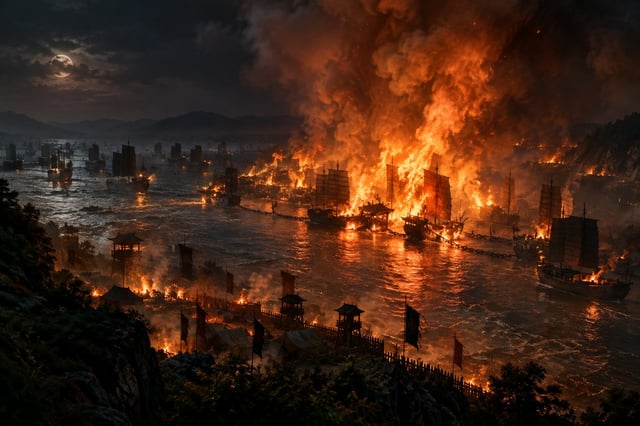
In the autumn and winter of the thirteenth year of Jian'an (208), having pacified Jingzhou, Cao Cao led a vast combined land and naval force downriver along the Yangtze with the intention of swallowing up Wu in a single stroke. Sun Quan sent Lu Su to Dangyang to meet with Liu Bei, and together with Zhuge Liang they agreed on a joint strategy to resist Cao Cao; Sun Quan then appointed Zhou Yu and Cheng Pu to command a naval force of thirty thousand, which combined with Liu Bei's army at Chibi to engage the enemy. Cao Cao's troops had marched a great distance and were exhausted, and large numbers of newly surrendered Jingzhou soldiers fell ill as they were unaccustomed to the climate — disease spread through the camp. Zhou Yu's subordinate Huang Gai discerned the weakness of Cao Cao's fleet, where ships were chained together bow to stern, and proposed an attack by fire, volunteering to feign surrender in order to draw close to Cao Cao's camp. In the eleventh month of that year — some sources say the twelfth — Huang Gai led dozens of warships loaded with kindling and oil in a fire attack that drove straight into Cao Cao's forces; riding the wind, the flames consumed Cao Cao's water and land encampments along the northern bank, and Cao Cao withdrew to Jiangling. His situation worsened as the epidemic intensified and his lines of retreat became unstable, and he pulled the entire army north from Jiangling, leaving Cao Ren to hold Nanjun. This battle established the foundation for the tripartite division of the realm: Sun Quan consolidated his hold over the Jiangdong region, Liu Bei transformed from a dependent ally into a growing power in Jingzhou, and Cao Cao's ambition to unify the south was permanently halted.
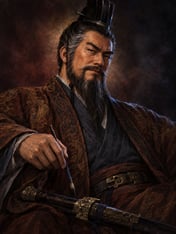 Cao CaoLivedCommanderTalk to me
 Zhou YuCommanderTalk to me
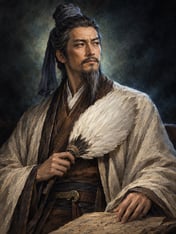 Zhuge LiangLivedAdvisorTalk to me
 Lu SuAdvisorTalk to me
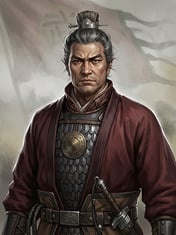 Huang GaiWarriorTalk to me
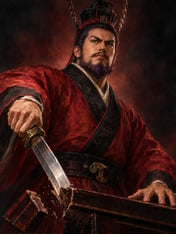 Sun QuanInstigatorTalk to me
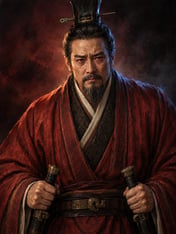 Liu BeiLivedCommanderTalk to me
Who won, as each book tells it; commanders as the text names them.
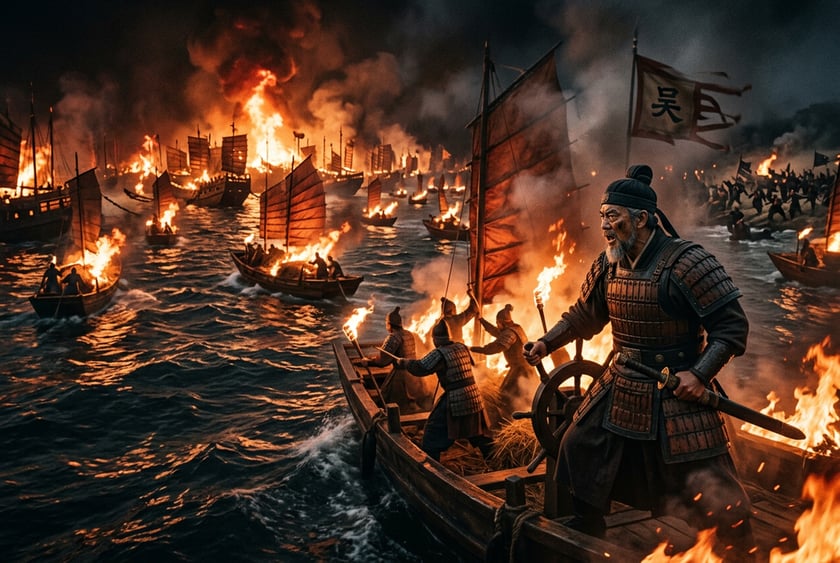
Scene
On the waters of Chibi, dozens of mengchong warships loaded with firewood, straw, and oil race through the night wind and waves toward Cao Cao's naval camp, whose warships stretch for several li, as flames soar into the sky.
Featured people: Huang Gai
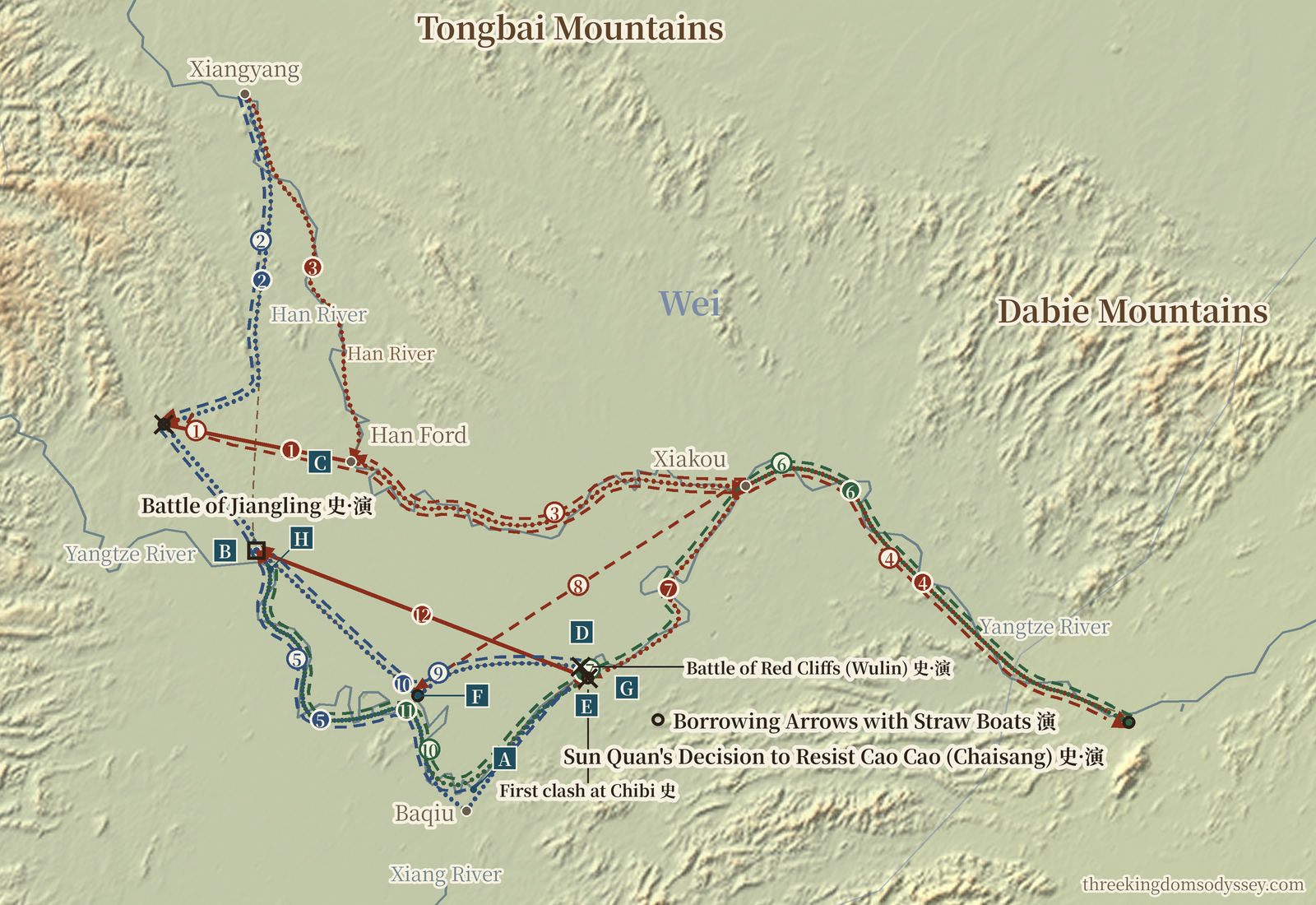
Swipe to see the whole map
The Sanguozhi's main text records only the first clash, Huang Gai's fire attack and Cao Cao's retreat north; the borrowed east wind, the chained ships and Guan Yu sparing Cao at Huarong are the novel's.
The books mostly say only where an army set out and arrived: a Records line is solid between the places they name and dotted where it follows a reconstructed road between them; an open ring marks an end the books don't give.
Base map: Natural Earth; terrain: AWS Terrain Tiles (SRTM and others). Roads and marches reconstructed from the sources listed; positions approximate.
Replay the battles on this map in 3D, phase by phase:▶ Battle of Red Cliffs▶ Battle of Changban
The novel portrays Zhuge Liang as the central figure directing the victory at Chibi; in the history, Zhou Yu is the decisive commander on the Eastern Wu side.
The Romance of the Three Kingdoms greatly exaggerates the strength of Cao Cao’s army and attributes its defeat mainly to tactical mistakes; the official history places greater emphasis on disease and the local climate and conditions.
208
208
208
208
208
208
208
208
208
208
Continue
Replay the Battle of Red Cliffs phase by phase on real terrain: troop strengths, movements and turning points at a glance, each marked as coming from the Records of the Three Kingdoms or the Romance.
2095 people in common
2105 people in common
2094 people in common
2104 people in common
2104 people in common
2104 people in common
2104 people in common
2083 people in common
The Battle of Red Cliffs was a classic example, rare in Chinese military history, of “achieving a strategic victory against superior numbers and winning the campaign through superior tactics.” It was also the turning point that made the Three Kingdoms configuration possible. In the first month of Jian’an 13 (208), having just pacified Hebei, Cao Cao shifted his strategic focus south. In the seventh month, he campaigned south against Jing Province; in the eighth month Liu Biao died, and in the ninth Liu Cong surrendered the entire province. Cao Cao gained Jing Province almost without a fight and, by incorporating its naval forces, reached the peak of his power. In Cao Cao’s view, advancing east down the river at that moment and swallowing up Sun Quan and the remnants of Liu Bei’s forces in one stroke was the only remaining window for unifying the realm. Yet Jia Xu had already urged Cao Cao to “make use of the abundance of the old Chu lands to provision the officers and soldiers, and pacify the people,” without rushing to attack the east of the Yangtze. When Pei Songzhi cited this counsel in his annotations, he specifically observed that it “did not suit the circumstances of the time”—even if Jia Xu saw the risks, Cao Cao could not afford not to move south against the east of the Yangtze, given the pressure from Han and Ma in the northwest and Sun Quan in the east. From this perspective, the Battle of Red Cliffs was a battle Cao Cao “had no choice but to fight” in the course of unifying the realm, while the Sun-Liu allied forces faced a powerful enemy they could not wear down through a prolonged war of attrition.
On Cao Cao’s side, he personally led five thousand northern cavalry from the central army in a rapid pursuit of Liu Bei as far as Changban, Dangyang, where they captured his baggage train. He then reorganized his land and naval forces and advanced east along the river. Scholars estimate that Cao Cao committed around two hundred thousand troops in practice, a substantial portion of them newly surrendered Jing Province naval forces. This was the most serious internal vulnerability in Cao Cao’s army: their loyalty was low, and they had no experience cooperating with the northern army’s infantry and cavalry. The Romance of the Three Kingdoms exaggerates the number to 830,000, claiming it was a million.
On the Sun-Liu allied side, Zhou Yu and Cheng Pu commanded the main force of thirty thousand naval troops. Liu Bei’s own forces, together with Guan Yu’s naval troops and Liu Qi’s Jiangxia troops, numbered a little over ten thousand, bringing the allied force to around forty thousand in total. The battlefield was Chibi, a mountainous stretch along the narrow southern bank of the middle Yangtze. Its river terrain could offset Cao Cao’s numerical advantage and also facilitated the deployment of a fire attack.
The outcome of the entire Battle of Red Cliffs hinged on four key decisions.
First was Sun Quan’s resolve to resist Cao Cao. After Cao Cao’s proclamation reached Chaisang, Zhang Zhao and others advocated surrender to protect the people of Jiangdong. Lu Su privately met with Sun Quan and pointed out that the ministers urging surrender could keep their offices, but if Sun Quan surrendered, he would have no household or person left to protect. Zhuge Liang, on his mission to Wu, further stirred Sun Quan’s resolve by telling him that he would otherwise have “no place to put his talents to use”. Zhou Yu, meanwhile, laid out all four of Cao Cao’s weaknesses: “his troops are unaccustomed to naval warfare, they are weary from traveling so far, the north is not yet pacified, and the horses have no fodder.” Sun Quan struck the table and decided to resist Cao Cao. This decision turned Eastern Wu away from a possible “surrender of Jiangdong” and back toward “Jiangdong’s independence.”
Second, Huang Gai recognized the weakness of Cao Cao’s warships, which were linked bow to stern. Cao Cao had linked the ships together to ease his soldiers’ seasickness—a measure born of necessity—but Huang Gai saw the possibility of a fire attack. This tactical instinct was the product of the long years of river training undergone by the Wu commanders under Zhou Yu.
Third was the combination of feigned surrender and fire attack. Huang Gai loaded several dozen mengchong and doujian warships with dry reeds and oil-soaked materials, and had previously sent a letter to Cao Cao feigning an intention to surrender. When the southeast wind rose, he charged at night toward Cao Cao’s riverine and land camps on the north bank. Once the flames spread to the camps ashore, Cao Cao’s infantry and cavalry were thrown into disarray as well, leaving them no time to organize a counterattack.
Fourth was Cao Cao’s decision to burn his ships and retreat. As he withdrew north to Jiangling, Cao Cao deliberately burned the remaining warships to prevent them from falling into Wu’s hands. This step is recorded in both the Records of the Three Kingdoms, “Annals of Emperor Wu,” and the Book of Wu, showing that although Cao Cao was defeated, he still retained considerable command ability: he was beaten, but his army did not collapse.
The campaign’s immediate result was Cao Cao’s retreat north to Jiangling, where he left Cao Ren to defend Nan Commandery. The Sun-Liu allied forces pressed their advantage and besieged Jiangling, while the four southeastern commanderies of Jing Province—Changsha, Lingling, Guiyang, and Wuling—successively came under Liu Bei’s control.
The strategic consequences were threefold.
First, the tripartite configuration took shape. The window for Cao Cao to unify the south was permanently closed. Thereafter, he shifted his strategic focus to Liang Province and Hanzhong in the northwest, while Sun and Liu divided the lands south of the Yangtze.
Second, the Sun-Liu alliance became the norm in southern politics. The division of roles established after the Battle of Red Cliffs—“Sun Wu commanding the waterways, Liu Shu the land”—continued for seven years, until before the Xiang River agreement, and was the most stable political arrangement of the early Three Kingdoms period.
Third, the economic and political center of gravity in southern China began to rise. Before this, China’s political and military center of gravity lay, in the vast majority of cases, in the middle and lower reaches of the Yellow River. After Red Cliffs, for the first time, the south had the strength to prevent the north from unifying the realm. This configuration lasted until the Western Jin unified the country, but returned in another form after the Rebellion of Yongjia.
There was more than one possible counterfactual path.
First: if Sun Quan had followed Zhang Zhao’s advice and surrendered, Jiangdong would have fallen to Cao Cao, and Liu Bei could not have stood alone. Cao Cao might have unified the country by 209, after which there would have been no Three Kingdoms period; China might have entered directly into a unified empire that lasted until the end of the third century. The cost, however, would have been the suppression for a century of the development of Jiangnan’s culture, gentry clans, and economic centers.
Second: if Cao Cao had followed Jia Xu’s advice and refrained from rushing east of the Yangtze, pacifying Jing Province first, the Battle of Red Cliffs would not have taken place in the winter of 208, but neither would the Sun-Liu alliance have formed. Cao Cao might have conquered Jiangdong in stages during the 210s. The Three Kingdoms configuration would likewise never have emerged, but unification would have proceeded more smoothly.
Third: if Lu Su had not arrived in time to join Liu Bei at Dangyang, and Liu Bei had headed toward Cangwu to seek refuge with Wu Chen, the Sun-Liu alliance might not have formed, and Cao Cao might have defeated Jiangdong by 209.
These three forks in the road have one thing in common: the Battle of Red Cliffs depended on a series of chance conditions—the decision by Sun Quan to resist Cao Cao, Zhou Yu’s command in the field, the timely rise of the southeast wind, and the outbreak of disease in Cao Cao’s camp. If any one link had been absent, the outcome would have been different. Campaigns in which “multiple coincidences converge” are extremely rare in Chinese military history. This is also why the Battle of Red Cliffs was imbued with such a strong sense of destiny in the Romance of the Three Kingdoms: episodes such as borrowing the east wind are the most direct literary treatment of this element of chance.