Cao Wei · Monarch
Cao Rui
courtesy name 元仲 · also called 明帝 · 204–239
Not to be confused with Cao Rui (曹蕤, ?–233) — Cao Rui, son of Cao Wei Emperor Cao Pi and younger brother of Emperor Cao Rui, was made Prince of Yangping and Beihai and died in Qinglong 1.
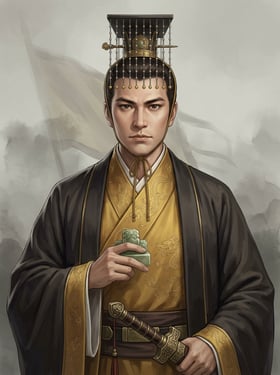
From boyhood he was clever, and skilled in bow and horse.

Life
In the novel: 15 chapters · In the Records: 28 volumes
Life204–239
220 CE (Huangchu 1)
228 CE (Taihe 2)
7 more events
230 CE (Taihe 4)
233 CE (Qinglong 1)
234 CE (Qinglong 2)
- Battle of Hefei (234)Hefei New CityCommander
237 CE (Jingchu 1)
- Jingchu Calendar ReformLuoyangInstigator
238 CE (Jingchu 2)
- Himiko Sends Envoys to WeiLuoyangCommander
- Sima Yi's Liaodong CampaignXiangpingInstigator
239 CE (Jingchu 3)
Allegiance
- Cao Wei
- Hatched: dated by chapter
- Life event
- Death
List all 9 stops
- Luoyang220Gao Rou's Administration of Criminal Law
- Chencang228Zhuge Liang's Second Northern Expedition
- Mount Qi228Zhuge Liang's Northern Expeditions
- Hanzhong230Cao Zhen's Invasion of Shu
- Luoyang230Emperor Ming of Wei's Lavish Palace Construction
- Hefei New City233–234Man Chong Relocates and Builds the New Hefei City+1 more
- Luoyang237–238Jingchu Calendar Reform+1 more
- Xiangping238Sima Yi's Liaodong Campaign
- Luoyang239Emperor Ming of Wei Entrusts the Regency on His Deathbed+1 more
On the boards
Compare with someone →Where this person ranks on each board.
Who they were
Character profile
- Appearance
- From boyhood he was clever, and skilled in bow and horse.
- Character
- Composed, resolute, and discerning, he acted as his heart inclined; fond of learning and broad in knowledge, he gave particular attention to law and principle. He grieved deeply for his mother's kin, and again and again built shrines and raised observatories for the family of the Zhen clan, his maternal house, conferring rank and title upon them. Benevolent and tender-hearted, moved by compassion, yet as a sovereign he was prone to suspicion, fond of novelty and arrogant ease, drowned in the favor of women, and would not heed remonstrance.
- Manner of speech
- At a loss when confronted with crises, he later repented of having demoted Sima Yi, sighing, 'Your learning and insight surpass even Sun Wu and Wu Qi.' His inquiries were terse, and he conveyed his designs by handwritten edict, deciding matters in short phrases—'What you say accords exactly with my mind'—and he also sighed at an enemy general's ability, 'Lu Xun's use of troops is no less than that of Sun Wu and Wu Qi.'
- Life
- In the fifth month of the first year of Yankang he was enfeoffed as Marquis of Wude; in the third month of the third year of Huangchu he was made Duke of Qi, and afterward established as Prince of Pingyuan. Because his mother had been put to death, he was not set up as heir; only in the summer fifth month of the seventh year of Huangchu, when Emperor Wen fell gravely ill, was he made Crown Prince, and on the dingsi day he ascended the imperial throne. After Emperor Wen died he took the throne, honored Lady Bian as Grand Empress Dowager, and posthumously titled his own mother of the Zhen clan Empress Wenzhao.
- Anecdotes
- He died in the first month of the third year of Jingchu, and having no son, he reared Cao Fang and Cao Xun. In the Jiaping period his adoptive mother Empress Guo died; it was rumored that, harboring a grievance from his childhood, he had forced her to death. He trusted Sima Yi and would not heed the ministers' remonstrance to 'recall Yi'; when mortally ill he grasped Yi's hand and entrusted his young son to him, weeping until his tears soaked his collar.
Historical Record
Cao Rui, courtesy name Yuanzhong, was the son of Wei Emperor Cao Pi. Tradition says that Cao Cao took a great liking to him soon after his birth and often kept him by his side. Cao Rui was studious and widely read, with a particular interest in law and principle. At fifteen, he was enfeoffed as Marquis of Wude; in the second year of Huangchu, he became Duke of Qi, and in the third year he was elevated to Prince of Pingyuan. Because his birth mother, Lady Zhen, had been executed, Cao Pi at one point did not designate him heir. Cao Rui initially bore a grudge against Empress Guo, but later served her with respect, and she in turn treated him with affection. In the seventh year of Huangchu, when Cao Pi fell gravely ill, he made Cao Rui crown prince. After Cao Pi’s death, Cao Rui ascended the throne, granted a general amnesty, and posthumously honored his birth mother, Lady Zhen, as Empress Wenzhao.
Early in his reign, Sun Quan attacked Jiangxia. Cao Rui judged that, since Sun Quan was already locked in a standoff with Wen Ping, the balance of offense and defense was unfavorable to him and he would not remain long. When Xun Yu arrived, he gathered forces along the route and set fires on the mountain; Sun Quan withdrew. When Zhuge Liang launched a campaign, the three commanderies of Tianshui, Nanan, and Anding responded to him. Cao Rui ordered Cao Zhen to command the forces west of the Passes, and Zhang He inflicted a major defeat on the Shu army at Jieting. Zhuge Liang withdrew, and the three commanderies were pacified. Later, Sun Quan attacked Hefei Xincheng and sent troops into the Huai and Mian regions, and Cao Rui personally led an eastern campaign. He judged that Sun Quan would be unable to capture the new city; as Wei forces approached, Sun Quan and his generals withdrew.
During his reign, Cao Rui valued the study of the classics and issued an edict to select talented people well versed in them; he also ordered high ministers to recommend worthy men. He also took an interest in criminal cases, declaring, “The prisons hold the lives of all under Heaven.” Whenever major cases were decided, he often personally attended to hear and examine them, and he issued an edict calling for deliberations on cases, postponement of executions, and a policy of leniency and simplicity. At the same time, he undertook extensive construction at the Luoyang palace, building halls and towers, which disrupted the people’s farming. Yang Fu, Gaotang Long, and others repeatedly remonstrated with him; although Cao Rui did not heed them, he nevertheless treated them leniently. He also established Wei’s calendar, system of ritual observances, and official colors, changed the era name to Jingchu, and proposed that Wei had received the earth phase and should make the second month of the Ox its first month. In the first month of the third year of Jingchu, Cao Rui fell gravely ill. He summoned Sima Yi into his bedchamber, took his hand, and entrusted him with affairs of state, charging him to assist his young son together with Cao Shuang. He died that same day at Jiafu Hall and was buried at Gaoping Mausoleum.
In the Novel
Romance of the Three Kingdoms portrays Cao Rui as an intelligent and compassionate heir apparent. The novel follows the account that he was born to Lady Zhen and raised by Empress Guo, and presents the story of his refusal to shoot a fawn after its mother had been killed as striking proof of his benevolence. Cao Pi consequently praised him, and the novel says he was enfeoffed as Prince of Pingyuan. Historical accounts also record a similar deer-hunting episode, but the novel elaborates on Lady Zhen’s death after she was falsely accused through a wooden effigy, as well as a conspiracy between Guo Guifei and Zhang Tao. These details have no corresponding account in the historical materials provided.
The novel depicts Cao Pi, on his deathbed, entrusting Cao Rui to Cao Zhen, Chen Qun, Sima Yi, Cao Xiu, and others. After ascending the throne, Cao Rui accedes to Sima Yi’s request and puts him in command of the troops in Yong and Liang. This differs from the historical account, which says that Cao Pi made Cao Rui crown prince while gravely ill and that Cao Rui ascended the throne after his death. The novel places greater emphasis on the regency established at the beginning of Cao Rui’s reign. Later, the novel’s Cao Rui is easily swayed by Shu’s rumors and schemes of disinformation, and for a time grows suspicious of Sima Yi, eventually stripping him of his office. When the Shu army invades again, he follows Zhong Yao’s advice to restore Sima Yi to office and put him in command of the troops. In this way, the novel portrays a Wei ruler who repeatedly relies on his ministers and generals in times of crisis, yet also changes his appointments out of suspicion and fear.
Key Relationships
- Cao Pi and Cao Rui: Father and son; succession to the throne. Cao Pi was Cao Rui’s father. Cao Rui was favored by Cao Cao in his youth, then named crown prince by Cao Pi and succeeded him as emperor. His birth mother, Lady Zhen, was posthumously honored as Empress Wenzhao.
- Empress Guo and Cao Rui: Foster mother and foster son. The Wei lüe, cited in Pei Songzhi’s commentary, says that Cao Pi ordered Empress Guo to raise Cao Rui. Cao Rui later served her with respect, and she treated him with affection. The novel likewise says that she raised him, but adds court-intrigue plotlines.
- Empress Mingdao: Cao Rui’s empress. Lady Mao was selected for the Eastern Palace and was favored while Cao Rui was Prince of Pingyuan. After his accession, she was first made Noble Consort, and in the first year of Taihe she was installed as empress. Her father, Mao Jia, was enfeoffed as a marquis.
- Cao Rui, Cao Fang, and Cao Xun: Members of the imperial clan and figures connected with the succession. Cao Rui was Cao Rui’s younger brother, while Cao Fang and Cao Xun were adopted by Cao Rui. When Cao Rui fell gravely ill, he made Cao Fang crown prince and entrusted Cao Shuang and Sima Yi with assisting his young son.
- Sima Yi: Entrusted regent and military commander. Historical accounts say that Cao Rui entrusted him with affairs of state on his deathbed; the novel adds the twists of Cao Rui dismissing Sima Yi through a scheme of disinformation and later reinstating him.
Signature Scenes
- His reluctance during the deer hunt: The Wei Mo zhuan, cited in Pei Songzhi’s commentary, records that after Cao Pi shot a doe, he ordered Cao Rui to shoot the fawn. Cao Rui refused, saying, “Your Majesty has already killed its mother; I cannot bear to kill its young as well.” Cao Pi was “deeply impressed by him,” and his decision to make Cao Rui his heir was settled. Romance of the Three Kingdoms also presents this episode as a defining example of Cao Rui’s benevolence; the novel’s additional court-intrigue details are unique to the fictional account.
- The Jieting campaign and defense of the Guanzhong region: When Zhuge Liang launched a campaign and the three commanderies responded, Cao Rui judged the situation and deployed Cao Zhen, Zhang He, and others to meet the enemy. After Zhang He won at Jieting, the Shu army withdrew. The episode shows Cao Rui making decisions in a military crisis and relying on his generals.
- The eastern campaign to Hefei Xincheng: When Sun Quan attacked, Cao Rui rejected the suggestion to withdraw the defenders from the new city and lure the enemy deeper into Wei territory. He personally led an imperial fleet eastward. Before the Wei army had even arrived, Sun Quan withdrew; Cao Rui then went to Shouchun to reward the troops.
- Entrusting the state on his deathbed: Cao Rui recalled Sima Yi, took his hand, and entrusted him with affairs of state, naming Cao Fang as his successor and ordering Sima Yi and Cao Shuang to serve as regents. This marked the end of his rule and a turning point in Wei’s regency arrangements.
Quotes
92 lines in the books · 3 featured
「昔劉玄德在白帝城病危,以幼子劉禪託孤於諸葛孔明,孔明因此竭盡忠誠,至死方休,偏邦尚然如此,何況大國乎?朕幼子曹芳,年纔八歲,不堪掌理社稷。幸太尉及宗兄元勳舊臣,竭力相輔,無負朕心!」
Cao Rui entrusting his orphaned heir to Sima Yi sowed the seeds for the Sima clan's later domination of power, and is of great historical significance.
「朕建高臺峻閣,欲與神仙往來,以求長生不老之方。」
This line reveals the muddleheaded side of Cao Rui in his later years, indulging in occult arts and pursuing immortality.
「我自召太尉,而曹肇等反使吾止之,幾敗吾事!」
This line embodies Cao Rui's trust in and reliance on Sima Yi, and also hints at Sima Yi's power.
- Family
- Lord & vassal
- Enemies
- Teacher & student
- Other
History vs. novel
8 points · 2 novel-only
| History | Novel |
|---|---|
| Shooting a Doe and Choosing an HeirNovel embellishes | |
The Wei Mo Zhuan, cited in historical sources, records that after Cao Pi shot a doe, he ordered Cao Rui to shoot its fawn. Cao Rui could not bring himself to do so, and Cao Pi therefore decided to name him heir. The main text of the Records of the Three Kingdoms, however, says only that Cao Rui was not named heir because his birth mother had been executed; the hunting story appears in material cited in Pei Songzhi's annotations. vol. 3 | The novel elaborates that while hunting, Cao Rui refused to shoot a fawn on the grounds that its mother was already dead. Cao Pi praised his benevolence and immediately made him Prince of Pingyuan. ch. 91 |
| The Death of Lady ZhenNovel embellishes | |
Historical records state that because his birth mother, Lady Zhen, had been executed, Cao Rui was for a time not named heir. Guo had no children, so Cao Pi had her raise Cao Rui. Cao Rui felt resentful, but later treated Guo with respect. vol. 3 | The novel says that Guo Guifei and the favored minister Zhang Tao laid a trap, forging evidence that Lady Zhen had practiced a curse ritual. Cao Pi consequently ordered Lady Zhen's death and made Guo Guifei empress. ch. 91 |
| Accession and the RegencyNovel embellishes | |
When Cao Pi became gravely ill, he named Cao Rui crown prince. After Cao Pi's death, Cao Rui ascended the throne. In his final years, when Cao Rui fell gravely ill, he summoned Sima Yi to the palace to receive his final decree and appointed Cao Shuang's Regency. vol. 3 | The novel portrays Cao Pi's deathbed entrustment as a joint charge to Cao Zhen, Chen Qun, Sima Yi, and others. When Cao Rui was critically ill, he also clasped Sima Yi's hand and, citing Liu Bei's entrustment of Zhuge Liang, charged him to assist Cao Fang. ch. 91 |
| Suspecting Sima YiNovel only | |
| — | The novel depicts Hua Xin and Wang Lang suspecting Sima Yi of harboring rebellious intentions, and Cao Rui briefly considering a personal campaign. Cao Zhen advised him to travel to Anyi to observe Sima Yi's movements, and Cao Rui accepted the plan. ch. 91 |
| Zhuge Liang's Northern ExpeditionsNovel embellishes | |
Historical records state that after Zhuge Liang set out from Mount Qi, Cao Rui went west to take up position in Chang'an and ordered Zhang He to meet the enemy. Zhang He defeated Ma Su at Jieting; Cao Rui did not personally appoint Xiahou Mao to lead the campaign. vol. 35 | The novel invents Cao Rui appointing Xiahou Mao, who had never commanded troops in battle, as grand commander to oppose Zhuge Liang. Xiahou Mao soon lost three commanderies; Cao Zhen later took over but also suffered repeated setbacks. ch. 91 |
| Palace ConstructionNovel embellishes | |
Historical records state that Cao Rui undertook extensive renovations of palace halls, with the people bearing the labor burden. Xin Pi submitted a remonstrance, pointing out that palace construction, combined with successive years of poor harvests, was worsening the people's hardship. Cao Rui, in turn, explained his plans for the construction. vol. 25 | The novel links palace construction with the pursuit of immortality, depicting Cao Rui ordering Ma Jun to dismantle the bronze figures and dew-catching basin from the Bailiang Terrace, while also greatly expanding the parks and gardens. ch. 105 |
| Ordering Empress Mingdao's DeathNovel only | |
| — | The novel depicts Cao Rui favoring Lady Guo and neglecting Empress Mingdao. When Empress Mingdao happened to learn that Cao Rui and Lady Guo had gone to stroll in the garden, Cao Rui executed the attendants and ordered Empress Mingdao's death. ch. 105 |
| RegentsNovel embellishes | |
When Cao Rui was gravely ill, he initially wanted Cao Yu, Prince of Yan, to serve as grand general, but Cao Yu firmly declined. Cao Rui followed the advice of Liu Fang and Sun Zi, recalled Sima Yi, and appointed Cao Shuang's Regency. vol. 13 | The novel likewise depicts Cao Yu declining the post and Cao Shuang receiving the appointment, but also elaborates on how Liu Fang and Sun Zi induced Cao Yu to leave the capital. Cao Rui then recalled Sima Yi, entrusted Cao Fang to his care, and drew a comparison with Liu Bei's entrustment of Zhuge Liang. ch. 106 |
- Shooting a Doe and Choosing an HeirNovel embellishes
- History
The Wei Mo Zhuan, cited in historical sources, records that after Cao Pi shot a doe, he ordered Cao Rui to shoot its fawn. Cao Rui could not bring himself to do so, and Cao Pi therefore decided to name him heir. The main text of the Records of the Three Kingdoms, however, says only that Cao Rui was not named heir because his birth mother had been executed; the hunting story appears in material cited in Pei Songzhi's annotations.
vol. 3
- Novel
The novel elaborates that while hunting, Cao Rui refused to shoot a fawn on the grounds that its mother was already dead. Cao Pi praised his benevolence and immediately made him Prince of Pingyuan.
ch. 91
- The Death of Lady ZhenNovel embellishes
- History
Historical records state that because his birth mother, Lady Zhen, had been executed, Cao Rui was for a time not named heir. Guo had no children, so Cao Pi had her raise Cao Rui. Cao Rui felt resentful, but later treated Guo with respect.
vol. 3
- Novel
The novel says that Guo Guifei and the favored minister Zhang Tao laid a trap, forging evidence that Lady Zhen had practiced a curse ritual. Cao Pi consequently ordered Lady Zhen's death and made Guo Guifei empress.
ch. 91
- Accession and the RegencyNovel embellishes
- History
When Cao Pi became gravely ill, he named Cao Rui crown prince. After Cao Pi's death, Cao Rui ascended the throne. In his final years, when Cao Rui fell gravely ill, he summoned Sima Yi to the palace to receive his final decree and appointed Cao Shuang's Regency.
vol. 3
- Novel
The novel portrays Cao Pi's deathbed entrustment as a joint charge to Cao Zhen, Chen Qun, Sima Yi, and others. When Cao Rui was critically ill, he also clasped Sima Yi's hand and, citing Liu Bei's entrustment of Zhuge Liang, charged him to assist Cao Fang.
ch. 91
- Suspecting Sima YiNovel only
- Novel
The novel depicts Hua Xin and Wang Lang suspecting Sima Yi of harboring rebellious intentions, and Cao Rui briefly considering a personal campaign. Cao Zhen advised him to travel to Anyi to observe Sima Yi's movements, and Cao Rui accepted the plan.
ch. 91
- Zhuge Liang's Northern ExpeditionsNovel embellishes
- History
Historical records state that after Zhuge Liang set out from Mount Qi, Cao Rui went west to take up position in Chang'an and ordered Zhang He to meet the enemy. Zhang He defeated Ma Su at Jieting; Cao Rui did not personally appoint Xiahou Mao to lead the campaign.
vol. 35
- Novel
The novel invents Cao Rui appointing Xiahou Mao, who had never commanded troops in battle, as grand commander to oppose Zhuge Liang. Xiahou Mao soon lost three commanderies; Cao Zhen later took over but also suffered repeated setbacks.
ch. 91
- Palace ConstructionNovel embellishes
- History
Historical records state that Cao Rui undertook extensive renovations of palace halls, with the people bearing the labor burden. Xin Pi submitted a remonstrance, pointing out that palace construction, combined with successive years of poor harvests, was worsening the people's hardship. Cao Rui, in turn, explained his plans for the construction.
vol. 25
- Novel
The novel links palace construction with the pursuit of immortality, depicting Cao Rui ordering Ma Jun to dismantle the bronze figures and dew-catching basin from the Bailiang Terrace, while also greatly expanding the parks and gardens.
ch. 105
- Ordering Empress Mingdao's DeathNovel only
- Novel
The novel depicts Cao Rui favoring Lady Guo and neglecting Empress Mingdao. When Empress Mingdao happened to learn that Cao Rui and Lady Guo had gone to stroll in the garden, Cao Rui executed the attendants and ordered Empress Mingdao's death.
ch. 105
- RegentsNovel embellishes
- History
When Cao Rui was gravely ill, he initially wanted Cao Yu, Prince of Yan, to serve as grand general, but Cao Yu firmly declined. Cao Rui followed the advice of Liu Fang and Sun Zi, recalled Sima Yi, and appointed Cao Shuang's Regency.
vol. 13
- Novel
The novel likewise depicts Cao Yu declining the post and Cao Shuang receiving the appointment, but also elaborates on how Liu Fang and Sun Zi induced Cao Yu to leave the capital. Cao Rui then recalled Sima Yi, entrusted Cao Fang to his care, and drew a comparison with Liu Bei's entrustment of Zhuge Liang.
ch. 106
Combat
On the field
Duels, kills and executions as the texts tell them, counted separately for the Records and the Romance.
- RecordsJuan 5ExecutionEmpress MingdaoWon「賜后死,然猶加諡,葬愍陵」
- RecordsJuan 24ExecutionGongsun HuangWon「竟遣使齎金屑飲晃及其妻子」
- RomanceCh. 105ExecutionZhang MaoWon「叡命斬之」
- RomanceCh. 105ExecutionEmpress MingdaoWon「叡即降詔賜毛皇后死」
Stratagems
Plans this person devised or saw through, as the texts tell them.
- Romance
- 0 carried out · 0 worked · 0 turned down · 1 seen through
- RomanceAttack from Front and RearOtherSaw throughagainst Wei's armyCh. 103「以兵斷魏軍歸路,吾率眾攻其前,彼首尾不敵」
Events
Events (25)
Battles and events the texts place this person in, by date.
Battles
Other events
- 220Gao Rou's Administration of Criminal LawWitness
- 228Zhou Fang's Feigned Surrender to Lure Cao Xiu
- 228Empty Fort Strategy
- 228Battle for Chencang
- 230Emperor Ming of Wei's Lavish Palace ConstructionInstigator
- 233Man Chong Relocates and Builds the New Hefei CityCommander
- 234Kongming Sends a Woman's Headdress to Sima Yi
- 234Battle of Hefei (234)Commander
All 16
- 237Gongsun Yuan Proclaims Himself King of Yan
- 237Jingchu Calendar ReformInstigator
- 238Himiko Sends Envoys to WeiCommander
- 238Sima Yi's Liaodong CampaignInstigator
- 239Emperor Ming of Wei Entrusts the Regency on His DeathbedInstigator
- 239Cao Shuang's Regency
- 249The Sima Clan's Seizure of Power
- 249Incident at the Gaoping Tombs
Famous objects

Continue
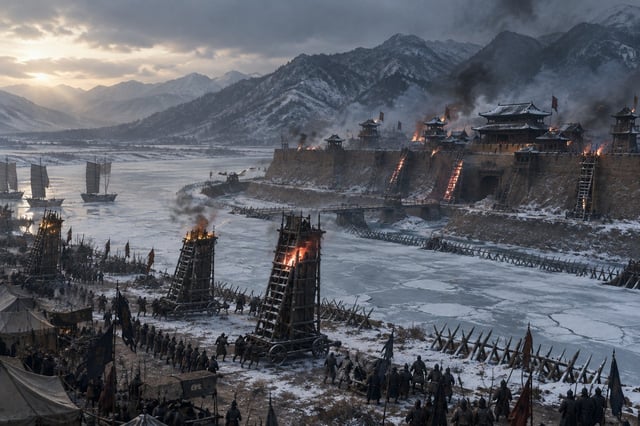
The Zhuge Liang's Northern Expeditions in 3D
Replay the Zhuge Liang's Northern Expeditions phase by phase on real terrain: troop strengths, movements and turning points at a glance, each marked as coming from the Records of the Three Kingdoms or the Romance.
Relationship timeline10 entries ▸
History · vol. 3
Child
Installed the emperor’s son Jiong as King of Qinghe.
History · vol. 14
- Sima Yi§131
Friend
Before Emperor Ming died, he summoned Sima Yi to his bedside to receive his edict
History · vol. 16
- Zheng Hun§61
Student
Issued an edict praising him and proclaimed it throughout the land; was promoted to Chief Artisan
History · vol. 17
- Zhang He§23
Commands
was granted the rank of Specially Advanced; his fief was increased by 1,000 households, in addition to the previous 4,300; personally went to Henan City, set out wine, and saw him off; summoned him to the capital by relay horse; divided He’s households and enfeoffed his four sons as marquises; granted the youngest son the title of Marquis Within the Passes
- Xu Huang§32
Commands
upon ascending the throne, refused Zhuge Jin; increased his fief by 200 households, bringing it to 3,100 households
History · vol. 20
- Cao Lin§116
Kin
In accordance with the late emperor’s wishes, bestowed favor and affection on Lin unlike those given to the other states
Novel · ch. 95
- Zhang He§1
Commands
appointed Zhang He as the vanguard and campaigned together with Sima Yi
Novel · ch. 100
- Sima Yi§13
Commands
On hearing that Cao Zhen had died, issued an edict urging Sima Yi to go to battle
All 10
Loading…
Inner monologues · AI-generated3 monologues ▸
- I was born into the imperial house, and from a young age often attended my grandfather, Emperor Wu of Wei, at his side.
- My illness grows ever more grave, and the lamplight flickers. The sounds of the ministers coming and going in the palace
- As I attend court and hear reports, what I fear most is not a beacon fire at one place, but news from several quarters p