Cao Wei · General-in-Chief
Cao Yu
courtesy name 彭祖 · –278
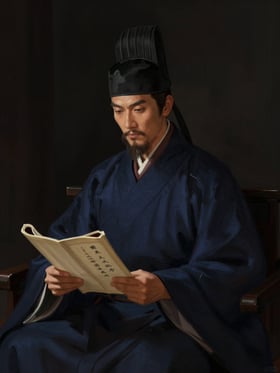
Cao Yu, Cao Wei's Prince of Yan and Cao Huan's father, refused the Grand Generalship; Romance depicts him weeping as he returned home by edict.
Life
In the novel: 2 chapters · In the Records: 4 volumes
Life?–278
Appearances
By chapter (6)
Novel
- 106
- 114
Records
- 3
- 9
- 14
- 20
- Cao Wei
- Hatched: dated by chapter
On the boards
Compare with someone →Where this person ranks on each board.
Historical Record
Cao Yu, courtesy name Pengzu, was a son of Cao Cao and Lady Huan, and a member of the Cao Wei imperial clan. In the sixteenth year of Jian’an, he was enfeoffed as Marquis of Duxiang; in the twenty-second year of Jian’an, his title was changed to Marquis of Luyang. After Cao Pi ascended the throne, he was promoted to duke in the second year of Huangchu, enfeoffed as King of Xiapi in the third year, and transferred to the County of Shanfu in the fifth year. In the sixth year of Taihe, Cao Rui changed his fief to the Kingdom of Yan. When Cao Rui was young, he had lived with Cao Yu and was especially fond of him; after ascending the throne, he also bestowed favors on Cao Yu that he did not grant to the other princes. In the third year of Qinglong, Cao Yu was summoned to court; in the first year of Jingchu, he returned to Ye, and in the summer of the following year he was summoned to the capital again.
In the winter of the second year of Jingchu, Cao Rui fell seriously ill and appointed Cao Yu Grand General, entrusting him with arrangements for the succession. After only four days in office, Cao Yu firmly declined the appointment. Cao Rui’s intentions changed as well, and Cao Yu was relieved of his post; he returned to Ye the following summer. The “Han Jin Chunqiu,” cited in Pei Songzhi’s commentary, records that Cao Rui had planned for Cao Yu, Xiahou Xian, Cao Shuang, Cao Zhao, and Qin Lang to jointly assist in governing. After Liu Fang and Sun Zi advised him, Cao Rui replaced Cao Yu with Cao Shuang and also asked Sima Yi to take part in the regency; Cao Zhao and the others were later dismissed as well. The Records of the Three Kingdoms separately records that, while ill, Emperor Ming planned to appoint Cao Yu and others to assist in governing, but Cao Yu, citing his mild and upright nature, earnestly declined. In the end, Cao Rui followed Liu Fang and Sun Zi’s advice and dismissed Cao Yu, Xiahou Xian, Cao Zhao, and Qin Lang.
Thereafter, during the Jingchu, Zhengyuan, and Jingyuan eras, Cao Yu’s fief was increased several times, reaching a total of 5,500 households. His son Cao Huan later succeeded to the main line of the clan and became Duke of Changdao Township.
In the Novel
Chapter 106 of Romance of the Three Kingdoms portrays Cao Yu as modest, frugal, and gentle, and unwilling to shoulder great responsibility. The novel says that after Cao Rui fell seriously ill, he summoned Cao Yu and appointed him Grand General to assist Crown Prince Cao Fang in governing as regent; Cao Yu firmly declined. Liu Fang and Sun Zi then recommended Cao Shuang and advised that Cao Yu be sent back to his fief. Cao Rui issued an edict ordering him to leave the capital that very day. Cao Yu departed in tears, and Cao Shuang subsequently took control of the court. This partly accords with the historical accounts: Cao Yu was indeed appointed Grand General and firmly declined four days later. But the Records of the Three Kingdoms says that he was dismissed after Cao Rui changed his mind; it does not mention the novel’s order for him to return to his fief that same day or his tearful departure, nor does it say that Liu Fang and Sun Zi supported Cao Shuang out of gratitude for favors received from Cao Zhen.
Chapter 114 identifies Cao Huan’s imperial-clan lineage through his father Cao Yu: Cao Huan was Cao Cao’s grandson and Cao Yu’s son. This relationship also appears in the historical accounts; the novel uses it chiefly to lead into the account of Cao Huan’s accession.
Key Relationships
- Cao Rui: The emperor of Cao Yu’s nephew’s generation. When young, Cao Rui lived with Cao Yu and was very fond of him. During his illness, he appointed Cao Yu Grand General and entrusted him with arrangements for the succession, but later changed his plans and dismissed him.
- Liu Fang and Sun Zi: They took part in arranging the regency when Cao Rui fell seriously ill. They advised Cao Rui to appoint Cao Shuang instead and recommended summoning Sima Yi to assist in governing; as a result, Cao Yu did not continue as Grand General.
- Cao Shuang, Xiahou Xian, Cao Zhao, and Qin Lang: They were originally considered as candidates to assist in governing alongside Cao Yu, but were later dismissed together with him. In the novel, Cao Shuang instead takes Cao Yu’s place and assumes control of the court.
- Cao Huan: Cao Yu’s son, who later succeeded to the main line of the clan. The novel also uses this relationship to explain Cao Huan’s imperial-clan connection as he succeeded to the Wei throne.
Signature Scene
The scene that best captures Cao Yu’s position is the change in the regency arrangements when Cao Rui was gravely ill in the winter of the second year of Jingchu. Cao Yu was appointed Grand General and entrusted with the weighty task of assisting in government, but firmly declined four days after his appointment. Meanwhile, deliberations at court shifted toward Cao Shuang and Sima Yi. Cao Rui ultimately changed his plans, and Cao Yu was dismissed. The historical accounts emphasize Cao Yu’s refusal and the change in the emperor’s intentions; they do not portray him as someone competing for power.
The novel rewrites the scene in more dramatic terms: Cao Yu, gentle and respectful in manner, refuses to act as regent, then receives an edict ordering him to return to his fief that very day and departs in tears, after which Cao Shuang takes control of the court. This episode heightens the tragic sense that Cao Yu was pushed aside and forced to leave the capital. The details that he “returned to his fief that very day” and “departed in tears” belong exclusively to the novel and should not be conflated with the historical accounts of his refusal and dismissal.
- Family
Who is Cao Yu connected to?
Pick someone to see how many steps lie between them and Cao Yu.
History vs. novel
7 points · 1 novel-only
| History | Novel |
|---|---|
| Regency appointmentNovel embellishes | |
When Emperor Ming was gravely ill, he appointed Cao Yu as General-in-Chief and entrusted him with arrangements for what was to come. vol. 20 | The novel says that Cao Rui summoned Cao Yu to serve as General-in-Chief and assist the Crown Prince, Cao Fang, in governing as regent. ch. 106 |
| Reason for decliningNovel embellishes | |
Four days after receiving the appointment, Cao Yu firmly declined. Cao Rui’s wishes also changed, and he consequently removed Cao Yu from office. vol. 20 | The novel emphasizes Cao Yu’s modesty and gentleness, depicting him as unwilling to shoulder this heavy responsibility and firmly declining it. ch. 106 |
| Process of dismissalNovel embellishes | |
Liu Fang and Sun Zi urged Cao Rui to appoint Cao Shuang instead and have Sima Yi assist him; during this time, Cao Zhao once wept as he remonstrated, and Cao Rui briefly ordered him to stop. vol. 3 | The novel says that Liu Fang and Sun Zi recommended Cao Shuang, and that after Cao Rui agreed, he ordered Cao Yu to return to his fief. It does not relate the repeated exchanges, such as Cao Zhao’s tearful remonstrance. ch. 106 |
| Forcing a handwritten edictHistory only | |
The Han-Jin Chunqiu records that Cao Rui was too ill to write. Liu Fang stepped forward, took his hand, and forced him to write an edict removing Cao Yu and the others from office. vol. 3 | — |
| Tearful return to his fiefNovel embellishes | |
After learning that they had been dismissed and could not remain in the palace, Cao Yu and the others embraced and wept before returning to their respective residences. vol. 3 | The novel says that Cao Yu wept as he departed after receiving the edict ordering him to return to his fief, and adds that without an imperial summons he could not attend court. ch. 106 |
| Sought her life, causing illnessNovel only | |
| — | The novel says that Empress Mingdao entered the palace at night with palace attendants to seek Cao Rui’s life, causing him to fall ill; the Records of the Three Kingdoms does not record this episode. ch. 106 |
| Reason for recommending Cao ShuangNovel embellishes | |
According to accounts cited in historical biographies, Liu Fang and Sun Zi feared that Cao Zhao, Qin Lang, and others might harm them in the future, so they plotted to sow discord and recommended Cao Shuang. vol. 3 | The novel says that Liu Fang and Sun Zi recommended Cao Zhen’s son, Cao Shuang, because they had received favors from Cao Zhen. ch. 106 |
- Regency appointmentNovel embellishes
- History
When Emperor Ming was gravely ill, he appointed Cao Yu as General-in-Chief and entrusted him with arrangements for what was to come.
vol. 20
- Novel
The novel says that Cao Rui summoned Cao Yu to serve as General-in-Chief and assist the Crown Prince, Cao Fang, in governing as regent.
ch. 106
- Reason for decliningNovel embellishes
- History
Four days after receiving the appointment, Cao Yu firmly declined. Cao Rui’s wishes also changed, and he consequently removed Cao Yu from office.
vol. 20
- Novel
The novel emphasizes Cao Yu’s modesty and gentleness, depicting him as unwilling to shoulder this heavy responsibility and firmly declining it.
ch. 106
- Process of dismissalNovel embellishes
- History
Liu Fang and Sun Zi urged Cao Rui to appoint Cao Shuang instead and have Sima Yi assist him; during this time, Cao Zhao once wept as he remonstrated, and Cao Rui briefly ordered him to stop.
vol. 3
- Novel
The novel says that Liu Fang and Sun Zi recommended Cao Shuang, and that after Cao Rui agreed, he ordered Cao Yu to return to his fief. It does not relate the repeated exchanges, such as Cao Zhao’s tearful remonstrance.
ch. 106
- Forcing a handwritten edictHistory only
- History
The Han-Jin Chunqiu records that Cao Rui was too ill to write. Liu Fang stepped forward, took his hand, and forced him to write an edict removing Cao Yu and the others from office.
vol. 3
- Tearful return to his fiefNovel embellishes
- History
After learning that they had been dismissed and could not remain in the palace, Cao Yu and the others embraced and wept before returning to their respective residences.
vol. 3
- Novel
The novel says that Cao Yu wept as he departed after receiving the edict ordering him to return to his fief, and adds that without an imperial summons he could not attend court.
ch. 106
- Sought her life, causing illnessNovel only
- Novel
The novel says that Empress Mingdao entered the palace at night with palace attendants to seek Cao Rui’s life, causing him to fall ill; the Records of the Three Kingdoms does not record this episode.
ch. 106
- Reason for recommending Cao ShuangNovel embellishes
- History
According to accounts cited in historical biographies, Liu Fang and Sun Zi feared that Cao Zhao, Qin Lang, and others might harm them in the future, so they plotted to sow discord and recommended Cao Shuang.
vol. 3
- Novel
The novel says that Liu Fang and Sun Zi recommended Cao Zhen’s son, Cao Shuang, because they had received favors from Cao Zhen.
ch. 106
Events
Events (2)
Battles and events the texts place this person in, by date.
Places
- Was at
- YeRecords
Continue
Cao Huan
Kin
Relationship timeline2 entries ▸
Inner monologues · AI-generated1 monologue ▸
- I am Cao Yu, courtesy name Pengzu. In his youth, Emperor Ming lived alongside me and treated me differently from the oth