Cao Wei · King of Wei
Cao Pi
courtesy name 子桓 · 187–226
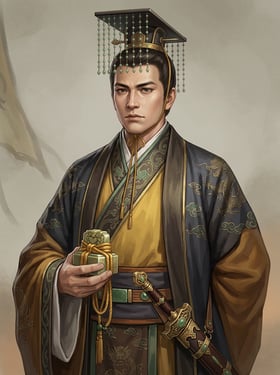
At his birth a cloudlike vapor, shaped like a canopy over a carriage, covered the room, and those who read the vapors declared it the aura of a Son of Heaven.

Life
In the novel: 21 chapters · In the Records: 37 volumes
Life187–226
210 CE (Jian'an 15)
213 CE (Jian'an 18)
216 CE (Jian'an 21)
- Cao Cao Created King of WeiYeParticipant
19 more events
217 CE (Jian'an 22)
218 CE (Jian'an 23)
219 CE (Jian'an 24)
- Yu Jin Surrenders to Guan YuFanchengInstigator
- Meng Da Defects to Wei and Liu Feng Is ExecutedShangyongCommander
- Wei Feng's ConspiracyYeInstigator
220 CE (Huangchu 1)
- Execution of Ding Yi and Ding YiYeInstigator
- The Quatrain of Seven StepsYeInstigator
- Nine-Rank SystemLuoyangCommander
- Death of Taizu and Jia Kui's Management of the FuneralLuoyangCommander
- Cao Pi Supplants the HanAbdication PlatformInstigator
- Cao Cao Dies and Emperor Wen of Wei Ascends the ThroneLuoyangInstigator
- Abdication of Emperor Xian of HanAbdication PlatformInstigator
- Xin Pi Remonstrates Against Relocating Jizhou Soldier FamiliesJi ProvinceInstigator
- Gao Rou's Administration of Criminal LawLuoyangWitness
221 CE (Huangchu 2)
- Sun Quan Invested as King of WuWuchangInstigator
222 CE (Huangchu 3)
223 CE (Huangchu 4)
- Five-Route Invasion of ShuChengduInstigator
224 CE (Huangchu 5)
Allegiance
- Cao Wei
- Life event
List all 12 stops
- Qiao187Birthplace
- Bronze Sparrow Terrace210–217Cao Cao Builds the Bronze Bird Terrace+5 more
- Sanggan218Cao Zhang's Northern Campaign Against the Wuhuan of Daijun
- Ye219Wei Feng's Conspiracy
- Fancheng219Yu Jin Surrenders to Guan Yu
- Shangyong219Meng Da Defects to Wei and Liu Feng Is Executed
- Luoyang220Nine-Rank System+3 more
- Abdication Platform220Cao Pi Supplants the Han+1 more
- Ji Province220Xin Pi Remonstrates Against Relocating Jizhou Soldier Families
- Wuchang221Sun Quan Invested as King of Wu
- Chengdu223Five-Route Invasion of Shu
- Guangling224Cao Pi's Guangling Campaign
On the boards
Compare with someone →Where this person ranks on each board.
Who they were
Character profile
- Appearance
- At his birth a cloudlike vapor, shaped like a canopy over a carriage, covered the room, and those who read the vapors declared it the aura of a Son of Heaven.
- Character
- Gifted in letters and eloquence, he composed at the stroke of the brush, was widely learned and of retentive memory, accomplished in many arts. Yet he was suspicious and jealous, harsh and sparing of favor, pressing hard upon both his brothers and surrendered generals—outwardly maintaining fraternal affection while in fact enforcing the law of the state. Craving swift accession, he yet cloaked the name of usurpation behind ceremonial declining, mounting the altar to receive the abdication while privately telling his ministers, 'The affair of Shun and Yu—I understand it now.'
- Manner of speech
- His words were weighty and imposing, often pressing others with the law of the state and the duty between ruler and minister. He professed to admire in secret the yielding of Tang Yao, his phrasing echoing the classics of abdication, and upon gaining the throne uttered the line about 'the affair of Shun and Yu.'
- Life
- Cao Pi was born in the winter of the fourth year of Zhongping. In the sixteenth year of Jian'an he became General of the Household of the Five Offices and Vice Chancellor, and in the twenty-second year of Jian'an was established as Crown Prince of Wei. After the Grand Progenitor died, he succeeded as Chancellor and King of Wei, and in the tenth month of the first year of Yankang received the abdication and took the imperial throne, changing the reign title to Huangchu. In the seventh year of Huangchu he died in the Jiafu Hall at the age of forty and was buried at the Shouyang tomb.
- Anecdotes
- He governed himself by artifice and cloaked his true feelings, and so was fixed upon as heir. After taking the throne he executed Ding Yi and Ding Yi, was severe in law toward his brothers, and later, campaigning east and passing Yongqiu, visited Zhi's palace and increased his fief. He enfeoffed Sun Quan as King of Wu and bestowed the Nine Bestowments upon him, and rejected Liu Ye's proposal to attack Wu.
Historical Record
Cao Pi, courtesy name Zihuan, was Cao Cao’s son. He was born in the winter of the fourth year of Zhongping in Qiao. Pei Songzhi’s annotations say that by the age of eight he could compose writing and had a broad command of the classics, histories, and works of the various schools from ancient to contemporary times; he was skilled in horsemanship and archery and fond of swordsmanship. In the sixteenth year of Jian’an, he was appointed General of the Household for All Purposes and deputy to the Chancellor; in the twenty-second year, he was made Crown Prince of Wei. After Cao Cao’s death, Cao Pi succeeded him as Chancellor and King of Wei, and changed the twenty-fifth year of Jian’an to the first year of Yankang. In the tenth month of that same year, the Han emperor abdicated in his favor. Cao Pi assumed the imperial throne, founded the Wei dynasty, and adopted the era name Huangchu; this marked the transfer of power from Han to Wei.
During his reign, Cao Pi issued an order calling broadly for remonstrance, requiring all officials to fulfill their duties and speak their views frankly. He also ordered commanderies and kingdoms to gather up soldiers killed in battle and return them to their families, with the authorities holding memorial rites—showing his regard for receiving advice and for the care of fallen soldiers. He had the old temple of Confucius repaired, assigned guards to it, and recruited scholars; he also once issued an edict restricting sacrifices not sanctioned by the rites and the pronouncements of shamans. In selecting men for office, he imposed no age limit: those versed in the classics and those skilled in legal and administrative writing were to be put on trial appointments, and the responsible officials were ordered to verify whether recommendations were truthful.
Cao Pi undertook military campaigns abroad, but also at times suspended offensives to give soldiers and civilians time to recover. The histories record that he once dispatched several armies to attack Sun Quan, then ordered the siege of Jiangling lifted on account of disease and the military situation, and reduced labor service and garrison duties. He and Lady Zhen had Cao Rui. Lady Zhen died in the second year of Huangchu; the historical account records that she “died,” but does not say in that passage that Cao Pi ordered her to be put to death. In the fifth month of the seventh year of Huangchu, Cao Pi fell gravely ill, appointed Cao Rui Crown Prince, and died the following day. He was buried at Shouyang Mausoleum.
In the Novel
Romance of the Three Kingdoms portrays Cao Pi as adept at weighing his options, eager to inherit power, yet often mindful of the proper distinctions between ruler and subject. The novel depicts him entering Yuan Shao’s residence first when accompanying Cao Cao in the conquest of Jizhou, where he sees Lady Zhen and takes her as his wife. This encounter and its details belong to the novel’s narrative; the historical accounts offer only brief statements, such as that Cao Pi took Lady Zhen as his wife in Ye and that she bore Cao Rui. The novel’s scene should not be treated as verifiable history.
In the episode concerning the choice of an heir, Cao Pi asks Jia Xu for advice, then displays filial devotion by weeping and bowing as he takes leave of Cao Cao. Jia Xu invokes Yuan Shao and Liu Biao and their sons as cautionary examples, prompting Cao Cao to appoint Cao Pi heir. These specific schemes and conversations are inventions of the novel, not accounts found in the histories. After Cao Cao’s death, the novel has Cao Pi ascend the throne swiftly and elaborates on the conflicts among the brothers: Cao Zhang arrives with troops, Cao Zhi is taken into custody, and the episode known as “The Quatrain of Seven Steps” unfolds. This makes the consolidation of power after Cao Pi’s succession tense and dramatic. Jia Kui’s subduing of Cao Zhang and Cao Pi’s forcing Cao Zhi to compose a poem and demoting his title are all unique to the novel.
The novel also depicts the abdication as a public ceremony involving repeated refusals: Cao Pi declines at first, then accepts Jia Xu’s proposal to build an Abdication Platform, and finally receives the jade seal from Emperor Xian of Han. The Records of the Three Kingdoms merely records that Cao Pi accepted the abdication and assumed the throne in the tenth month of the first year of Yankang; it does not mention the novel’s three refusals, the Abdication Platform, or its elaborate ceremony.
Key Relationships
- Cao Cao: Father-son and succession relationship. The histories record that Cao Pi was Cao Cao’s heir. He first served as General of the Household for All Purposes and deputy to the Chancellor, then was made Crown Prince of Wei, and succeeded Cao Cao after his death. The novel additionally depicts Cao Pi weeping and bowing before his father to secure the position of heir; this is a fictional episode.
- Cao Rui: Father-son relationship. Cao Rui was Cao Pi’s son; when Cao Pi was gravely ill, he appointed him Crown Prince.
- Lady Zhen: Marital relationship. The histories record that Cao Pi took Lady Zhen as his wife and that she bore Cao Rui; Lady Zhen later died. The novel, by contrast, emphasizes the scene of Cao Pi seeing her at the Yuan residence after the conquest of Jizhou, which is unique to the novel.
- Cao Zhi and Cao Zhang: Brothers and rivals for succession. The histories record that Cao Zhi and Cao Zhang were Cao Pi’s younger brothers, but the Records of the Three Kingdoms provided here does not record the succession conflict in the novel. Cao Zhang’s arrival in Ye with an army and Cao Pi’s ordering Cao Zhi to compose a poem in seven steps are both unique to the novel.
- Jia Xu: Adviser. The novel depicts Jia Xu advising Cao Pi, taking part in the struggle over the heirship, and suggesting that an Abdication Platform be built; these specific proposals are unique to the novel.
Signature Scenes
- From Crown Prince to King of Wei: In the sixteenth year of Jian’an, Cao Pi served as General of the Household for All Purposes and deputy to the Chancellor; in the twenty-second year, he was made Crown Prince of Wei. After Cao Cao’s death, he succeeded him as Chancellor and King of Wei, ushering in the Yankang era.
- The abdication from Han to Wei: The histories record that Cao Pi accepted the abdication and assumed the throne in the tenth month of the first year of Yankang. The novel expands this into a dramatic scene of officials pressing him to accept, repeated refusals, and the building of a platform to receive the imperial seal; the latter elements are unique to the novel.
- Appointing an heir while gravely ill: In the seventh year of Huangchu, Cao Pi fell gravely ill and appointed Cao Rui Crown Prince; he died on the ding-si day. This marked the end of his life and a crucial point in the succession to the throne.
- The Quatrain of Seven Steps: The novel depicts Cao Pi testing Cao Zhi by demanding that he compose a poem. Cao Zhi promptly produces one, and Cao Pi, moved to tears, demotes him to the title of Marquis of Anxiang. The Records of the Three Kingdoms does not record this episode; it is unique to the novel.
Quotes
121 lines in the books · 3 featured
「吾與汝乃兄弟也。以此為題。亦不許犯著『兄弟』字樣。」
This line introduces the allusion of 'The Quatrain of Seven Steps,' displaying Cao Pi's harassment of Cao Zhi and the cruelty of brothers turning on one another.
「舜、禹之事,朕知之矣!」
'The deeds of Shun and Yu-now I understand them!' is Cao Pi's famous line upon taking the throne, implying the legitimacy of his supplanting the Han.
「備不曉兵,豈有七百里營可以拒敵者乎!『苞原隰險阻而爲軍者,爲敵所禽』,此兵忌也。孫權上事今至矣。」
This line reflects Cao Pi's deep insight into military strategy, predicting Liu Bei's defeat and displaying his military talent.
- Family
- Lord & vassal
- Friends
- Enemies
- Teacher & student
- Other
History vs. novel
8 points · 5 novel-only
| History | Novel |
|---|---|
| Zhen Shi Enters YeNovel only | |
| — | After capturing Jizhou, Cao Pi drew his sword, intending to kill Yuan Shao’s family. Seeing Zhen Shi’s exceptional beauty, he comforted her family and took her into his household ch. 33 |
| The Struggle over the HeirNovel embellishes | |
In the twenty-second year of Jian'an, Cao Cao named Cao Pi crown prince of Wei. The Records of the Three Kingdoms records the outcome of the succession, but does not detail the specific schemes in the contest between Cao Pi and Cao Zhi vol. 2 | The novel has Cao Pi ask Jia Xu for advice and follow his suggestion to display filial piety and care in Cao Cao’s presence. Jia Xu answers by invoking Yuan Shao and Liu Biao and their sons, prompting Cao Cao to name Cao Pi heir apparent ch. 68 |
| Wu Zhi Hidden in a Bamboo BasketNovel only | |
| — | Cao Pi concealed Wu Zhi in a large bamboo basket and brought him into the residence to confer. After Yang Xiu reported this, Wu Zhi used the ploy of pretending to load silk into the basket to mislead Cao Cao, causing Cao Cao instead to suspect Yang Xiu ch. 72 |
| Succession after Cao Cao’s DeathNovel embellishes | |
After Cao Cao’s death, Cao Pi succeeded him as chancellor and King of Wei. The historical account also records that the Han emperor issued an edict granting him the seal and the title of king vol. 2 | The novel has Chen Jiao urge Cao Pi to assume the throne at once, while Hua Xin claims to have obtained an edict from Emperor Xian of Han and secures it through intimidation. Cao Pi then ascends the throne ch. 78 |
| The Quatrain of Seven StepsNovel only | |
| — | Cao Pi orders Cao Zhi to compose a poem in seven steps, then sets brothers as the subject and orders him to compose another. Cao Zhi recites a poem on the spot; Cao Pi weeps and ultimately demotes him ch. 79 |
| Humiliating Yu JinNovel only | |
| — | Cao Pi orders a scene depicting Yu Jin’s capture by Guan Yu painted on the whitewashed wall of Cao Cao’s tomb chamber, then deliberately sends Yu Jin to view it. Overcome with shame and anger, Yu Jin falls ill and dies not long afterward ch. 79 |
| Accepting the Abdication and Becoming EmperorNovel embellishes | |
In the first year of Yankang, Cao Pi took the throne as King of Wei, changed the era name to Huangchu, and formally accepted the abdication to become emperor. The historical account records his accession and the change of era name vol. 2 | The novel describes Cao Pi first pretending to refuse, then, following Jia Xu’s advice, having the Abdication Platform built. Emperor Xian of Han personally presents him with the imperial seals and ribbons; Cao Pi ascends the throne and enfeoffs the abdicated emperor as Duke of Shanyang ch. 80 |
| The Phantom City at GuanglingNovel only | |
| — | Cao Pi personally led a campaign against Wu and reached Guangling. Xu Sheng fashioned decoy figures from reeds and set up a phantom city. The Wei army mistakenly believed Wu’s defenses were Yan Mi; Cao Pi lamented that Jiangnan was difficult to conquer, and ultimately returned without success ch. 86 |
- Zhen Shi Enters YeNovel only
- Novel
After capturing Jizhou, Cao Pi drew his sword, intending to kill Yuan Shao’s family. Seeing Zhen Shi’s exceptional beauty, he comforted her family and took her into his household
ch. 33
- The Struggle over the HeirNovel embellishes
- History
In the twenty-second year of Jian'an, Cao Cao named Cao Pi crown prince of Wei. The Records of the Three Kingdoms records the outcome of the succession, but does not detail the specific schemes in the contest between Cao Pi and Cao Zhi
vol. 2
- Novel
The novel has Cao Pi ask Jia Xu for advice and follow his suggestion to display filial piety and care in Cao Cao’s presence. Jia Xu answers by invoking Yuan Shao and Liu Biao and their sons, prompting Cao Cao to name Cao Pi heir apparent
ch. 68
- Wu Zhi Hidden in a Bamboo BasketNovel only
- Novel
Cao Pi concealed Wu Zhi in a large bamboo basket and brought him into the residence to confer. After Yang Xiu reported this, Wu Zhi used the ploy of pretending to load silk into the basket to mislead Cao Cao, causing Cao Cao instead to suspect Yang Xiu
ch. 72
- Succession after Cao Cao’s DeathNovel embellishes
- History
After Cao Cao’s death, Cao Pi succeeded him as chancellor and King of Wei. The historical account also records that the Han emperor issued an edict granting him the seal and the title of king
vol. 2
- Novel
The novel has Chen Jiao urge Cao Pi to assume the throne at once, while Hua Xin claims to have obtained an edict from Emperor Xian of Han and secures it through intimidation. Cao Pi then ascends the throne
ch. 78
- The Quatrain of Seven StepsNovel only
- Novel
Cao Pi orders Cao Zhi to compose a poem in seven steps, then sets brothers as the subject and orders him to compose another. Cao Zhi recites a poem on the spot; Cao Pi weeps and ultimately demotes him
ch. 79
- Humiliating Yu JinNovel only
- Novel
Cao Pi orders a scene depicting Yu Jin’s capture by Guan Yu painted on the whitewashed wall of Cao Cao’s tomb chamber, then deliberately sends Yu Jin to view it. Overcome with shame and anger, Yu Jin falls ill and dies not long afterward
ch. 79
- Accepting the Abdication and Becoming EmperorNovel embellishes
- History
In the first year of Yankang, Cao Pi took the throne as King of Wei, changed the era name to Huangchu, and formally accepted the abdication to become emperor. The historical account records his accession and the change of era name
vol. 2
- Novel
The novel describes Cao Pi first pretending to refuse, then, following Jia Xu’s advice, having the Abdication Platform built. Emperor Xian of Han personally presents him with the imperial seals and ribbons; Cao Pi ascends the throne and enfeoffs the abdicated emperor as Duke of Shanyang
ch. 80
- The Phantom City at GuanglingNovel only
- Novel
Cao Pi personally led a campaign against Wu and reached Guangling. Xu Sheng fashioned decoy figures from reeds and set up a phantom city. The Wei army mistakenly believed Wu’s defenses were Yan Mi; Cao Pi lamented that Jiangnan was difficult to conquer, and ultimately returned without success
ch. 86
Combat
On the field
Duels, kills and executions as the texts tell them, counted separately for the Records and the Romance.
- RecordsJuan 5ExecutionEmpress ZhenWon「二年六月,遣使賜死,葬於鄴」
- RecordsJuan 12ExecutionBao XunWon「遂誅勛」
- RecordsJuan 19ExecutionDing YiDing YiWon「誅丁儀、丁廙并其男口」
- RecordsJuan 19ExecutionDing YiDing YiWon「誅丁儀、丁廙并其男口」
- RecordsJuan 23ExecutionYang JunWon「遂自殺」
- RomanceCh. 79ExecutionDing YiDing YiWon「先將丁儀、丁廙等盡皆誅戮」
All encounters (8)
Loading…
Battles in command
Battles this person commanded in, with the outcome as each text tells it.
- Romance
- 0W 1L 0D 0 undecided
- Romance222Three-Pronged Campaign against WuLostvs Wu troopsCh. 85「丕聽知三路兵敗,乃喟然嘆曰」
Stratagems
Plans this person devised or saw through, as the texts tell them.
- Records
- 1 carried out · 1 worked · 0 turned down · 0 seen through
- Romance
- 2 carried out · 1 worked · 0 turned down · 0 seen through
- RecordsFeigning Virtue to Disguise OneselfDeceptionWorkedJuan 19「文帝御之以術,矯情自飾,宮人左右,併為之說,故遂定為嗣」
- RomanceSecretly Send Word to CaoSowing discordWorkedagainst Yang Xiu and Cao ZhiCh. 72「後曹丕暗買植左右,偷答教來告操」
- RomanceRaid Wu While It Is UnguardedDeceptionSeen throughagainst Eastern WuCh. 85「早有哨馬報說東吳已有準備」
Events
Events (27)
Battles and events the texts place this person in, by date.
Battles
- 222Three-Pronged Campaign against WuCommander
- 222Battle of Xiaoting
- 223Five-Route Invasion of ShuInstigator
Other events
- 210Cao Cao Builds the Bronze Bird TerraceWitness
- 213Cui Yan Publicly Endorses Cao Pi as HeirWitness
- 216Cao Cao Created King of Wei
- 217Great Epidemic of the 22nd Year of Jian'anWitness
- 217Succession Struggle Between Cao Pi and Cao ZhiInstigator
- 217Cao Pi Named Heir Apparent
- 218Cao Zhang's Northern Campaign Against the Wuhuan of DaijunAdvisor
- 219Yu Jin Surrenders to Guan YuInstigator
All 24
- 219Meng Da Defects to Wei and Liu Feng Is ExecutedCommander
- 219Death of Yang Xiu
- 219Wei Feng's ConspiracyInstigator
- 220Execution of Ding Yi and Ding YiInstigator
- 220The Quatrain of Seven StepsInstigator
- 220Nine-Rank SystemCommander
- 220Death of Taizu and Jia Kui's Management of the FuneralCommander
- 220Cao Pi Supplants the HanInstigator
- 220Cao Cao Dies and Emperor Wen of Wei Ascends the ThroneInstigator
- 220Abdication of Emperor Xian of HanInstigator
- 220Xin Pi Remonstrates Against Relocating Jizhou Soldier FamiliesInstigator
- 220Gao Rou's Administration of Criminal LawWitness
- 221Sun Quan Invested as King of WuInstigator
- 224Xu Sheng Builds Phantom Walls to Repel Cao PiCommander
- 224Cao Pi's Guangling CampaignCommander
- 237Gongsun Yuan Proclaims Himself King of Yan
Famous objects
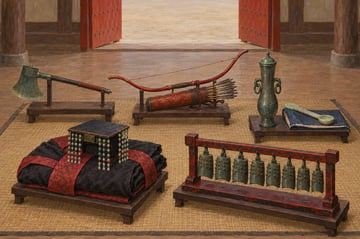
Treasures and regaliaRecordsRomance
Nine Bestowments
gave → Sun QuanRecordsgave → Sun QuanRomance
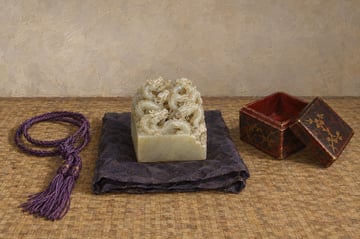
Treasures and regaliaRecordsRomance
Heirloom Seal of the Realm
heldRomance
Those who met it

Places
- Native of
- QiaoRecords
- Was at
- YeRecords
- Governed
- Ji ProvinceRecords
- Moved to
- LuoyangRecords

Continue
Three-Pronged Campaign against Wu
Relationship timeline36 entries ▸
History · vol. 2
- Cao Rui§9
Child
Wang Zirui was enfeoffed as Marquis of Wude
History · vol. 3
- Cao Rui§1
Child
In the fifth month of summer in the seventh year of Huangchu, when the emperor was critically ill, he was made Crown Prince
History · vol. 5
- Cao Rui§15
Child
father and son
History · vol. 10
- Xun You§51
Teacher
When Emperor Wen was in the Eastern Palace, Taizu ordered [him] to show him the utmost respect; when You was ill, [he] alone paid respects beneath his bed
History · vol. 11
- Zhang Fan§13
Teacher
Taizu told Emperor Wen, "In every undertaking, you must consult these two"; the Heir Apparent treated them with the respect due to elders
- Bing Yuan§13
Teacher
Taizu told Emperor Wen, "In every undertaking, you must consult these two"
- Liang Mao§18
Teacher
When Emperor Wen was in the Eastern Palace, Mao again served as Grand Tutor to the Heir Apparent and was shown great respect
History · vol. 16
- Su Ze§13
Rival
Was additionally appointed Colonel Who Protects the Qiang and Lord within the Passes; was asked about a pearl one inch in diameter; during a hunting game, in anger, pardoned the supervising official; “You are an upright minister”; because he was feared, was demoted to Chancellor of Dongping
- Du Ji§21
Student
Upon ascending the throne, granted the title of Guanneihou and summoned him to serve as Shangshu; promoted him to Fengle Tinghou and appointed him acting Sili Xiaowei; appointed him Shangshu Puye to oversee the affairs left behind; when a boat overturned on the Tao River, the emperor wept for him; posthumously appointed him Grand Coachman and gave him the posthumous title Daihou
All 36
Loading…
Inner monologues · AI-generated3 monologues ▸
- Now that the many affairs of state have briefly subsided, whenever I enter the hall to attend to business, I often feel
- At the time of the abdication, the officials stood in their appointed places, with the mandate and the rites before thei
- When I was young, I was often at my father’s side. What I witnessed at the table was not merely the forms of dress and r