


Background
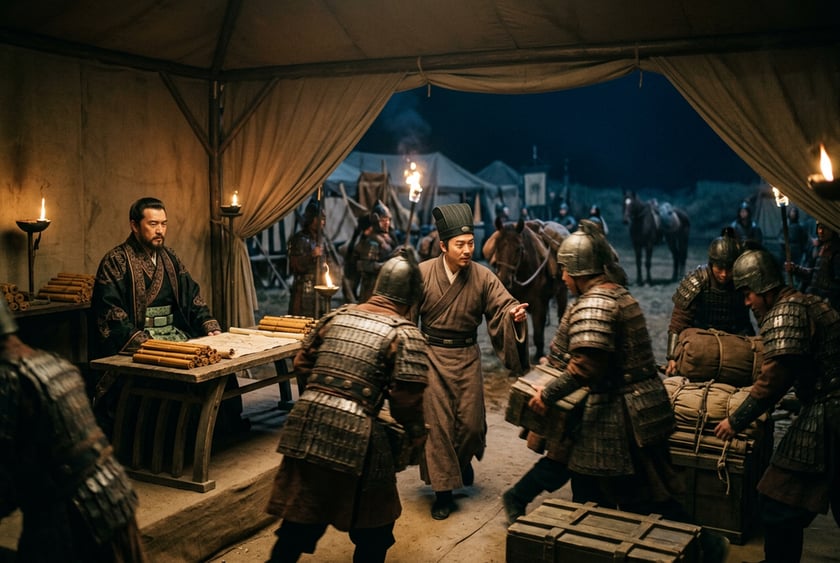
The Death of Yang Xiu was not simply a case of military misconduct; it was an event in which succession politics within Cao Cao’s regime, the boundaries between ruler and subject, and control over military orders intersected. In the account in chapter 72 of the Romance of the Three Kingdoms, Cao Cao is caught between advancing and retreating on the Hanzhong battlefield and uses “chicken ribs” as the password for the night. Yang Xiu infers from this that the army is about to withdraw and orders the soldiers to pack their belongings. Cao Cao then has him executed for “spreading rumors and disrupting the morale of my army.” The novel places his death during a stalemate, before the commander’s intentions have been made public, so that it appears both a punishment for leaking military secrets and a reckoning for overstepping his authority by presuming to interpret those intentions.
The chronology and sources, however, must be distinguished. The prompt dates the event to the autumn of the twenty-fourth year of Jian’an (219), during the Hanzhong Campaign; the supplied material from chapter 72 of the Romance of the Three Kingdoms describes the context of this campaign but does not explicitly specify “autumn” in the quoted passage. The relevant passage in the Records of the Three Kingdoms, meanwhile, recounts Cao Zhi’s unauthorized passage through the Sima Gate in the twenty-second year and Cao Cao’s “execution of Xiu for his crime”; it does not mention the “chicken ribs” password in this passage. The novel’s episode can therefore be used to analyze how later generations understood the Death of Yang Xiu, but it should not be uncritically equated with the precise historical course of events. The “specific cause and time of death” remain uncertain at the level of the sources.
Main Figures
Yang Xiu was both the direct victim of the incident and a counselor with considerable political visibility. The account in the Dianlüe describes him as “modest, respectful, talented, and widely learned.” After he became a secretary in the Chancellor’s office, he “oversaw affairs inside and outside the office, and everything was handled to satisfaction.” It also notes that the Wei heir Cao Pi and others were on friendly terms with him, and that Cao Zhi corresponded with him repeatedly. This position made Yang Xiu not merely a quick-witted aide, but someone caught between the rivalry among Cao Cao’s sons and intersecting bureaucratic networks. His talent brought him renown, but may also have made him a bearer of political risk.
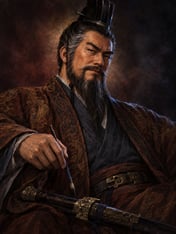
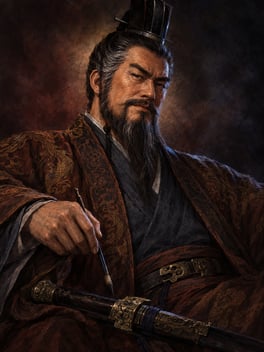
Cao Cao is both the person who orders Yang Xiu’s execution in the novel and the ruler who makes the decision to have him killed in the historical account. The novel focuses his anger on military morale and command authority: Yang Xiu interprets “chicken ribs” before any public order has been issued, prompting the troops at large to prepare for the return journey. The commander then believes that his decision has been disclosed prematurely and that military discipline has been disrupted. The historical account offers a more explicitly political explanation: concerned about the transfer of power after his death, Cao Cao believes Yang Xiu “had talent and strategic ability” and was also a nephew of the Yuan family, and so “had Xiu executed for his crime.” The two accounts emphasize different points and should not be reduced to a single, certain motive.
Xiahou Dun is a key witness and intermediary in the novel. He first asks Yang Xiu why he is packing his belongings and, after hearing his explanation, begins preparing as well. Later, when Cao Cao inspects the camp and discovers that the soldiers are acting unusually, Xiahou Dun reports Yang Xiu’s interpretation to him. Thus, what began as one person’s interpretation of a password quickly becomes visible collective action, and Yang Xiu’s inference shifts from clever discernment to a threat to military command. Cao Zhi, by contrast, is not present in the “chicken ribs” episode, but is a figure connected to the politics revealed by the historical account: Yang Xiu was close to Cao Zhi, and Cao Zhi’s loss of favor and the changing succession situation formed the backdrop to Yang Xiu’s circumstances.
Key Issues
First, how did Yang Xiu’s ability to “discern intentions” cross the boundary of a counselor’s duties? Chapter 60 first depicts him recommending Zhang Song to Cao Cao, praising Zhang Song’s wide learning and strong memory, and helping arrange for him to inspect the army. This episode shows Yang Xiu’s ability to assess talent and take an active part in affairs of state. Chapter 72 then uses the stories of the “living” character on the garden gate and a box of “combined pastry” to portray him as someone who repeatedly guesses Cao Cao’s thoughts correctly. Together, these stories form the novel’s explanation of his character: Yang Xiu did not die because of one accidental misreading, but because he repeatedly displayed his ability to see through intentions, until his talent gradually became an affront to authority. These stories, however, are narrative groundwork provided by the novel and cannot establish that every anecdote is a true historical event.
Second, did military orders permit private interpretation? The text never explicitly states that “chicken ribs” meant an order to retreat, yet Yang Xiu translated it into a signal to withdraw and had the soldiers prepare their belongings. Even if his judgment was correct, this bypassed the commander’s formal process for issuing orders and could cause the troops to lose cohesion prematurely. If his judgment was wrong, it would disrupt morale all the more. Cao Cao’s punishment can therefore be understood as a forceful act to uphold the chain of command, but the beheading depicted in the novel also shows a regime maintaining order through fear rather than procedural adjudication. There is an evident question of proportionality and legitimacy in the relationship between Yang Xiu’s offense and his punishment.
Third, when does personal renown become grounds for factional suspicion? The Records of the Three Kingdoms does not attribute Yang Xiu’s death solely to the “chicken ribs” incident, but places him within the broader context of Cao Zhi’s loss of favor and Cao Cao’s anxiety over a succession conflict. Cao Cao had changed his view of Cao Zhi after the latter secretly opened the Sima Gate. The account then notes that Cao Cao was concerned about upheaval in the transfer of power and had Yang Xiu executed because of his talent and strategic ability and his status as a nephew of the Yuan family. The key point is not to prove that Yang Xiu was plotting to seize the succession, but to show that a ruler might combine closeness to a particular heir, political ability, and marital ties to an old clan into a judgment of potential threat. The novel’s character-driven account and the historical account’s focus on power respectively reveal the visible pretexts for this reckoning and the deeper conditions behind it.
Political Consequences
For Yang Xiu, death ended his ability to operate within Cao Cao’s political network. For Cao Cao, his punishment sent a clear message: a secretary could take part in state affairs and discern decisions, but could not publicly announce the commander’s intentions on his behalf, much less turn an interpretation into troop movements. In the novel, Xiahou Dun and the other generals proceed to prepare for the return journey, illustrating the chain through which “information, interpretation, and collective response” spread. This also explains why Cao Cao regarded the incident as a matter of military discipline rather than harmless cleverness.
At a deeper level, the consequence was a further decline in the sense of security within Cao Zhi’s camp. The Records of the Three Kingdoms explicitly states that after Yang Xiu was executed, “Zhi became even more inwardly uneasy,” directly linking Yang Xiu’s death to Cao Zhi’s political circumstances. This outcome shows that eliminating a counselor punishes not only the individual, but also narrows the room for action available to the related heir and his supporters. While the transfer of power remained unresolved, talent, personal associations, and family ties could all be reinterpreted as signs of factionalism. The Death of Yang Xiu thus serves as an example of how deterrence affected officials and the imperial clan amid Cao Cao’s late-life succession politics.
Counterfactual Analysis
If Cao Cao had first clarified the meaning of “chicken ribs” through a formal military order and then questioned Yang Xiu privately about the basis for his interpretation, he might have prevented a chain reaction in the army and distinguished whether Yang Xiu had deliberately spread rumors, made an unauthorized prediction, or accurately understood the commander’s predicament. If Yang Xiu had reported his inference privately to Xiahou Dun without having the soldiers pack their belongings, he might likewise have reduced the risk of being judged to have disrupted morale. These are, however, only institutional counterfactuals based on the novel’s episode; they cannot prove that gentler options were realistically available at the time. In a highly centralized military command system, Cao Cao may not have been willing to tolerate any unauthorized “speaking on his behalf.”
If we begin instead from the succession politics revealed in the historical account, changing only the “chicken ribs” incident might not have been enough to alter Yang Xiu’s fate. So long as Cao Cao continued to regard Yang Xiu’s talent and strategic ability, his close dealings with Cao Zhi, and his marital ties to the Yuan family as potential risks, some other military, political, or court incident might still have provided grounds for punishment. Conversely, if the succession order had stabilized earlier and the boundaries between counselors and princes had been clearer, Yang Xiu might not have been drawn into the security logic of the succession struggle. The soundest conclusion, then, is not to assert that “Yang Xiu died because of a single phrase, ‘chicken ribs,’” but rather that the novel presents the episode as the immediate trigger, while the historical account points to deeper political suspicions. The precise course of events and a single definitive cause of death cannot be fully established from the existing passages.