Cao Wei · Aide to the Minister of Works; Administrator of Changguang; Administrator of Lean; Aide in the Eastern Section; Deputy Director of the Department of the Secretariat; Junior Tutor to the Crown Prince; Grand Tutor; Master of the Imperial Stud
He Kui
courtesy name 叔龙
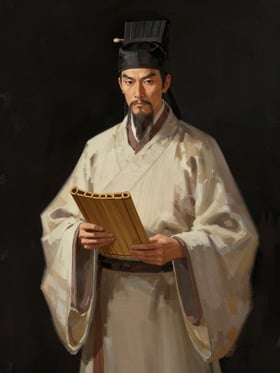
He Kui was a Cao Wei official known for resisting Yuan Shu’s coercion, governing generously, and upholding his principles.
On the boards
Compare with someone →Where this person ranks on each board.
Historical Record
He Kui, courtesy name Shulong, was from Yangxia in Chen Commandery. His great-grandfather, He Xi, had served as General of Chariots and Cavalry under the Eastern Han. He Kui lost his father when he was young and lived with his mother and elder brother. He was known for his filial devotion and fraternal affection; he stood eight chi and three cun tall and had a dignified appearance. At the end of the Han, he fled the turmoil to Huainan, where Yuan Shu summoned him to serve and kept him there. Yuan Shu later tried to force him to persuade Cao Cao’s subordinates, who were holding out at Qiyang, to surrender. Citing the story of Liuxia Hui’s refusal to take part in a campaign against another state, He Kui refused to serve Yuan Shu and then fled into Mount Qian. In the second year of Jian’an, he seized an opportunity to leave, and the following year returned to his home region.
Cao Cao summoned He Kui to serve as an assistant in the Secretariat of the Excellency over Works. Faced with Cao Cao’s harsh enforcement of the law and his frequent use of the staff to punish subordinate officials, He Kui prepared poison and vowed that he would rather die than suffer humiliation. As a result, he was not beaten. He later served successively as Prefect of Chengfu and Administrator of Changguang. Changguang was rife with bandit forces. He believed that Guan Cheng and the others were not naturally inclined to disorder, but had simply not been instructed in virtue. He therefore opposed an immediate military assault and sent the commandery deputy Huang Zhen to explain the situation to them; Guan Cheng and the others then asked to surrender. He also joined Zhang Liao in suppressing Hou Ping and Cong Qian, and sent agents to sow discord among Wang Ying’s followers. The situation was brought under control within a month or so.
When new laws and tax regulations were introduced, He Kui considered that Changguang Commandery had only recently been established and that the hardships of war and famine had not yet ended. He proposed that, for the time being, senior local officials be allowed to handle minor matters at their discretion, and that uniform enforcement of the law be introduced only after the people had enjoyed three years of settled livelihoods. Cao Cao accepted his proposal. Recalled to court, He Kui took part in the Chancellor’s military affairs and later became Administrator of Lean. Within a few months, he pacified the towns plagued by raids from the sea bandit Guo Zu. When he entered the court to serve as an assistant in the Eastern Bureau, he also proposed that candidates for recommendation be vetted first against the opinions of their local communities, with the loyal and upright rewarded and false reports investigated. Cao Cao praised the proposal.
After the Wei kingdom was established, He Kui served as Vice Director of the Secretariat, and later as Junior Tutor to the Heir Apparent. He then succeeded Liang Mao as Grand Tutor. He refused to change his stance because Ding Yi and his brother had fallen into favor, and also declined an invitation from the heir apparent, Cao Pi, who had specifically asked to see him off, saying that the state’s established rites should be observed. After Emperor Wen ascended the throne, He Kui was enfeoffed as Marquis of Chengyang Village. He repeatedly requested permission to retire because of illness, and later died. His posthumous title was Marquis Jing. His son, He Zeng, inherited his title and later rose to the position of Minister over the Masses.
In the Novel
The Romance materials provided contain no account of He Kui, so they offer no basis for describing his appearance, words, deeds, or literary portrayal in the novel. Nor is there any episode in the novel that can be compared with the events recorded in the histories.
Key Relationships
He Kui’s relationship with Cao Cao involved both recruitment and appointment, as well as a meeting of minds in political judgment. When Cao Cao asked about rumors that Yuan Shu’s army was about to fall into disorder, He Kui replied that Yuan Shu had lost trust and the Way, and could not expect the aid of Heaven or men. Cao Cao lamented that Yuan Shu had failed to make use of He Kui, saying that his defeat and disorder were only to be expected. Cao Cao later adopted He Kui’s proposals for lenient governance in Changguang and for verifying candidates for recommendation, showing that his opinions were valued.
In local administration, He Kui used kindness and trust to win over Guan Cheng, and worked with Zhang Liao to suppress rebellions. Rather than relying solely on force against local powers, he assessed each situation and chose among persuasion, military action, and sowing division as appropriate. His relationship with Cao Pi was that of Junior Tutor and Grand Tutor to the heir apparent, but He Kui upheld state protocol and would not alter established ceremony for a private farewell. In his family life, he was filial and devoted to his brother from a young age; his son, He Zeng, inherited his title and later attained prominence.
Signature Episodes
When Yuan Shu besieged Qiyang, He Kui was ordered to use his status as a native of the commandery to persuade the defenders to surrender. He did not argue from considerations of advantage or harm, but cited the story of Liuxia Hui, who grieved on hearing of a campaign against another state, and refused to lobby on behalf of the aggressor. He then fled into Mount Qian. This choice made his principles in an age of turmoil concrete; though Yuan Shu hated him, he spared him because of their family ties.
While serving as Administrator of Changguang, He Kui faced Guan Cheng’s band, which comprised more than three thousand households. When advisers proposed sending troops, He Kui argued that pressing them too hard might drive them to fight to the death and harm officials and civilians. He first sent Huang Zhen to explain the likely consequences of their choices and the ruler’s benevolence, ultimately persuading Guan Cheng and the others to submit. On another occasion, he joined Zhang Liao in leading troops to put down the revolt of Hou Ping and Cong Qian, demonstrating an approach to governance that adapted to circumstances.
He Kui’s preparation of poison in case he was beaten was another expression of his determination to preserve his dignity, and it also reveals the tensions of the age. Under Cao Cao’s harsh management of his subordinates, he would rather die than be humiliated. Yet Sun Sheng, quoted in Pei Songzhi’s commentary, criticized this stance: he argued that beating subordinate officials in a public office violated proper rites, but also faulted He Kui for threatening suicide to escape humiliation. The historical accounts thus record both his integrity and later generations’ assessment of how he conducted himself.
In the sources
Where the books name He Kui
History · vol. 11Records of the Three Kingdoms
初,渙從弟霸,公恪有功幹,魏初為大司農,及同郡何夔並知名於時。…
Read the whole paragraph
初,渙從弟霸,公恪有功幹,魏初為大司農,及同郡何夔並知名於時。而霸子亮,夔子曾,與侃復齊聲友善。亮貞固有學行,疾何晏、鄧颺等,著論以譏切之,位至河南尹、尚書。〈《晉諸公贊》曰:亮子粲,字儀祖,文學博識,累為儒官,至尚書。〉霸弟徽,以儒素稱。遭天下亂,避難交州。司徒辟,不至。〈袁宏《漢紀》曰:初,天下將亂,渙慨然歎曰:「漢室陵遲,亂無日矣。苟天下擾攘,逃將安之?若天未喪道,民以義存,唯彊而有禮,可以庇身乎!」徽曰:「古人有言:『知機其神乎』!見機而作,君子所以元吉也。天理盛衰,漢其亡矣!夫有大功必有大事,此又君子之所深識,退藏於密者也。且兵革旣興,外患必衆,徽將遠迹山海,以求免身。」及亂作,各行其志。〉徽弟敏,有武藝而好水功,官至河隄謁者。
History · vol. 12Records of the Three Kingdoms
== 何夔 ==
History · vol. 12Records of the Three Kingdoms
何夔字叔龍,陳郡陽夏人也。曾祖父熙,漢安帝時官至车騎將軍。〈華峤《漢書》曰:熙字孟孫,少有大志,不拘小節。…
Read the whole paragraph
何夔字叔龍,陳郡陽夏人也。曾祖父熙,漢安帝時官至车騎將軍。〈華峤《漢書》曰:熙字孟孫,少有大志,不拘小節。身長八尺五寸,体貌魁梧,善爲容儀。舉孝廉,爲谒者,贊拜殿中,音动左右。和帝(佳)之,历位司隸校尉、大司农。永初三年,南单于與乌丸俱反,以熙行车騎將軍征之,累有功。乌丸请降,单于復稱臣如舊。會熙暴疾卒。〉夔幼喪父,與母兄居,以孝友稱。長八尺三寸,容貌矜严。〈《魏書》曰:漢末阉宦用事,夔從父衡爲尚書,有直言,由是在党中,諸父兄皆禁锢。夔歎曰:『天地闭,賢人隱。』故不应宰司之命。〉避亂淮南。后袁术至壽春,辟之,夔不应,然遂爲术所留。久之,术與桥蕤俱攻围蕲陽,蕲陽爲太祖固守。术以夔彼郡人,欲胁令说蕲陽。夔謂术謀臣李業曰:『昔柳下惠聞伐國之謀而有忧色,曰「吾聞伐國不問仁人,斯言何爲至於我哉」!』遂遁匿灊山。术知夔終不爲己用,乃止。术從兄山陽太守遺母,夔從姑也,是以雖恨夔而不加害。
Quotes
5 lines in the books · 3 featured
天之所助者順,人之所助者信。术無信順之實,而望天人之助,此不可以得志於天下。夫失道之主,親戚叛之,而况於左右乎!以夔觀之,其亂必矣。
These words reveal He Kui's deep insight into Yuan Shu's failure, reflecting his political foresight.
自喪亂已來,民人失所,今雖小安,然服教日淺。……所領六縣,疆域初定,加以饥馑,若一切齊以科禁,恐或有不從教者。……愚以爲此郡宜依遠域新邦之典,其民間小事,使長吏臨時随宜,上不背正法,下以順百姓之心。比及三年,民安其業,然后齊之以法,則無所不至矣。
This proposal reflects He Kui's governing wisdom of adapting to local conditions and tempering leniency with severity.
自軍兴以來,制度草创,用人未详其本,是以各引其類,時忘道德。夔聞以賢制爵,則民慎德;以庸制禄,則民兴功。……上以觀朝臣之節,下以塞爭竞之源,以督羣下,以率萬民,如是則天下幸甚。
This remark stresses the importance of selecting and employing the worthy and able, offering inspiration to later systems of personnel appointment.
- Family
- Lord & vassal
- Enemies
- Teacher & student
- Other
Who is He Kui connected to?
Pick someone to see how many steps lie between them and He Kui.
Combat
On the field
Duels, kills and executions as the texts tell them, counted separately for the Records and the Romance.
Stratagems
Plans this person devised or saw through, as the texts tell them.
- Records
- 2 carried out · 2 worked · 0 turned down · 0 seen through
- RecordsPersuade to SurrenderPersuasionWorkedJuan 12「乃遣郡丞黄珍往,爲陳成敗,承等皆请服」
- RecordsSowing DiscordSowing discordWorkedJuan 12「夔遣吏王钦等,授以計略,使离散之。旬月皆平定」
Places
- Was at
- Mount TianzhuRecords
Continue
He Zeng
Child
Relationship timeline3 entries ▸
Inner monologues · AI-generated1 monologue ▸
- I am He Kui, courtesy name Shulong, from Yangxia in Chen Commandery. I lost the shelter of my parents when young, and wa