Empress Zhen
also called 甄夫人、文昭皇后 · 183–221
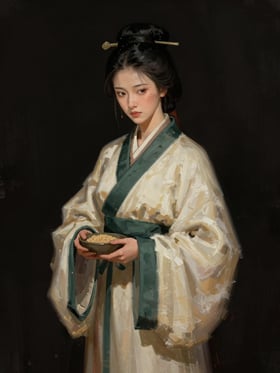
She had a beauty capable of toppling a kingdom. When first seen, her hair was loose and her face dirty.
Life
In the novel: 2 chapters · In the Records: 7 volumes
Life183–221
Appearances
By chapter (9)
Novel
- 33
- 91
Records
- 2
- 3
- 5
- 13
- 20
- 21
- 29
On the boards
Compare with someone →Where this person ranks on each board.
Who they were
Character profile
- Appearance
- She had a beauty capable of toppling a kingdom. When first seen, her hair was loose and her face dirty.
- Character
- When war and famine ravaged the land, though only a little over ten years old, she urged her mother to give grain to aid relatives and neighbors.
- Life
- She was from Wuji, Zhongshan. Her father, Zhen Yi, once served as Magistrate of Shangcai. She married Yuan Xi early in life; after Yuan Xi was posted to You Province, she remained in Ye. After Jizhou was pacified, Cao Pi took her as his wife. She bore Cao Rui and Princess Dongxiang. In the sixth month of the second year of Huangchu, displeased and resentful, she was ordered to die by Cao Pi’s envoy and was buried in Ye.
- Anecdotes
- She was Cao Rui’s birth mother. After Cao Rui ascended the throne, he posthumously honored her as Empress Wenzhao.
Historical Record
Empress Zhen, identified in her biography in the Records of the Three Kingdoms as Empress Wen Zhao, was from Wuji in Zhongshan. She came from a family whose members had served for generations as officials with salaries of two thousand dan. Her father, Zhen Yi, once served as magistrate of Shangcai. She lost her father at the age of three. During wartime upheaval and famine, the Zhen family had grain in storage. When she was in her teens, she advised her mother not to buy jewels, but instead to aid hungry relatives and neighbors. Her family followed her advice.
During the Jian’an era, Yuan Shao chose Zhen as a wife for his second son, Yuan Xi. When Yuan Xi took up his post in You Province, she remained at home to serve her mother-in-law. After Jizhou was pacified, Cao Pi brought her to Ye. Zhen was favored and gave birth to Cao Rui and the Princess of Dongxiang. After Cao Pi ascended the throne, Guo Hou, Noble Lady Li, Yin Guiren, and others received his favor, while Zhen gradually fell out of favor and voiced resentment. In the sixth month of Huangchu 2, Cao Pi flew into a rage and sent an envoy to order her death. Zhen died in Ye and was buried there. Pei Songzhi pointed out that the Wei histories’ accounts of Zhen’s humility, virtue, and other qualities might not be trustworthy; her biography, however, explicitly records that she was ordered to die.
After Cao Rui ascended the throne, he posthumously honored his birth mother as Empress Wen Zhao. In the first year of Taihe, the court built a sleeping temple for her in Ye; that same year, her father, Zhen Yi, was posthumously enfeoffed as Marquis Jing. In the fourth year of Taihe, because the terrain around her old tomb was low-lying, Zhen was reburied at Chaoyang Mausoleum. The Records of the Three Kingdoms also records that Cao Rui once dreamed of Empress Zhen and arranged appointments and rewards for her maternal relatives. When Wang Lang was sent on an official mission to Ye to inspect her tomb, he saw that the people were lacking necessities and submitted a memorial urging Emperor Ming to reduce labor service and give priority to farming.
In the Novel
The Romance of the Three Kingdoms turns Zhen’s fate into a tragedy driven by beauty, rivalry for favor, and court intrigue. The novel portrays her as originally Yuan Xi’s wife, left in Ye while Yuan Xi guarded You Province. After Cao Pi captured Ye, he saw Zhen with disheveled hair and a grimy face, yet still thought her exceptionally beautiful, and then took her as his wife. This first encounter emphasizes her beauty through the contrast between her disheveled appearance and peerless looks. It is a dramatic embellishment in the novel; the Records of the Three Kingdoms only says that Cao Pi took Zhen at Ye and does not describe such an encounter.
The novel also links her loss of favor to Guo Guifei’s scheming to become empress, adding a plot in which the favored courtier Zhang Tao frames Zhen by claiming that a wooden figure had been dug up in the palace. Cao Pi consequently orders her death and makes Guo empress. The Records of the Three Kingdoms does record that Zhen fell out of favor and voiced resentment before Cao Pi sent an envoy to order her death, but it says nothing about a wooden figure, Zhang Tao’s involvement, or Guo’s plotting. This framing plot, therefore, is unique to the novel. The novel also uses Cao Rui’s response when hunting deer—he could not bear to shoot a fawn—to show how Zhen’s death foreshadowed Cao Rui’s image as a benevolent ruler. Material cited in the annotations to the Records of the Three Kingdoms includes a similar story about a doe and a fawn, but in that account it is Cao Rui who refuses to shoot; Zhen herself is not present.
Key Relationships
Yuan Xi: Zhen was first Yuan Xi’s wife. When Yuan Xi took up his post in You Province, she remained at home to serve her mother-in-law; after Jizhou was pacified, Cao Pi took her at Ye. The Romance of the Three Kingdoms presents this transition as a scene in which Cao Pi sees Zhen in person after capturing Ye and takes her because of her beauty. The specific details are the novel’s embellishment.
Cao Pi: Cao Pi was Zhen’s later husband and the one who ordered her death. The historical biography records that after she fell out of favor and voiced resentment, Cao Pi flew into a rage and sent an envoy to order her death; its account of her death does not include the wooden-figure conspiracy found in the novel.
Cao Rui: Zhen was Cao Rui’s birth mother. After he ascended the throne, Cao Rui posthumously honored her as Empress Wen Zhao, built a sleeping temple for her, and reburied her at Chaoyang Mausoleum, showing that she received imperial honors after her death. The Romance of the Three Kingdoms strengthens the mother-and-son tragedy with episodes in which Guo raises Cao Rui and Cao Rui has a complicated relationship with his stepmother because his mother was killed. The wooden-figure framing plot is unique to the novel.
Signature Scenes
Relief for Relatives and Neighbors with Grain: During a time of war and famine, Zhen advised her mother to use the grain stored at home to help hungry relatives and neighbors rather than continue buying gold, silver, and jade. The historical biography presents this early act as evidence of her compassion for the poor amid the turmoil of the age.
Ordered Death and Posthumous Honor: In the sixth month of Huangchu 2, Cao Pi sent an envoy to order Zhen’s death, and she was buried at Ye. After Cao Rui ascended the throne, he posthumously honored her as Empress Wen Zhao, and later she was reburied at Chaoyang Mausoleum. The progression from her ordered death to her posthumous honors and reburial forms a striking contrast between her loss of favor in life and the respect she received after death.
Framed with a Wooden Figure: The Romance of the Three Kingdoms says that Zhang Tao falsely claimed a wooden figure inscribed with the emperor’s year, month, day, and hour had been dug up in Zhen’s palace. This enraged Cao Pi and led him to order Zhen’s death. It is a key episode driving the novel’s tragedy, but it does not appear in the Records of the Three Kingdoms. (Unique to the novel)
Lines
- 史 ch.5 §16
「今世亂而多買寶物,匹夫無罪,懷璧為罪。又左右皆飢乏,不如以穀振給親族鄰里,廣為恩惠也。」
- Family
Who is Empress Zhen connected to?
Pick someone to see how many steps lie between them and Empress Zhen.
Combat
On the field
Duels, kills and executions as the texts tell them, counted separately for the Records and the Romance.
Places
Continue
Cao Pi
Spouse
Relationship timeline9 entries ▸
History · vol. 2
- Cao Pi§28
Spouse
Died on the dingmao day of the sixth month in the second year of Huangchu
History · vol. 3
- Cao Rui§1
Child
Cao Rui’s birth mother; not established as heir because her mother was executed
History · vol. 5
- Cao Rui§15
Child
Emperor Ming’s birth mother
- Yuan Xi§17
Spouse
During Jian’an, Yuan Shao took her as a wife for his second son, Xi
- Cao Pi§17
Spouse
After Jizhou was pacified, Emperor Wen took [her] into his household at Ye, and she was favored
- Cao Pi§18
Betrayer
In the second year of Huangchu, an envoy was sent to order him to die
Novel · ch. 33
- Yuan Xi§1
Spouse
Wife; stayed in Ye because Xi went to serve as governor of You Province and she refused to travel far
Novel · ch. 91
Inner monologues · AI-generated3 monologues ▸
- I was born in Wuji, Zhongshan. My father, Zhen Yi, once served as magistrate of Shangcai. I lost my father at the age of
- An edict’s envoy arrived in Ye and presented me with a letter bearing the imperial seal. I knew it was no ordinary greet
- I was born in the final years of the Han dynasty, into the Zhen family, and later became Cao Pi’s wife. As for my family