Cao Wei · Advisor
Liu Ye
courtesy name 子扬 · c. 175–234
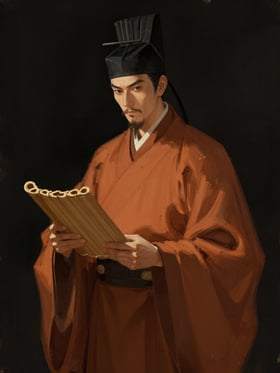
Liu Ye, a Cao Wei strategist famed for reading situations and offering military plans, was portrayed as resourceful but lost favor in his later years.

Life
In the novel: 14 chapters · In the Records: 5 volumes
Life175–234
199 CE (Jian'an 4)
Allegiance
- Cao Wei
- Hatched: dated by chapter
- Life event
On the boards
Compare with someone →Where this person ranks on each board.
Historical Record
Liu Ye, courtesy name Ziyang, was from Chengde, Huainan. He was a descendant of Liu Yan, Prince of Fuling and son of Emperor Guangwu of Han. When his mother was gravely ill, she instructed him and his elder brother to eliminate an obsequious and malicious attendant of their father. At the age of thirteen, Liu Ye believed that his mother’s command should be carried out. He entered the room, killed the attendant, and then paid his respects at his mother’s tomb. His father was angry and sent men after him, but after hearing that he had acted on his mother’s dying instruction, ultimately did not punish him. Xu Shao of Runan praised him as a man capable of assisting in the governance of his age.
When Liu Ye was in his twenties, Zheng Bao gathered a following and planned to drive off and plunder the populace before crossing the river. He also wanted to force Liu Ye to plan and lend support to his cause. Taking advantage of a visit from an envoy of Cao Cao, Liu Ye held a banquet and personally killed Zheng Bao with a knife. He then went to Zheng Bao’s camp and explained the benefits and dangers of the situation. The men there chose him as their leader. Unwilling to command troops, he handed Zheng Bao’s followers over to Liu Xun, the Administrator of Lujiang. Liu Xun later followed Sun Ce’s plan and attacked Shangliao, only to be ambushed by Sun Ce. Defeated, he fled to Cao Cao. Liu Ye had once tried to dissuade him from making that expedition.
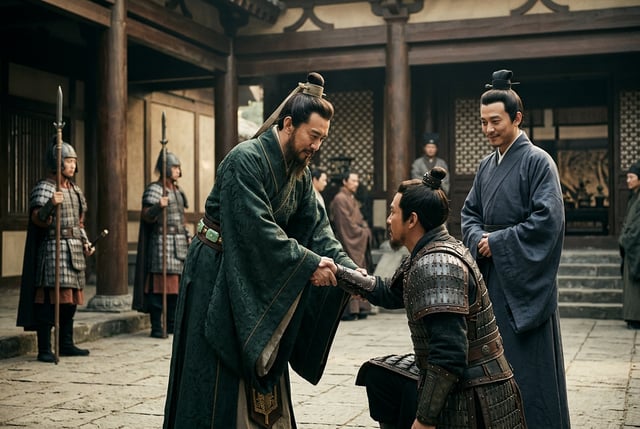
After joining Cao Cao, Liu Ye was appointed Assistant in the Secretariat of the Minister of Works, and later served as Chief Clerk, Acting Chief of the Army, and Palace Attendant, among other posts. He proposed using rewards and the imposing presence of a large army to induce the bandit leader Chen Ce to surrender. Cao Cao followed his plan and won. During the campaign against Zhang Lu, Liu Ye judged that Hanzhong could still be taken and urged Cao Cao to advance; Hanzhong was duly pacified. He also advised taking Shu while the momentum was theirs, but Cao Cao did not accept the proposal. After Cao Pi took the throne, Liu Ye served as Palace Attendant. He once predicted that Liu Bei would send troops on Guan Yu’s behalf, and saw through the predicament behind Sun Quan’s submission, urging an opportune attack on Wu; neither proposal was accepted. He also warned that Meng Da would eventually rebel, and his prediction later came true.
At court, Liu Ye did not associate much with his contemporaries. He explained that the Wei house had only recently been established and that, as a relative of the Han imperial house serving Wei, it might be fitting for him to have few people of like mind. In his later years, he served successively as Grand Master of the Palace and Grand Herald, and was posthumously titled Marquis Jing. According to the Fuzi, cited in Pei Songzhi’s annotations, when Emperor Ming considered campaigning against Shu, Liu Ye gave different answers in public and in private, explaining that military plans should not be divulged. Thereafter, when Emperor Ming tested his views, Liu Ye’s responses only widened the distance between ruler and subject. He eventually became mentally ill and died of grief.
In the Novel
The Romance of the Three Kingdoms portrays Liu Ye as a strategist adept at reading circumstances and offering counsel to Cao Cao, Cao Pi, and Cao Rui, and expands his deeds into a series of military and political episodes. In Chapter Ten, Guo Jia recommends Liu Ye to Cao Cao, describing him as a descendant of Emperor Guangwu; Cao Cao immediately recruits him. This recommendation is a fictional elaboration, as it is not recorded in the Records of the Three Kingdoms. The novel also depicts Liu Ye seeing through Chen Gong’s ruse to lure the enemy at Puyang and advising Cao Cao to divide his forces and take precautions. After Cao Cao captures Puyang, Liu Ye warns him not to let the exhausted Lü Bu escape lightly.
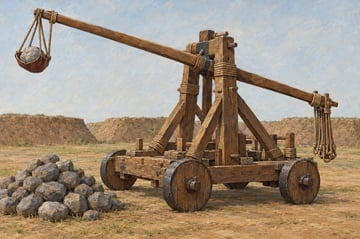
During the Battle of Guandu, the novel has Liu Ye devise stone-throwing engines that break the archers and crossbowmen on the Yuan army’s earthen ramparts. He then proposes digging a long trench around the camp to block the Yuan army’s tunnels, showing his ingenuity in countering weapons and tactics in the midst of battle. When Cao Cao advances into Jing Province, Liu Ye advises him to first reassure the people and sends Xu Shu to persuade Liu Bei to surrender. This surrender episode and its specific arrangements are part of the novel’s narrative. The novel also depicts him strongly opposing Sun Quan’s elevation when Cao Pi names him King of Wu, urging an attack on Wu and advising against further enhancing Sun Quan’s rank. Later, Liu Ye serves as military adviser in the army campaigning against Shu.
The novel especially emphasizes Liu Ye’s ability to “adapt to circumstances.” In Chapter Ninety-Nine, he endorses the campaign against Shu in Cao Rui’s presence, but denies having supported it when speaking with the ministers at home. When pressed, he explains, “War is a matter of deception,” turning the discrepancy between his words into a stratagem for keeping secrets. The historical annotations to Liu Ye’s biography do record that he was tested and fell out of favor with the ruler because his public and private statements differed. The novel, however, turns this into a scene in which he successfully explains himself and earns respect instead, changing the outcome from that in the historical account.
Key Relationships
- Cao Cao: After joining Cao Cao, Liu Ye served as his strategist, advising him on defeating Chen Ce and offering counsel on Zhang Lu, Hanzhong, and the conquest of Shu. The novel further depicts him as a military strategist who breaks the earthen ramparts and blocks the tunnels at Guandu.
- Cao Pi: Liu Ye served as Palace Attendant and took part in assessing whether Liu Bei would send troops and what lay behind Sun Quan’s submission. He repeatedly urged Cao Pi to seize the opportunity to act against Wu, but Cao Pi did not accept his advice.
- Zheng Bao and Liu Xun: Liu Ye killed Zheng Bao, took command of his followers, and then handed them over to Liu Xun. He also warned Liu Xun of the dangers of attacking Shangliao, but Liu Xun ignored him and was defeated.
- Lu Su: The historical account says that Liu Ziyang and Lu Su were on friendly terms. Liu Ye once wrote to urge Lu Su to go to Chaohu and join Zheng Bao; Lu Su ultimately followed Zhou Yu’s advice and stayed with Sun Quan. The novel also retains the episode in which Liu Ziyang invites Lu Su to join Zheng Bao, and depicts Lu Su as being about to accept his invitation. (Unique to the novel: the meeting and invitation are directly included in the narrative.)
- Meng Da: Liu Ye judged that Meng Da was proud of his talents and lacked gratitude, and would eventually turn against them. Meng Da later rebelled and was defeated, confirming Liu Ye’s prediction.
Signature Scenes
- Killing Zheng Bao at the banquet: Zheng Bao arrived with several hundred men, bringing oxen and wine. Liu Ye hosted a banquet for him. Seeing that the cupbearers dared not act, Liu Ye drew his own sword and killed Zheng Bao. He then rode alone to Zheng Bao’s camp and persuaded the officers and men by explaining the benefits and dangers of the situation, stabilizing the crisis. This shift from urgent action to rallying support demonstrates his courage and adaptability.
- Counsel on Hanzhong: Cao Cao at one point believed his provisions were insufficient and prepared to withdraw. Liu Ye judged that Zhang Lu could be defeated, hurried to report his view, and urged an attack, so Cao Cao continued his advance. After Hanzhong was pacified, Liu Ye again advised taking Shu while they had the momentum, presenting him as a strategist attentive to the right moment and to the situation that would follow.
- The thunderclap carts at Guandu: In the novel, the Yuan army builds earthen ramparts and shoots arrows from the high ground. Liu Ye proposes using stone-throwing engines, and Cao Cao’s forces drive back the archers and crossbowmen with stone projectiles. They then seal the exits of the tunnels with a long trench. (Unique to the novel.)
- Different words in public and private, and his later years: The historical annotations record that Liu Ye gave different answers in public and in private about Emperor Ming’s proposal to campaign against Shu, later defending himself by saying that military plans could not be divulged. But later, his ability to read the ruler’s intentions led to his falling out of favor; he became mentally ill and died of grief. The novel rewrites this episode: Liu Ye insists in person that the secret must be kept, explains himself, and earns Cao Rui’s respect, highlighting the novel’s portrayal of him as a resourceful strategist.
Quotes
36 lines in the books · 3 featured
「可作發石車以破之。」
This line reflects Liu Ye's foresight in military technology, driving the adoption of the trebuchet.
「淵性太剛,恐中奸計。」
He accurately anticipates the weakness in Zhang He's character, displaying his keen insight into people.
「吳絕在江、漢之表,無內臣之心久矣。陛下雖齊德有虞,然醜虜之性,未有所感。因難求臣,必難信也。彼必外迫內困,然後發此使耳,可因其窮,襲而取之。夫一日縱敵,數世之患,不可不察也。」
He incisively analyzes Sun Quan's motive for suing for surrender, warning Cao Pi not to breed a tiger and court disaster, showing his strategic vision.
- Family
- Lord & vassal
- Friends
- Enemies
- Other
Who is Liu Ye connected to?
Pick someone to see how many steps lie between them and Liu Ye.
History vs. novel
8 points · 2 novel-only
| History | Novel |
|---|---|
| The Puyang RuseNovel only | |
| — | Lü Bu pretended to surrender to lure Cao Cao into Puyang. Liu Ye saw through the ruse and advised sending three separate forces into the city, with troops stationed to support them. Cao Cao followed his advice and avoided an ambush. ch. 12 |
| Defending the Camp at GuanduNovel only | |
| — | Yuan Shao built earthen mounds to rain arrows and crossbow bolts down on Cao Cao’s camp. Liu Ye proposed using stone-throwing engines to drive off the archers and crossbowmen. When Yuan Shao’s forces then dug tunnels, Liu Ye advised digging a deep trench around the camp to thwart them. ch. 30 |
| The Campaign in HanzhongNovel embellishes | |
After Hanzhong was pacified, Liu Ye urged Cao Cao to seize Shu while Liu Bei had yet to secure his position. Cao Cao ignored him, but seven days later concluded that Shu had become somewhat more stable and should not be attacked. vol. 14 | Sima Yi first advised Cao Cao to take advantage of the moment and attack Shu. Liu Ye agreed, pointing out that further delay would make it difficult to conquer. Cao Cao held back, citing the hardship of sending his troops on a distant expedition. ch. 67 |
| Cao Cao’s Personal Campaign in HanzhongNovel embellishes | |
After Cao Cao's Campaign Against Zhang Lu reached Hanzhong, Cao Cao wanted to retreat because of difficulties with the supply route. Liu Ye judged that Zhang Lu could be defeated and urged him to continue the attack. Following his advice, Cao Cao sent reinforcements and a large supply of crossbow bolts, eventually pacifying Hanzhong. vol. 14 | When Liu Bei advanced on Hanzhong, Liu Ye urged Cao Cao to lead a personal campaign, arguing that the loss of Hanzhong would shake the Central Plains. Cao Cao regretted not having heeded Liu Ye earlier and immediately dispatched troops. ch. 71 |
| Sun Quan Pledges AllegianceNovel embellishes | |
After Sun Quan sent an envoy to pledge allegiance, Liu Ye judged that he was under pressure from outside and facing difficulties at home, and advocated taking the opportunity to attack Wu. Cao Pi rejected the proposal and later enfeoffed Sun Quan as King of Wu. vol. 14 | Liu Ye advocated attacking Wu while Wu and Shu were at war, warning that enfeoffing Sun Quan as a king would be like giving a tiger wings. Cao Pi nevertheless decided to confer the title on Sun Quan. ch. 82 |
| Advising Against the Wu CampaignNovel embellishes | |
After Liu Bei’s defeat and retreat, Liu Ye argued that Sun Quan had just won a victory, that his people were united, and that the rivers and lakes offered natural defenses; Wu should not be attacked hastily. Cao Pi ignored his advice. vol. 14 | When Cao Pi decided to campaign against Wu, Liu Ye pointed out that Lu Xun had just defeated the Shu army, that Wu’s troops were full of fighting spirit, and that rivers and lakes stood in their way. He urged Cao Pi not to advance rashly, but Cao Pi would not listen. ch. 85 |
| Observing Wu at GuanglingNovel embellishes | |
When Cao Pi personally campaigned at Guangling, his officials all believed Sun Quan would come out to meet him in person. Liu Ye judged that Sun Quan would hold back and watch. After Cao Pi stayed there for several days, Sun Quan indeed sent no troops. vol. 14 | After Cao Pi arrived at Guangling, he asked whether they could cross the river. Liu Ye believed Wu’s forces must be prepared and advised waiting three to five days to observe them. Cao Pi said that Liu Ye’s view matched his own. ch. 86 |
| Advocating and Opposing the Shu CampaignNovel embellishes | |
During Cao Rui’s reign, Liu Ye privately advocated a campaign against Shu but publicly said it should not be undertaken. When questioned, he explained that military operations had to be kept secret. Later, Cao Rui tested him on the basis of slanderous reports and grew distant from him. Liu Ye died in sorrow. vol. 14 | Liu Ye first told Cao Rui that Shu could be conquered, but after leaving the palace told the court officials that it should not be attacked. When challenged, he explained that matters of state and war must not be divulged. Cao Rui therefore respected him even more. ch. 99 |
- The Puyang RuseNovel only
- Novel
Lü Bu pretended to surrender to lure Cao Cao into Puyang. Liu Ye saw through the ruse and advised sending three separate forces into the city, with troops stationed to support them. Cao Cao followed his advice and avoided an ambush.
ch. 12
- Defending the Camp at GuanduNovel only
- Novel
Yuan Shao built earthen mounds to rain arrows and crossbow bolts down on Cao Cao’s camp. Liu Ye proposed using stone-throwing engines to drive off the archers and crossbowmen. When Yuan Shao’s forces then dug tunnels, Liu Ye advised digging a deep trench around the camp to thwart them.
ch. 30
- The Campaign in HanzhongNovel embellishes
- History
After Hanzhong was pacified, Liu Ye urged Cao Cao to seize Shu while Liu Bei had yet to secure his position. Cao Cao ignored him, but seven days later concluded that Shu had become somewhat more stable and should not be attacked.
vol. 14
- Novel
Sima Yi first advised Cao Cao to take advantage of the moment and attack Shu. Liu Ye agreed, pointing out that further delay would make it difficult to conquer. Cao Cao held back, citing the hardship of sending his troops on a distant expedition.
ch. 67
- Cao Cao’s Personal Campaign in HanzhongNovel embellishes
- History
After Cao Cao's Campaign Against Zhang Lu reached Hanzhong, Cao Cao wanted to retreat because of difficulties with the supply route. Liu Ye judged that Zhang Lu could be defeated and urged him to continue the attack. Following his advice, Cao Cao sent reinforcements and a large supply of crossbow bolts, eventually pacifying Hanzhong.
vol. 14
- Novel
When Liu Bei advanced on Hanzhong, Liu Ye urged Cao Cao to lead a personal campaign, arguing that the loss of Hanzhong would shake the Central Plains. Cao Cao regretted not having heeded Liu Ye earlier and immediately dispatched troops.
ch. 71
- Sun Quan Pledges AllegianceNovel embellishes
- History
After Sun Quan sent an envoy to pledge allegiance, Liu Ye judged that he was under pressure from outside and facing difficulties at home, and advocated taking the opportunity to attack Wu. Cao Pi rejected the proposal and later enfeoffed Sun Quan as King of Wu.
vol. 14
- Novel
Liu Ye advocated attacking Wu while Wu and Shu were at war, warning that enfeoffing Sun Quan as a king would be like giving a tiger wings. Cao Pi nevertheless decided to confer the title on Sun Quan.
ch. 82
- Advising Against the Wu CampaignNovel embellishes
- History
After Liu Bei’s defeat and retreat, Liu Ye argued that Sun Quan had just won a victory, that his people were united, and that the rivers and lakes offered natural defenses; Wu should not be attacked hastily. Cao Pi ignored his advice.
vol. 14
- Novel
When Cao Pi decided to campaign against Wu, Liu Ye pointed out that Lu Xun had just defeated the Shu army, that Wu’s troops were full of fighting spirit, and that rivers and lakes stood in their way. He urged Cao Pi not to advance rashly, but Cao Pi would not listen.
ch. 85
- Observing Wu at GuanglingNovel embellishes
- History
When Cao Pi personally campaigned at Guangling, his officials all believed Sun Quan would come out to meet him in person. Liu Ye judged that Sun Quan would hold back and watch. After Cao Pi stayed there for several days, Sun Quan indeed sent no troops.
vol. 14
- Novel
After Cao Pi arrived at Guangling, he asked whether they could cross the river. Liu Ye believed Wu’s forces must be prepared and advised waiting three to five days to observe them. Cao Pi said that Liu Ye’s view matched his own.
ch. 86
- Advocating and Opposing the Shu CampaignNovel embellishes
- History
During Cao Rui’s reign, Liu Ye privately advocated a campaign against Shu but publicly said it should not be undertaken. When questioned, he explained that military operations had to be kept secret. Later, Cao Rui tested him on the basis of slanderous reports and grew distant from him. Liu Ye died in sorrow.
vol. 14
- Novel
Liu Ye first told Cao Rui that Shu could be conquered, but after leaving the palace told the court officials that it should not be attacked. When challenged, he explained that matters of state and war must not be divulged. Cao Rui therefore respected him even more.
ch. 99
Combat
On the field
Duels, kills and executions as the texts tell them, counted separately for the Records and the Romance.
- RecordsJuan 14AssassinationZheng BaoWon「曄因自引取佩刀斫殺寶,斬其首以令其軍」
Stratagems
Plans this person devised or saw through, as the texts tell them.
- Records
- 2 carried out · 2 worked · 0 turned down · 1 seen through
- Romance
- 1 carried out · 0 worked · 0 turned down · 2 seen through
- RecordsExecute Zheng Bao at a BanquetDeceptionWorkedagainst Zheng Bao's troopsJuan 14「曄因自引取佩刀斫殺寶,斬其首以令其軍」
- RecordsLure the Tiger Out of the MountainLureSaw throughagainst Liu XunJuan 14「勳不從。興兵伐上繚,策果襲其後」
- RecordsMake a Show of Force, Then StrikeOtherWorkedagainst mountain banditsJuan 14「遂遣猛將在前,大軍在後,至則克策,如曄所度」
- RomanceShoot into the Camp from an Earthen MoundSiegeSaw throughagainst Cao forcesCh. 30「就曹操寨前築起土山,令軍人下視寨中放箭」
- RomanceTunnel-Digging CorpsSiegeSaw throughagainst Cao's campCh. 30「可遶營掘長塹,則彼伏道無用也」
- RomancePersuade to SurrenderPersuasionFailedagainst Liu BeiCh. 41「言玄德並無降意」
Events
Events (12)
Battles and events the texts place this person in, by date.
Battles
Famous objects
Places
- Was at
- PuyangRomance
Continue
Zhang Xiu Surrenders to Cao Cao
Relationship timeline10 entries ▸
History · vol. 14
- Zheng Bao§67
Enemy
Drew his saber and hacked Zheng Bao to death
- Cao Cao§74
Advised
After capturing Hanzhong, urged taking advantage of the momentum to seize Shu, but the Grand Ancestor did not follow his advice
- Meng Da§75
Rival
Anticipated that Meng Da would certainly rebel
- Cao Pi§76
Advised
Urged Emperor Wen to take advantage of Wu and Shu attacking each other and attack Wu from within; urged not to enfeoff Sun Quan as a king
History · vol. 25
- Yang Fu§19
Friend
Emperor Wen asked what sort of person the Wudu commandery governor was; Liu Ye and others said that Fu had the qualities of a high minister
Novel · ch. 12
- Cao Cao§2
Advised
urged Cao Cao to guard against Chen Gong's deception and divide the army into three units
Novel · ch. 41
- Cao Cao§2
Advised
urged buying the people's support first; ordered Xu Shu to go persuade Liu Bei
Novel · ch. 82
- Cao Pi§5
Advised
urged Cao Pi to take advantage of the fighting between Wu and Shu and attack Wu; also urged not granting a royal title, "adding wings to a tiger"
All 10
Loading…
Inner monologues · AI-generated3 monologues ▸
- I am Liu Ye, courtesy name Ziyang. In the first year of Huangchu, I was appointed Palace Attendant and granted the title
- I am Liu Ye, courtesy name Ziyang. Serving in the military headquarters, I saw that what mattered was often not the gain
- My name is Ye, and my courtesy name is Ziyang. I am from Chengde in Huainan. My family descended from Emperor Guangwu of