Background
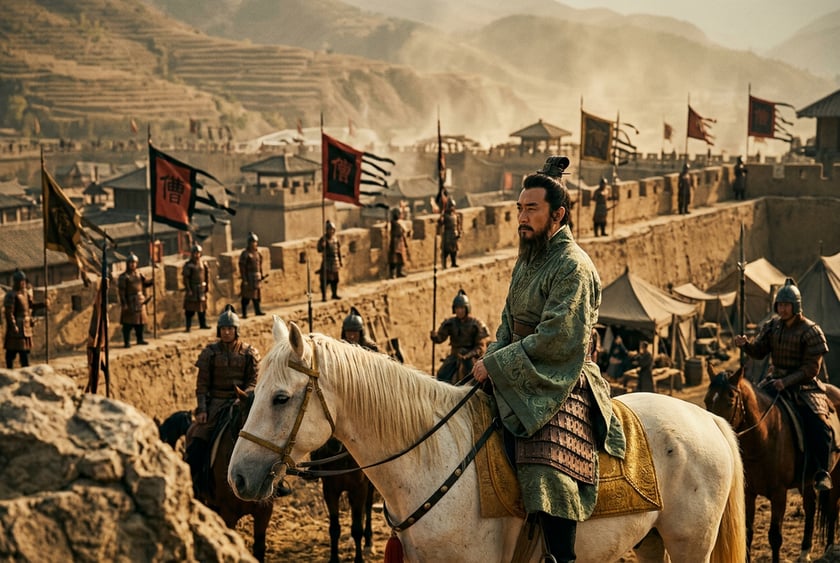
In the account in Romance of the Three Kingdoms, the strategic context for Cao Cao's Campaign Against Zhang Lu was that it was temporarily inadvisable to launch a campaign against Sun Quan or Liu Bei, while Hanzhong was regarded as a forward base for entering Yi Province. Xiahou Dun proposed taking Hanzhong first and then advancing into Shu with “victorious troops.” Cao Cao agreed and raised an army to campaign west. This decision was not simply an attempt to expand territory; rather, it sought to arrange the sequence of battle into a political and military chain: seize routes and strongholds, build momentum through victory, and then gauge the response of Liu Bei, who controlled Yi Province. This, however, illustrates only the strategic vision presented in the novel and cannot be equated directly with a complete record of the actual historical decision-making.
Yangping Pass became a key point in the advance. Zhang Lu ordered Yang Ang and Yang Ren to lead troops there to defend it. When Xiahou Yuan and Zhang He arrived with the vanguard, they camped fifteen li from the pass. The army was exhausted from its long march and was then attacked at night. The novel attributes this setback to Cao Cao’s forces underestimating the risks of marching: Cao Cao demanded to know why the two generals had failed to guard against a camp raid and even sought to punish them under military law, but relented after his officers pleaded on their behalf. This shows that the narrative emphasizes not an unbroken series of Cao’s victories, but the problems of supply, fatigue, and camp defenses on a distant campaign. It also reveals the pressure on a commander to restore discipline in the army.
Main Figures
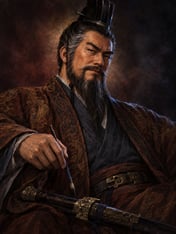
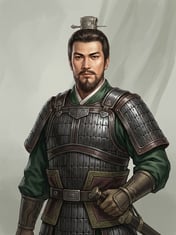
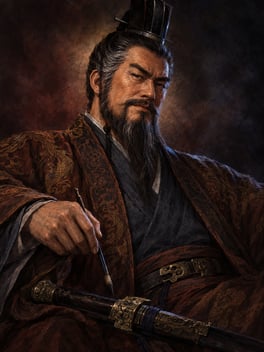
In this part of the narrative, Cao Cao serves both as strategic decision-maker and as arbiter of military discipline. He accepts the proposal to take Hanzhong first, and after the vanguard is defeated, he rigorously pursues accountability. At the same time, the novel has him listen to his advisers, weigh the value of his generals, and decide to postpone a further advance into Shu after taking Hanzhong. He is therefore not portrayed as an actor driven solely by expansion, but as a commander repeatedly weighing his objectives against his army’s endurance and the opportunity at hand.
Zhang Lu is the central figure in the Hanzhong regime, and Zhang Wei is his younger brother. The passages at hand mainly show Zhang Lu following advice and sending Yang Ang and Yang Ren to Yangping Pass. They give no specific details of Zhang Wei’s actions in the fighting, so it would be inappropriate to cast him as the actual decision-maker behind any particular tactic. Yang Ren first defeats Cao Cao’s forces in an ambush, then falls for a ruse while fighting Xiahou Yuan and is killed. Yang Ang takes part in the earlier night raid, but the source does not state what ultimately happens to him. Yan Pu is listed among the figures involved in the events, but the cited passages do not describe anything he specifically says or does. This is a reminder to distinguish a list of characters from verifiable events, rather than inventing historical facts from a person’s status or title.
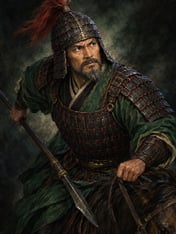
Xiahou Yuan, Zhang He, and other Cao generals lead the fighting on the front lines. The novel depicts them first suffering a setback in the night raid, then shows Xiahou Yuan killing Chang Qi and, after luring Yang Ren into pursuit, killing him as well. This marks a shift from tactical failure to regaining the initiative. Zhang He also takes part in a clash with Pang De, after which Cao Cao considers how to persuade Pang De to surrender. Han Sui is listed as a related figure, but the cited text does not describe his actions in this campaign, so it does not support conclusions about how he took part or what influence he had. This approach preserves the network of figures while avoiding presenting relationships not found in the cited passages as established fact.
Core Issues
The first core issue is the conflict between strategic objectives and the costs of a campaign. Cao Cao Raises an Army with a plan that looked beyond Hanzhong toward Yi Province, but the night attack at Yangping Pass shows that taking a place “first” does not automatically make the advance inexpensive. Exhausted troops, fortified passes, and an opponent willing to take the initiative could all disrupt the planned pace of the march. Cao Cao’s use of military law to intimidate his generals reflects a commander’s attempt to restore order by holding individuals accountable. But blaming a defeat on personal negligence cannot replace an institutional review of preparations for a distant campaign and the quality of intelligence assessments.
The second issue is the relationship between victory on the battlefield and political disintegration. The novel says Cao Cao used strategies proposed by his advisers, such as sowing discord and luring the enemy, to alter the enemy’s internal calculations and thereby seek Pang De’s surrender. This shows that warfare involves not only combat at the front, but also contests over trust, reputation, and decision-making. The passage, however, mentions Jia Xu’s scheme targeting Yang Song; it does not justify adding reactions by Zhang Lu, Yan Pu, or others that are absent from the cited text. For political history, the important point is to identify how the text places gifts of gold and silk, slander, and the loyalty of generals within the machinery of war—not to treat the novel’s stratagems as proven historical events.
The third issue is whether to keep advancing after a victory. Sima Yi and Liu Ye urge Cao Cao to press on and attack Shu, reasoning that Liu Bei has only recently taken Yi Province and has not yet secured it; delay would allow him to win over the people and strengthen his defenses in the terrain. Cao Cao, however, holds his forces back, citing the hardship endured by his soldiers on the distant campaign. The two positions represent, respectively, an opportunistic logic of attack and a concern for the army’s capacity and the costs of governing. Through the remark “having gained Long, he still looks toward Shu,” the novel sets the urge to expand against the need for restraint, suggesting that strategic decisions concern not only whether victory can be won, but also whether the forces exist to hold what has been gained.
Political Consequences
As far as the material provided shows, the novel explicitly says that Cao Cao “had already taken Dongchuan” and links control of Hanzhong to political alarm in Yi Province. The narrative then turns to the debate over whether to continue the attack on Shu and Cao Cao’s decision to postpone the advance. This material therefore cannot be summarized as saying that Cao Cao had already conquered Yi Province, nor does it establish the full outcome of the Hanzhong Campaign, its administrative arrangements, or the ultimate fate of Zhang Lu’s regime. A more cautious assessment is that the text depicts Hanzhong as a strategic fulcrum affecting Yi Province’s sense of security and the pace at which Liu Bei’s regime could consolidate. Its subsequent political effects still depended on whether the advance continued.
From the perspective of political organization, Cao Cao’s decision reveals at least two competing responsibilities of command. On the one hand, a commander must respond to the opportunity identified by his advisers and prevent the opponent from completing its consolidation. On the other, he must contend with the exhaustion of his soldiers and the costs of a distant campaign; practical capacity to occupy territory cannot be inferred from a feasible route on a map alone. In the novel, holding back may be interpreted as restraint, or as squandering a window of opportunity. The coexistence of these interpretations shows that military victory does not automatically produce stable rule. Since the material offers only a single narrative passage, it cannot establish the real long-term consequences of this choice.
Counterfactual Analysis
If Cao Cao had accepted Sima Yi and Liu Ye’s advice and advanced into Yi Province at once, the most favorable outcome would have been to exploit the fact that Liu Bei had only recently taken Yi Province and that its internal situation was not yet settled, forcing him to divide resources between consolidating his regime and defending the front. This scenario accords with the two advisers’ logic of “seizing the moment.” But it also requires assuming that Cao Cao’s forces could endure a further distant campaign and maintain supply lines, garrisons, and a continued offensive after taking Hanzhong. The original text offers no evidence that these conditions were in place, so the possibility of “extending the advantage” cannot be presented as certain victory.
Conversely, if Cao Cao had continued to rest his troops, he might have reduced the exhaustion caused by the long campaign, restored order among his forces, and avoided overextending the front just after making progress in Hanzhong. The cost might have been giving Liu Bei time to consolidate Yi Province and strengthen the passes, weakening the element of surprise envisaged in the original plan. The novel explicitly sets these two risks against each other in the characters’ dialogue, but gives no answer to the counterfactual. More importantly, the night raid at Yangping Pass already shows that fighting at the front was not a cost-free advance. Any conclusion that “a swift attack would certainly have won” or that “rest would certainly have meant missing the opportunity” goes beyond what the cited passages can support.
Overall, this episode of Cao Cao's Campaign Against Zhang Lu is best understood as a discussion of the strategic window, the limits of the army, and the pace of political consolidation, rather than as a historical source that can independently reconstruct the entire campaign. It is especially important to remember that Romance of the Three Kingdoms dramatizes generals, stratagems, and conflicts over decisions. The details of attack and defense cited here should first be treated as evidence of how the novel explains warfare. Their value for modern political history lies in clarifying the logic of decisions and the relationships of power, while recognizing the limits of the source and avoiding the direct conversion of literary narrative into unverified historical fact.