Xiliang Army · General Who Guards the West / Inspector of Bingzhou
Han Sui
courtesy name 文约 · c. 145–215
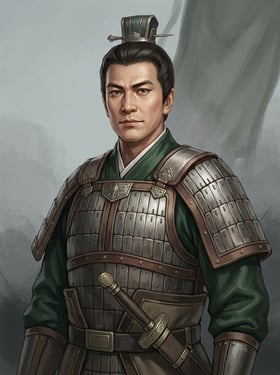
Han Sui was seasoned and steady, yet easily swayed. For the sake of shared native ties he would break a military order; he once slipped free of Fan Chou with the two phrases "a man from the same hometown" and "it is all for the sake of the state". Cao Cao once appraised him as "a mediocre little man, hardly worth mentioning".

Life
In the novel: 8 chapters · In the Records: 17 volumes
Life?–215
196 CE (Jian'an 1)
211 CE (Jian'an 16)
215 CE (Jian'an 20)
- Cao Cao's Campaign Against Zhang LuHanzhongParticipant
- Xiliang Army
- Cao Wei
- Hatched: dated by chapter
- Life event
- Death
List all 4 stops
On the boards
Compare with someone →Where this person ranks on each board.
Who they were
Character profile
- Character
- Han Sui was seasoned and steady, yet easily swayed. For the sake of shared native ties he would break a military order; he once slipped free of Fan Chou with the two phrases "a man from the same hometown" and "it is all for the sake of the state". Cao Cao once appraised him as "a mediocre little man, hardly worth mentioning".
- Life
- Han Sui once surrendered together with Ma Teng, was granted the title General Who Guards the West, and was sent back to Liang Province. In the sixteenth year of Jian'an, he rebelled together with Ma Chao and others; Cao Cao campaigned against them and defeated them, and Han Sui fled to Jincheng, where he was ultimately killed by his own subordinate general. In the twentieth year of Jian'an, he was beheaded by Qu Yan and Jiang Shi, who sent up his head.
- Anecdotes
- Han Sui was the chief of the Jincheng rebellion, later holding Guanzhong and Liang Province, and for a long time resisting alongside Ma Chao. He was once one of the most powerful warlords of the Liang Province and Guanzhong region, and a maker of turmoil in Liang Province, a partisan of Bian Zhang. Han Sui and Ma Teng became sworn brothers of different surnames, then turned into enemies, but in the end again joined forces with Ma Chao to rebel against Cao. He was once the deputy commander of the Xiliang allied army, and an uncle-figure to Ma Chao.
Historical Record
Han Sui, courtesy name Wenyue, was renowned in the Western Regions from an early age, along with Bian Zhang, a fellow commandery native. Once, while carrying out a mission, he went to the capital. He Jin had heard of him and received him in person. Han Sui urged He Jin to eliminate the eunuchs, but his advice was not accepted, so he asked to return home. After Song Yang, Beigong Yu, and others in Liang Province rose in revolt, they chose Bian Zhang and Han Sui as their leaders. Bian Zhang soon died of illness, while Han Sui was seized by the rebels and had no choice but to take up arms and rebel. His career of rebellion lasted thirty-two years in all. Pei Songzhi’s annotation records that he was over seventy when he died.
Toward the end of the Han dynasty, the court once appointed Han Sui General Who Stabilizes the West and sent him back to Liang Province. He and Ma Teng, among others, surrendered for a time, but later came into conflict. When Zhong Yao was pacifying Guanzhong, he explained the advantages and disadvantages to Han Sui and Ma Teng, and each sent a son to the court as a hostage. Han Sui also joined Ma Chao, Ma Teng’s son, and others in defeating Guo Yuan and Gao Gan. Later, his former closeness with Ma Teng turned to enmity.
In the sixteenth year of Jian’an, the generals of Guanzhong suspected that Zhong Yao was about to attack. Ma Chao then rebelled with Han Sui, Yang Qiu, Li Kan, Cheng Yi, and others. Cao Cao led a western campaign and fought the rebels at Tong Pass and south of the Wei River. Han Sui once met Cao Cao on the battlefield; they spoke of old times in the capital but did not discuss military matters. Cao Cao then used Jia Xu’s stratagem to sow discord between Han Sui and Ma Chao. In the decisive battle, Cao Cao’s forces routed the rebels, beheading Cheng Yi and Li Kan, while Han Sui and Ma Chao retreated to Liang Province.
Han Sui remained active in Liang Province thereafter. When Xiahou Yuan campaigned against Ma Chao, Han Sui was at Xianqin. On hearing that he was about to be attacked, he fled; Xiahou Yuan pursued him to Lueyang and seized his army’s provisions. In the nineteenth year of Jian’an, Han Sui joined the forces of the Di king Qianwan, but later lost a battle against Xiahou Yuan and fled to Xiping. In the twentieth year of Jian’an, the generals Qu Yan and Jiang Shi of Xiping and Jincheng joined forces to kill Han Sui and send his head to Cao Cao.
In the Novel
Romance of the Three Kingdoms portrays Han Sui as a general from the Western Liang who joined Ma Teng in campaigning against Li Jue and Guo Si. It also says that he was appointed General Who Stabilizes the West and became sworn brothers with Ma Teng. The novel has the two men coordinate with sympathizers inside Chang’an and lead an army against the powerful ministers. After their inside contacts were exposed and their supplies ran short, Han Sui persuaded Fan Chou to withdraw his troops and let them pass during their retreat, appealing to their shared hometown and saying, “It is all for the state.” These specific exchanges and events are part of the novel’s portrayal and are not recorded in the Records of the Three Kingdoms.
In its account of the Battle of Tong Pass, the novel further casts Han Sui as an uncle-generation relative of Ma Chao and deputy commander of the allied forces. He joins forces with Ma Chao, hears Ma Chao’s proposal to attack while the enemy is halfway across the river, and takes part in assaults on Cao Cao’s camp and the burning of the pontoon bridge and thatched encampment. After Cao Cao employs stratagems such as pretending to agree to cede territory, reminiscing with Han Sui on the battlefield, and altering a letter, Ma Chao grows suspicious of Han Sui. The novel says that Han Sui’s subordinates urge him to secretly defect to Cao Cao, and the two sides eventually become mutually suspicious and turn on each other. Compared with the historical record, the Records of the Three Kingdoms confirms that Cao Cao sowed discord between Han Sui and Ma Chao, but does not record the novel’s specific secret letter, the severing of Han Sui’s left hand, or the night raid on the central camp—dramatic details added by the novel.
Key Relationships
- Ma Chao: Historically, the two were powerful generals in Guanzhong who once joined forces to rebel against Cao Cao and, after their defeat, both fled to Liang Province. The novel calls them uncle and nephew, emphasizing their alliance and later falling-out due to Cao Cao’s schemes. The novel’s kinship terms and events should not be treated as historical fact.
- Ma Teng: Historically, Han Sui and Ma Teng surrendered for a time and received appointments from the court, but later became enemies after clashes between their followers. Romance of the Three Kingdoms recasts them as sworn brothers who campaigned together against rebels.
- Cao Cao: The two faced off at Tong Pass. Historically, Cao Cao met Han Sui on horseback and reminisced with him, then followed Jia Xu’s plan to sow discord between Han Sui and Ma Chao. The novel expands this strategy into a sequence of schemes involving a battlefield conversation, an altered letter, and the recruitment of Han Sui’s subordinates.
- Qu Yan and Jiang Shi: Historically, the two took part in killing Han Sui and sending his head to Cao Cao.
Signature Scenes
- Reminiscing on the battlefield at Tong Pass: Han Sui meets Cao Cao, and they talk about their old acquaintances in the capital without discussing military affairs; Ma Chao consequently grows suspicious. The historical record notes the meeting and the suspicion it sparked as a key turning point, while the novel elaborates with a scene in which Cao Cao rides out alone, recalls that they had both been recommended as Filial and Incorrupt, and converses with Han Sui at length.
- Feigning peace and sowing discord: The rebels propose ceding territory to seek peace. Cao Cao pretends to accept, following Jia Xu’s plan, and then sows discord between Han Sui and Ma Chao, ultimately defeating the allied forces. The historical account records the strategy and outcome; the altered letter, Ma Chao’s confrontation in his tent, and Han Sui’s subordinates plotting to defect to Cao Cao appear only in Romance of the Three Kingdoms.
- Defeat and death in Liang Province: After his defeat in Guanzhong, Han Sui retreats to Liang Province and is later defeated by Xiahou Yuan. He is eventually killed by Qu Yan, Jiang Shi, and others, who send his head to Cao Cao. The novel adds that after falling out with Ma Chao, Han Sui is made Marquis of Western Liang and loses his left hand; these details of his fate are unique to the novel.
Quotes
8 lines in the books · 3 featured
「吾與汝父結為兄弟,安忍害汝?汝若興兵,吾當相助。」
This line shows the sworn-brotherhood bond between Han Sui and Ma Chao's father's generation, central to his web of relationships.
「不必如此。豈不聞兵法有云:『兵半渡可擊。』待操兵渡至一半,汝卻於南岸擊之,操兵皆死於河內矣。」
This stratagem embodies Han Sui's military cunning and reflects the classic application of the maxim 'strike when the enemy is halfway across the river.'
「吾聞曹操選極壯之人,為帳前侍衛,名曰『虎衛軍』,以驍將典韋、許褚領之。典韋已死,今救曹操者,必許褚也。此人勇力過人,人皆稱為『虎痴』;如遇之,不可輕敵。」
This line references Dian Wei, Xu Chu, and the 'Tiger Fool' allusion, carrying high cultural recognizability.
- Family
- Lord & vassal
- Friends
- Enemies
- Other
Who is Han Sui connected to?
Pick someone to see how many steps lie between them and Han Sui.
History vs. novel
7 points · 1 novel-only
| History | Novel |
|---|---|
| Campaign Against Li JueNovel embellishes | |
The histories say that in the third year of Chuping, Ma Teng and Han Sui led their forces to Chang'an, where Han Sui was appointed General Who Guards the West. Ma Teng later failed in an attack on Chang'an and withdrew to Liang Province. They do not record the two joining forces with over a hundred thousand troops to campaign against Li Jue and Guo Si, or arranging for collaborators inside the city. vol. 36 | The novel says that Han Sui and Ma Teng led an army of over a hundred thousand, claiming they were going to suppress rebels, and contacted officials in Chang'an to serve as inside collaborators. After their plan was exposed, the two withdrew because they had run out of provisions. ch. 10 |
| Persuading Fan Chou to WithdrawNovel only | |
| — | During the retreat, Han Sui appealed to Fan Chou as a fellow countryman and argued that he had taken up arms for the sake of the state. Fan Chou eventually called off his troops and let him leave. ch. 10 |
| Sworn BrotherhoodNovel embellishes | |
The histories record that Ma Teng and Han Sui once became sworn brothers despite having different surnames. They were close at first, but later became enemies after a clash between their troops. vol. 36 | The novel says that Ma Teng and Han Sui became sworn brothers. When Cao Cao tried to win Han Sui over, Han Sui invoked his brotherly bond with Ma Teng as his reason for deciding to help Ma Chao. ch. 57 |
| Alliance Against Cao CaoNovel embellishes | |
Ma Chao and other commanders in the Guanzhong region formed an alliance and rebelled against Cao Cao at Tong Pass. The histories say their forces totaled one hundred thousand; after Cao Cao defeated them, Han Sui and Ma Chao fled to Liang Province. vol. 1 | The novel says that Han Sui killed Cao Cao's envoy, then joined forces with Ma Chao and led the eight commanders in a combined army of two hundred thousand toward Chang'an. ch. 58 |
| Debate Over Crossing the RiverNovel embellishes | |
The histories record that Ma Chao proposed holding off Cao Cao north of the Wei River, reasoning that Cao Cao's army would withdraw once its provisions ran out. Han Sui instead proposed letting Cao Cao's army cross the river before intercepting it, and the two disagreed. vol. 36 | The novel likewise says that Ma Chao proposed holding the north bank and preventing Cao Cao's army from crossing, while Han Sui suggested attacking from the south bank once half the enemy army had crossed. Ma Chao accepted Han Sui's proposal. ch. 58 |
| Cao Cao Meets Han SuiNovel embellishes | |
Cao Cao and Han Sui met on horseback, each riding alone, and spoke of old times without discussing military affairs. This made Ma Chao and the others suspicious of Han Sui. vol. 1 | The novel elaborates on Cao Cao and Han Sui speaking before the battle lines: they discuss the old ties between their families and their past experiences, taking care not to mention military affairs. ch. 59 |
| Discord and DefeatNovel embellishes | |
The histories say that Cao Cao used Jia Xu's plan to sow discord between Ma Chao and Han Sui. The two grew suspicious of each other and were ultimately defeated; the histories do not record Han Sui sending a secret letter to surrender. vol. 36 | The novel says that Cao Hong deliberately spread rumors to deepen Ma Chao's suspicions of Han Sui. Han Sui then sent Yang Qiu to surrender to Cao Cao. When Ma Chao learned of this, he stormed into Han Sui's tent, and the two came to blows. ch. 59 |
- Campaign Against Li JueNovel embellishes
- History
The histories say that in the third year of Chuping, Ma Teng and Han Sui led their forces to Chang'an, where Han Sui was appointed General Who Guards the West. Ma Teng later failed in an attack on Chang'an and withdrew to Liang Province. They do not record the two joining forces with over a hundred thousand troops to campaign against Li Jue and Guo Si, or arranging for collaborators inside the city.
vol. 36
- Novel
The novel says that Han Sui and Ma Teng led an army of over a hundred thousand, claiming they were going to suppress rebels, and contacted officials in Chang'an to serve as inside collaborators. After their plan was exposed, the two withdrew because they had run out of provisions.
ch. 10
- Persuading Fan Chou to WithdrawNovel only
- Novel
During the retreat, Han Sui appealed to Fan Chou as a fellow countryman and argued that he had taken up arms for the sake of the state. Fan Chou eventually called off his troops and let him leave.
ch. 10
- Sworn BrotherhoodNovel embellishes
- History
The histories record that Ma Teng and Han Sui once became sworn brothers despite having different surnames. They were close at first, but later became enemies after a clash between their troops.
vol. 36
- Novel
The novel says that Ma Teng and Han Sui became sworn brothers. When Cao Cao tried to win Han Sui over, Han Sui invoked his brotherly bond with Ma Teng as his reason for deciding to help Ma Chao.
ch. 57
- Alliance Against Cao CaoNovel embellishes
- History
Ma Chao and other commanders in the Guanzhong region formed an alliance and rebelled against Cao Cao at Tong Pass. The histories say their forces totaled one hundred thousand; after Cao Cao defeated them, Han Sui and Ma Chao fled to Liang Province.
vol. 1
- Novel
The novel says that Han Sui killed Cao Cao's envoy, then joined forces with Ma Chao and led the eight commanders in a combined army of two hundred thousand toward Chang'an.
ch. 58
- Debate Over Crossing the RiverNovel embellishes
- History
The histories record that Ma Chao proposed holding off Cao Cao north of the Wei River, reasoning that Cao Cao's army would withdraw once its provisions ran out. Han Sui instead proposed letting Cao Cao's army cross the river before intercepting it, and the two disagreed.
vol. 36
- Novel
The novel likewise says that Ma Chao proposed holding the north bank and preventing Cao Cao's army from crossing, while Han Sui suggested attacking from the south bank once half the enemy army had crossed. Ma Chao accepted Han Sui's proposal.
ch. 58
- Cao Cao Meets Han SuiNovel embellishes
- History
Cao Cao and Han Sui met on horseback, each riding alone, and spoke of old times without discussing military affairs. This made Ma Chao and the others suspicious of Han Sui.
vol. 1
- Novel
The novel elaborates on Cao Cao and Han Sui speaking before the battle lines: they discuss the old ties between their families and their past experiences, taking care not to mention military affairs.
ch. 59
- Discord and DefeatNovel embellishes
- History
The histories say that Cao Cao used Jia Xu's plan to sow discord between Ma Chao and Han Sui. The two grew suspicious of each other and were ultimately defeated; the histories do not record Han Sui sending a secret letter to surrender.
vol. 36
- Novel
The novel says that Cao Hong deliberately spread rumors to deepen Ma Chao's suspicions of Han Sui. Han Sui then sent Yang Qiu to surrender to Cao Cao. When Ma Chao learned of this, he stormed into Han Sui's tent, and the two came to blows.
ch. 59
Combat
On the field
Duels, kills and executions as the texts tell them, counted separately for the Records and the Romance.
Battles in command
Battles this person commanded in, with the outcome as each text tells it.
- Records
- 0W 1L 0D 0 undecided
- Records211Battle of Tong PassLostvs Cao forcesJuan 1「乃縱虎騎夾擊,大破之,斬成宜、李堪等」
Stratagems
Plans this person devised or saw through, as the texts tell them.
- Romance
- 3 carried out · 0 worked · 0 turned down · 0 seen through
- RomanceInternal SupportOtherSeen throughagainst Li Jue and Guo SiCh. 10「馬宇家僮出首家主與劉範、种邵,外連馬騰、韓遂,欲為內應等情」
- RomanceAttack While They Are CrossingAmbushFailedCh. 58「待操兵渡至一半,汝卻於南岸擊之,操兵皆死於河內矣」
- RomanceLure Cao Cao into an Assassination AttemptDeceptionFailedCh. 59「來日吾在陣前賺操說話,汝從陣內突出,一槍刺殺便了」
Events
Events (6)
Battles and events the texts place this person in, by date.
Battles
- 208Battle of Red Cliffs
- 211Battle of Tong PassCommander
Other events
Places
- Native of
- JinchengRecords
- Was at
- Liang ProvinceRecords
- Tong PassRecords
- JinchengRecords
- Governed
- Liang ProvinceRecords
Continue
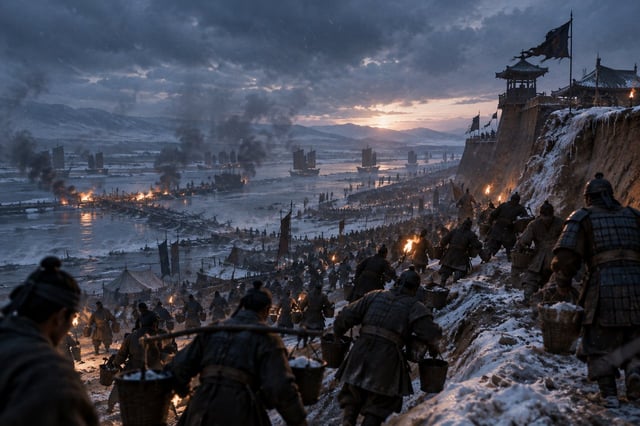
The Battle of Tong Pass in 3D
Replay the Battle of Tong Pass phase by phase on real terrain: troop strengths, movements and turning points at a glance, each marked as coming from the Records of the Three Kingdoms or the Romance.
Relationship timeline4 entries ▸
History · vol. 1
- Qu Yan§98
Enemy
the generals of Xiping and Jincheng joined in killing Sui and sent his head
Novel · ch. 58
- Ma Chao§5
Sworn brother
became sworn brothers with Ma Teng and could not bear to harm Ma Chao and his brothers; beheaded Cao Cao’s envoy and raised troops from Xiliang to assist
- Ma Chao§21
Advised
urged, "When half the army has crossed, it can be attacked"—waited until half of Cao Cao's troops had crossed, then attacked them from the southern bank
- Pang De§25
Commands
both led fifty thousand troops straight to Weinan; when trapped in the center of the encirclement, was rescued on foot by Pang De
Inner monologues · AI-generated1 monologue ▸
- I am Han Sui, courtesy name Wenyue. I remember how, long ago, Ma Teng and I received a secret imperial edict and joined