Language
← Dong Zhuo's Coup

Turmoil of Li Jue and Guo Si

192 CE (Chuping 3) · Chang'an

According to chapters 9 through 14 and chapter 17 of the San Guo romance, after Wang Yun and Lv Bu assassinated Dong Zhuo in the third year of Chuping (192), Dong Zhuo's former subordinates Li Jue, Guo Si, Zhang Ji, and Fan Chou fled to Liangzhou and attempted to submit a memorial seeking amnesty, without success. The strategist Jia Xu then advised them to rally the troops of Liangzhou under the banner of "serving the state and punishing the traitors," and to stir up the Liangzhou populace with rumors that Wang Yun intended to slaughter every man in the region; within a short time they had assembled a force of more than one hundred thousand, which they sent against Changan in four columns. Lv Bu led troops out to meet them but could not break through; Li Jue's planted agents Li Meng and Wang Fang opened the gates of Changan from within, and all four columns surged into the city. Wang Yun refused to flee and threw himself from the city wall. Lv Bu abandoned his family and escaped to seek shelter with Yuan Shu. Li Jue and his confederates seized the Emperor Xian and let their troops loose to plunder the capital; high officials including the Grand Ritualist Zhong Fu and the Grand Coachman Lu Kui perished in the catastrophe, while the warlords rewarded themselves with titles such as General of Chariots and Cavalry, Rear General, Right General, and General of Flying Cavalry. Ma Teng and Han Sui subsequently led Xi Liang forces in to relieve the city; Ma Chao killed Li Meng and Wang Fang in battle, but the campaign ultimately collapsed when the internal plot was exposed and the troops withdrew. Li Jue then used a banquet as a pretext to murder Fan Chou, and Zhang Ji fell back to hold Hongnong. Li Jue and Guo Si then turned on each other, Li Jue holding the emperor hostage while Guo Si held the court officials; daily fighting for more than fifty days left corpses piled across the capital region. In the first year of Jian'an (196), Cao Cao marched west to escort the emperor back to Luoyang, mopping up the remnants of Li Jue and Guo Si's forces; the two fugitives fled like "stray dogs fleeing a ruined house" into the mountains to become outlaws, and were eventually killed by Duan Wei and Wu Xi. This upheaval utterly destroyed what remained of Eastern Han central authority and created the conditions for Cao Cao's strategy of "holding the Son of Heaven hostage to command the lords."

Part of the Dong Zhuo's Coup campaign▶ Watch the whole campaign's routes on the map
Turmoil of Li Jue and Guo Si

Scene

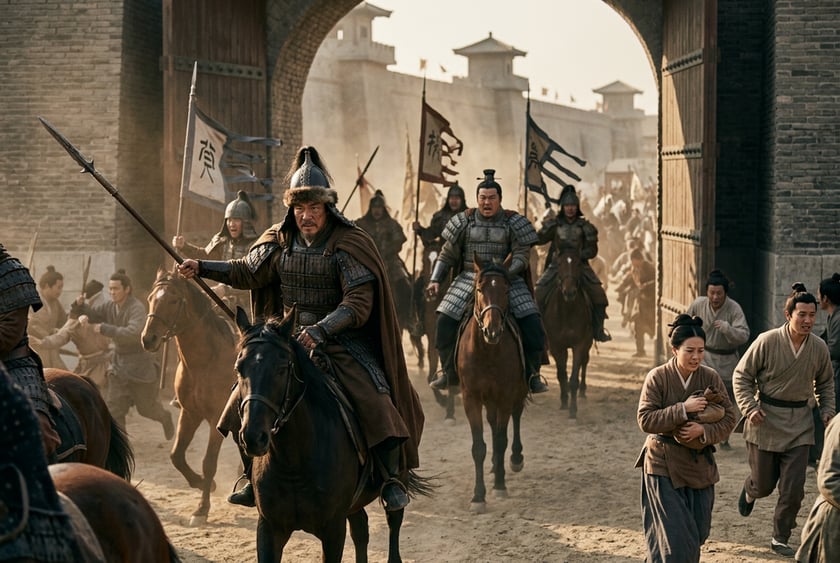
The gates of Chang'an stand wide open as the Liang Province troops, including Li Jue and Guo Si, surge into the city like a flood. The townspeople panic and flee in all directions.

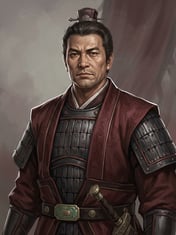
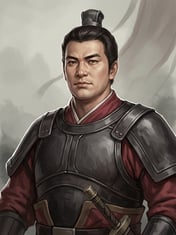
Featured people: Li Jue、Guo Si

Imagine this scene →
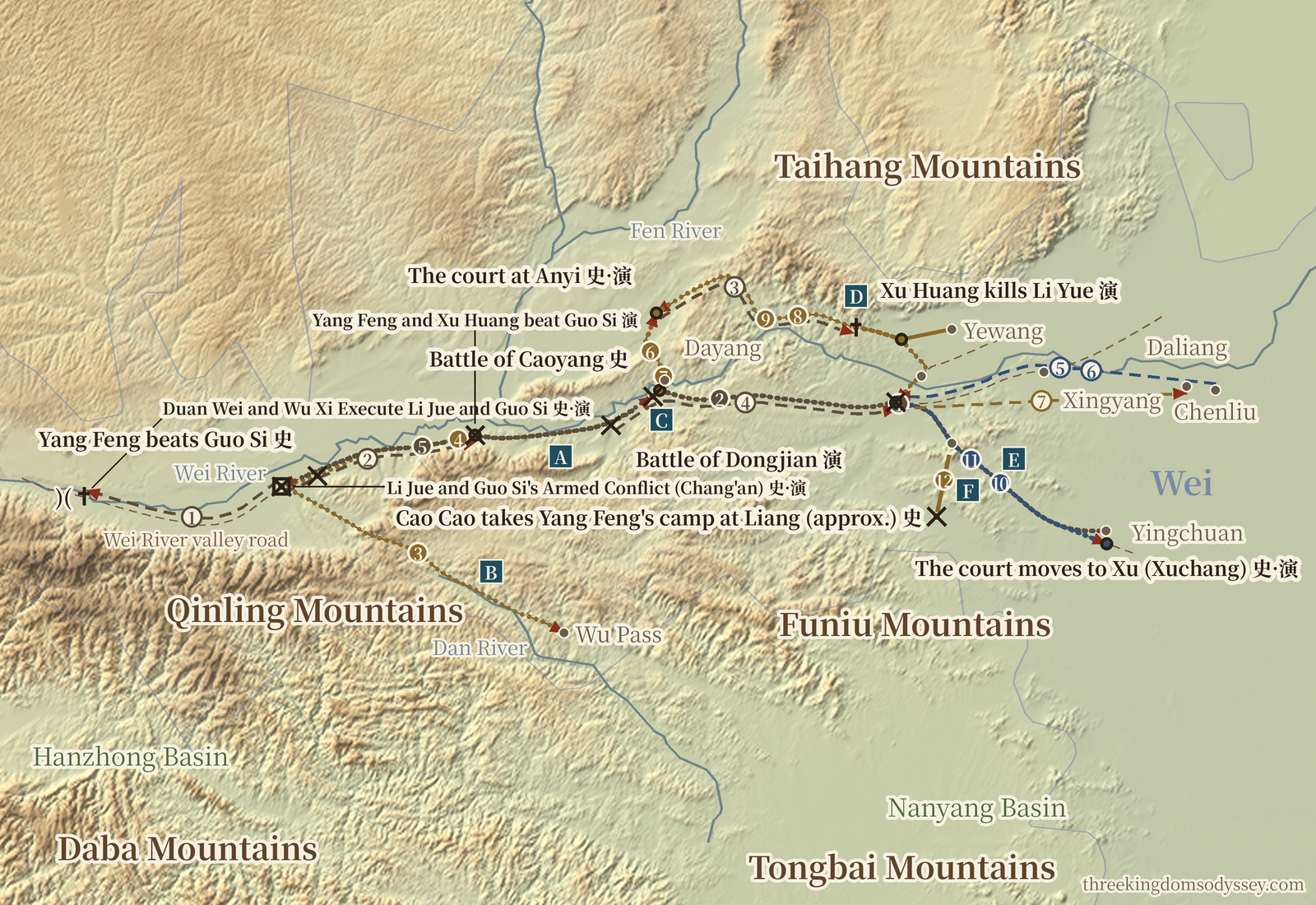
Map of the Turmoil of Li Jue and Guo Si, 192

Swipe to see the whole map

Map of the Turmoil of Li Jue and Guo Si, 192See the routes on the live map →

In the Records

  1. 1Li Jue and Guo Si and Zhang Ji, sent by Niu Fu, marches on the Yingchuan areaRecords of the Three Kingdoms, juan 6Records of the Three Kingdoms, juan 10
  2. 2Li Jue and Guo Si and Zhang Ji marches on Chang'anover 100,000 menHist.Records of the Three Kingdoms, juan 6Records of the Three Kingdoms, juan 10Romance of the Three Kingdoms, ch. 9
  3. 3Lü Bu falls back to Wu Passa few hundred horsemenHist.Records of the Three Kingdoms, juan 7Records of the Three Kingdoms, juan 1
  4. 4Emperor Xian of Han and Yang Feng and Dong Cheng falls back to CaoyangRecords of the Three Kingdoms, juan 6Romance of the Three Kingdoms, ch. 13
  5. 5Li Jue and Guo Si pursues to CaoyangRecords of the Three Kingdoms, juan 6Romance of the Three Kingdoms, ch. 13
  6. 6Han Xian and Hu Cai and Li Le, sent by Yang Feng, reinforces CaoyangRecords of the Three Kingdoms, juan 6Romance of the Three Kingdoms, ch. 13
  7. 7Emperor Xian of Han and Yang Feng and Han Xian and Dong Cheng falls back to AnyiRecords of the Three Kingdoms, juan 6Records of the Three Kingdoms, juan 1Romance of the Three Kingdoms, ch. 13
  8. 8Zhang Yang reinforces AnyiRecords of the Three Kingdoms, juan 8
  9. 9Emperor Xian of Han and Yang Feng and Han Xian and Dong Cheng marches on LuoyangRecords of the Three Kingdoms, juan 6Records of the Three Kingdoms, juan 1Romance of the Three Kingdoms, ch. 13Romance of the Three Kingdoms, ch. 14
  10. 10Cao Cao marches on LuoyangRecords of the Three Kingdoms, juan 14Records of the Three Kingdoms, juan 1
  11. 11Cao Cao marches on XuchangRecords of the Three Kingdoms, juan 1Records of the Three Kingdoms, juan 14Records of the Three Kingdoms, juan 6Romance of the Three Kingdoms, ch. 14
  12. 12Yang Feng meets the enemy at the Huanyuan Pass areaRecords of the Three Kingdoms, juan 1Records of the Three Kingdoms, juan 14

In the Romance

  1. 1Li Jue and Li Xian marches on MeiRomance of the Three Kingdoms, ch. 13
  2. 2Guo Si pursues to HuayinRomance of the Three Kingdoms, ch. 13
  3. 3Li Le pursues to Ji PassRomance of the Three Kingdoms, ch. 13Romance of the Three Kingdoms, ch. 14
  4. 4Li Jue and Guo Si marches on LuoyangRomance of the Three Kingdoms, ch. 14
  5. 5Xiahou Dun and Xu Chu and Dian Wei and Cao Hong and Li Dian and Yue Jin, sent by Cao Cao, marches on Luoyang50,000 picked troopsNovelRomance of the Three Kingdoms, ch. 14
  6. 6Cao Cao marches on LuoyangRomance of the Three Kingdoms, ch. 14
  7. 7Yang Feng and Han Xian falls back to DaliangRomance of the Three Kingdoms, ch. 14

In the Sanguozhi's main text Li Yue dies of illness in Hedong; the novel has Xu Huang kill him chasing the emperor, and adds Li Jue and Guo Si attacking Luoyang and routed by Cao's army.

The books mostly say only where an army set out and arrived: a Records line is solid between the places they name and dotted where it follows a reconstructed road between them; an open ring marks an end the books don't give.

Why these routes

  • AJia Xu's advice: don't scatter and flee home, march west on Chang'an and gather men on the way. Setting out from Shan, they reached Chang'an over 100,000 strong.Hist.Records of the Three Kingdoms, juan 10Records of the Three Kingdoms, juan 6
  • BLü Bu left by Wu Pass: the Wuguan road climbs the Qinling along the Ba and Dan valleys and comes out southeast into the Nanyang basin. He meant to join Yuan Shu.Schol.寻秦 | 从秦楚古道→西十高铁 这条穿越秦岭的“路”从未停歇(凤凰网)武关道考察(中国社会科学网)Records of the Three Kingdoms, juan 7
  • CAt Shan, Yang Biao vetoed going downriver by boat: thirty-six rapids lay below. After Caoyang the emperor crossed north to Dayang instead.Schol.元和郡县图志·卷六(维基文库)Records of the Three Kingdoms, juan 6
  • DWith Li Jue and Guo Si at Hongnong on the Xiao–Hangu road, the court went east through Ji Pass and down the Zhi road below Mount Wangwu; Zhang Yang brought food.Schol.Records of the Three Kingdoms, juan 6轵关陉(维基百科)崤函古道(维基百科)
  • ELuoyang was burnt and had no grain. Dong Zhao's pretext: Luyang is near Xu, where grain is easier to bring. The court left by Huanyuan Pass for Xu.Hist.Records of the Three Kingdoms, juan 6Records of the Three Kingdoms, juan 14Records of the Three Kingdoms, juan 1
  • FYang Feng camped at Liang (Ruzhou), southwest of the Huanyuan road, and set out to cut off the court but was too late. The novel makes Liang into Daliang (Kaifeng).BothRecords of the Three Kingdoms, juan 1Records of the Three Kingdoms, juan 14Romance of the Three Kingdoms, ch. 14梁县(维基百科)大梁(维基百科)轘辕关(维基百科)

Base map: Natural Earth; terrain: AWS Terrain Tiles (SRTM and others). Roads and marches reconstructed from the sources listed; positions approximate.


Geography

Turmoil of Li Jue and Guo Si
Chang'an192 CE

What happened next

Li Jue

Continue

Li Jue

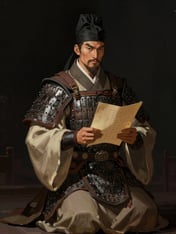
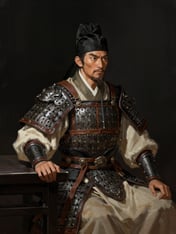
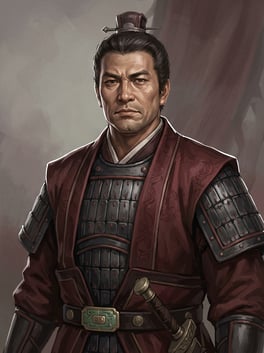
Li Jue was cruel to the common people; he first slighted Jia Xu's stratagems and later relied heavily on them, and at a banquet set a "Hongmen feast" to kill Fan Chou. Brutal, he was fond of heterodox and sorcerous arts, even employing shamanesses to beat drums and summon spirits.

Go to Li Jue →

Related events

In depth

AI analysis

Origin

When Minister of Works Wang Yun and Lv Bu killed Dong Zhuo in the fourth month of the third year of Chuping (192), it should have been the moment of Eastern Han's revival — the people of Changan celebrated, and many believed the Han house might yet be restored. Yet Wang Yun's policy for managing the aftermath rapidly exposed a grave flaw: he took a hard line of "neither amnesty nor pacification" toward the Liangzhou military. When Li Jue, Guo Si, Zhang Ji, and Fan Chou — Dong Zhuo's four core subordinate generals — fled back to Liangzhou and sent men to memorialize for pardon, Wang Yun's answer was: "Though a general amnesty has been declared for the realm, these four men alone are excluded". The political cost of this decision was enormous — it backed tens of thousands of Liangzhou troops into a corner where "they had to rebel or die." Jia Xu intervened at this moment and offered his famous advice to march on Changan: rather than each man fleeing separately to be seized by some local headman, they should rally the Liangzhou troops and "in the name of the state punish the traitor"; simultaneously he used the rumor that "Wang Yun intends to sweep clean all the people of this region" to rouse the populace. This rhetoric simultaneously cloaked the rebellion in the legitimacy of "avenging Dong Zhuo" and converted the Liangzhou people's fear of Wang Yun into a mobilization force of over a hundred thousand — a classic case of "rumor mobilization" in Chinese political history.

Forces Involved

Li Jue, Guo Si, Zhang Ji, and Fan Chou constituted the core military strength, advancing in four columns toward Changan; along the road they encountered Dong Zhuo's son-in-law Niu Fu leading five thousand troops to join them and were assigned to spearhead the advance. On the capital's side, Wang Yun and Lv Bu were the main resistance, but Lv Bu's forces were limited and Li Su was defeated and killed by Niu Fu in the opening battle. Inside the city, the "internal agents" were Dong Zhuo remnants such as Li Meng and Wang Fang, who secretly opened the city gates — the direct cause of Changan's fall. Emperor Xian of Han occupied a completely passive position, used as a political symbol by all sides in turn. Ma Teng and Han Sui led the Xiliangjun in to reinforce and represented the external anti-Dong forces; but the household servants of the families inside Changan reported the plot, the three clans' young men of ability were executed, the internal agents neutralized, and the Xiliangjun ultimately withdrew in defeat. Cao Cao's move in the first year of Jian'an to escort the Son of Heaven eastward was the critical outside force that finally broke the deadlock.

Key Turning Points

The Liguozhiluan falls into three distinct phases, each with a defining turning point. The first phase was the fall of Changan: four columns of Liangzhou troops, totaling over a hundred thousand, bypassed Lv Bu's main force, entered through the gates opened by Li Meng and Wang Fang — Wang Yun refused to flee and from the Xuanping Gate jumped down, loudly announcing his identity, and was killed on the spot by Li Jue and Guo Si; this was the direct node at which Eastern Han's central authority collapsed. The second phase was the internal strife between Li Jue and Guo Si: after the four generals jointly seized power, Li Jue set a banquet to kill Fan Chou and Zhang Ji withdrew to protect Hongnong. The relationship between Li and Guo deteriorated rapidly; they fought over power every day for over fifty days — Li Jue seized the emperor and removed him to Meiwu, while Guo Si seized the court ministers, each using the Son of Heaven and the officials as hostages against the other. The metropolitan region suffered casualties beyond counting, and the state's central apparatus effectively ceased to exist. The third phase was Cao Cao's westward escort and the final reckoning: in the first year of Jian'an (196) Cao Cao advanced under imperial mandate; Xu Chu, Dian Wei, Xiahou Dun, Cao Ren, and other crack troops along multiple routes routed the Li-Guo combined army in the eastern outskirts of Changan; Xu Chu alone cut down Li Xian and Li Bie in battle; Li and Guo "fled westward in panic like stray dogs with nowhere to take shelter, with no choice but to become mountain bandits". They were ultimately killed by Duan Wei and Wu Xi.

Suppression and Outcome

At the military level, the suppression of the Liguozhiluan was not the result of a single battle but a combined effect of long resistance by multiple forces — tasks that Ma Teng and Han Sui had not accomplished, that Lv Bu had not accomplished, and that Wang Yun had not accomplished were ultimately completed in full by Cao Cao under the banner of the Son of Heaven. At the political level, the chaos produced several irreversible consequences. First, Changan was left in ruins; the western capital lost the capacity to serve again as the central capital, and the Eastern Han's political center of gravity shifted permanently eastward. Second, after the Liangzhou military bloc was shattered with Li and Guo's defeat, it never regained cohesion; Ma Teng, Han Sui, Zhang Ji, and others each managed their own localities, laying the groundwork for Cao Cao's later division-and-pacification approach to Guanzhong. Third, the political model of "holding the Son of Heaven hostage to command the lords" took definitive form in Cao Cao's hands — after the emperor's return east, he fell under Cao Cao's shadow, and Emperor Xian of Han spent the rest of his life there.

Historical Echoes

The Liguozhiluan has a textbook standing in Chinese political history. First, it is the model case of how "rumor mobilization" can transform a desperate military clique into a large-scale rebellion — Jia Xu's single utterance changed the course of history, cementing his label as "the toxic advisor." Second, it reveals the fatal flaw of the "neither amnesty nor pacification" approach when dealing with remnant forces of a defeated regime: Wang Yun's hard line may have appeared politically correct, but without the military strength to back it up it merely turned the opposing party into a mortal enemy. This lesson was repeatedly cited in later generations — from the post-conquest placement of Wu and Shu surrendered officials after Jin destroyed Wu, to the early Ming handling of Yuan remnant forces — always with "generosity as the foundation, severity as the supplement" as the basic principle. Third, the internal strife of the Liguozhiluan — the four generals killing each other, Li and Guo mutually seizing the Son of Heaven and the court ministers as hostages — is one of the most typical cases in Chinese political history of a "warlord coalition dissolving from within," providing a cautionary example for later warlord coalitions (from Dong Zhuo's remnants to the Simashi to the late Tang regional commanders): once a power bloc lacks a clear central arbitration mechanism, self-destruction is inevitable. From the perspective of grand history, the Liguozhiluan was the critical transition from the Dongzhuozhiluan to the San Guo tripartite equilibrium — it completely destroyed the last possibility of a Han restoration and created irreplaceable political opportunities for Cao Cao's rise.