Background
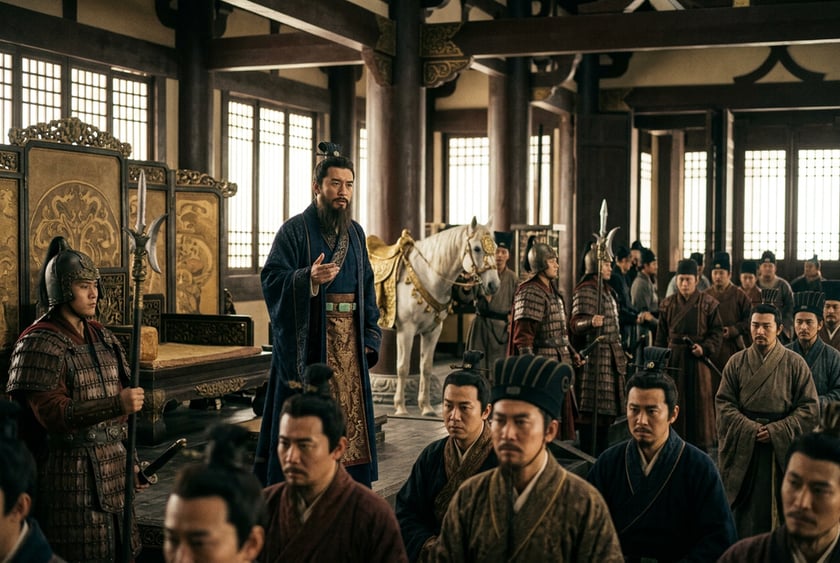
In the first year of Jian’an (196), Emperor Xian of Han returned east from Chang’an to Luoyang. The court was nominally restored, but it lacked a reliable army, food supplies, and administrative control. According to the account in Romance of the Three Kingdoms, Grand Commandant Yang Biao proposed summoning Cao Cao to court to “support the imperial house.” Cao Cao then led troops to escort the emperor, who granted him powers including Colonel of the Sili Province, authority to wield the imperial ax, and oversight of the Secretariat. The escort was therefore not merely a military rescue: it also brought Cao Cao into the heart of court politics, enabling him to expand his influence in the name of serving Han.
Yet Luoyang did not thereby become a dependable political center. The emperor, on his return east, remained caught between various armies, while transport and supplies were difficult to secure. Nor did old military forces such as those of Yang Feng and Han Xian automatically submit to Cao Cao. The novel particularly emphasizes Dong Zhao’s assessment that the generals “each had different intentions,” and presents moving the court to Xu as a way to address the risks of remaining where they were. In other words, escorting the emperor and moving the capital were not the same act: the former gave Cao Cao access to the emperor and the court; the latter sought to turn that opportunity into a more lasting institutional and geographical advantage.
Key Figures
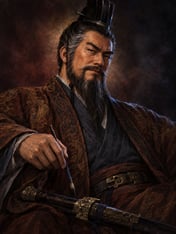
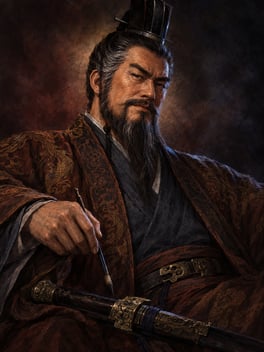
Cao Cao organized the operation, but his power did not arise from personal orders alone. He first entered court as the figure who would campaign against Li Jue and Guo Si and protect the emperor, then used the move of the capital to arrange an armed escort, control the route, and rebuild government offices. The novel has him candidly tell Dong Zhao, “This has long been my intention,” showing that moving the capital was not a temporary emergency measure but part of his political plan. At the same time, Cao Cao needed to frame that plan in terms of grain transport, palaces, and the security of the capital in order to leave less room for open opposition from the ministers.
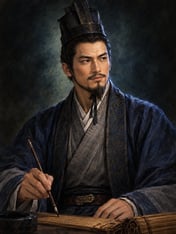
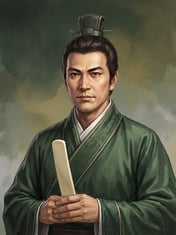
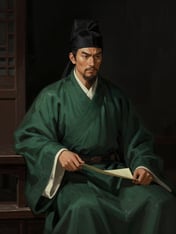
Dong Zhao and Xun Yu represent two complementary modes of political counsel. Dong Zhao proposed moving to Xu, urging that Yang Feng first be reassured, then arguing for the move on the grounds that Luoyang lacked grain and Xu was near Luyang and convenient for transport. In the novel, Xun Yu places Xu and Cao Cao’s rise within an interpretation of the Five Phases and Heaven’s Mandate, lending the decision symbolic legitimacy. This accords with the framing of “Xun Yu's Counsel to Escort the Emperor,” though the available quotations do not present the full process by which he first proposed escorting the emperor. Dong Cheng, Yang Feng, Han Xian, Xu Huang, and others, meanwhile, illustrate the political costs of the move: some were incorporated into the new order, while others used force to resist it. Military strength still determined whether policy could be carried out.
Central Issues
The first issue is whether “serving the Son of Heaven” meant assisting in government or controlling the political center. Cao Cao’s public justification was to punish rebellious ministers and preserve the state. But once the emperor, officials, and government offices had moved to Xu, where Cao Cao could exert influence, edicts and appointments more readily fell within the reach of his military protection. The novel makes this shift quite clear: Cao Cao enters the scene as the emperor’s protector, then takes part in deciding to move the capital, and goes on to rebuild the ancestral temples, altars of soil and grain, and government offices at every level in Xu. Loyalty to the Han house and the concentration of power were not mutually exclusive; the former could provide political legitimacy for the latter.
The second issue is the mutual dependence of coercive force and legitimacy. In name, the move began after the emperor issued an edict; in practice, Cao Cao controlled the escorting army, and the ministers dared not object because they feared his power. When Yang Feng and Han Xian intercepted the party on the way, and Xu Huang cried, “Where are you taking the emperor by force?” the dispute was exposed not merely as an administrative choice but as a contest over the emperor’s freedom of movement and who had the right to protect him. This migration should therefore neither be viewed simply as a voluntary relocation by the court nor reduced to a military abduction. It was a reorganization of power carried out in the emperor’s name, secured by force, and justified in administrative terms to win acceptance.
Political Consequences
The immediate consequence of the move was that Cao Cao brought the scattered and vulnerable court to Xu and set about building palaces, ancestral temples, treasuries, and government offices. The novel says that Dong Cheng and twelve others were made marquises, and that rewards and punishments were “all left to Cao Cao to decide.” This shows that the restoration of institutions in the new capital unfolded alongside Cao Cao’s growing influence over appointments and discipline. The court thus gained a relatively functional political center, but its ability to operate was closely tied to Cao Cao’s army and personal judgment. This made it more likely that government orders could be carried out, while narrowing the space for the emperor and officials to act independently.
Later, Yang Feng and Han Xian were killed by Liu Bei. Liu Bei explained to Cao Cao that he had “removed a threat to the state,” and Cao Cao approved. This part of the narrative shows that the armed forces opposed to the move did not disappear immediately after the court established itself in Xu; they remained active in local politics and were eventually dealt with by other military powers. In chapter 59, the novel later depicts Emperor Xian going outside the city walls to welcome Cao Cao and granting him honors comparable to those once given to Xiao He, bringing Cao Cao’s rise to power to a literary culmination. These chapters, however, span a considerable period, so the later honors should not all be attributed to the move of the capital. The safer conclusion is that Xu provided Cao Cao with an important basis for maintaining his influence over the court.
Counterfactual Analysis
Had Cao Cao not escorted the emperor, the Han court might have remained under the sway of Yang Feng, Han Xian, and other warlords, while Luoyang’s shortages and security problems might not have been quickly resolved. Cao Cao would have lost the opportunity to turn his military advantage into authority in the name of the court. Political competition would more likely have taken the form of open struggles among the various powers for territory and control of the emperor, rather than competition for influence through edicts and official appointments. The available narrative, however, does not say whether other powers could have reliably supplied the court, so it cannot establish that the Han court would inevitably have collapsed or that any particular faction would inevitably have taken control.
Even if the move succeeded but Cao Cao did not control the troops escorting the emperor, Xu might have remained a capital in name only, with the court still held hostage by rival armed factions. Conversely, if Cao Cao controlled the emperor but did not rebuild government offices, ancestral temples, and systems for transporting grain, short-term intimidation would have been difficult to turn into a lasting political order. The novel links Dong Zhao’s strategy, Cao Cao’s military strength, and the court’s institutional relocation in a chain of cause and effect. This suggests that the key to the operation was not simply “bringing the emperor over,” but arranging security, supplies, legitimacy, and administration all at once. The long-term result can therefore be judged to have significantly strengthened Cao Cao’s advantage at the center of government, but within the limits of the material provided, the specific historical outcome should not be established on the basis of the novel’s narrative alone.