Cao Wei · Commander of the Navy
Mao Jie
courtesy name 孝先 · –216
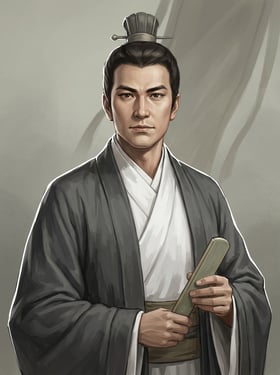
Mao Jie was refined, upright, and impartial, pure and frugal, leading by his own restraint. In charge of appointments, he promoted the honest and substantial, rejected the flashy and false, and curbed factional cliques. Firm and unbending, keeping few partisans, he held office in the time of Cao Wei and esteemed men of pure and plain conduct.

Life
In the novel: 9 chapters · In the Records: 4 volumes
Life?–216
192 CE (Chuping 3)
196 CE (Jian'an 1)
208 CE (Jian'an 13)
Allegiance
- Cao Wei
- Hatched: dated by chapter
- Life event
List all 3 stops
On the boards
Compare with someone →Where this person ranks on each board.
Who they were
Character profile
- Character
- Mao Jie was refined, upright, and impartial, pure and frugal, leading by his own restraint. In charge of appointments, he promoted the honest and substantial, rejected the flashy and false, and curbed factional cliques. Firm and unbending, keeping few partisans, he held office in the time of Cao Wei and esteemed men of pure and plain conduct.
- Manner of speech
- Mao Jie's manner of speech was concise and pointed; he was adept at citing ancient precedents and remonstrating with blunt candor.
- Life
- Mao Jie was a man of Pingqiu in Chenliu. In his youth he served as a county clerk, known for his integrity and fairness. He originally meant to flee the turmoil to Jing Province, but upon hearing that Liu Biao's governance was unclear, he went instead to Luyang. Cao Cao recruited him as an Attendant Officer of the Bureau of Merit; he advised "revere the Son of Heaven to command the unsubmissive," and together with Cui Yan took charge of appointments, recommending only pure and upright men. When the state of Wei was first established, he served as Vice Director of the Masters of Writing, again managing appointments. After Cui Yan's death, Mao Jie was falsely accused over his words, imprisoned, and dismissed, and finally died at home.
- Anecdotes
- Mao Jie was Cao Cao's Attendant Officer of the Bureau of Merit, Eastern Section clerk, and Vice Director of the Masters of Writing, and strongly advocated "revere the Son of Heaven to command the unsubmissive." He once served alongside Ren Jun as Agricultural Commandant of the Household, pressing the collection of money and grain, and is also mentioned as one of Cao Cao's strategists, joining Xun Yu in reading the omens for a night raid on the enemy camp. In the Romance, he was appointed Commander of the Navy and took part in rescuing Wen Ping amid the fire-filled forest.
Historical Record
Mao Jie, courtesy name Xiaoxian, was from Pingqiu in Chenliu. In his youth, he served as a county clerk and became known for his integrity and fairness. When the realm fell into turmoil, he initially planned to seek refuge in Jing Province, but after hearing that Liu Biao’s government was ineffectual, he turned instead to Luyang. After Cao Cao took office in Yanzhou, he recruited Mao Jie to serve as an Attendant in the Central Secretariat. Mao Jie observed that the realm was divided and collapsing, and that the people had been driven from their livelihoods and scattered. He advised Cao Cao to “support the Son of Heaven and command those who defy him,” while also promoting farming and storing military supplies, thereby laying the foundations for his cause. Cao Cao accepted his advice and appointed him to the post of Registrar in the headquarters.
During Cao Cao’s tenure as Minister of Works and Chancellor, Mao Jie served as an East Bureau Assistant and jointly oversaw appointments with Cui Yan. They recommended many upright and honest men, choosing candidates for their character rather than their fame. Mao Jie also maintained a frugal way of life and encouraged scholars to cultivate integrity and self-discipline. Emperor Wen, Cao Pi, once visited Mao Jie in person to ask him to promote one of his close associates, but Mao Jie refused, citing his duty to uphold his office. When the proposal to merge the East Bureau was debated, someone invoked old precedent to argue for its abolition. Cao Cao saw through the motive and instead abolished the West Bureau. Mao Jie was later promoted to Right Military Adviser. When the state of Wei was first established, he became Deputy Director of the Secretariat and again oversaw appointments. Historical accounts and Pei Songzhi’s annotations say that he promoted honest men, rejected ostentation and hypocrisy, curbed factionalism, and influenced officialdom through his own frugality and integrity.
When the choice of heir apparent had not yet been settled, Mao Jie secretly remonstrated with Cao Cao, invoking the lesson of Yuan Shao’s downfall, which had resulted from failing to distinguish between his principal and secondary sons. He urged Cao Cao not to discuss the matter of replacing the heir lightly. Cao Cao called him “the upright officer of the state” and compared him to Zhou Chang. Later, when Cui Yan was put to death, Mao Jie was displeased. Someone accused him of discussing court affairs while attributing the drought to Heaven’s displeasure, and Cao Cao had him arrested and imprisoned. In his defense, Mao Jie cited examples from antiquity of men who had suffered from slander and demanded that the truth be investigated. Huan Jie and He Qia also spoke up on his behalf. Mao Jie was ultimately stripped of office and died at home. Cao Cao provided him with a coffin, household goods, money, and silk, and appointed his son, Mao Ji, as a Gentleman of the Household.
In the Novel
The Romance of the Three Kingdoms portrays Mao Jie as a minister in Cao Cao’s camp with both civil and military abilities, and gives him a role more closely tied to military affairs than the historical accounts do. In Chapter 10, Man Chong and Lu Qian jointly recommend Mao Jie, a native of Pingqiu in Chenliu, and Cao Cao appoints him as an aide. In Chapter 11, he accompanies Cao Cao on a night raid against Lü Bu’s western camp and is listed among the campaign’s commanders. These specific recommendations and the night raid belong to the novel’s narrative; the historical accounts contain no corresponding record.
The novel also assigns Mao Jie various roles in managing grain and funds, appointing officials, and commanding a naval force. Chapter 14 says that he and Ren Jun both served as Commandants of Agricultural Colonies, supervising the collection of grain and funds. Chapter 39 has him serve as an East Bureau Assistant, sharing responsibility for the East and West Bureaus with Cui Yan. In Chapter 45, after Cai Mao and Zhang Yun are killed, he takes over as naval commander alongside Yu Jin. The novel gives him a shifting range of duties in Cao Cao’s army, highlighting him as an all-purpose strategist, administrator, and general. These combinations of appointments and specific experiences should not be treated as historical fact.
In Chapter 24, the wind blows down a blue-and-red command banner as Cao Cao’s army marches. Mao Jie and Xun Yu successively conclude that Liu Bei will raid the camp that night. Cao Cao accordingly lays an ambush and foils the raid by Liu Bei and Zhang Fei. The scene presents Mao Jie as perceptive, able to read omens and discern the enemy’s intentions; the Records of the Three Kingdoms does not record this episode. In the Chibi story, he also commands the navy alongside Yu Jin and later rescues Wen Ping amid the chaos of the fire attack. Such battlefield scenes likewise belong to the novel’s portrayal.
Key Relationships
Mao Jie’s relationship with Cao Cao was that of both a trusted subordinate and a forthright remonstrant. According to the historical accounts, Cao Cao adopted his advice to “support the Son of Heaven and command those who defy him,” praised his frugality, and approved of his uprightness when he refused Cao Pi’s request and urged caution in discussions about the succession. Yet in the case of “making Heaven withhold rain,” Cao Cao had him imprisoned after an accusation was made against him, and ultimately dismissed him from office. Their relationship shifted from trust and reliance to suspicion and punishment, showing Mao Jie’s commitment to justice and his refusal to let power change his principles.
Cui Yan was Mao Jie’s colleague in jointly overseeing appointments. The two were known for their uprightness, conscientious service, and esteem for frugality and integrity. After Cui Yan’s death, Mao Jie’s displeasure also became part of the background to the later accusation against him. Huan Jie and He Qia came to Mao Jie’s defense when he was falsely accused. He Qia urged that the charges be verified, stressing that Mao Jie had always been forthright and loyal to the public good, and should not be convicted on hearsay alone.
Signature Scenes
Proposing a fundamental remedy. Faced with a realm in disarray, insufficient grain reserves, and a people driven from their homes, Mao Jie did not focus solely on immediate military action. Instead, he brought together honoring the Son of Heaven, cultivating land and storing grain, and accumulating military supplies into a single plan for laying the foundations of a cause. Cao Cao respected and adopted his proposal, making Mao Jie an important early contributor to Cao Cao’s political strategy.
Refusing a private request and secretly remonstrating over the heir. When Cao Pi personally asked him to show favor to a relative, Mao Jie put his duties first and refused to act out of favoritism. When the succession remained unsettled, he also invoked Yuan Shao’s downfall to urge caution on Cao Cao. Together, these episodes portray his sense of duty and courage in remonstrating, and explain why Cao Cao called him “the upright officer of the state.”
His defense in the drought case. After Mao Jie was accused of using the drought to criticize the government, he demanded in prison that the accuser’s claims be investigated, rather than allowing the case to be decided solely on reputation or influence. Huan Jie and He Qia pleaded on his behalf, but could not prevent his dismissal. This ending gives his image of upright integrity a political cost, and shows that Cao Cao’s handling of slander ultimately did not lead to Mao Jie’s reinstatement.
The blue-and-red command banner as a warning (unique to the novel). The novel has Mao Jie and Xun Yu infer from the fallen banner and the rising wind that Liu Bei is about to raid the camp, after which Cao Cao sets an ambush and strikes back. The scene recasts Mao Jie, known in the historical accounts for fair appointments and personal frugality, as a strategist who can read the situation in battle, highlighting the contrast between his administrative role in the historical accounts and his military role in the novel.
Quotes
7 lines in the books · 3 featured
今天下分崩,國主遷移,生民废業,饥馑流亡,公家無經歲之儲,百姓無安固之志,難以持久。今袁紹、劉表,雖士民眾强,皆無經遠之虑,未有树基建本者也。夫兵義者勝,守位以財,宜奉天子以令不臣,脩耕植,畜軍资,如此則霸王之業可成也。
This remark laid the strategic foundation for Cao Cao's policy of 'holding the Son of Heaven to command the lords,' with far-reaching influence.
近者袁紹以嫡庶不分,覆宗灭國。废立大事,非所宜聞。
Citing Yuan Shao as an example, Mao Jie warns Cao Cao of the gravity of establishing an heir, reflecting his political foresight.
臣聞萧生缢死,困於石顯;贾子放外,谗在绛、灌;白起賜劍於杜郵;晁错致誅於東市;伍员绝命於吴都:斯數子者,或妒其前,或害其后。……乞蒙宣子之辨,而求王叔之對。若臣以曲聞,即刑之日,方之安驷之赠;賜劍之來,比之重赏之惠。谨以狀對。
This memorial is fierce in its wording, displaying Mao Jie's upright, incorruptible character and his willingness to remonstrate frankly.
- Friends
- Enemies
- Other
Who is Mao Jie connected to?
Pick someone to see how many steps lie between them and Mao Jie.
History vs. novel
8 points · 4 novel-only
| History | Novel |
|---|---|
| First Entering Cao Cao’s StaffNovel embellishes | |
After Cao Cao took control of Yanzhou, he immediately summoned Mao Jie to serve as an Assistant in the Office of Administration. Mao Jie then presented a strategy for establishing a great enterprise. vol. 12 | The novel says that Mao Jie was jointly recommended by Man Chong and Lu Qian, and that Cao Cao only then appointed him as an Assistant, elaborating on a succession of recommendations. ch. 10 |
| Director of Agricultural ColoniesNovel only | |
| — | After Cao Cao made himself Grand General and Marquis of Wuping, he appointed Mao Jie and Ren Jun as Directors of Agricultural Colonies, responsible for supervising the collection of money and grain. ch. 14 |
| Appointments in the Eastern OfficeNovel embellishes | |
Mao Jie and Cui Yan both served as Clerks in the Eastern Office and jointly oversaw appointments, using integrity as the standard for selecting officials. vol. 12 | The novel says that Mao Jie served as a Clerk in the Eastern Office, Cui Yan as a Clerk in the Western Office, and Sima Yi as a Literary Clerk, expanding the roster of officials serving at court. ch. 39 |
| Warning of a Violent WindNovel only | |
| — | As Cao Cao’s army was on the march, a violent wind broke the army’s banner. Mao Jie judged that someone would raid the camp that night, matching Xun Yu’s prediction. ch. 24 |
| Commander of the Chibi FleetNovel only | |
| — | After Cao Cao killed Cai Mao and Zhang Yun, he appointed Mao Jie and Yu Jin as naval commanders in their place. ch. 45 |
| Ships Linked and ReadyNovel only | |
| — | Before the Battle of Chibi, Mao Jie and Yu Jin reported to Cao Cao that the ships had been securely linked and the banners and equipment were ready, and requested orders to advance. ch. 48 |
| Refusing Cao Pi’s RequestHistory only | |
When Cao Pi was General of the Household, he personally asked Mao Jie to find a post for one of his close associates. Mao Jie refused, saying it would violate the proper order of promotion. vol. 12 | — |
| The Effects of Upright AppointmentsHistory only | |
Mao Jie and Cui Yan oversaw appointments, promoting upright men and excluding those of poor character. The historical biography also records that their frugal example influenced scholars throughout the realm. vol. 12 | — |
- First Entering Cao Cao’s StaffNovel embellishes
- History
After Cao Cao took control of Yanzhou, he immediately summoned Mao Jie to serve as an Assistant in the Office of Administration. Mao Jie then presented a strategy for establishing a great enterprise.
vol. 12
- Novel
The novel says that Mao Jie was jointly recommended by Man Chong and Lu Qian, and that Cao Cao only then appointed him as an Assistant, elaborating on a succession of recommendations.
ch. 10
- Director of Agricultural ColoniesNovel only
- Novel
After Cao Cao made himself Grand General and Marquis of Wuping, he appointed Mao Jie and Ren Jun as Directors of Agricultural Colonies, responsible for supervising the collection of money and grain.
ch. 14
- Appointments in the Eastern OfficeNovel embellishes
- History
Mao Jie and Cui Yan both served as Clerks in the Eastern Office and jointly oversaw appointments, using integrity as the standard for selecting officials.
vol. 12
- Novel
The novel says that Mao Jie served as a Clerk in the Eastern Office, Cui Yan as a Clerk in the Western Office, and Sima Yi as a Literary Clerk, expanding the roster of officials serving at court.
ch. 39
- Warning of a Violent WindNovel only
- Novel
As Cao Cao’s army was on the march, a violent wind broke the army’s banner. Mao Jie judged that someone would raid the camp that night, matching Xun Yu’s prediction.
ch. 24
- Commander of the Chibi FleetNovel only
- Novel
After Cao Cao killed Cai Mao and Zhang Yun, he appointed Mao Jie and Yu Jin as naval commanders in their place.
ch. 45
- Ships Linked and ReadyNovel only
- Novel
Before the Battle of Chibi, Mao Jie and Yu Jin reported to Cao Cao that the ships had been securely linked and the banners and equipment were ready, and requested orders to advance.
ch. 48
- Refusing Cao Pi’s RequestHistory only
- History
When Cao Pi was General of the Household, he personally asked Mao Jie to find a post for one of his close associates. Mao Jie refused, saying it would violate the proper order of promotion.
vol. 12
- The Effects of Upright AppointmentsHistory only
- History
Mao Jie and Cui Yan oversaw appointments, promoting upright men and excluding those of poor character. The historical biography also records that their frugal example influenced scholars throughout the realm.
vol. 12
Combat
On the field
Duels, kills and executions as the texts tell them, counted separately for the Records and the Romance.
Stratagems
Plans this person devised or saw through, as the texts tell them.
- Romance
- 0 carried out · 0 worked · 0 turned down · 1 seen through
- RomanceRaid the CampOtherSaw throughagainst Cao troopsCh. 24「飛知中計,急出寨外」
Events
Events (8)
Battles and events the texts place this person in, by date.
Places
- Native of
- ChenliuRecords
- Was at
- Yan ProvinceRecords
Continue
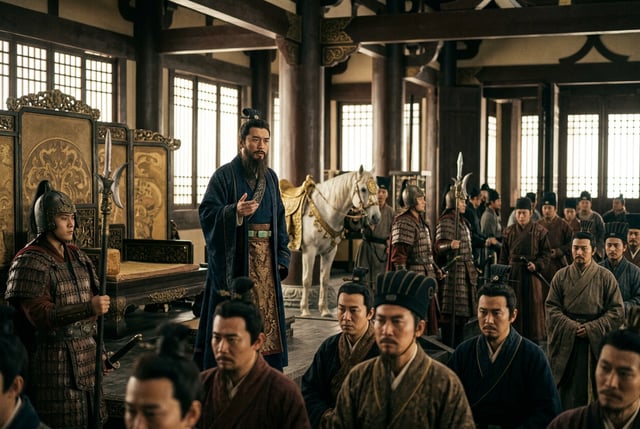
Cao Cao Escorts the Emperor and Moves the Capital to Xu
Relationship timeline3 entries ▸
History · vol. 12
Novel · ch. 24
- Cao Cao§19
Advised
Mao Jie likewise predicted that someone would attack the camp tonight
Inner monologues · AI-generated3 monologues ▸
- I am Mao Jie, courtesy name Xiaoxian. Though I held a high position, all I upheld was integrity, frugality, and fairness
- I am Mao Jie, courtesy name Xiaoxian. Looking back on what I upheld throughout my life, it was no more than to fulfill m
- I am Mao Jie, courtesy name Xiaoxian, from Pingqiu County in Chenliu. In my youth, I served as a county clerk. I sought