Ding Yi
courtesy name 正礼 · –220
Not to be confused with Ding Yi (丁廙, ?–220) — Ding Yi, younger brother of Ding Yi and a Cao Zhi-aligned scholar, reportedly urged Cao Cao to name Cao Zhi heir; Cao Pi executed him.
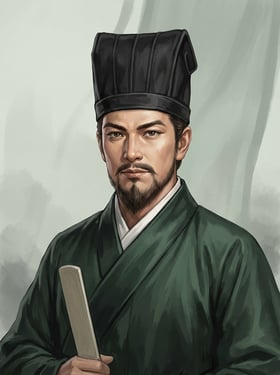
Ding Yi was a partisan of Cao Zhi, and he slandered and brought harm to Cui Yan, Xu Yi, Mao Jie, He Kui, and others.

Life
In the novel: 1 chapter · In the Records: 4 volumes
Life?–220
216 CE (Jian'an 21)
- Death of Cui YanYeInstigator
217 CE (Jian'an 22)
- Succession Struggle Between Cao Pi and Cao ZhiYeKilled in action
220 CE (Huangchu 1)
Appearances
By chapter (5)
Novel
- 79
Records
- 12
- 19
- 21
- 22
- Life event
- Death
List all 2 stops
- Pei StateBirthplace
- Ye216–220Death of Cui Yan+2 more
On the boards
Compare with someone →Where this person ranks on each board.
Who they were
Character profile
- Character
- Ding Yi was a partisan of Cao Zhi, and he slandered and brought harm to Cui Yan, Xu Yi, Mao Jie, He Kui, and others.
- Anecdotes
- Ding Yi was a native of Pei. After Emperor Wen ascended the throne as king, he was executed, and his male offspring were likewise put to death. He had served as Aide of the Western Bureau, and together with Ding Yi and Yang Xiu he served as one of Cao Zhi's wings of support.
Historical Record
Ding Yi, courtesy name Zhengli, was from Pei Commandery. His father, Ding Chong, had been on good terms with Cao Cao in his early years and once urged him to seize the opportunity to help bring order to the realm. Ding Chong later died drunk from excessive drinking. Remembering his old friendship with Ding Chong and having heard that Ding Yi was talented, Cao Cao recruited him as a clerk. Ding Yi had a defect in his eyes, and Cao Cao had once considered marrying his daughter to him. Cao Pi dissuaded him, arguing that women placed great importance on appearance, so Cao Cao instead married his daughter to Cao Mao. Later, while speaking with Ding Yi, Cao Cao admired his clear and incisive thinking and lamented that he should have given his daughter to Ding Yi even if he were blind in both eyes. Ding Yi, for his part, regretted that he had not married a princess. He was close to Cao Zhi and repeatedly praised his exceptional talent. When Cao Cao considered making Cao Zhi his heir, Ding Yi also joined others in supporting the idea. While Cao Zhi held the titles of Marquis of Pingyuan and Marquis of Linzi, Ding Yi, Ding Yi, Yang Xiu, and others were described as his supporters. Cao Cao hesitated for a time, and Cao Zhi came close to becoming heir several times, but Cao Pi ultimately succeeded him. Historical accounts also record that Ding Yi served as a clerk in the Western Bureau and repeatedly pointed out the shortcomings of Mao Jie and Xu Yi. The two men were upright by nature and had few associates, and were saved only through Huan Jie’s protection. Xu Yi also regarded Ding Yi as one of the favored men who had harmed him.
After Cao Pi assumed the throne, he executed Ding Yi, Ding Yi, and their male relatives. Pei Songzhi’s annotation to the Weilüe adds that Cao Pi was wary of Ding Yi because he belonged to Cao Zhi’s faction: Cao Pi once reassigned him as a deputy censor, intending to make him take his own life, but Ding Yi failed to do so. He then kowtowed to Xiahou Shang, commander of the Central Army, and begged for mercy. Xiahou Shang wept for him but could not save him. Ding Yi later died after being taken into custody and imprisoned over an official matter. The historical accounts thus portray him both as a talented official under the Cao clan and as an active supporter of Cao Zhi’s faction; his fate was tied to the political purge that followed Cao Pi’s accession. The Records of the Three Kingdoms also lists Ding Yi alongside Ding Yi and Yang Xiu as men of literary talent who were not included among the seven leading literary figures of the time, noting that the account of them appears in the biography of Chen Si Wang.
In the Novel
Chapter 79 of Romance of the Three Kingdoms portrays Ding Yi as a man of letters and loyal factional supporter at Cao Zhi’s side, turning Cao Pi’s confrontation with Cao Zhi into a specific dramatic scene. In the novel, after Cao Zhi is ordered to take up his fief, he fails to attend Cao Cao’s funeral, and Cao Pi sends an emissary to demand an explanation. The emissary reports back that Cao Zhi was drinking with Ding Yi and Ding Yi. Ding Yi rebukes the emissary to his face, accusing him of obstructing the late ruler’s wish to make Cao Zhi heir through slander. Ding Yi also defends Cao Zhi, calling him exceptionally intelligent and deserving of the succession. Cao Zhi then orders his guards to beat the emissary out with staves. This heated exchange depicts Ding Yi as a supporter of Cao Zhi bold enough to openly defy the new ruler. Although the Records of the Three Kingdoms records that he was close to Cao Zhi and repeatedly praised his talent, it contains no such confrontation with the emissary or face-to-face denunciation; this should be regarded as a fictional embellishment.
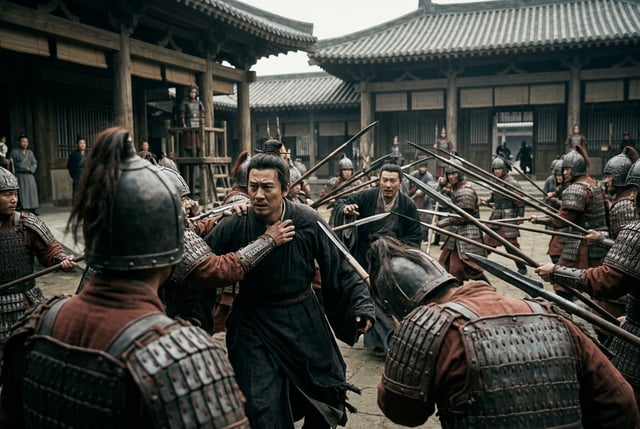
The novel goes on to say that Cao Pi orders Xu Chu to lead three thousand Tiger Guards to Linzi to seize them. Xu Chu kills the officer defending the city and storms into the residence hall, where he finds Cao Zhi, Ding Yi, and Ding Yi all passed out drunk. He has them bound and taken to Ye Commandery. Cao Pi orders Ding Yi and Ding Yi executed first, calling them “literary men of their time” and conveying people’s regret at their deaths. Being seized while drunk, Xu Chu leading troops into the city, and the Ding brothers being executed first are all dramatic inventions in Romance of the Three Kingdoms. The historical accounts record only that, after Cao Pi assumed the throne, he executed Ding Yi, Ding Yi, and their male relatives, and that Ding Yi was put to death in prison over an official matter; they do not contain the specific scenes described above.
Key Relationships
Cao Zhi: Ding Yi was close to Cao Zhi and repeatedly praised his remarkable talent. When Cao Cao considered making Cao Zhi his heir, Ding Yi also supported the idea. The historical accounts describe Ding Yi, Ding Yi, Yang Xiu, and others as Cao Zhi’s supporters, while the novel turns this political backing into a scene in which Ding Yi rebukes an emissary to Cao Zhi’s face and defends his claim to the succession.
Cao Pi: Cao Pi opposed Ding Yi’s political allegiance to Cao Zhi. When Cao Cao initially wanted to marry his daughter to Ding Yi, Cao Pi objected on the grounds of Ding Yi’s appearance. After Cao Pi later assumed the throne, Ding Yi was executed. The novel further depicts Cao Pi sending troops to seize him and ordering the immediate execution of the Ding brothers.
Ding Yi: Ding Yi’s younger brother, courtesy name Jingli, he belonged to Cao Zhi’s faction along with his elder brother and was executed with him after Cao Pi’s accession. In the novel, the brothers jointly defend Cao Zhi and are captured while drinking; these specific events are unique to the novel.
Mao Jie and Xu Yi: The historical accounts say that Ding Yi repeatedly criticized the two men’s shortcomings, and that Xu Yi was also described as having been harmed by a favored man. Huan Jie once protected Mao Jie and Xu Yi. Ding Yi’s dealings with the two show that he was involved not only in Cao Zhi’s succession faction but also in personal rivalries among Cao Cao’s officials.
Defining Scenes
Cao Cao’s admiration for his talent and marriage discussion: Having heard of Ding Yi’s fine reputation, Cao Cao once planned to marry his beloved daughter to him. Cao Pi dissuaded him, citing Ding Yi’s impaired eyesight and arguing that women valued appearance. After speaking with Ding Yi, Cao Cao praised his talent and said he would have given him his daughter even if he were blind in both eyes, remarking that his son had thwarted his plans. This account in Pei Songzhi’s annotations juxtaposes Ding Yi’s reputation, his eye condition, and his regret over the marriage, while also explaining the early discord between him and Cao Pi.
Purged for supporting Cao Zhi: Ding Yi was close to Cao Zhi and praised his exceptional talent; he also supported Cao Zhi when Cao Cao considered naming an heir. After Cao Pi assumed the throne, Ding Yi was reassigned as a deputy censor and then imprisoned and executed over an official matter. The historical accounts also say that he kowtowed to Xiahou Shang and begged for mercy but was not saved, marking the crucial turn in his fortunes from being valued for his talent to falling from political favor.
Drinking in Linzi and capture (unique to the novel): The novel has Cao Zhi, Ding Yi, and Ding Yi passed out drunk in the residence at Linzi. Xu Chu leads troops into the compound, binds the three men, and takes them to Ye Commandery; Cao Pi executes the Ding brothers first. The scene uses their drunken state and the sudden raid to heighten the abrupt reversal of fortune, turning the historical accounts’ summary of the executions into a visible stage scene. The Records of the Three Kingdoms does not record this capture in Linzi.
- Lord & vassal
- Enemies
Who is Ding Yi connected to?
Pick someone to see how many steps lie between them and Ding Yi.
History vs. novel
5 points
| History | Novel |
|---|---|
| Ding Yi Helps Cao Zhi Contest the SuccessionNovel embellishes | |
Cao Cao once considered making Cao Zhi his heir. Ding Yi, Ding Yi, Yang Xiu, and others supported Cao Zhi, and Cao Cao hesitated for a time vol. 19 | An envoy from Linzi reported that the Ding Yi brothers had been drinking with Cao Zhi and had accused Cao Pi of prosecuting his own kin. The novel uses this to highlight their support for Cao Zhi ch. 79 |
| Cao Cao Seeks to Marry His Daughter to Ding YiHistory only | |
Cao Cao once wanted to marry his beloved daughter to Ding Yi, but later followed Cao Pi's advice and married her to someone else. After debating with Ding Yi, Cao Cao praised his talent and regretted his earlier decision vol. 19 | — |
| Ding Yi Slanders Xu YiHistory only | |
Ding Yi and others tried to marginalize Xu Yi because he was favored, but Xu Yi remained unmoved. Pei Songzhi's annotation also recounts how Ding Yi drove a wedge between Xu Yi and Cui Yan vol. 12 | — |
| Ding Yi Frames Mao JieHistory only | |
Mao Jie and Xu Yi were upright and had few allies, which displeased Ding Yi. Ding Yi repeatedly pointed out their shortcomings, and they were saved only because Huan Jie defended them vol. 22 | — |
| The Circumstances of Ding Yi's ExecutionNovel embellishes | |
After Cao Pi became king, he sought to punish Ding Yi. He once reassigned him as Right Inspector of Criminals, intending to force him to take his own life. Ding Yi kowtowed to Xiahou Shang to plead for mercy, but was later arrested and executed over official business vol. 19 | The Romance of the Three Kingdoms depicts Cao Pi sending someone to prosecute Cao Zhi. Ding Yi rebukes the envoy to his face, and Cao Zhi orders his guards to beat the envoy out with clubs. This confrontation is not recorded in the Records of the Three Kingdoms ch. 79 |
- Ding Yi Helps Cao Zhi Contest the SuccessionNovel embellishes
- History
Cao Cao once considered making Cao Zhi his heir. Ding Yi, Ding Yi, Yang Xiu, and others supported Cao Zhi, and Cao Cao hesitated for a time
vol. 19
- Novel
An envoy from Linzi reported that the Ding Yi brothers had been drinking with Cao Zhi and had accused Cao Pi of prosecuting his own kin. The novel uses this to highlight their support for Cao Zhi
ch. 79
- Cao Cao Seeks to Marry His Daughter to Ding YiHistory only
- History
Cao Cao once wanted to marry his beloved daughter to Ding Yi, but later followed Cao Pi's advice and married her to someone else. After debating with Ding Yi, Cao Cao praised his talent and regretted his earlier decision
vol. 19
- Ding Yi Slanders Xu YiHistory only
- History
Ding Yi and others tried to marginalize Xu Yi because he was favored, but Xu Yi remained unmoved. Pei Songzhi's annotation also recounts how Ding Yi drove a wedge between Xu Yi and Cui Yan
vol. 12
- Ding Yi Frames Mao JieHistory only
- History
Mao Jie and Xu Yi were upright and had few allies, which displeased Ding Yi. Ding Yi repeatedly pointed out their shortcomings, and they were saved only because Huan Jie defended them
vol. 22
- The Circumstances of Ding Yi's ExecutionNovel embellishes
- History
After Cao Pi became king, he sought to punish Ding Yi. He once reassigned him as Right Inspector of Criminals, intending to force him to take his own life. Ding Yi kowtowed to Xiahou Shang to plead for mercy, but was later arrested and executed over official business
vol. 19
- Novel
The Romance of the Three Kingdoms depicts Cao Pi sending someone to prosecute Cao Zhi. Ding Yi rebukes the envoy to his face, and Cao Zhi orders his guards to beat the envoy out with clubs. This confrontation is not recorded in the Records of the Three Kingdoms
ch. 79
Combat
On the field
Duels, kills and executions as the texts tell them, counted separately for the Records and the Romance.
Events
Events (3)
Battles and events the texts place this person in, by date.
Other events
- 216Death of Cui YanInstigator
- 217Succession Struggle Between Cao Pi and Cao ZhiKilled in action
- 220Execution of Ding Yi and Ding YiVictim
Places
- Native of
- Pei StateRecords
Continue
Execution of Ding Yi and Ding Yi
Relationship timeline5 entries ▸
Inner monologues · AI-generated1 monologue ▸
- Since the Jian’an era, the realm had been unsettled, and each renowned scholar and worthy talent held to his own princip