Cao Wei · Vanguard Military Adviser
Zhong Yao
courtesy name 元常 · 151–230
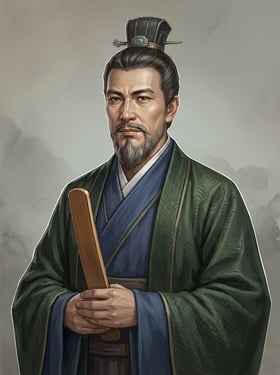
Zhong Yao excelled at strategy and decision, and his authority and renown were long established. He loved antiquity and set store by the debate over corporal punishment. He was close to Xun You, and once managed Xun You's household affairs and arranged for his concubine to be married off.

Life
In the novel: 7 chapters · In the Records: 17 volumes
Life151–230
195 CE (Xingping 2)
196 CE (Jian'an 1)
202 CE (Jian'an 7)
1 more event
210 CE (Jian'an 15)
216 CE (Jian'an 21)
219 CE (Jian'an 24)
- Wei Feng's ConspiracyYeVictim
Allegiance
- Cao Wei
- Hatched: dated by chapter
- Life event
- Death
List all 4 stops
On the boards
Compare with someone →Where this person ranks on each board.
Who they were
Character profile
- Character
- Zhong Yao excelled at strategy and decision, and his authority and renown were long established. He loved antiquity and set store by the debate over corporal punishment. He was close to Xun You, and once managed Xun You's household affairs and arranged for his concubine to be married off.
- Manner of speech
- Zhong Yao was skilled at quoting the arts of war—for instance, 'Sunzi says: know the enemy and know yourself, and in a hundred battles you will be victorious a hundred times'—and his recommendations were well grounded.
- Life
- Zhong Yao was a man of Changshe in Yingchuan, styled Yuanchang. In his youth he was nominated as filial and incorrupt, and he served successively as Gentleman of the Masters of Writing, Prefect of Yangling, Justice of the Commandant of Justice, and Yellow Gate Attendant. He took part in the plan to escort the Son of Heaven eastward out of Chang'an, and as Palace Attendant and acting Colonel Director of Retainers, holding the imperial tally, he oversaw the armies of Guanzhong, pacified Ma Teng and Han Sui, and quelled uprisings in several places. When the state of Wei was first established he was made Grand Judge and then promoted to Chancellor, but was dismissed on account of the case of Wei Feng's conspiracy. After Emperor Wen ascended the throne he was reinstated as Grand Judge, transferred to Commandant of Justice, advanced in fief as Marquis of Chonggao District, and promoted to Grand Commandant. After Emperor Ming took the throne he was advanced in fief as Marquis of Dingling and promoted to Grand Tutor. He died in the fourth year of the Taihe era, with the posthumous title of Marquis Cheng.
- Anecdotes
- Zhong Yao was a senior minister of Cao Wei, serving as Grand Tutor, Commandant of Justice, and Chancellor, and is one of the subjects of this biography. He and his kinsman-uncle Zhong Yu once encountered a physiognomist who foretold that they would 'come to grief by water,' a prophecy that was borne out. Xu Jing once compared Zhang Yi to Zhong Yao, and he was the father of Zhong Hui and Zhong Yu.
Historical Record
Zhong Yao, courtesy name Yuanchang, was from Changshe, Yingchuan. As a young man, he was recommended as a Filial and Incorrupt official, and later served as Gentleman of the Secretariat, Magistrate of Yangling, Deputy Commandant of Justice, and Attendant at the Yellow Gates. When Li Jue and Guo Si controlled Emperor Xian of Han and cut off contact with the eastern regions, Zhong Yao urged them to receive Cao Cao’s envoys, restoring communication between Cao Cao and the imperial court. The emperor was able to leave Chang’an, and Zhong Yao also took part in planning the move. He later served as Palace Attendant and Acting Colonel-Director of Retainers, holding the authority of a tally to supervise the armies in Guanzhong. He pacified Ma Teng and Han Sui, and sent Cao Cao’s army more than two thousand horses. Cao Cao praised him as a Xiao He who guarded Guanzhong and supplied the army with provisions.
Guo Yuan, appointed by Yuan Shang, attacked Hedong. While the generals debated retreating, Zhong Yao judged Guo Yuan to be headstrong and contemptuous of the enemy, and advocated attacking while his forces were still crossing the Fen River. He arranged for Ma Teng’s forces to join them, defeated Guo Yuan, and had him beheaded; the Southern Xiongnu chanyu submitted. Later, Zhong Yao also led troops to suppress the rebellion of Wei Gu and others. He relocated the people of Guanzhong and took in refugees, gradually replenishing the population around Luoyang.
After the establishment of the state of Wei, Zhong Yao served as Grand Minister of Justice and then as Chancellor. In the twenty-first year of Jian’an, Cao Cao Elevated to King of Wei, and Zhong Yao became Chancellor that same year. He was later dismissed from office because his subordinate Wei Feng plotted a rebellion. After Emperor Wen ascended the throne, Zhong Yao again served as Grand Minister of Justice, was renamed Minister of Justice, and was subsequently promoted to Grand Commandant. After Emperor Ming ascended the throne, he was ennobled and promoted to Grand Tutor. Zhong Yao once advocated restoring some forms of corporal punishment to reduce the use of the death penalty, but the proposal was not implemented. He died in the fourth year of Taihe. Emperor Ming wore plain mourning clothes to pay his respects, and Zhong Yao was posthumously titled Marquis Cheng.
In the Novel
In Romance of the Three Kingdoms, Zhong Yao appears as a civil official in Cao Cao’s camp. In the scene of the poetry gathering at the Bronze Sparrow Terrace, he joins Wang Lang, Wang Can, Chen Lin, and others in presenting poems praising Cao Cao’s achievements and virtue. Through this, the novel depicts the officials exalting Cao Cao, while Cao Cao declares his own loyalty to the Han court.
The novel gives the Guanzhong campaign a different, more dramatic treatment. As commandant of Chang’an, Zhong Yao confronts Ma Dai but is routed without striking a single blow. After Ma Chao and Han Sui besiege the city, Zhong Yao initially holds it, but ultimately abandons it and flees when Pang De launches a nighttime attack and opens the gates. The Records of the Three Kingdoms records that Zhong Yao supervised the armies in Guanzhong and pacified the region; it does not mention the fall of Chang’an or a battle with Ma Dai.
When Cao Cao is named King of Wei, the novel also has Zhong Yao ordered to draft the edict appointing him. The Records of the Three Kingdoms records that Emperor Xian elevated Cao Cao to King of Wei and that Zhong Yao became Chancellor, but does not mention Zhong Yao drafting the edict. After Cao Rui ascends the throne, the novel has the Grand Tutor Zhong Yao, as a senior courtier, recommend Sima Yi, believing he can repel the Shu army. This recommendation appears in the novel.
Key Relationships
Zhong Yao was closely associated with Cao Cao: he persuaded Li Jue and Guo Si to let Cao Cao’s envoys pass, was ordered to administer Guanzhong, and supplied horses to support Cao Cao during his standoff with Yuan Shao. Cao Cao relied on his ability to stabilize the western regions and maintain ties with the generals in Guanzhong.
Ma Teng and Han Sui were both powers in Guanzhong whom Zhong Yao pacified and contacted, and they also took part in the joint attack on Guo Yuan. Ma Chao, in turn, led troops to join them at his father’s order. Zhong Yao won by analyzing the enemy general’s temperament and choosing to attack while his forces were still crossing the river. While Cao Pi was Crown Prince, he gifted Zhong Yao a five-flavor cauldron and composed an inscription for it, praising his service to Wei. During Emperor Ming’s reign, Zhong Yao was promoted to Grand Tutor.
Zhong Yao and Wang Lang held opposing views in debates on criminal law: Zhong Yao advocated restoring some forms of corporal punishment, while Wang Lang opposed replacing the death penalty with amputation of the feet. The debate was ultimately set aside. His son Zhong Yu inherited his title; the novel additionally describes Zhong Yao as Zhong Hui Zhi Fu and says he once brought both his sons to meet Emperor Wen. (Novel only)
Signature Scenes
Guo Yuan’s crossing of the Fen River is a representative example of Zhong Yao’s military judgment. When his officers argued for retreat, he did not abandon Hedong simply because of the enemy’s imposing presence. Instead, he pointed out that Guo Yuan was arrogant and might attempt to cross rashly. Zhong Yao attacked before the enemy had finished crossing, ultimately routing them, beheading Guo Yuan, and securing the chanyu’s submission.
Another important image is not of the battlefield, but of administration in Guanzhong: Zhong Yao persuaded Ma Teng and Han Sui to submit, sent warhorses to support the front, and relocated people to replenish the population around Luoyang. Cao Cao compared his work guarding the region and supplying the army to that of Xiao He, showing Zhong Yao’s dual role in military coordination and civil administration.
The novel, by contrast, creates a dramatic reversal with the fall of Chang’an: Zhong Yao sees through the possibility that a retreat may be a ruse, yet when Ma Chao’s army approaches again, he still opens the city gates so the soldiers and civilians can fetch water and gather firewood. Pang De then launches a nighttime attack and breaks through the gates, forcing Zhong Yao to abandon the city. (Novel only)
Quotes
11 lines in the books · 3 featured
「凡為將者,知過於人,則能制人。孫子云:『知彼知己,百戰百勝。』臣量曹真雖久用兵,非諸葛亮對手。臣以全家良賤保舉一人,可退蜀兵。未知聖意准否?」
This line quotes Sun Tzu's Art of War, reflecting Zhong Yao's military insight and his ability to judge men.
「古之肉刑,更歷聖人,宜復施行,以代死刑。」
Zhong Yao advocated restoring corporal punishment, reflecting his Legalist thought and his distinctive views on penal law.
「吾與公達曾共使朱建平相,建平曰:『荀君雖少,然當以後事付鍾君。』吾時啁之曰:『惟當嫁卿阿騖耳。』何意此子竟早隕沒,戲言遂驗乎!今欲嫁阿騖,使得善處。追思建平之妙,雖唐舉、許負何以復加也!」
This line reveals the deep friendship between Zhong Yao and Xun Yu, as well as his faith in physiognomy.
- Family
- Lord & vassal
- Friends
- Enemies
- Other
Who is Zhong Yao connected to?
Pick someone to see how many steps lie between them and Zhong Yao.
History vs. novel
8 points · 3 novel-only
| History | Novel |
|---|---|
| Meeting Ma Dai in BattleNovel only | |
| — | The novel says that Ma Chao and Han Sui attacked Chang'an, and Zhong Yao personally rode out of the city to meet Ma Dai in battle. But before they could exchange a single blow, he was defeated and fled, then went up onto the city wall to defend the city. ch. 58 |
| Elevated to King of Wei and Presented with PoemsNovel only | |
| — | When Cao Cao sought elevation to King of Wei, Zhong Yao and other civil officials, including Wang Lang, presented poems praising Cao Cao’s merits and hinting that he was destined by Heaven to receive the title. ch. 56 |
| Appointed ChancellorNovel embellishes | |
When the state of Wei was first established, Zhong Yao was transferred from Grand Minister of Justice to Chancellor. The historical records merely note this appointment. vol. 13 | After the Geng Ji and Wei Huang rebellion was put down, the novel says Cao Cao appointed Zhong Yao Chancellor and simultaneously revised the system of official posts and noble titles. ch. 69 |
| Entrusted with Cao Pi’s HeirNovel embellishes | |
After Cao Pi ascended the throne, Zhong Yao first served as Grand Minister of Justice, then became Minister of Justice and was promoted to Grand Commandant. The historical records say that Cao Pi called Zhong Yao and the other two Three Excellencies great men of their age. vol. 13 | The novel says that, on his deathbed, Cao Pi entrusted the young Cao Rui to Cao Zhen, Chen Qun, Sima Yi, and others. After Cao Rui ascended the throne, Zhong Yao was enfeoffed as Grand Tutor. ch. 91 |
| Recommending Sima YiNovel only | |
| — | During Zhuge Liang's Northern Expeditions, when Cao Zhen suffered setbacks, Zhong Yao strongly recommended Sima Yi to Cao Rui, saying that recalling him to service would drive back the Shu army. ch. 94 |
| Tian Chou Declines EnfeoffmentHistory only | |
When Cao Cao wanted to enfeoff Tian Chou, the heir apparent Cao Pi, Xun Yu, and Zhong Yao all argued that his refusal should be accepted. Zhong Yao held that although Tian Chou’s stance did not accord with the greater principles of righteousness, it would help promote a spirit of humility. vol. 11 | — |
| Advocating the Restoration of Corporal PunishmentHistory only | |
Zhong Yao advocated restoring corporal punishment to replace some death sentences, arguing that it could save three thousand people each year. Wang Lang and others opposed the proposal, which was ultimately shelved. vol. 13 | — |
| Caring for Xun You’s FamilyHistory only | |
After Xun You died, he left behind young children. Zhong Yao took care of his family’s affairs and planned to find a new husband for Xun You’s concubine. vol. 29 | — |
- Meeting Ma Dai in BattleNovel only
- Novel
The novel says that Ma Chao and Han Sui attacked Chang'an, and Zhong Yao personally rode out of the city to meet Ma Dai in battle. But before they could exchange a single blow, he was defeated and fled, then went up onto the city wall to defend the city.
ch. 58
- Elevated to King of Wei and Presented with PoemsNovel only
- Novel
When Cao Cao sought elevation to King of Wei, Zhong Yao and other civil officials, including Wang Lang, presented poems praising Cao Cao’s merits and hinting that he was destined by Heaven to receive the title.
ch. 56
- Appointed ChancellorNovel embellishes
- History
When the state of Wei was first established, Zhong Yao was transferred from Grand Minister of Justice to Chancellor. The historical records merely note this appointment.
vol. 13
- Novel
After the Geng Ji and Wei Huang rebellion was put down, the novel says Cao Cao appointed Zhong Yao Chancellor and simultaneously revised the system of official posts and noble titles.
ch. 69
- Entrusted with Cao Pi’s HeirNovel embellishes
- History
After Cao Pi ascended the throne, Zhong Yao first served as Grand Minister of Justice, then became Minister of Justice and was promoted to Grand Commandant. The historical records say that Cao Pi called Zhong Yao and the other two Three Excellencies great men of their age.
vol. 13
- Novel
The novel says that, on his deathbed, Cao Pi entrusted the young Cao Rui to Cao Zhen, Chen Qun, Sima Yi, and others. After Cao Rui ascended the throne, Zhong Yao was enfeoffed as Grand Tutor.
ch. 91
- Recommending Sima YiNovel only
- Novel
During Zhuge Liang's Northern Expeditions, when Cao Zhen suffered setbacks, Zhong Yao strongly recommended Sima Yi to Cao Rui, saying that recalling him to service would drive back the Shu army.
ch. 94
- Tian Chou Declines EnfeoffmentHistory only
- History
When Cao Cao wanted to enfeoff Tian Chou, the heir apparent Cao Pi, Xun Yu, and Zhong Yao all argued that his refusal should be accepted. Zhong Yao held that although Tian Chou’s stance did not accord with the greater principles of righteousness, it would help promote a spirit of humility.
vol. 11
- Advocating the Restoration of Corporal PunishmentHistory only
- History
Zhong Yao advocated restoring corporal punishment to replace some death sentences, arguing that it could save three thousand people each year. Wang Lang and others opposed the proposal, which was ultimately shelved.
vol. 13
- Caring for Xun You’s FamilyHistory only
- History
After Xun You died, he left behind young children. Zhong Yao took care of his family’s affairs and planned to find a new husband for Xun You’s concubine.
vol. 29
Combat
On the field
Duels, kills and executions as the texts tell them, counted separately for the Records and the Romance.
- RomanceCh. 58DuelMa DaiLost「不一合,繇大敗奔走」
Stratagems
Plans this person devised or saw through, as the texts tell them.
- Records
- 3 carried out · 3 worked · 0 turned down · 0 seen through
- RecordsPlan to Get the Emperor OutOtherWorkedagainst Li JueJuan 13「後傕脅天子,繇與尚書郎韓斌同策謀。天子得出長安,繇有力焉」
- RecordsAttack While They Are CrossingAmbushWorkedagainst the Yuan clanJuan 13「援至,果輕渡汾,衆止之,不從。濟水未半,擊,大破之」
- RecordsAlly with Ma Teng to Strike the ReinforcementsPersuasionWorkedagainst Yuan ShangJuan 15「司隷校尉鍾繇遣旣說將軍馬騰等,旣為言利害,騰等從之」
Events
Events (6)
Battles and events the texts place this person in, by date.
Other events
- 195Zhong Yao Helps the Emperor Flee Chang'anAdvisor
- 196Zhong Yao Superintends GuanzhongCommander
- 202Zhong Yao Defeats Guo Yuan and Receives the Xiongnu Chanyu's SubmissionCommander
- 210Bronze Bird Terrace Inauguration CeremonyWitness
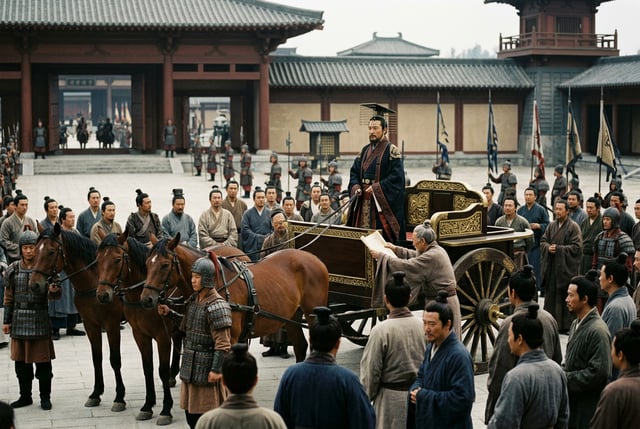
- 216Cao Cao Created King of WeiAdvisor
- 219Wei Feng's ConspiracyVictim
Places
- Native of
- YingchuanRecords
- Governed
- Sili ProvinceRecords
Continue
Cao Cao Created King of Wei
Relationship timeline19 entries ▸
History · vol. 10
- Ma Teng§23
Commands
Zhong Yao led Ma Teng and others in defeating Gao Gan and Guo Yuan
History · vol. 11
- Tian Chou§31
Advised
He argued that the heir apparent’s proposal was appropriate and agreed to Tian Chou’s refusal.
- Wang Xiu§37
Advised
the Chancellor adhered to the old practice that "each of the Nine Ministers occupies his own office"; Xiu replied, "Having received its emoluments, how could one avoid its troubles?"
History · vol. 12
History · vol. 13
- Zhong Yu§3
Kin
Clan uncle; You and his clan uncle Yu both arrived in Luoyang
- Han Bin§3
Friend
conspired with Gentleman of the Secretariat Han Bin to help the Son of Heaven leave Chang'an
- Ma Teng§4
Friend
Sent a letter setting out the possible disaster and good fortune; Teng sent his son to attend at court; later he also sent his son Chao with elite troops to join in attacking Guo Yuan.
- Han Sui§4
Friend
Sent a letter setting out the possible disaster and good fortune, and consequently sent his son to attend at court.
- Guo Yuan§4
Enemy
besieged the Xiongnu chanyu at Pingyang; when Guo Yuan had crossed less than halfway over the Fen River, attacked him and beheaded Yuan
- Cao Pi§5
Lord
When Emperor Wen was in the Eastern Palace, he gave You a five-compartment cooking cauldron and composed an inscription for it
- Hua Xin§5
Friend
simultaneously held the offices of Grand Commandant and Minister over the Masses
Rival
discussed corporal punishment at court; Lang advocated shaving the head and cutting off the feet instead of execution, rebutting Yao’s proposal to restore corporal punishment
- Zhong Yu§7
Child
father and son; his son Yu succeeded him
- Zhong Hui§12
Child
father and son; Zhong Yu's younger brother Hui had his own biography; both were sons of You
All 19
Loading…
Inner monologues · AI-generated3 monologues ▸
- My name is Yao, and my courtesy name is Yuanchang. Looking back on my early years, the realm was in turmoil, and neither
- I am Zhong Yao, courtesy name Yuanchang. Looking back on my life, much of it was spent amid the laws of the court and th
- I am Zhong Yao, courtesy name Yuanchang. Whenever I recall the military upheaval in Chang'an and the Son of Heaven drive