Cao Wei · Minister of Agriculture; Palace Attendant
Wang Xiu
courtesy name 叔治
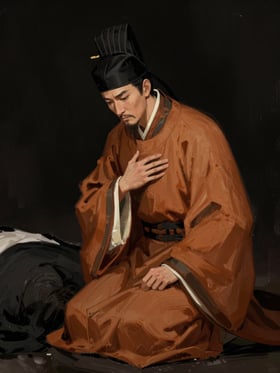
Wang Xiu served Kong Rong, Yuan Tan, and Cao Cao, famed for admonishing Yuan Tan, risking himself to seek his burial, and a palace-gate rescue.
Life
In the novel: 2 chapters · In the Records: 1 volume
Allegiance
- Cao Wei
- Yuan Shao's Faction· Undated
- Hatched: dated by chapter
On the boards
Compare with someone →Where this person ranks on each board.
Historical Record
Wang Xiu, courtesy name Shuzhi, was from Yingling in Beihai. He lost his mother at the age of seven; she died on the day of the community sacrifice. The following year, when the neighbors held the sacrifice, he thought of his mother and grieved deeply, so the neighbors stopped the ceremony. At twenty, he went to Nanyang to study and lodged with Zhang Feng. When everyone in the Zhang household fell ill and had no one to care for them, Wang Xiu personally tended to them and did not leave until they had recovered. During the Chuping era, Kong Rong appointed him chief clerk and concurrently made him acting magistrate of Gaomi. A powerful local Sun clan sheltered lawbreakers. Wang Xiu led officials and commoners to surround their home, strictly ordering that anyone who failed to attack would be deemed equally guilty, thereby forcing the Sun clan to hand over the thieves. Later, while acting as magistrate of Jiaodong, he dealt with Gongsha Lu, who refused to comply with a summons, and pacified the rest of his clan. When Kong Rong fell into danger, Wang Xiu hurried to his aid through the night. Kong Rong said that Wang Xiu would surely risk himself to come, and thereafter relied on him repeatedly to escape danger.
Kong Rong recommended Wang Xiu for the position of Filial and Incorrupt, but Wang Xiu tried to yield the honor to Bing Yuan and was not permitted to do so. When Yuan Tan was in Qing Province, he recruited Wang Xiu as an Attendant Official in the Office of Administration, later appointing him as an aide-de-camp. Liu Xian once slandered him; later, when Liu Xian was convicted and sentenced to death, Wang Xiu still pleaded on his behalf and secured his reprieve. When Yuan Tan and Yuan Shang went to war, Wang Xiu repeatedly remonstrated with Yuan Tan, comparing brothers to a person’s left and right hands and opposing their attacks on one another. Yuan Tan did not listen. During the Battle of Nanpi, hearing that Yuan Tan was in peril, Wang Xiu led troops to his aid. When he reached Gaomi and learned that Yuan Tan was already dead, he asked Cao Cao for permission to gather and bury Yuan Tan’s body. Cao Cao did not answer at first. Wang Xiu again declared that he had received great kindness from the Yuan clan and would have no regrets even if he were executed after burying Yuan Tan, whereupon Cao Cao granted his request. He also pleaded for the release of Guan Tong, the Administrator of Lean, who refused to surrender, and Guan Tong was pardoned. Cao Cao inspected Wang Xiu’s household possessions and found fewer than ten hu of grain but several hundred volumes of books. He therefore courteously recruited him as an Assistant in the Office of the Excellency of Works and Acting General of the Office of Metal; Wang Xiu later became Administrator of Wei Commandery. In office, Wang Xiu curbed the powerful and supported the weak, meting out rewards and punishments fairly.
After the establishment of the state of Wei, Wang Xiu served as Director of the Court of Agriculture. He opposed the use of corporal punishment then in force, and Cao Cao accepted his proposal. Wang Xiu was later transferred to the post of Fengchang. When Yan Cai rebelled and attacked the palace gates, Wang Xiu heard of the upheaval and immediately hurried there on foot with his subordinates. Zhong Yao cited the old rule that, in the event of trouble in the capital, the Nine Ministers should remain at their respective offices. Wang Xiu replied, “If we take their emoluments, how can we avoid their dangers?” He died in office not long afterward. In his youth, he recognized the talents of Gao Rou and Wang Ji, both of whom later became well known.
In the Novel
The Romance of the Three Kingdoms portrays Wang Xiu as a Qing Province aide-de-camp at Yuan Tan’s side, frank in speech and steadfast in loyalty and principle. In Chapter 32, as Yuan Tan, caught up in a dispute over succession by seniority, listened to Guo Tu’s plan to murder Yuan Shang and Shen Pei, Wang Xiu arrived in time and compared brothers to “left and right hands,” urging Yuan Tan not to let others’ provocation make him cut off his own limbs. The central argument in this passage closely resembles the account in the Records of the Three Kingdoms, but the novel makes the specific targets of the plot and the narrative circumstances more dramatic.
In Chapter 33, Cao Cao ordered that anyone who dared to weep while Yuan Tan’s head was displayed be executed. Wang Xiu nevertheless went before the head to mourn. After being seized, he candidly explained that Yuan Tan had appointed him, and that failing to weep for Yuan Tan after his death would be unjust. He added that he would have no regrets even if he were executed, provided he could bury Yuan Tan. Cao Cao praised him as a man of principle, ordered Yuan Tan buried, and treated Wang Xiu with respect, appointing him General of the Office of Metal. The historical record likewise says that Wang Xiu wept and pleaded to bury Yuan Tan, and that Cao Cao granted his request and recruited him. But the novel adds theatrical details such as “a cloth cap and mourning clothes,” the public display of Yuan Tan’s head, and their face-to-face exchange. These details should be regarded as elements of the novel’s portrayal, not all as historical fact.
Key Relationships
Kong Rong: Wang Xiu was recruited by Kong Rong early in his career and served as chief clerk and acting magistrate of Gaomi. When Kong Rong fell into danger, Wang Xiu risked himself to go to his aid, and thereafter repeatedly came to his rescue. Their bond was one of mutual trust and assistance.
Bing Yuan: When Kong Rong recommended Wang Xiu for the position of Filial and Incorrupt, Wang Xiu tried to yield the recommendation to Bing Yuan, demonstrating his modesty. Kong Rong nevertheless insisted on appointing Wang Xiu.
Yuan Tan: Wang Xiu served as one of Yuan Tan’s officials, came to the aid of his defeated forces, and urged him not to attack Yuan Shang. After Yuan Tan’s death, Wang Xiu still risked himself to secure his burial. The novel also emphasizes this loyalty, shaping the remonstrance and mourning into more concentrated dramatic scenes.
Cao Cao: After Wang Xiu entered Cao Cao’s service, he held official posts. Cao Cao praised him for the contrast between his modest means and his good reputation, and also accepted his plea on Guan Tong’s behalf. When Wang Xiu asked to bury Yuan Tan, Cao Cao ultimately recognized his sense of principle.
Signature Scenes
The Metaphor of Left and Right Hands: When Yuan Tan asked for advice, Wang Xiu compared brothers to a person’s left and right hands, pointing out that abandoning one’s brother and listening to slander would only weaken oneself. He also urged Yuan Tan to punish those who sowed discord and restore amity between the brothers. Yuan Tan did not take his advice and ultimately continued fighting Yuan Shang. The novel preserves and heightens the metaphor, making it a defining expression of Wang Xiu’s forthright remonstrance.
Mourning Yuan Tan at Nanpi: The historical record says that when Wang Xiu heard Yuan Tan was in peril, he immediately led men to his aid. After learning that Yuan Tan was already dead, he dismounted and wailed, then asked Cao Cao for permission to bury the body. When Cao Cao remained silent, Wang Xiu said that even if he were killed after burying Yuan Tan, he would have no regrets. In the end, his request was granted. The novel turns the incident into a scene in which Wang Xiu defies a ban to mourn, declares his principles face-to-face after being interrogated, and is treated with respect by Cao Cao. The display of Yuan Tan’s head and the descriptions of a cloth cap and mourning clothes appear only in the novel.
Rushing to the Palace Gates During Yan Cai’s Rebellion: When Wang Xiu heard that the palace gates were under attack, he hurried there on foot with his subordinates before carriages and horses could be prepared. Cao Cao recognized him from afar. In response to Zhong Yao’s citation of the old rule that each of the Nine Ministers should remain at his own office, Wang Xiu replied that those who received emoluments should not avoid danger. The scene reveals his character: he did not shrink from emergencies and placed his duty above all else.
Quotes
10 lines in the books · 3 featured
「夫兄弟者,左右手也。譬人將鬬而斷其右手,而曰『我必勝』,若是者可乎?夫棄兄弟而不親,天下其誰親之!屬有讒人,固將交鬬其間,以求一朝之利,願明使君塞耳勿聽也。若斬佞臣數人,復相親睦,以禦四方,可以橫行天下。」
These words urge reconciliation between brothers with a vivid metaphor, embodying Wang Xiu's loyalty and foresight, and carrying historical significance.
「我生受其辟命,亡而不哭,非義也。畏死忘義,何以立世乎!若得收葬譚屍,受戮無恨。」
These words manifest Wang Xiu's loyalty and righteousness—unafraid of death and holding fast to bonds of duty—shaping his noble character.
「食其祿,焉避其離?居府雖舊,非赴難之義。」
These words embody Wang Xiu's refusal to shrink from danger and his steadfast devotion to duty, a portrait of his loyalty.
- Family
- Lord & vassal
- Friends
- Enemies
- Other
Who is Wang Xiu connected to?
Pick someone to see how many steps lie between them and Wang Xiu.
History vs. novel
8 points · 1 novel-only
| History | Novel |
|---|---|
| Advising Against Brothers FightingNovel embellishes | |
Yuan Tan wanted to attack Yuan Shang. Wang Xiu advised him that brothers fighting one another would lead to ruin, comparing brothers to a person's right and left hands. He urged Yuan Tan to execute the slanderous ministers and make peace with his brother so they could resist their enemies together. Yuan Tan did not heed his advice. vol. 11 | Taking Guo Tu's advice, Yuan Tan planned to hold a banquet and ambush Yuan Shang and Shen Pei. Wang Xiu hurried over to stop him, comparing brothers to a person's right and left hands and stressing that they must not trust divisive schemes for some fleeting gain. ch. 32 |
| Rushing to Yuan Tan's Aid and His DeathNovel embellishes | |
Cao Cao attacked Yuan Tan at Nanpi while Wang Xiu was transporting grain in Lean. Hearing that Yuan Tan was in danger, Wang Xiu led troops to his aid. When he reached Gaomi and learned that Yuan Tan was already dead, he dismounted and wept aloud. vol. 11 | The account only says that Wang Xiu asked to bury Yuan Tan and describes Cao Cao's response; it does not mention Wang Xiu setting out from Lean to his aid or learning of Yuan Tan's death along the way. ch. 33 |
| Requesting Permission to Bury Yuan TanNovel embellishes | |
Wang Xiu asked Cao Cao for permission to bury Yuan Tan, but Cao Cao remained silent. Wang Xiu said that even if he were executed for it, he would have no regrets. Cao Cao praised his righteousness and granted permission for the burial. vol. 11 | Cao Cao asked Wang Xiu whether he knew of the ban on mourning and whether he feared death. Wang Xiu replied that he had been recruited by the Yuan clan and could not forget his duty out of fear of death. Cao Cao praised the men of Hebei for their sense of honor, granted permission for the burial, received Wang Xiu as an honored guest, and appointed him Commandant of the Metal Treasury. ch. 33 |
| Cao Cao Asks How to Deal with Yuan ShangNovel only | |
| — | Cao Cao asked Wang Xiu how he should deal with Yuan Shang, who had fled to join Yuan Xi. Wang Xiu remained silent, and Cao Cao consequently called him a loyal minister. ch. 33 |
| Wang Xiu Appointed as AssistantHistory only | |
When Yuan Tan was in Qing Province, he recruited Wang Xiu as an Administrative Assistant. Wang Xiu later served as Yuan Tan's Assistant, and Yuan Shao had also recruited him as magistrate of Jimo. vol. 11 | — |
| The Sun Clan Surrenders the BanditsHistory only | |
The Sun clan of Gaomi was arrogant and overbearing. After bandits broke into their home, the officials dared not arrest them. Wang Xiu surrounded the Sun clan with officials and commoners, and declared that anyone who dared not attack them would be punished as an accomplice. The Sun clan eventually handed over the bandits. vol. 11 | — |
| Rushing Through the Night to Kong RongHistory only | |
A rebellion broke out in the commandery. Hearing that Kong Rong was in danger, Wang Xiu set out that night to rescue him. Kong Rong said that only Wang Xiu would dare risk the journey to help him; as he finished speaking, Wang Xiu arrived. vol. 11 | — |
| Rushing to the Palace Gate During Yan Cai's RebellionHistory only | |
Yan Cai led several dozen men in an attack on the Yemen Gate. When Wang Xiu heard of the upheaval, his carriage and horses were not yet ready, so he hurried to the palace gate on foot with his subordinates. When Zhong Yao advised him to remain at the prefectural headquarters in accordance with precedent, Wang Xiu replied that those who drew a salary should not avoid danger. vol. 11 | — |
- Advising Against Brothers FightingNovel embellishes
- History
Yuan Tan wanted to attack Yuan Shang. Wang Xiu advised him that brothers fighting one another would lead to ruin, comparing brothers to a person's right and left hands. He urged Yuan Tan to execute the slanderous ministers and make peace with his brother so they could resist their enemies together. Yuan Tan did not heed his advice.
vol. 11
- Novel
Taking Guo Tu's advice, Yuan Tan planned to hold a banquet and ambush Yuan Shang and Shen Pei. Wang Xiu hurried over to stop him, comparing brothers to a person's right and left hands and stressing that they must not trust divisive schemes for some fleeting gain.
ch. 32
- Rushing to Yuan Tan's Aid and His DeathNovel embellishes
- History
Cao Cao attacked Yuan Tan at Nanpi while Wang Xiu was transporting grain in Lean. Hearing that Yuan Tan was in danger, Wang Xiu led troops to his aid. When he reached Gaomi and learned that Yuan Tan was already dead, he dismounted and wept aloud.
vol. 11
- Novel
The account only says that Wang Xiu asked to bury Yuan Tan and describes Cao Cao's response; it does not mention Wang Xiu setting out from Lean to his aid or learning of Yuan Tan's death along the way.
ch. 33
- Requesting Permission to Bury Yuan TanNovel embellishes
- History
Wang Xiu asked Cao Cao for permission to bury Yuan Tan, but Cao Cao remained silent. Wang Xiu said that even if he were executed for it, he would have no regrets. Cao Cao praised his righteousness and granted permission for the burial.
vol. 11
- Novel
Cao Cao asked Wang Xiu whether he knew of the ban on mourning and whether he feared death. Wang Xiu replied that he had been recruited by the Yuan clan and could not forget his duty out of fear of death. Cao Cao praised the men of Hebei for their sense of honor, granted permission for the burial, received Wang Xiu as an honored guest, and appointed him Commandant of the Metal Treasury.
ch. 33
- Cao Cao Asks How to Deal with Yuan ShangNovel only
- Novel
Cao Cao asked Wang Xiu how he should deal with Yuan Shang, who had fled to join Yuan Xi. Wang Xiu remained silent, and Cao Cao consequently called him a loyal minister.
ch. 33
- Wang Xiu Appointed as AssistantHistory only
- History
When Yuan Tan was in Qing Province, he recruited Wang Xiu as an Administrative Assistant. Wang Xiu later served as Yuan Tan's Assistant, and Yuan Shao had also recruited him as magistrate of Jimo.
vol. 11
- The Sun Clan Surrenders the BanditsHistory only
- History
The Sun clan of Gaomi was arrogant and overbearing. After bandits broke into their home, the officials dared not arrest them. Wang Xiu surrounded the Sun clan with officials and commoners, and declared that anyone who dared not attack them would be punished as an accomplice. The Sun clan eventually handed over the bandits.
vol. 11
- Rushing Through the Night to Kong RongHistory only
- History
A rebellion broke out in the commandery. Hearing that Kong Rong was in danger, Wang Xiu set out that night to rescue him. Kong Rong said that only Wang Xiu would dare risk the journey to help him; as he finished speaking, Wang Xiu arrived.
vol. 11
- Rushing to the Palace Gate During Yan Cai's RebellionHistory only
- History
Yan Cai led several dozen men in an attack on the Yemen Gate. When Wang Xiu heard of the upheaval, his carriage and horses were not yet ready, so he hurried to the palace gate on foot with his subordinates. When Zhong Yao advised him to remain at the prefectural headquarters in accordance with precedent, Wang Xiu replied that those who drew a salary should not avoid danger.
vol. 11
Combat
On the field
Duels, kills and executions as the texts tell them, counted separately for the Records and the Romance.
- RecordsJuan 11Struck downGongsha LuWon「脩獨將數騎徑入其門,斬盧兄弟」
Places
- Native of
- BeihaiRecords
- Was at
- Qing ProvinceRecords
- NanyangRecords
- Governed
- Wei CommanderyRecords

Continue
Yuan Tan
Lord
Relationship timeline9 entries ▸
History · vol. 11
- Kong Rong§35
Lord
Rong summoned Xiu to serve as chief clerk; whenever trouble arose, even if Xiu had returned home, he always came; Rong often relied on Xiu to escape trouble
- Bing Yuan§35
Friend
Yielded the recommendation for Filial and Incorrupt to Bing Yuan
- Yuan Tan§36
Lord
Tan appointed Xiu as chief clerk and deputy; Xiu advised him not to attack Shang, but was not heeded; after Tan was defeated and died, Xiu went to collect and bury him
- Cao Cao§36
Lord
Taizu praised his righteousness and permitted the burial of Tan’s corpse; [he] inspected Xiu’s family’s ten hu of grain, and courteously appointed [him] as an Excellency of Works’ clerk and General of the Household for Metals
- Wang Zhong§37
Child
father and son (Zhong was Xiu’s son)
- Gao Rou§41
Friend
He was recognized at the age of twenty; in the end, he attained a high rank.
- Wang Ji§41
Crossed paths
was regarded as unusual as a child (ultimately achieved great things)
Novel · ch. 32
- Yuan Tan§12
Advised
Served as Biejia; advised that brothers should be one’s right and left hands, and remonstrated against ambushing and killing Yuan Shang
All 9
Loading…
Inner monologues · AI-generated1 monologue ▸
- I am Wang Xiu, courtesy name Shuzhi, from Yingling in Beihai. At this moment I stand before the palace gate. Hearing tha