Cao Wei · Inspector of Qing Province; Area Commander of All Military Affairs in Xu Province
Zhong Yu
–263
Not to be confused with Zhong Yu (钟瑜) — Zhong Yu, a clan elder of the late Han’s Zhong Yao, is recorded in history for supporting Zhong Yao’s studies.
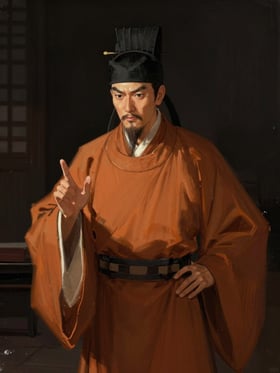
Zhong Yu, a Cao Wei official, often remonstrated and served as Minister of Justice; the novel says he saw Emperor Wen sweat profusely as a child.
Life
In the novel: 1 chapter · In the Records: 4 volumes
Life?–263
- Cao Wei· Undated
On the boards
Compare with someone →Where this person ranks on each board.
Historical Record
Zhong Yu, courtesy name Zhishu, was Zhong Yao’s son and Zhong Hui’s elder brother. He served Cao Wei, holding posts including Gentleman Attendant of the Palace Guard, Palace Guard Attendant, Palace Attendant, Minister of Justice, and Inspector of Qing Province. At fourteen, he became a Gentleman Attendant of the Palace Guard. Quick-witted and eloquent, he displayed much of his father’s bearing in conversation. Early in the Taihe era, when Zhuge Liang besieged Mount Qi, Emperor Ming of Wei wanted to lead a campaign in person. Zhong Yu submitted a memorial urging him to remain in the heartland, pointing out that marching in the intense summer heat would impose enormous costs and that the emperor ought to remain at court as a source of support for the various regions. Emperor Ming accepted his advice, and Zhong Yu was subsequently promoted to Gentleman of the Yellow Gate. When palaces were being built in Luoyang and the court moved to Xu Chang, Zhong Yu again urged the court to halt plans for large-scale construction there of felt halls and fish-and-dragon performances, citing the unpredictability of floods and droughts, empty treasuries, and the burden of labor on the people. He also proposed opening up wasteland within the passes for the people to cultivate. His proposals were adopted.
During the Zhengshi era, Cao Shuang campaigned against Shu in the height of summer. His advance was blocked, but he still wanted to send in reinforcements. Zhong Yu wrote to him, advising him to advance when conditions permitted and withdraw when difficulties became clear. Cao Shuang ultimately returned without success; Zhong Yu consequently fell out of favor with him. Zhong Yu was first transferred to the post of Palace Attendant and later sent out to serve as Administrator of Wei Commandery. After Cao Shuang was executed, Zhong Yu returned to court and served as Censor-in-Chief, Palace Attendant, and Minister of Justice. He proposed allowing officials whose ruler or father had died to defend them against slanderous allegations, and also established that once a scholar-official was enfeoffed as a marquis, his wife could not remarry. During the Jia ping era, Li Feng and others plotted to kill Sima Shi and have Xiahou Xuan oversee the government. After Xiahou Xuan was arrested, Zhong Yu personally interrogated him. The Shiyu, quoted in Pei Songzhi’s commentary, says that Xiahou Xuan refused to provide a statement himself. At night, Zhong Yu drafted one for him, making it fit the facts of the case, then showed it to him in tears. Xiahou Xuan merely nodded after reading it. Zhong Yu then submitted a report detailing the treason of Li Feng and the others, and the court deliberated and sentenced them according to law.
During the Zhengyuan era, when Guanqiu Jian and Wen Qin raised troops, Zhong Yu went under imperial authority to Yang and Yu provinces to announce an amnesty and instruct the officials and people. He was later appointed Minister of Works. When Zhuge Dan rebelled, Zhong Yu judged that Eastern Wu might still send forces to aid him. He advised Sima Zhao not to underestimate the Wu army just because Sun Yi had led his followers in surrendering to Wei. Sima Zhao approved and ordered Zhong Yu to accompany the army to Shouchun. After Huainan was pacified, Zhong Yu successively served as Inspector of Qing Province, Commandant of Xu Province, and Commandant of Jing Province. He died in the winter of the fourth year of Jingyuan and was posthumously awarded the title General of Chariots and Cavalry and the posthumous name Marquis Hui. When discussing the Classic of Changes with Guan Lu, Zhong Yu once asked whether the world could enjoy peace. Guan Lu replied with phrases such as “Four and nine, flying in the heavens; it is beneficial to see a great man.” Only after Cao Shuang was executed did Zhong Yu understand what he meant.
In the Novel
Chapter 107 of Romance of the Three Kingdoms does not recount Zhong Yu’s career in office. Instead, in a conversation after Xiahou Ba defected to Shu, it recalls an anecdote about the Zhong brothers meeting Emperor Wen of Wei in their youth. Xiahou Ba says that Zhong Yao brought the young Zhong Yu and Zhong Hui to court. The eight-year-old Zhong Yu was so frightened upon seeing the emperor that sweat poured down his face. When Emperor Wen asked why he was sweating, he replied, “I tremble with fear, and sweat pours out like pulp.” By showing the brothers reacting differently to the same question, this passage highlights Zhong Hui’s quickness and courage, while portraying Zhong Yu as a more restrained and honest child. Xiahou Ba goes on to describe Zhong Hui and Deng Ai together as promising young men of Wei who were to be feared, but Jiang Wei laughs and says, “What is there to say of a mere child like him?” This passage serves to set up the characters in the novel. The supplied Records of the Three Kingdoms material says that at fourteen Zhong Yu was already quick-witted and lively in conversation, with his father’s bearing, but does not record the story of his meeting Emperor Wen at eight or the phrase “sweat pours out like pulp.”
Key Relationships
Zhong Yu was born into the Zhong clan. His father, Zhong Yao, rose to high office in Wei, and Zhong Yu inherited his title. His younger brother Zhong Hui later also became an important minister of Wei. After Zhong Hui’s rebellion failed, Sima Zhao submitted a memorial requesting that the descendants of Zhong Yao and Zhong Yu be spared, citing Zhong Yao’s meritorious service and Zhong Yu’s record of serving both inside and outside the court with distinction. Zhong Hui’s adopted elder brother’s sons, Zhong Jun and Zhong Chan, and others were specially pardoned. Pei Songzhi’s commentary also records another account, according to which Zhong Yu once privately warned Sima Zhao that Zhong Hui was full of schemes and could not be trusted with responsibility, and that power should not be entrusted to him alone. Sima Zhao reportedly replied with a laugh that even if Zhong Yu’s words were true, the matter would certainly not implicate the clan.
Zhong Yu’s relationship with Cao Shuang shifted from remonstrance to estrangement. He once wrote urging Cao Shuang to withdraw his troops; Cao Shuang returned without success, and Zhong Yu was transferred out of the capital for going against his wishes. Later, as Minister of Justice, Zhong Yu took part in the trials of Li Feng, Xiahou Xuan, and others, bearing responsibility for judicial proceedings and deliberations at court. The novel, by contrast, presents him alongside Zhong Hui as a young Wei figure whom Xiahou Ba considered worth watching, and uses their childhood exchange to contrast their characters. This childhood scene appears only in the novel and is not recorded in the Records of the Three Kingdoms.
Signature Scenes
Urging Emperor Ming not to campaign west. When Zhuge Liang besieged Mount Qi, Emperor Ming prepared to lead a campaign in person. Zhong Yu urged the emperor to remain in the heartland, arguing that decisions made from the command tent were better than a distant imperial expedition, and that military expenses in the Guanzhong region and campaigning in the intense summer heat should not be taken lightly. This episode shows his ability to consider the wider situation during a military crisis and his concern for the season and the people’s strength.
Urging Cao Shuang to withdraw. Cao Shuang launched a campaign against Shu in the height of summer and was blocked, yet still wanted to send in reinforcements. Drawing on the principles of warfare followed by earlier generations, Zhong Yu urged him to recognize the difficulties and withdraw. His earnest advice failed to change Cao Shuang’s attitude toward him. After Cao Shuang returned without success, Zhong Yu was also transferred from his post.
Drafting a statement for Xiahou Xuan in the Minister of Justice’s prison. After Xiahou Xuan was arrested, he refused to make a statement. Zhong Yu drafted one for him that night and showed it to him in tears; Xiahou Xuan responded only with a nod. This account appears in the Shiyu quoted in Pei Songzhi’s commentary. It reveals the tension between judicial duty and the bearing of a celebrated scholar, and offers a quiet moment of contrast between the two men amid the case.
The eight-year-old’s reply, “sweat pours out like pulp” (unique to the novel). In the novel, Emperor Wen asks Zhong Yu why he is sweating, and Zhong Yu replies, “I tremble with fear, and sweat pours out like pulp.” The story then has Zhong Hui answer, “I dare not let my sweat come out.” This exchange of witticisms is a signature passage through which the novel shapes the brothers’ personalities; it should not be treated as an event recorded in the Records of the Three Kingdoms.
Quotes
7 lines in the books · 3 featured
「夫策貴廟勝,功尚帷幄,不下殿堂之上,而決勝千里之外。車駕宜鎮守中土,以爲四方威勢之援。今大軍西征,雖有百倍之威,於關中之費,所損非一。且盛暑行師,詩人所重,實非至尊動軔之時也。」
This remark reflects Zhong Yu's deep grasp of military strategy, stressing the importance of calculation in the temple-hall and of domestic governance.
「竊以爲廟勝之策,不臨矢石;王者之兵,有征無戰。誠以干戚可以服有苗,退舍足以納原寇,不必縱吳漢於江關,騁韓信於井陘也。見可而進,知難而退,蓋自古之政。惟公侯詳之!」
This line displays Zhong Yu's military thinking, advocating subduing the enemy's troops without fighting, a manifestation of his wisdom.
「君可畏也。死以付天,不以付君。」
This remark is Zhong Yu's response to Guan Lu's fortune-telling, reflecting his open-minded attitude toward fate and rich in philosophy.
- Family
- Enemies
- Other
Who is Zhong Yu connected to?
Pick someone to see how many steps lie between them and Zhong Yu.
History vs. novel
8 points · 1 novel-only
| History | Novel |
|---|---|
| Young Zhong Yu SweatsNovel only | |
| — | The novel says that when Zhong Yu was eight, he accompanied his father to pay a visit to Emperor Wen. Terrified, he was drenched in sweat, and answered a question by saying, “The sweat is flowing like a stream.” The Records of the Three Kingdoms does not record this scene. ch. 107 |
| Entered Service at FourteenHistory only | |
Historical records state that Zhong Yu became a Cavalry Regular Attendant at just fourteen. Quick-witted and eloquent, he greatly resembled his father, Zhong Yao. vol. 13 | — |
| Advised Against the Emperor’s Western CampaignHistory only | |
When Zhuge Liang besieged Mount Qi, Emperor Ming wanted to lead a western campaign in person. Zhong Yu submitted a memorial urging him to remain in the central regions, pointing out that launching a campaign in midsummer was ill-advised. vol. 13 | — |
| Remonstrated Against Costly Palace ConstructionHistory only | |
Xu Chang was cramped, and the court was building a felt pavilion south of the city, putting the people to forced labor. Zhong Yu argued that the state treasury was empty and that construction should wait for a good harvest. He also proposed reclaiming wasteland and encouraging farming; his advice was put into effect. vol. 13 | — |
| Urged Cao Shuang to WithdrawHistory only | |
Cao Shuang’s campaign against Shu was hampered by the summer heat, and he planned to send in reinforcements. Zhong Yu wrote to him, advising him to advance when success seemed attainable and withdraw when difficulties arose. Cao Shuang failed to win, and Zhong Yu was also transferred after displeasing him. vol. 13 | — |
| Anticipated Wu’s MovementsHistory only | |
During Zhuge Dan’s rebellion, Zhong Yu argued that Sun Yi’s defection was no reason to conclude that Wu would not send troops. He also explained that Wu forces might still act while the siege of Shouchun remained unresolved. Sima Zhao accepted his advice and took him along. vol. 13 | — |
| Secretly Warned Against Zhong HuiHistory only | |
Historical records state that Zhong Yu once secretly advised Sima Wenwang that Zhong Hui was scheming and could not be trusted to remain loyal, and that he should not be given sole responsibility. The record also notes that there is another account. vol. 28 | — |
| Refused Further DivinationHistory only | |
After Guan Lu calculated the month of Zhong Yu’s birth, Zhong Yu marveled at his ability and then said that life and death were in Heaven’s hands, refusing to have him perform any more divinations. vol. 29 | — |
- Young Zhong Yu SweatsNovel only
- Novel
The novel says that when Zhong Yu was eight, he accompanied his father to pay a visit to Emperor Wen. Terrified, he was drenched in sweat, and answered a question by saying, “The sweat is flowing like a stream.” The Records of the Three Kingdoms does not record this scene.
ch. 107
- Entered Service at FourteenHistory only
- History
Historical records state that Zhong Yu became a Cavalry Regular Attendant at just fourteen. Quick-witted and eloquent, he greatly resembled his father, Zhong Yao.
vol. 13
- Advised Against the Emperor’s Western CampaignHistory only
- History
When Zhuge Liang besieged Mount Qi, Emperor Ming wanted to lead a western campaign in person. Zhong Yu submitted a memorial urging him to remain in the central regions, pointing out that launching a campaign in midsummer was ill-advised.
vol. 13
- Remonstrated Against Costly Palace ConstructionHistory only
- History
Xu Chang was cramped, and the court was building a felt pavilion south of the city, putting the people to forced labor. Zhong Yu argued that the state treasury was empty and that construction should wait for a good harvest. He also proposed reclaiming wasteland and encouraging farming; his advice was put into effect.
vol. 13
- Urged Cao Shuang to WithdrawHistory only
- History
Cao Shuang’s campaign against Shu was hampered by the summer heat, and he planned to send in reinforcements. Zhong Yu wrote to him, advising him to advance when success seemed attainable and withdraw when difficulties arose. Cao Shuang failed to win, and Zhong Yu was also transferred after displeasing him.
vol. 13
- Anticipated Wu’s MovementsHistory only
- History
During Zhuge Dan’s rebellion, Zhong Yu argued that Sun Yi’s defection was no reason to conclude that Wu would not send troops. He also explained that Wu forces might still act while the siege of Shouchun remained unresolved. Sima Zhao accepted his advice and took him along.
vol. 13
- Secretly Warned Against Zhong HuiHistory only
- History
Historical records state that Zhong Yu once secretly advised Sima Wenwang that Zhong Hui was scheming and could not be trusted to remain loyal, and that he should not be given sole responsibility. The record also notes that there is another account.
vol. 28
- Refused Further DivinationHistory only
- History
After Guan Lu calculated the month of Zhong Yu’s birth, Zhong Yu marveled at his ability and then said that life and death were in Heaven’s hands, refusing to have him perform any more divinations.
vol. 29
Places
- Was at
- Xu ProvinceRecords
- Jing ProvinceRecords
- Governed
- Qing ProvinceRecords
- Wei CommanderyRecords
Continue
Zhong Hui
Kin
Relationship timeline4 entries ▸
History · vol. 13
- Cao Shuang§11
Rival
Later, having incurred Shuang's displeasure, he was transferred to Palace Attendant and sent out to serve as Administrator of Wei Commandery
- Sima Zhao§12
Advised
Joined Sima Wenwang’s campaign against Zhuge Dan.
History · vol. 28
- Zhong Hui§89
Kin
older brother
Novel · ch. 107
- Zhong Hui§25
Sibling
The brothers appeared together before Emperor Wen; Yu’s sweat flowed like syrup, and at the gathering, “dared not sweat”
Inner monologues · AI-generated1 monologue ▸
- I am Zhong Yu, courtesy name Zhishu. At the age of fourteen, I entered the court as a Gentleman Attendant of the Scatter