Cao Wei · General Who Guards the West
Zhong Hui
courtesy name 士季 · 225–264
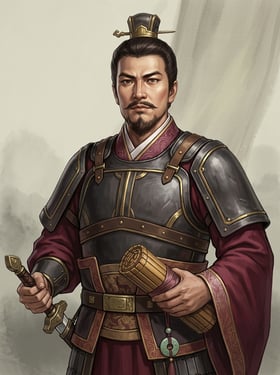
Zhong Hui was refined in strategy and calculation, and his contemporaries likened him to Zifang; from boyhood he had daring and wits, loved to read books on war, and was deeply versed in strategy. He repeatedly offered ingenious schemes and was eager to press ahead, obstinate and unwilling to retire into idleness—both coveting the merit of subduing the realm, and suspicious and prone to jealousy.

Life
In the novel: 8 chapters · In the Records: 13 volumes
Life225–264
263 CE (Jingyuan 4)
264 CE (Xianxi 1)
- Zhong Hui's RebellionChengduInstigator
Allegiance
List all 4 stops
- Yingchuan225Birthplace
- Jiange263Jiang Wei's Retreat to Jiange
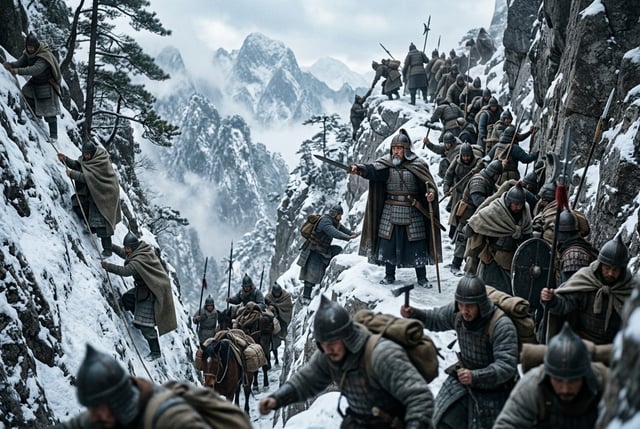
- Yinping263Deng Ai's Surprise Attack Through Yinping
- Chengdu264Died hereZhong Hui's Rebellion
On the boards
Compare with someone →Where this person ranks on each board.
Who they were
Character profile
- Character
- Zhong Hui was refined in strategy and calculation, and his contemporaries likened him to Zifang; from boyhood he had daring and wits, loved to read books on war, and was deeply versed in strategy. He repeatedly offered ingenious schemes and was eager to press ahead, obstinate and unwilling to retire into idleness—both coveting the merit of subduing the realm, and suspicious and prone to jealousy.
- Manner of speech
- Zhong Hui spoke to the point, foreseeing upheaval at court, and was skilled at dissecting advantage and harm in terse phrases and at citing the maxims of the art of war and the ancients. His military orders were clipped and commanding, and in council he invoked ancient precepts, pressing others with the Son of Heaven's clear edicts and the Duke of Jin's solemn commands, while in private he mocked Deng Ai as a mediocrity.
- Life
- Zhong Hui was a native of Changshe in Yingchuan, the youngest son of the Grand Tutor Zhong Yao, quick and clever from his youth. He served as Gentleman of the Palace Library and as Attendant Gentleman of the Masters of Writing and Palace Secretariat, and in the reign of the Duke of Gaogui was granted the rank of Marquis Within the Passes. In the fourth year of Jingyuan he invaded Shu by way of the Luo Valley; after Shu was pacified he became Minister over the Masses; in the first year of Xianxi he rebelled in Shu and was suppressed, and finally, on the eighteenth day of the first month of the fifth year, he was killed by mutinous soldiers at the age of forty.
- Anecdotes
- Zhong Hui was once praised by Sima Zhao as 'truly my Zifang.' As commander-in-chief of the campaign against Shu, he raised a revolt at Chengdu in the first month of the first year of Xianxi, which led to Liu Xuan being killed by the mutinous soldiers.
Historical Record
Zhong Hui, courtesy name Shiji, was from Changshe, Yingchuan, and was the youngest son of Grand Tutor Zhong Yao. Clever and precocious from an early age, he became widely learned as an adult, excelled in the analysis of names and principles, and was skilled at strategy. When he was five, Jiang Ji met him and remarked, “He is no ordinary person.” During the Zhengshi era, he served as a Secretary郎, later rising to Assistant Director of the Secretariat and Palace Writer. After the accession of the Prince of Gaogui, he was granted the title of Marquis within the Passes.
When Guanqiu Jian raised an army, Zhong Hui accompanied Sima Shi on the eastern campaign and managed confidential affairs. After Sima Shi’s death, he plotted with Fu Gu, arranging for Fu Gu to lead the army back; he then returned with Sima Zhao to encamp south of the Luo River. When Sima Zhao took charge of the government, Zhong Hui was appointed Palace Attendant at the Yellow Gate. He later took part in the campaign against Zhuge Dan. Using Quan Hui and Quan Yi’s names, he sent letters into the city to sow discord among Quan Yi and the other Wu commanders, prompting them to lead their followers in surrender. After Shouchun was pacified, he was enfeoffed as Marquis of Chen for his strategic contribution. He later became Colonel Director of Retainers, and people of the time called him “Zifang.”
In the third year of the Jingyuan era, Zhong Hui was appointed General Who Guards the West, empowered to act with a tally, and placed in command of all forces in Guanzhong. He and Sima Zhao jointly planned the campaign against Shu. The following year, he led an army of more than a hundred thousand through Xie Valley and Luo Valley into Hanzhong. He divided his forces to besiege Hancheng and Lecheng, and personally captured Yang’an Pass. Xu Yi had gone ahead to repair the roads, but a bridge collapsed, so Zhong Hui had him executed. Jiang Wei retreated to Jiange, where Zhong Hui attacked but failed to break through. Deng Ai, meanwhile, advanced along a hidden route through Yinping, defeated the Shu forces at Mianzhu, and received Liu Shan’s surrender. Zhong Hui accepted the surrender of Jiang Wei and the others, then secretly accused Deng Ai of rebellion, and Deng Ai was summoned back in a caged wagon. Once Zhong Hui had sole command of the main army, he grew confident in his achievements and military power and plotted rebellion, intending to use Jiang Wei and the others’ forces to advance north. In the first month of the first year of the Xianxi era, he falsely claimed to have an edict from Empress Dowager Guo, detained the generals, and planned to raise his forces. On the eighteenth day, the army mutinied, and both Zhong Hui and Jiang Wei were killed. Zhong Hui was forty years old.
In the Novel
The Romance of the Three Kingdoms portrays Zhong Hui as a young strategist, quick-witted and skilled at anticipating the enemy’s moves. Through Xiahou Ba, the novel recounts how, as a boy, he answered Cao Pi’s questions with, “I tremble in fear; I dare not let my sweat show,” and describes him as “brave and intelligent from childhood” and fond of reading military books. These details are literary embellishments: although the Records of the Three Kingdoms describes him as quick-minded and perceptive from a young age, widely learned, and well versed in his studies, it does not record this childhood exchange. The novel later has him offer Sima Zhao advice on several occasions. During the battle of Shouchun, he advocates tempting the enemy with benefits and leaving the southern gate open so that they will leave of their own accord, and urges Sima Zhao to treat the surrendered Wen Yang and Wen Hu leniently. The historical accounts do record his role in planning the Shouchun campaign and sowing discord among the Wu commanders, but these specific exchanges and episodes are inventions of the novel.
In the campaign against Shu, Zhong Hui leads the army into Hanzhong. The novel emphasizes his strict discipline, including his execution of Xu Yi as a warning to others. It also depicts him making offerings at Zhuge Liang’s tomb and, after dreaming of the Marquis of Wu, raising a white banner bearing the words “Protect the state and bring peace to the people.” The historical accounts mention that he forbade cutting wood or grazing animals near the tomb, but the dream and banner episodes appear only in the novel. After Shu’s fall, the novel further develops the story of Jiang Wei and Zhong Hui becoming sworn brothers and plotting to restore Han, as well as Zhong Hui’s false claim of an edict from the Empress Dowager and his banquet at which he detained the generals. The historical accounts say that Zhong Hui did indeed rebel, falsely claim an edict, and die at the hands of mutinous soldiers, but they do not mention the sworn brotherhood, the banquet arrangements, or the dialogue presented in the novel.
Key Relationships
Zhong Yao was Zhong Hui’s father, and Zhong Yu was his elder brother. The historical accounts state that Zhong Yu was older than Zhong Hui and record that Zhong Hui was on good terms with Fu Gu and once discussed talent and character with him. Zhong Hui was highly valued by Sima Zhao and took part in military and political planning, but ultimately rebelled against him. Empress Dowager Guo was also invoked by treacherous ministers, and Zhong Hui used a forged edict to launch his rebellion. Zhong Hui and Jiang Wei were adversaries during the campaign, but after Shu surrendered they treated one another with mutual respect. The historical accounts say that Zhong Hui treated Jiang Wei generously and intended to give him command of troops as his vanguard; both men ultimately died at the hands of mutinous soldiers. The novel depicts them breaking an arrow to swear brotherhood and conspiring to restore Han; this sworn brotherhood is unique to the novel.
Signature Scenes
During the campaign against Shu, as he advanced into Hanzhong, Zhong Hui divided his forces to besiege Hancheng and Lecheng and pressed on to Yang’an Pass. After a bridge collapsed during the march, he executed Xu Yi to enforce military discipline. This episode demonstrates the severity of his command and is a key event found in both the historical accounts and the novel.
The rebellion in Chengdu brought his career to an abrupt end. Zhong Hui falsely claimed to have an edict from the Empress Dowager, sealed the city gates, and detained the generals. After Hu Lie’s personal troops spread the news, the armies raised a tumult and surged into the city, where the mutinous soldiers killed Zhong Hui and Jiang Wei. The historical accounts give a brief but brutal account of their end; the novel expands it into a Lantern Festival banquet where Zhong Hui coerces the generals and threatens to bury them alive, all of which is literary invention.
Quotes
48 lines in the books · 3 featured
「吾意決矣。事成則得天下,不成則退西蜀,亦不失作劉備也。」
These words reveal Zhong Hui's ambition to emulate Liu Bei and carve out a domain of his own, a turning point in his life.
「但取鄧艾,相國知我能獨辦之;今來大重,必覺我異矣,便當速發。事成,可得天下;不成,退保蜀漢,不失作劉備也。我自淮南以來,畫無遣策,四海所共知也。我欲持此安歸乎!」
This line is a genuine historical record of Zhong Hui's rebellion, reflecting his political ambition.
「蜀若聞我兵大進,必求救於東吳也:故先布聲勢,作伐吳之狀,吳必不敢妄動。一年之內,蜀已破,船已成,而伐吳,豈不順乎?」
This stratagem displays Zhong Hui's military cunning-feinting east while striking west-in preparation for the campaign against Shu.
- Family
- Lord & vassal
- Friends
- Enemies
- Other
Who is Zhong Hui connected to?
Pick someone to see how many steps lie between them and Zhong Hui.
History vs. novel
7 points
| History | Novel |
|---|---|
| The Strategy at ShouchunNovel embellishes | |
Zhong Hui exploited a family dispute within Quan Cong’s clan, arranging for trusted aides to spread false rumors to Quan Yi and others that the state of Wu would execute their relatives. This induced them to open the city gates and surrender; historical accounts describe Zhong Hui as a master strategist, and his contemporaries called him “Zifang.” vol. 28 | Zhong Hui advised surrounding Shouchun on three sides while leaving the southern gate open, then pursuing the enemy once they left the city. Sima Zhao praised him as “my Zifang.” ch. 112 |
| Plans for the Campaign Against ShuNovel embellishes | |
Zhong Hui and Sima Zhao jointly planned the campaign against Shu. Zhong Hui then commanded an army of more than a hundred thousand, entering Shu by way of Xie Valley and Luo Valley. vol. 28 | Zhong Hui had maps of the campaign against Shu drawn in advance, detailing the routes for the advance and the transport of provisions. He also had ships built under the pretext of attacking Wu, claiming this would deceive Eastern Wu. ch. 115 |
| The Execution of Xu YiNovel embellishes | |
Xu Yi was ordered to repair the roads ahead of the army, but a bridge gave way and the horses’ hooves became stuck. Zhong Hui consequently had him executed; the news struck all the troops with fear. vol. 28 | The novel relates that Zhong Hui was crossing the bridge himself when his horse’s hoof became stuck, nearly costing him his life. He then ignored the generals’ pleas and executed Xu Yi to enforce military discipline. ch. 116 |
| Paying Respects to Zhuge LiangNovel embellishes | |
When Zhong Hui passed through Hanzhong, he visited Zhuge Liang’s tomb to pay his respects and ordered the soldiers not to graze their animals or gather firewood nearby. vol. 35 | The novel adds that Zhuge Liang appeared to Zhong Hui in a dream at night and admonished him not to kill wantonly. Zhong Hui then raised a white banner bearing the words “Protect the State and Keep the People Safe,” and ordered his troops to refrain from the slightest offense. ch. 116 |
| Deng Ai Is SummonedNovel embellishes | |
Zhong Hui, Hu Lie, and others reported that Deng Ai had acted treasonously, so the court issued an edict summoning him in a caged cart. The commentary by Pei Songzhi, citing the Shiyu, additionally records that Zhong Hui altered Deng Ai’s memorials to make their wording seem arrogant. vol. 28 | The Romance relates that Jiang Wei urged Zhong Hui to falsely accuse Deng Ai, then had someone imitate Deng Ai’s handwriting and alter his memorials to make his words seem arrogant. Wei Guan was then ordered to arrest Deng Ai and his sons. ch. 119 |
| Jiang Wei and Zhong HuiNovel embellishes | |
Historical accounts say Zhong Hui treated Jiang Wei with great regard, sharing a carriage and a mat with him. The Han Jin Chunqiu, cited in Pei Songzhi’s commentary, also records that Jiang Wei urged Zhong Hui to rebel, hoping to exploit the ensuing chaos to restore Shu. | The Romance relates that Jiang Wei feigned surrender to Zhong Hui and became sworn brothers with him, secretly urging him to raise an army. He also sent a secret letter to Liu Shan, saying he would turn the fortunes of the state around. ch. 118 |
| The Rebellion in ChengduNovel embellishes | |
Zhong Hui falsely claimed to have an edict from the Empress Dowager, summoned the generals and officials, and had them detained. After Qiu Jian let the news out, the Wei army mutinied on the eighteenth day of the first month, and Jiang Wei and Zhong Hui were killed amid the fighting. vol. 28 | The Romance also relates that Zhong Hui forged an edict from Empress Dowager Guo and imprisoned the Wei generals, but adds that he prepared a great pit and white cudgels to kill them. Jiang Wei briefly sought to kill the generals, but in the end Zhong Hui was brought down by a hail of arrows and Jiang Wei killed himself with his sword. ch. 119 |
- The Strategy at ShouchunNovel embellishes
- History
Zhong Hui exploited a family dispute within Quan Cong’s clan, arranging for trusted aides to spread false rumors to Quan Yi and others that the state of Wu would execute their relatives. This induced them to open the city gates and surrender; historical accounts describe Zhong Hui as a master strategist, and his contemporaries called him “Zifang.”
vol. 28
- Novel
Zhong Hui advised surrounding Shouchun on three sides while leaving the southern gate open, then pursuing the enemy once they left the city. Sima Zhao praised him as “my Zifang.”
ch. 112
- Plans for the Campaign Against ShuNovel embellishes
- History
Zhong Hui and Sima Zhao jointly planned the campaign against Shu. Zhong Hui then commanded an army of more than a hundred thousand, entering Shu by way of Xie Valley and Luo Valley.
vol. 28
- Novel
Zhong Hui had maps of the campaign against Shu drawn in advance, detailing the routes for the advance and the transport of provisions. He also had ships built under the pretext of attacking Wu, claiming this would deceive Eastern Wu.
ch. 115
- The Execution of Xu YiNovel embellishes
- History
Xu Yi was ordered to repair the roads ahead of the army, but a bridge gave way and the horses’ hooves became stuck. Zhong Hui consequently had him executed; the news struck all the troops with fear.
vol. 28
- Novel
The novel relates that Zhong Hui was crossing the bridge himself when his horse’s hoof became stuck, nearly costing him his life. He then ignored the generals’ pleas and executed Xu Yi to enforce military discipline.
ch. 116
- Paying Respects to Zhuge LiangNovel embellishes
- History
When Zhong Hui passed through Hanzhong, he visited Zhuge Liang’s tomb to pay his respects and ordered the soldiers not to graze their animals or gather firewood nearby.
vol. 35
- Novel
The novel adds that Zhuge Liang appeared to Zhong Hui in a dream at night and admonished him not to kill wantonly. Zhong Hui then raised a white banner bearing the words “Protect the State and Keep the People Safe,” and ordered his troops to refrain from the slightest offense.
ch. 116
- Deng Ai Is SummonedNovel embellishes
- History
Zhong Hui, Hu Lie, and others reported that Deng Ai had acted treasonously, so the court issued an edict summoning him in a caged cart. The commentary by Pei Songzhi, citing the Shiyu, additionally records that Zhong Hui altered Deng Ai’s memorials to make their wording seem arrogant.
vol. 28
- Novel
The Romance relates that Jiang Wei urged Zhong Hui to falsely accuse Deng Ai, then had someone imitate Deng Ai’s handwriting and alter his memorials to make his words seem arrogant. Wei Guan was then ordered to arrest Deng Ai and his sons.
ch. 119
- Jiang Wei and Zhong HuiNovel embellishes
- History
Historical accounts say Zhong Hui treated Jiang Wei with great regard, sharing a carriage and a mat with him. The Han Jin Chunqiu, cited in Pei Songzhi’s commentary, also records that Jiang Wei urged Zhong Hui to rebel, hoping to exploit the ensuing chaos to restore Shu.
- Novel
The Romance relates that Jiang Wei feigned surrender to Zhong Hui and became sworn brothers with him, secretly urging him to raise an army. He also sent a secret letter to Liu Shan, saying he would turn the fortunes of the state around.
ch. 118
- The Rebellion in ChengduNovel embellishes
- History
Zhong Hui falsely claimed to have an edict from the Empress Dowager, summoned the generals and officials, and had them detained. After Qiu Jian let the news out, the Wei army mutinied on the eighteenth day of the first month, and Jiang Wei and Zhong Hui were killed amid the fighting.
vol. 28
- Novel
The Romance also relates that Zhong Hui forged an edict from Empress Dowager Guo and imprisoned the Wei generals, but adds that he prepared a great pit and white cudgels to kill them. Jiang Wei briefly sought to kill the generals, but in the end Zhong Hui was brought down by a hail of arrows and Jiang Wei killed himself with his sword.
ch. 119
Combat
On the field
Duels, kills and executions as the texts tell them, counted separately for the Records and the Romance.
- RecordsJuan 28ExecutionJi KangWon「嵇康等見誅,皆會謀也」
- RecordsJuan 28ExecutionXu YiWon「而橋穿,馬足陷,於是斬儀」
- RomanceCh. 116ExecutionXu YiWon「遂令斬首示眾」
Stratagems
Plans this person devised or saw through, as the texts tell them.
- Records
- 4 carried out · 3 worked · 0 turned down · 0 seen through
- Romance
- 5 carried out · 5 worked · 0 turned down · 0 seen through
- RecordsDouble Agent StratagemSowing discordWorkedagainst WuJuan 28「會建策,密為輝、儀作書,使輝、儀所親信齎入城告懌等」
- RecordsFabricate Evidence of Ai's RebellionDeceptionWorkedagainst Deng AiJuan 28「會內有異志,因鄧艾承制專事,密白艾有反狀」
- RecordsSlander Xu as CowardlyDeceptionWorkedagainst XuJuan 28「會欲專軍勢,密白緒畏懦不進,檻車徵還」
- RecordsPersuade to SurrenderPersuasionFailedagainst ShuJuan 44「維不答書,列營守險」
- RomanceLure the EnemyLureWorkedagainst southern troopsCh. 112「吳兵之助諸葛誕,實為利也;以利誘之,則必勝矣」
- RomancePacify and Induce SurrenderPersuasionWorkedagainst people inside the cityCh. 112「文鴦乃司馬氏讎人,尚且重用,何況我等乎」
All stratagems (10)
Loading…
Events
Events (6)
Battles and events the texts place this person in, by date.
Other events
- 249The Sima Clan's Seizure of Power
- 257Zhuge Dan's Rebellion
- 263Jiang Wei's Retreat to JiangeCommander
- 263Conquest of Shu by Wei
- 263Deng Ai's Surprise Attack Through YinpingCommander
- 264Zhong Hui's RebellionInstigator
Famous objects
Those who met it

Places
- Native of
- YingchuanRecords
- Governed
- Sili ProvinceRecords
- Yi ProvinceRecords
- Died at
- ChengduRecords
Continue
Deng Ai's Surprise Attack Through Yinping
Relationship timeline21 entries ▸
History · vol. 4
- Sima Zhao§85
Enemy
Rebelled in Shu and was attacked by the people
History · vol. 28
- Deng Ai§57
Betrayer
Together with Hu Lie, Shi Zuan, and others, reported Ai’s treasonous acts; [he] was summoned and placed in a caged prison cart
- Zhong Yao§72
Kin
The Grand Tutor’s youngest son
- Jiang Ji§72
Witnessed
saw him at the age of five; Ji found him extraordinary
- Sima Shi§74
Advised
accompanied the eastern campaign against Guanqiu Jian and was in charge of confidential matters
- Sima Zhao§74
Advised
Planned strategies in the command tent, was transferred to Gentleman Attendant of the Yellow Gate, and was enfeoffed as Marquis of Dongwu Pavilion; later was enfeoffed as Marquis of Chen and appointed Minister over the Masses
- Zhuge Dan§76
Advised
Plotted for Quan Yi and others to open the city gates and surrender; people of the time called [him] Zifang
- Xu Yi§77
Enemy
had him beheaded while he was repairing the road and bridge
- Jiang Wei§77
Fights
attacked Jianmen Pass but failed to take it; later Jiang Wei surrendered to Hui, and they became very close
- Sima Zhao§87
Betrayer
after Shu was destroyed, claimed that his achievements surpassed all others and plotted a rebellion; was killed by mutinous troops
All 21
Loading…
Inner monologues · AI-generated3 monologues ▸
- I am Zhong Hui, courtesy name Shiji. Only now do I understand that, though one may devise plans in the command tent, one
- I have often believed that success and failure in this world are determined first by recognizing the situation, then by
- My name was Hui, and my courtesy name was Shiji. I was from Changshe in Yingchuan, the youngest son of Taifu You. Histor