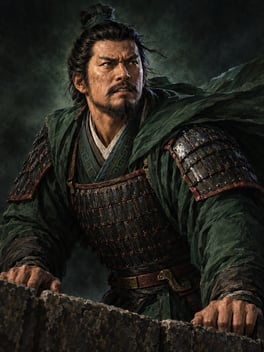
In 257, the second year of the Ganlu era, Wei’s General-in-Chief Zhuge Dan refused a summons and raised troops at Shouchun, killing Yue Chen, the Inspector of Yangzhou. Sima Zhao assembled Wei forces to besiege the city, while Eastern Wu sent Wen Qin and others to reinforce it. In 258, the third year of the Ganlu era, Shouchun fell and Zhuge Dan’s Rebellion was put down. The Wu forces withdrew, and some of their generals surrendered to Wei. This campaign restored the Wei court’s control over Huainan and further consolidated Sima Zhao’s military and political power.
The Wei Book and Wu Book of the Records of the Three Kingdoms present this campaign as a political and military conflict between a regional military governor and the central government. Zhuge Dan first distributed his family’s wealth to win over the influential men of Huainan and increased the garrison to 100,000 to secure his regional stronghold, creating a structural opposition to the Sima clan’s trend toward centralization. The edict summoning him to serve as Minister of Works was only the catalyst that intensified the conflict. His defeat was the logical outcome of the disparity in troop strength and mistakes in the command of Wu’s relief forces.
Romance
Chapters 111–112 of the novel portray Zhuge Dan as a loyal Wei representative who refuses to side with the usurping Sima clan. They dramatize his righteous anger as he kills Jia Chong’s emissary and his integrity in choosing death over surrender after the city falls. The entire campaign is presented as a landmark event in which Sima Zhao uses military power to eliminate opponents and pave the way to replace Wei, with the emphasis on moral contrast rather than strategic analysis.
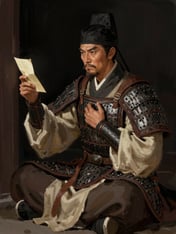
Zhuge Dan's Rebellion was not an isolated local mutiny, but a renewed power crisis in Huainan as part of the “Three Rebellions in Shouchun,” following the Incident at the Gaoping Tombs, Wang Ling's Rebellion, and Guanqiu Jian's Rebellion. The immediate trigger is stated briefly and clearly in the surviving accounts in the Records of the Three Kingdoms: Zhuge Dan refused a summons, raised troops in rebellion, and killed Yue Lin, the Inspector of Yang Province. The Wei court then pardoned the officials and commoners in Huainan who had been implicated or coerced by Zhuge Dan. This indicates that the court both branded the event a rebellion and sought to sever the rebel forces’ ties with local society.
The deeper context was the rise of the Sima clan, which forced Wei generals to reassess their personal security and political prospects. Zhuge Dan held the rank of General-in-Chief and commanded Huainan’s military resources. His refusal to come to court meant that the central government’s summons was understood as a political threat, not an ordinary personnel transfer. It is important to note that the dramatized account in Romance of the Three Kingdoms—in which Sima Zhao secretly sent someone to contact Yue Lin and Zhuge Dan attacked the city as a result—cannot be treated as equivalent to the official histories. It helps explain how later generations understood the conflict, but cannot replace the historical record’s more concise sequence: “refused the summons—raised troops—killed the inspector.”
Forces Involved
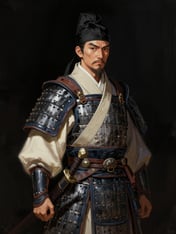
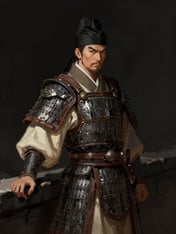
At the heart of the rebellion were Zhuge Dan and the Huainan military and administrative network under his control. He was both the organizer of the uprising and the linchpin of Shouchun’s defenses. His political aims went beyond retaining local troops; they also included resisting the Sima clan with outside support. Wu chose to intervene militarily, sending Wen Qin, Tang Zi, Quan Duan, Quan Yi, and others to lead troops to the city’s aid. The siege of Shouchun thus rapidly developed from an internal Wei rebellion into a joint military campaign and counteroffensive between Wei and Wu in the Huainan region.
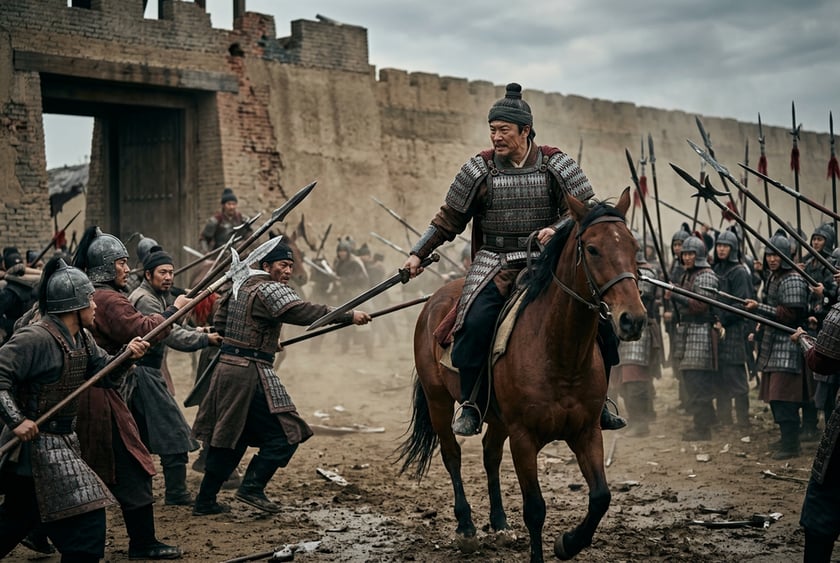
Sima Zhao directed Wei’s overall operations, while Wang Ji played a major role in besieging Shouchun. Zhou Tai and Shi Bao were tasked with blocking Wu’s forces, and Hu Lie led a surprise attack on Wu’s supply train. The battlefield details in the official histories show that Wei did not rely merely on overwhelming numbers: Zhou Tai intercepted Zhu Yi at Yangyuan, and Shi Bao and Zhou Tai then disrupted Wu’s attempts to cross the river and build fortifications. Hu Lie attacked Dulu and burned the provisions and supplies of Zhu Yi’s army. Wu repeatedly tried to open a route to the besieged city, but came under constant pressure on its flanks and supply lines.
Cao Mao appears in the political and military narrative as Wei’s emperor. The arrangement of power presented in the Wei court’s edict emphasized that the Empress Dowager and the emperor would “temporarily take command of the troops together,” framing the suppression of the rebellion in the name of imperial authority as an effort to uphold state order. Pang Hui and others were rewarded for breaking out and engaging the enemy. The participants were not limited to frontline commanders: Zhuge Dan’s troops, Wu’s relief forces, Wei’s besieging army, and Huainan’s local population were all drawn into a conflict over loyalty, coercion, and survival.
Turning Points
The first turning point came when Wu’s relief forces failed to lift the siege of Shouchun. Zhu Yi led troops in an attempt to distract Wei’s forces and support Wen Qin and the others, but Zhou Tai blocked him at Yangyuan and then pursued him, inflicting heavy losses. Zhu Yi’s forces continued fighting around Lijiang and Dulu, where Hu Lie also burned their supplies. Later, Sun Chen sent reinforcements and ordered Zhu Yi to fight to the death. Zhu Yi refused and was executed, reflecting a rift between Wu’s command decisions and its frontline capabilities. Although the relief forces continued their efforts, they failed to break through in a way that could alter the course of the siege.
The second turning point was the siege’s gradual shift from “waiting for relief” to “wearing down the defenders.” Romance of the Three Kingdoms depicts Wei building earthen ramparts and pressuring Shouchun with a prolonged siege, and describes food shortages, conflict between Wen Qin and Zhuge Dan, Wen Qin’s death, and his sons’ surrender. These episodes are not evidence of the same kind as the excerpts from the official histories: they give later readers a vivid picture of the defenders’ collapse, but the surviving historical material provided here confirms only that Wu’s relief efforts were thwarted, Zhu Yi’s forces suffered losses, and, in the end, “Dan was defeated.” The novel’s individual details cannot all be treated as verified by the official histories.
The third turning point was the breakdown of coordination between the relief forces and the defenders. The novel portrays the defection to Wei of Quan Duan, Quan Yi, and others, along with divisions among the city’s commanders, as signs that Shouchun’s defenses were beginning to give way. This account highlights the interplay between political trust and military discipline during a siege. The excerpts from the official histories likewise show that Wu failed to rescue Zhuge Dan, and that Sun Chen “was resented by all” for his losses and the death of a famous general. Shouchun’s isolation was therefore not simply a matter of the city being surrounded: it also resulted from the attrition of the relief network and the growing fragility of command relations.
Suppression and Outcome
The Wei court presented the campaign as a restoration of order in Huainan. Its edict invoked Ying Bu, Wei Xiao, and the campaigns of Emperor Ming of Wei as historical parallels, declaring that the expedition was intended to “pacify the eastern lands.” Pardoning those implicated under coercion and granting titles to those who distinguished themselves in a breakout represented two approaches: intimidation and conciliation. The strategy relied not solely on battlefield victory, but on combining military force, political condemnation, and local appeasement to make it harder for the rebellion to continue winning support among the population.
In the surviving materials, the excerpts from the official histories record that Wu’s relief effort was blocked and Zhu Yi was killed, and summarize the outcome with the phrase “when Dan was defeated, [the Wu forces] withdrew.” This supports the conclusion that Wei gained the upper hand and the rebellion ultimately failed, but the passages provided do not detail how Zhuge Dan was killed. Romance of the Three Kingdoms explicitly describes Sima Zhao capturing Shouchun and killing Zhuge Dan, and includes Wu’s surrender and Tang Zi’s submission in its account of the outcome. Thus, if the sources are carefully distinguished, the safest conclusion is that the suppression ended in a military victory for Wei, while the specific details of Zhuge Dan’s final days cannot be fully reconstructed from these excerpts alone. “The outcome is unclear” should be understood as a lack of evidence about the details, not as an absence of any indication of which side prevailed.
Historical Reverberations
The importance of Zhuge Dan's Rebellion lies in the way it brought Huainan’s local military power, Wu’s intervention along Wei’s borders, and the Sima clan’s control over the Wei court together on a single battlefield. Zhuge Dan’s ability to mobilize Huainan’s troops and seek help from Wu shows that local military and administrative resources could still pose a major threat to the central government. Wei gradually weakened the rebels’ ability to resist by besieging the city, blocking relief forces, disrupting supplies, and pardoning those who had been coerced. The military lesson was clear: unless relief forces could secure their supply lines, break through the blockade, and coordinate reliably with the defenders inside the city, even a numerical advantage could be squandered in fighting beyond the walls.
The rebellion also revealed the tension between military victory and political legitimacy. The Wei court issued its campaign edict in Cao Mao’s name, but Sima Zhao was the one who actually directed the operation. In public, the rebels were denounced as a “wicked revolt” that disrupted state order; at the same time, pardoning those who had been coerced acknowledged that local society had not stood uniformly behind the rebels. Later, Romance of the Three Kingdoms wove plots, sieges, calls to surrender, and disputes over the killing of prisoners into a coherent drama, heightening the conflicts between its characters. Modern analysis should recognize both the interpretive power of this narrative and the limits of its historical evidence, and avoid mistaking literary details for battlefield records.