Records
Wu forces won
- Commanders
- Wu forcesZhuge Ke
Vol. 48「戊午,兵及東興,交戰,大破魏軍,殺將軍韓綜、桓嘉等」
252 CE (Jiaping 4) · Dongxing
In 252 AD (the fourth year of the Jia Ping era under Wei and the first year of the Jian Xing era under Wu), Grand Tutor Zhuge Ke of Wu led troops in building the Dongxing Dam and left forces to guard the two forts. Wei general Hu Zun attacked with 70,000 troops, and Zhuge Ke led reinforcements there. Ding Feng and others launched a surprise attack in the snow, routing the Wei army. Han Zong, Huan Jia, and others were killed, and the Wu army captured large quantities of chariots, horses, and military supplies. The battle ended in victory for Wu, and the Dongxing defenses were preserved. For his achievements, Zhuge Ke was promoted in rank and appointed Governor of Jing and Yang Provinces and Commander of All Military Affairs, Both Within and Without the Court.
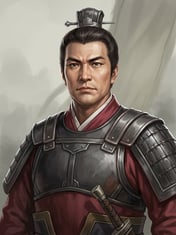 Ding FengWarriorTalk to me
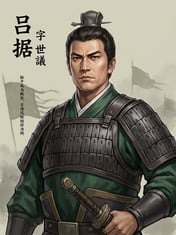 Lü JuWarriorTalk to me
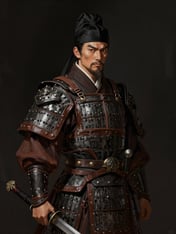 Tang ZiWarriorTalk to me
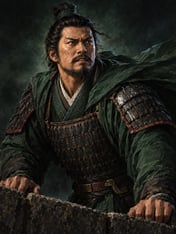 Zhuge DanCommanderTalk to me
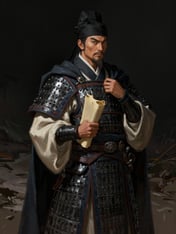 Guanqiu JianCommanderTalk to me
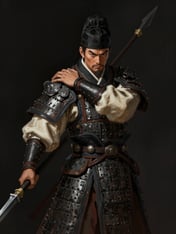 Huan JiaKilled in actionTalk to me
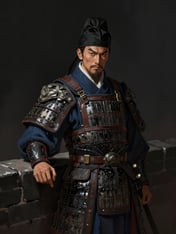 Quan DuanWarriorTalk to me
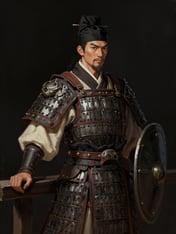 Liu LueWarriorTalk to me
Who won, as each book tells it; commanders as the text names them.
Scene
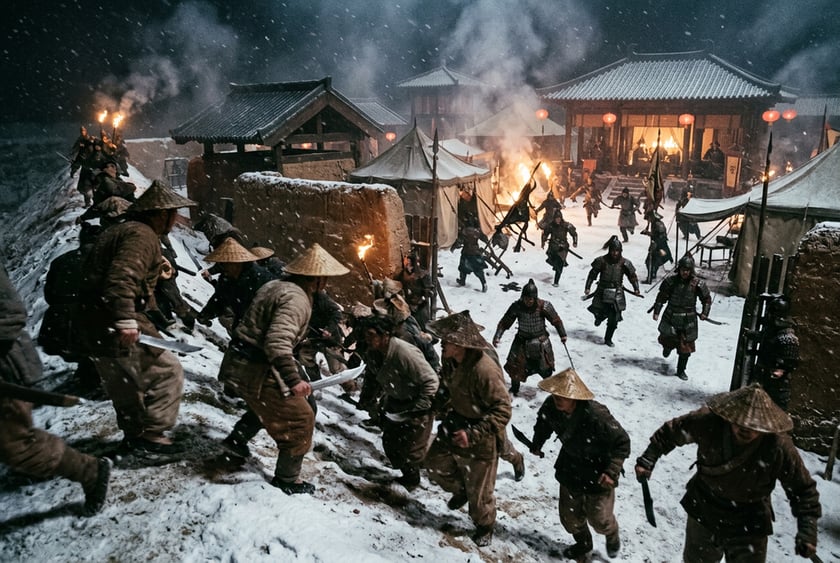
Amid bitter cold and heavy snow, the Wu general Ding Feng leads soldiers who have discarded their armor and helmets and carry only short swords in a daring climb up the embankment. They surprise the Wei camp as its troops feast, throwing the Wei forces into confusion.
Continue
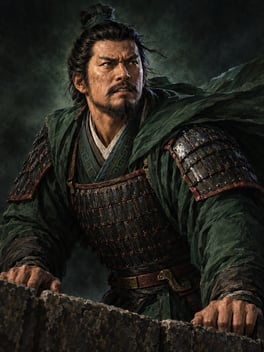
Zhuge Dan was stern, resolute, and commanding, and loyal to the state of Wei, once declaring, "Should the court fall into peril, I would repay it with my death." Yet at times he was also obstinate and headstrong: when he heard proposals to give battle he would execute the speaker, using killing to enforce his authority.
2574 people in common
2553 people in common
2553 people in common
2573 people in common
2522 people in common
2512 people in common
2552 people in common
2582 people in common
Dongxing was not merely a border fortress, but part of a system of embankments and strongpoints that Wu had developed around the Chaohu lake basin. During Sun Quan’s reign, an embankment was built to hold back the lake. Later, after defeats in the Huainan campaigns and the withdrawal of the fleet, the project was abandoned for a time. In the first year of the Jianxing era, Zhuge Ke rebuilt the main embankment and constructed a fort on each of the hills on either side, leaving a thousand men to garrison each. Its strategic value lay in restricting movement across the lake with the embankment and controlling its banks with the two forts, making it difficult for Wei forces to destroy the water barrier directly or use it as a route for a deeper advance. Wei regarded Wu’s reconstruction work as a challenge to the border order: it wanted to demolish the works for military reasons, while also facing political pressure not to tolerate the other side “entering its territory.” The Battle of Dongxing was therefore an offensive and defensive struggle over terrain, engineering, and the credibility of deterrence—not simply a clash that can be explained by the relative size of the armies.
The battle took place during the transfer of power following Sun Quan’s death and Sun Liang’s accession. The Wei court judged that Wu’s new ruler and unsettled political situation might offer an opportunity, and decided to launch a multi-pronged campaign. The Romance of the Three Kingdoms portrays this decision as a plan to attack Wu led by Sima Shi, with Fu Gu proposing a defensive policy on the frontier. This highlights the strategic debate between “taking advantage of the new ruler’s youth” and the difficulty of crossing the natural barrier of the Yangtze. The historical sources confirm that Wei forces applied pressure toward Dongxing, Nan Commandery, and Wuchang, while Wu sent Zhuge Ke to lead the relief forces. The novel’s depictions of the deliberations and commanders’ movements should not be treated directly as a record of events on the battlefield. In particular, the battle’s result is labeled “unclear” in the prompt, which does not fully accord with the Records of the Three Kingdoms, whose account explicitly states that Wu’s forces routed Wei. Analysis should distinguish between the battle label in the materials and the conclusions drawn in surviving historical sources.
Wei forces, led by Hu Zun and Zhuge Dan among others, sent seventy thousand troops to attack Dongxing. Wang Chang attacked Nan Commandery, while Guanqiu Jian advanced toward Wuchang, creating pressure on multiple fronts. The mission on the Dongxing front was to cross the water, deploy on the embankment, and then divide forces to besiege the two Wu forts and attempt to destroy the embankment. On the Wu side, Zhuge Ke led the relief forces, while Quan Duan was left to defend Xicheng and Liu Lue to defend the eastern fort. Each fort had a thousand men and relied on its elevated, rugged terrain for defense. This deployment reflected Wu’s approach of distributing limited forces among key points while keeping its mobile main force available for relief: the garrisons did not need to defeat Wei in the field, only to hold the crucial strongpoints until reinforcements arrived and tie down the enemy’s besieging forces.
The Records of the Three Kingdoms states that Zhuge Ke set out with forty thousand troops, “marching day and night to the rescue,” and sent Liu Zan, Lü Ju, Tang Zi, and Ding Feng at the vanguard. The figures of forty thousand and seventy thousand at least indicate that Wei had a numerical advantage on the Dongxing battlefield. But these numbers come from historical records and should not be used mechanically to calculate the forces actually committed or the casualties. Although Wei successfully built pontoon bridges and reached the embankment, it failed to take the two forts quickly. Their elevated defenses drew Wei into a siege, while the limited space along the banks hampered the deployment and maneuvering of a large army. In other words, Wei completed the crossing and engaged the enemy, but did not achieve its campaign objectives before Wu’s relief forces arrived. Its early tactical progress did not translate into a secure operational position.
The first key decision was Wei’s choice to assault both forts and try to destroy the embankment, without quickly overcoming the defenders. A siege was not inherently a mistake: had Wei taken the forts before Wu’s main force arrived, it might have gained control of the embankment. But once it was held up before the hilltop forts, time shifted from being an asset for Wei to becoming a risk. Zhuge Ke’s rapid relief exploited precisely the opening created by the stalled siege. By dividing its forces to besiege the forts on the embankment, Wei had to maintain order across its pontoon bridges, camp, and assault troops at the same time. If it came under a sudden attack, its retreat route could become a bottleneck. The crucial question, then, was not simply “who arrived first,” but whether Wei could maintain its formation on the embankment and keep the crossing open when attacked.
The second key decision was for Ding Feng’s vanguard to approach the Wei forces in freezing, snowy conditions and launch an assault with light equipment and short weapons. The Records of the Three Kingdoms says that Wei’s officers were drinking. Seeing that the Wu troops were few in number and carried no spears or halberds, they underestimated them. Once the Wu troops climbed onto the embankment, they shouted and charged; the Wei forces fell into confusion and rushed for the pontoon bridges. When the bridges broke, many fell into the water or trampled one another. Light equipment and short weapons aided a rapid climb and close-quarters assault, but would have entailed great risk in a head-on encounter with an enemy prepared for battle. Their success depended on the convergence of weather, terrain, the enemy’s slack vigilance, and the timing of the Wu attack; it cannot be reduced simply to the superiority of one kind of equipment over another. The Romance of the Three Kingdoms adds specific scenes of Ding Feng traveling by boat and stripping off his armor and clothing. These can help us understand how later generations shaped the heroic image of “fighting with short weapons in the snow,” but such details should be considered separately from the briefer account in the histories.
According to the Records of the Three Kingdoms, Wu won a major victory at Dongxing: Wei retreated in defeat, Huan Jia and others were killed, and Han Zong, who had defected from Wu to Wei, was also slain. Wu captured carts, horses, oxen, donkeys, mules, and a large quantity of equipment. Zhuge Ke was subsequently enfeoffed and received an additional official appointment. These accounts support the conclusion that Wu drove back Wei and thwarted its efforts to attack the embankment and forts. However, the history’s figure of “tens of thousands” dead is an important casualty estimate that should still be treated with caution; the available materials are insufficient to verify its precision independently. When the battle’s result is labeled “unclear,” the cautious approach is not to erase the historical account of Wu’s victory, but to explain that the narrative sources clearly present a Wu victory while the available materials are limited, leaving the scale of the victory, the casualty figures, and their bearing on the overall strategic objectives uncertain.
The Battle of Dongxing also shows that a local victory and a strategic gain are not the same thing. Wu held the embankment and the two forts, and restored its deterrent power through a successful counterattack. Wei failed to achieve its objective of breaching the Dongxing defenses. But the battle took place against the backdrop of Wei’s operations on several fronts. The accounts of the Dongxing battlefield alone cannot establish the outcome of every operation toward Nan Commandery and Wuchang, nor can they prove that Wu thereby eliminated the pressure on its borders. The more reliable lesson is that both sides saw the two-sided nature of engineered defenses: the embankment-and-fort system could hold up the enemy, but required the defenders to hold out until reinforcements arrived; Wei, for its part, had to coordinate the crossing, siege, vigilance, and retreat as parts of a single whole, rather than mistaking its arrival on the embankment for control of the battlefield.
If Wei had switched to a siege after being held up at the two forts, strengthened the defenses of its pontoon bridges, and assigned dedicated troops to guard the approaches to the embankment, the surprise of Ding Feng’s light-armed assault might have been reduced. Even if an attack still took place, Wei would have been more likely to keep its retreat route open and prevent the disorder from spreading. But that would not mean Wei was certain to take the forts: their elevated defenses, the advance of Wu’s main force, and the terrain along the embankment would still have posed obstacles. Another possibility is that, before the relief forces arrived, Wei could have concentrated on attacking one fort in an attempt to force the defenders to abandon it through a local breakthrough. The cost would have been more time spent, while the other fort and the embankment continued to tie down Wei’s forces. The point of counterfactual analysis is not to assume that either side would “certainly have won,” but to identify the organizational vulnerabilities between Wei’s successful crossing and its loss of control on the battlefield.
Conversely, if Zhuge Ke’s relief had been delayed, or if one of the two forts had fallen prematurely, Wei might have gained a foothold on the embankment, creating greater opportunities to damage the works and expand the space for subsequent attacks. But the available accounts do not prove that this would inevitably have caused Wu’s entire defensive line to collapse. Nor was Ding Feng’s assault a tactic that could be copied at will: it depended on Wei’s underestimation of the enemy, the freezing snow, and congestion on the bridges. If the enemy had remained alert and kept its formation intact, the lightly equipped troops armed with short weapons might instead have suffered heavy losses. The military lesson of the Battle of Dongxing is therefore closer to “turning weak points in the enemy’s chain of action into an opening for victory” than to advocating an isolated, reckless charge. The historical sources give a clear account of the battle’s victor and vanquished, but do not provide enough detail to make definite claims about every stage of the fighting or its counterfactual outcomes.