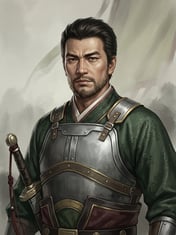
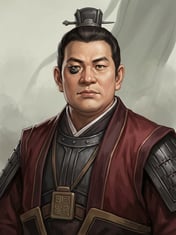
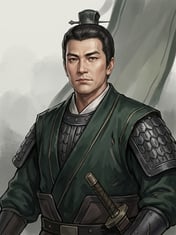
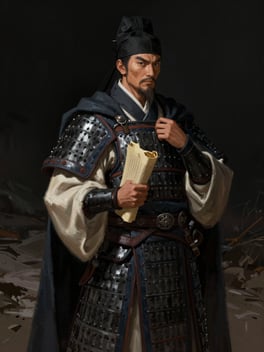
In 255, the second year of the Zhengyuan era, Guanqiu Jian, General Who Guards the East, and Wen Qin, Inspector of Yangzhou, raised troops in revolt against Wei. Sima Shi led an army to suppress them. The Wei army defeated Wen Qin at Lejia, and Wen Qin fled to Eastern Wu. Guanqiu Jian retreated to Anfeng Ford, where a local commandant killed him; his head was sent to the capital, and the rebellion was put down. Afterward, the court pardoned the civilians and officials in Huainan who had been implicated and appointed Zhuge Dan General Who Guards the East. Sima Shi died of illness soon afterward, and Sima Zhao succeeded him as General-in-Chief, bringing power in Wei into Sima Zhao’s hands.
The biography in the Records of the Three Kingdoms and Pei's commentary focus on Sima Shi leading the army on campaign, Fu Gu and Wang Ji devising the strategy to “dig deep trenches and build high ramparts,” and Deng Ai rushing to the aid of Lejia before the decisive battle. After Guanqiu Jian fled in defeat, he was killed by a local man from Huainan. The name “Wen Yang” has little prominence in the historical records.
Romance
Chapter 110 of the Romance of the Three Kingdoms dramatizes the battle as a legendary episode in which Wen Yang raids Lejia by night, fights the Wei army alone, and makes seven sorties and returns on a single horse, making the father and son’s valor the narrative focus. The Wei army’s strategic deployment is reduced to the passive account that “Sima Shi held firm despite being ill.”
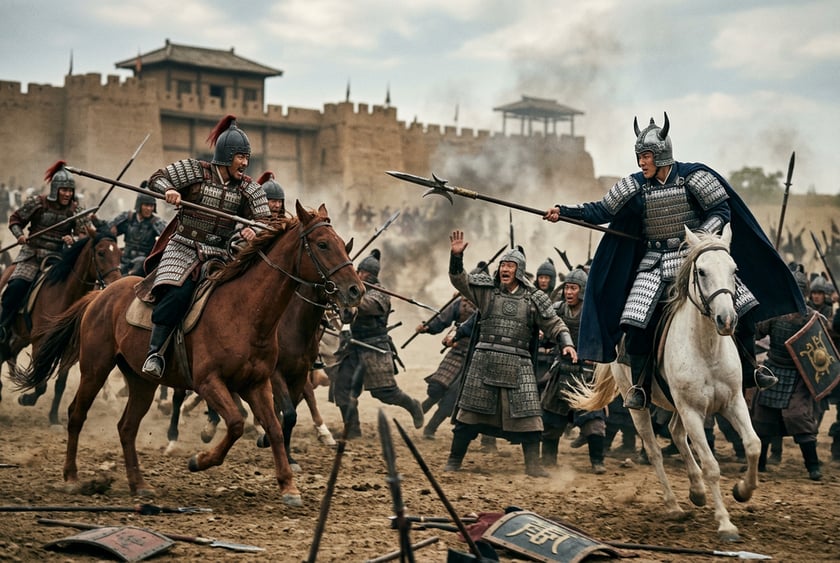
Outside Lejia, Wei general Deng Ai suddenly emerges with his troops from the flank and launches a fierce assault on the Huainan formation of Wen Qin and his son, throwing it into confusion.
The Rebellion of Guanqiu Jian and Wen Qin took place in the first month of the second year of the Zhengyuan era of Wei (255). The surviving account in the Records of the Three Kingdoms identifies the rebels as Guanqiu Jian, General Who Guards the East, and Wen Qin, Inspector of Yang Province, and summarizes the event as a “rebellion”; the Romance of the Three Kingdoms adds that the two raised their forces in the name of “deposing the ruler.” The two accounts establish that the rebellion occurred amid a transfer of power at the Wei court and military and political tensions in Huainan, but the political slogan in the novel cannot be taken as equivalent to the two men’s actual motives. In military terms, Guanqiu Jian controlled regional military and administrative resources, while Wen Qin brought a force of fierce fighters. Their alliance quickly turned local military strength into a force opposing the court; however, the available sources do not establish whether they shared a coherent political program.
The Romance of the Three Kingdoms offers a more dramatic explanation of the rebels’ situation after they rose in arms: the rebels sought to seize Nandun, and Wen Qin, believing Lejia’s defenses were incomplete, volunteered to lead an assault. These episodes portray the pressure on the rebels to seize the initiative and make up for their political and military disadvantages through a swift campaign, but they belong to the novel’s narrative and should not be conflated with the brief battle records in the historical biographies. Particularly significant is the novel’s claim that the people of Huainan did not generally support the rebels of their own accord, but were coerced by Guanqiu Jian’s forces. This cannot be treated as a quantitative description of local society, but it suggests that the rebellion may not have enjoyed strong grassroots support.
Participants
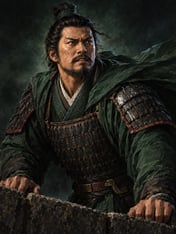
The rebellion was led by Guanqiu Jian, with Wen Qin as its principal military commander. Wen Qin’s son, Wen Yang, became the most striking figure in later accounts of the fighting. The Romance of the Three Kingdoms depicts Wen Yang judging that the Wei army’s camp was not yet fully prepared and advising his father that they attack by night along separate routes; it also says he was only eighteen. This passage portrays the young warrior as perceptive and decisive, and attributes the rebels’ tactical advantage to surprise and individual valor. The central historical account, however, does not elaborate on Wen Yang’s performance. Stories such as Wen Yang Single-handedly Repulses the Wei Army should therefore be discussed as part of literary memory, not uncritically treated as battlefield facts confirmed by the cited official histories.
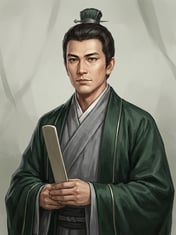
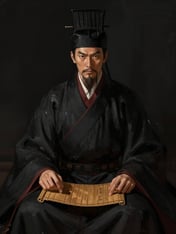
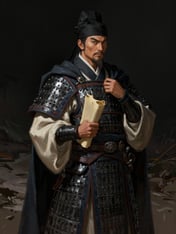
The central commander on the Wei side was Sima Shi. In the novel’s account, Fu Gu took part in deliberations on the overall deployment, Wang Ji was responsible for advancing on Nandun, and Deng Ai was ordered to move on Lejia. The historical account explicitly records that Sima Shi personally led the campaign and defeated Wen Qin at Lejia. In the novel, Zhuge Dan leads troops to seize Shouchun; the official history records that after the rebellion was suppressed, he was appointed General Who Guards the East, indicating his key role in the subsequent takeover of Huainan and its defense. Although Wang Su is included among the participants, the cited passages provide no details of his decisions or actions, so it would be inappropriate to assign him a battlefield role unsupported by the sources.
The incident also involved the state of Wu. The novel says Sun Jun led troops across the river to attack Shouchun, causing Guanqiu Jian to worry about his route of retreat; Wen Qin did in fact eventually flee to Wu. Wu’s actions thus offered the rebels potential external support while also pressuring them to divide their forces and worry about their rear. Another name that can easily be misread is Guo Huai: the historical account says he died in the month the rebellion broke out, not that he took part in its suppression as a general. Listing him as a “witness” does not justify inferring that he personally experienced the fighting.
Key Turning Points
Nandun and Lejia represent the two sides’ different approaches to gaining the initiative on the battlefield. The novel first has Wang Ji advise the Wei army to seize Nandun. On hearing this, Guanqiu Jian also tries to take the city, but finds that the Wei army has already established its camp, narrowing his room to maneuver. Fu Gu then proposes dispatching forces to control Lejia, Xiangcheng, and Shouchun, using pressure at multiple points to undermine the Huainan forces; Deng Ai is ordered to advance toward Lejia. The aim of this plan was not simply to seek a single decisive battle, but to target key routes and lines of retreat, forcing the rebels to divide their forces among confronting the enemy, defending cities, and sending reinforcements.
The Battle of Lejia thus became the turning point at which the rebellion shifted from attack to collapse. The official history summarizes the outcome simply as “defeated Wen Qin at Lejia,” then records that Wen Qin fled to Wu. The novel expands on the sequence, depicting Wen Qin and Wen Yang advancing along separate routes, their separation, and Wen Qin’s retreat. The novel’s portrayal of “Wen Yang repulsing the Wei army” highlights a moment of individual valor, but does not alter the campaign’s overall result: even if particular units had at times inflicted a shock, the rebels failed to defeat the main Wei force or retain the strategic initiative. Distinguishing individual feats from the overall course of the campaign is essential to reading this rebellion.
Suppression and Outcome
If “the outcome is unclear” refers to the military result, the cited passages in the surviving official history are in fact quite clear: the Wei army defeated Wen Qin at Lejia, and Wen Qin fled into Wu territory; Guanqiu Jian, meanwhile, was killed at Anfeng Ford by a commandant, and his head was sent to the capital. The Wei court subsequently granted amnesty to the people of Huainan who had been implicated or misled by Guanqiu Jian and Wen Qin, and appointed Zhuge Dan to take charge of the eastern front. The rebellion’s military organization was thus destroyed, while the Wei court restored its rule through amnesty and a reallocation of local command. The military outcome is not unclear; a more cautious conclusion is that the cited sources cannot fully explain the extent of the damage to local society, the precise scale of participation, or the personal fates of everyone involved.
The suppression also came at a cost in terms of political power. The historical account records that Sima Shi died in Xu Chang after leading the campaign, and that in the second month Sima Zhao succeeded him as General-in-Chief and Director of the Imperial Secretariat. Their proximity in time alone is not enough to conclude that suppressing the rebellion directly caused Sima Shi’s death. The sequence does, however, show that the military crisis in Huainan was closely connected to the transfer of supreme power at the Wei court: crushing the rebellion did not mean that the ruling group’s internal power struggles had also disappeared. The novel also introduces a dramatic political interlude in which Yin Damu pursues Wen Qin and hints that Sima Shi is gravely ill; this detail should be treated separately from the official history’s account of Sima Shi’s death.
Historical Legacy
The military lesson of this rebellion is that although a powerful local commander could rapidly assemble troops, he also had to secure political support, protect his rear, and coordinate operations on the battlefield. In the novel, news of Wu forces approaching Shouchun makes Guanqiu Jian worry about his route of retreat, while the Wei army narrows his options by seizing Nandun and advancing on Lejia. The rebels are drawn in several directions and ultimately fail to turn local surprise attacks into lasting gains. Rather than explaining their defeat simply as “valor without strategy,” it is more useful to consider the difference in the two sides’ organizational resources: the court could mobilize commanders along several routes and deploy them around key transportation hubs, while the rebels faced multiple defensive demands amid uncertain external support and limited local backing.
This incident also shows how narrative traditions reshape the memory of war. The Records of the Three Kingdoms gives a brief account of the uprising, defeat, flight, execution, and amnesty. The Romance of the Three Kingdoms adds deliberations, a night attack, the separation of father and son, and dialogue, turning Wen Yang’s valor and Sima Shi’s crisis into vivid dramatic scenes. Reading the two together makes it possible both to understand the campaign’s institutional and strategic outcome and to recognize how later generations used heroic narratives to explain victory and defeat. The soundest conclusion about the Rebellion of Guanqiu Jian and Wen Qin is that the Wei army suppressed it, Guanqiu Jian was killed, and Wen Qin fled to Wu; Wen Yang’s specific achievements and the historical details of several episodes must still be assessed according to the standing of the sources.