Cao Wei · Marquis of Guangyang
Han Zong
–253
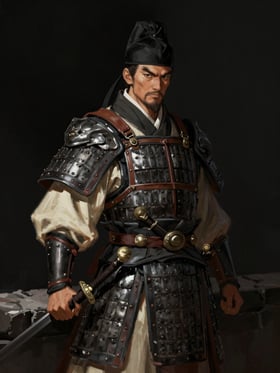
Han Zong, a Wei defector to Wu, was defeated and beheaded at Dongxing; the novel says Ding Feng killed him.

Life
In the novel: 1 chapter · In the Records: 3 volumes
Life?–253
252 CE (Jiaping 4)
- Ding Feng's Snow Attack with Short WeaponsDongxingKilled in action
- Battle of DongxingDongxingWarrior
Appearances
By chapter (4)
Novel
- 108
Records
- 48
- 55
- 64
- Eastern Wu· Undated
- Cao Wei· Undated
- Life event
- Death
On the boards
Compare with someone →Where this person ranks on each board.
Historical Record
Han Zong was the son of the Eastern Wu general Han Dang. He inherited his father’s marquisate and command of troops. When Sun Quan campaigned against Shiyang, Han Zong was in mourning and was ordered to defend Wuchang. Later, his conduct became increasingly wanton, and fearing the consequences, he used his father’s burial as an opportunity to defect to Cao Wei, taking his mother, family members, and several thousand men and women from his retainers with him. Wei appointed him a general and enfeoffed him as Marquis of Guangyang. He later repeatedly invaded Wu territory and killed civilians, earning Sun Quan’s deep hatred.
At the Battle of Dongxing, Han Zong served as commander of the Wei army’s vanguard. Wu Grand Tutor Zhuge Ke led troops in a forced march to reinforce Dongxing. The Wei army was repulsed on the dike and fell into disorder as it tried to cross the pontoon bridge; Han Zong, a general who had defected from Wu, was also slain in the defeat. Zhuge Ke sent his head to the Wu court to be offered in sacrifice at Sun Quan’s ancestral temple. The Records of the Three Kingdoms records that Han Zong defected from Wu to Wei and died in battle at Dongxing, but does not describe any specific encounter between him and Ding Feng.
In the Novel
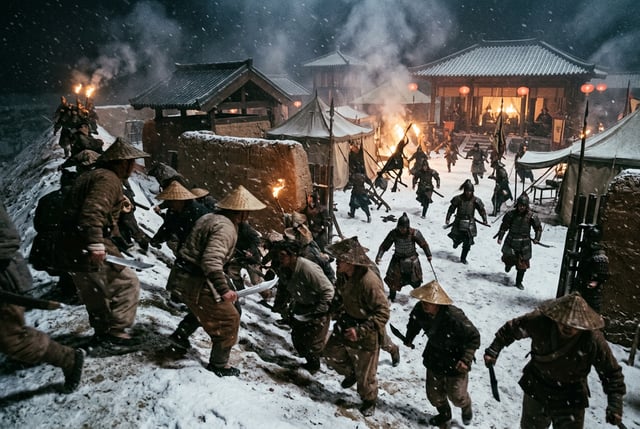
Chapter 108 of Romance of the Three Kingdoms portrays Han Zong as a Wei general and one of the commanders attacking the two Wu-held cities. The novel says that he and Huan Jia attacked the city on Hu Zun’s orders, but failed to take it because the Wu troops held their ground. Amid heavy snow, the Wei generals drank and let down their guard, whereupon Ding Feng led his troops in an assault, discarding their armor and carrying only short swords.
During the surprise attack, Han Zong seized the great halberd in front of his tent and fought back, but Ding Feng charged in close, then felled him with a single stroke. The novel presents his death as a vivid success of Ding Feng’s nighttime assault through the snow. By contrast, the Records of the Three Kingdoms merely records that Han Zong was slain after Wei’s defeat at Dongxing; it does not say that Ding Feng killed him personally or give details of their individual combat on the battlefield.
Key Relationships
- Han Dang: Han Zong’s father. Han Zong inherited his father’s marquisate and command of troops; historical accounts say he later used “carrying his father’s coffin” as a pretext to take his family and retainers to Wei.
- Eastern Wu and Cao Wei: Han Zong first served Eastern Wu, then defected to Cao Wei, where he was enfeoffed as Marquis of Guangyang and repeatedly raided Wu territory.
- Zhuge Ke: He led Wu troops to reinforce Dongxing; after the battle, he had Han Zong’s head cut off and sent it to be offered at Sun Quan’s ancestral temple.
- Ding Feng: In the novel, he is Han Zong’s direct adversary. Ding Feng raided the Wei camp and felled him; the Records of the Three Kingdoms does not record any encounter between the two. (Unique to the novel)
Signature Scene
On the battlefield at Dongxing, Wu troops attacked amid bitter cold and driving snow, taking the Wei army by surprise as it let down its guard. The historical account says that Wu’s vanguard climbed the dike and beat drums as it attacked; the Wei army panicked and scrambled for the pontoon bridge, which broke, sending many men into the water. Han Zong, commander of the Wei vanguard, was also slain, and after the battle his head was sent to Sun Quan’s ancestral temple. The novel, by contrast, narrows the focus to Ding Feng’s short-sword assault: Han Zong raises his halberd to meet the enemy, Ding Feng closes in and fells him with a single stroke, then the Wei army routs and the pontoon bridge breaks. The former recounts the defeat and its aftermath, while the latter turns Han Zong’s death into a dramatic scene of Ding Feng slaying a general in the field; this individual encounter is a creation of the novel and should not be treated as a detail recorded in historical accounts. (Unique to the novel)
Family, lords and rivals
1 relationships
Who is Han Zong connected to?
Pick someone to see how many steps lie between them and Han Zong.
History vs. novel
7 points
| History | Novel |
|---|---|
| Wuchang garrisonHistory only | |
When Sun Quan led a campaign against Shiyang, he placed Han Zong in charge of Wuchang because he had concerns about him. During this time, however, Han Zong behaved lewdly and improperly. Sun Quan, mindful of Han Zong’s father, did not pursue the matter. vol. 55 | — |
| Defection from Wu to WeiHistory only | |
Fearing the consequences, Han Zong plotted to defect. In the end, under the pretext of burying his father, he brought his mother, family, and several thousand followers over to Cao Wei. vol. 55 | — |
| Enfeoffed as Marquis of Guangyang by WeiHistory only | |
After Han Zong defected to Wei, he was appointed general and enfeoffed as Marquis of Guangyang. He later repeatedly raided Wu’s borders and killed civilians. vol. 55 | — |
| Killed in the Battle of DongxingNovel embellishes | |
In the Battle of Dongxing, Han Zong served as the Wei army’s vanguard. When Wei’s forces were defeated and retreated, he was killed in battle. Zhuge Ke sent his head to Sun Quan’s temple. vol. 55 | The Romance of the Three Kingdoms depicts Ding Feng charging into the Wei camp, where Han Zong pulled up the great halberd in front of his tent to meet him, only to be felled by a close-range slash from Ding Feng. ch. 108 |
| Ding Feng’s surprise attackNovel embellishes | |
Seeing that the Wu army was small, unarmored, and armed only with swords and shields, the Wei army failed to take precautions in time. After the Wu troops climbed the embankment, they raised a clamor and cut down their foes; the Wei army was immediately thrown into confusion and routed. vol. 64 | The Romance of the Three Kingdoms depicts the surprise attack as Ding Feng leading his troops into the Wei camp. The soldiers followed with short swords drawn, catching the Wei troops off guard as the Wu army charged through the camp. ch. 108 |
| Han Zong’s deathSources disagree | |
The Records of the Three Kingdoms only records that Han Zong’s army was defeated and he died in the Battle of Dongxing; it does not describe any specific encounter between him and Ding Feng. vol. 55 | The Romance of the Three Kingdoms specifically depicts Han Zong raising a great halberd to fight Ding Feng, only to be felled moments later by a close-range blow from Ding Feng. ch. 108 |
| Wei army’s rout at the pontoon bridgeNovel embellishes | |
In panic, the Wei army rushed to cross the pontoon bridge. After it broke, many fell into the water or trampled one another; the dead numbered in the tens of thousands. vol. 64 | The Romance of the Three Kingdoms depicts the Wei troops rushing all at once toward the broken pontoon bridge, with most falling into the water and dying, while those killed in the snow were too numerous to count. ch. 108 |
- Wuchang garrisonHistory only
- History
When Sun Quan led a campaign against Shiyang, he placed Han Zong in charge of Wuchang because he had concerns about him. During this time, however, Han Zong behaved lewdly and improperly. Sun Quan, mindful of Han Zong’s father, did not pursue the matter.
vol. 55
- Defection from Wu to WeiHistory only
- History
Fearing the consequences, Han Zong plotted to defect. In the end, under the pretext of burying his father, he brought his mother, family, and several thousand followers over to Cao Wei.
vol. 55
- Enfeoffed as Marquis of Guangyang by WeiHistory only
- History
After Han Zong defected to Wei, he was appointed general and enfeoffed as Marquis of Guangyang. He later repeatedly raided Wu’s borders and killed civilians.
vol. 55
- Killed in the Battle of DongxingNovel embellishes
- History
In the Battle of Dongxing, Han Zong served as the Wei army’s vanguard. When Wei’s forces were defeated and retreated, he was killed in battle. Zhuge Ke sent his head to Sun Quan’s temple.
vol. 55
- Novel
The Romance of the Three Kingdoms depicts Ding Feng charging into the Wei camp, where Han Zong pulled up the great halberd in front of his tent to meet him, only to be felled by a close-range slash from Ding Feng.
ch. 108
- Ding Feng’s surprise attackNovel embellishes
- History
Seeing that the Wu army was small, unarmored, and armed only with swords and shields, the Wei army failed to take precautions in time. After the Wu troops climbed the embankment, they raised a clamor and cut down their foes; the Wei army was immediately thrown into confusion and routed.
vol. 64
- Novel
The Romance of the Three Kingdoms depicts the surprise attack as Ding Feng leading his troops into the Wei camp. The soldiers followed with short swords drawn, catching the Wei troops off guard as the Wu army charged through the camp.
ch. 108
- Han Zong’s deathSources disagree
- History
The Records of the Three Kingdoms only records that Han Zong’s army was defeated and he died in the Battle of Dongxing; it does not describe any specific encounter between him and Ding Feng.
vol. 55
- Novel
The Romance of the Three Kingdoms specifically depicts Han Zong raising a great halberd to fight Ding Feng, only to be felled moments later by a close-range blow from Ding Feng.
ch. 108
- Wei army’s rout at the pontoon bridgeNovel embellishes
- History
In panic, the Wei army rushed to cross the pontoon bridge. After it broke, many fell into the water or trampled one another; the dead numbered in the tens of thousands.
vol. 64
- Novel
The Romance of the Three Kingdoms depicts the Wei troops rushing all at once toward the broken pontoon bridge, with most falling into the water and dying, while those killed in the snow were too numerous to count.
ch. 108
Combat
On the field
Duels, kills and executions as the texts tell them, counted separately for the Records and the Romance.
Events
Events (2)
Battles and events the texts place this person in, by date.
Battles
- 252Battle of DongxingWarrior
Other events
- 252Ding Feng's Snow Attack with Short WeaponsKilled in action
Places
Continue
Battle of Dongxing
Inner monologues · AI-generated1 monologue ▸
- When I was ordered to garrison Wuchang, my lord was campaigning against Shiyang. Out of consideration for my father, he