
Background
The siege of Hefei Xincheng took place during the administration of Zhuge Ke, Grand Tutor of Wu. According to the annals in fascicle 4 of the Records of the Three Kingdoms, in the fifth month of the second year of Zhengyuan under Wei (the second year of Jianxing under Wu, 253), Zhuge Ke led an army to besiege Hefei Xincheng, and the Wei court ordered Grand Commandant Sima Fu to repel the enemy. In the seventh month of that year, the Wu army withdrew. Thus, although this campaign followed the military situation after the Battle of Dongxing, it cannot simply be regarded as a victory that had already altered the balance of power between Wei and Wu. Its immediate aim was to seize an important Wei stronghold in the Huainan direction; in practice, the siege failed and the Wu army withdrew.
The surviving sources show that Wei and Wu made different use of time on the battlefield. The Wu army besieged the city, seeking either to force the defenders to submit or to lure Wei forces into a decisive battle. The Wei side, however, did not rush into a direct confrontation. It dispatched reinforcements while also responding to Jiang Wei’s attack on Didao as the Wu army maintained the siege. The “Annals of Han and Jin,” quoted in the Records of the Three Kingdoms, records the Wei side’s judgment that the Wu army had come from afar and would grow exhausted if it failed to take the city; Jiang Wei, too, withdrew because his provisions were low. This shows that the siege was not an isolated assault on a city, but part of a broader contest in which Wu and Shu operations on two fronts were checked against Wei’s pace of troop deployment.
Major Figures
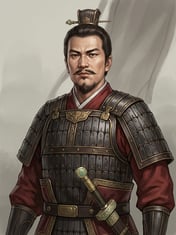
Zhuge Ke was the central decision-maker behind the Wu army’s campaign. The histories call him “Grand Tutor of Wu” and record that he personally besieged Hefei Xincheng. Fascicle 28 further summarizes that after the Wu army laid siege to the city, Guanqiu Jian and Wen Qin were responsible for resisting the enemy, while Sima Fu led the central army east to relieve the siege, after which Zhuge Ke withdrew. This arrangement shows that both Wu’s offensive and Wei’s defense depended on the deployment decisions of their commanders. However, the surviving Records of the Three Kingdoms does not provide a complete record of Zhuge Ke’s deliberations at each step, so fictional dialogue should not be treated as an authentic account of the decision-making process.
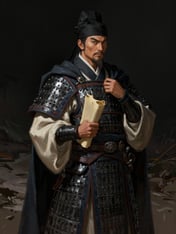
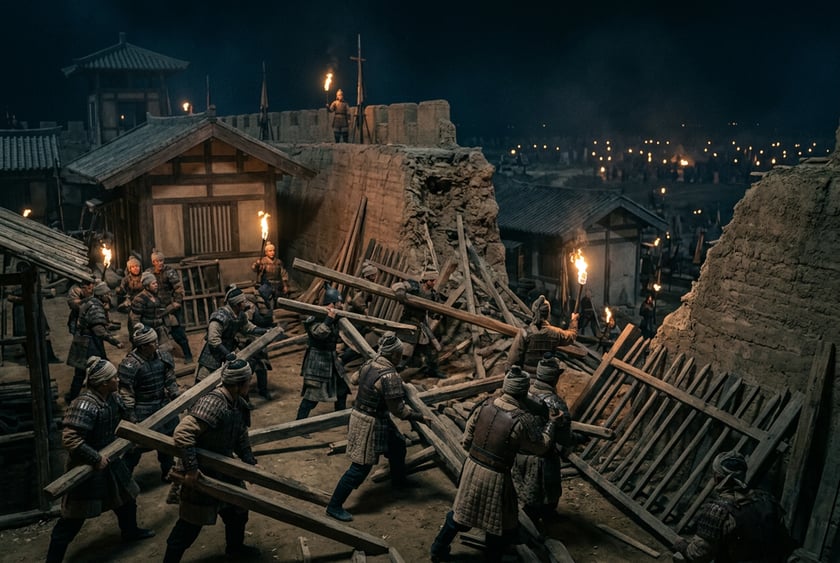
The defender Zhang Te is another key figure in the siege narrative. According to the “Weilue,” quoted in fascicle 4 of the Records of the Three Kingdoms, his troops and those of Le Fang and others numbered about three thousand in total, and more than half had died in battle or fallen ill. When the city was in danger, Zhang Te claimed that Wei’s rules allowed a garrison besieged for more than a hundred days to surrender without its families being implicated. He said he would return to the city to register the names of those surrendering, and handed his seal ribbons to the Wu army as a pledge. The Wu army temporarily halted its attack. Once back inside, however, Zhang Te had building materials stripped from houses and used overnight to repair the defenses, then continued resisting the next day. The story highlights how the defenders used expectations about official policy and communication on the battlefield to buy time, rather than winning through superior numbers alone.
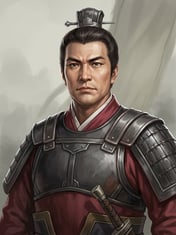
Sima Fu, Guanqiu Jian, and Wen Qin illustrate the Wei side’s layered response: Sima Fu led the central army to lift the siege, while Guanqiu Jian and Wen Qin took charge of resisting the enemy on the front line. The deliberations quoted in fascicle 4 also say that Sima Shi accepted Yu Song’s advice to avoid a hasty offensive, instead addressing Jiang Wei’s siege on the western front and ordering Guanqiu Jian and the others to hold their positions. Although Zhuge Liang, Sun Quan, and Sima Yi appear in associated人物 listings or narrative background, these passages do not establish that they personally took part in directing this siege. Listing them all as decision-makers in the campaign would confuse the wider historical context with those directly involved.
Key Issues
The first key issue is the time cost of siege warfare. Zhuge Ke committed elite troops to the siege, but Zhang Te’s defenders prolonged it by holding out and repairing the fortifications. Wei’s deliberations regarded “the failure to take the city and the inability to bring the enemy to battle” as favorable, judging that the Wu army might withdraw on its own after its troops grew weary from the prolonged campaign. The record confirms that the Wu army withdrew in the seventh month. This suggests that Hefei Xincheng’s defensive value lay not only in its walls, but also in its ability to force the attackers to keep spending troops, provisions, and time. The siege became a prolonged contest for the initiative.
The second issue is how pressure on multiple fronts affected the allocation of resources. As the Wu army besieged Hefei Xincheng, Jiang Wei was also active on the western front. The Wei court therefore had to weigh risks on both the eastern and western fronts at once. Yu Song proposed concentrating forces from Guanzhong to relieve the siege of Didao while allowing the Wu army on the eastern front to continue its siege for the time being. After Sima Shi accepted the plan, Jiang Wei withdrew to a new camp because his provisions were low, while Wei handled the eastern front defensively. The account does not depict Wei as having the upper hand everywhere; rather, it shows the court trying to manage risk through troop deployments and patience—avoiding battle with the Wu army at an unfavorable moment while preventing pressure on the western front from turning into a greater crisis.
The third issue is battlefield intelligence and deception. Zhang Te drew on Wei policy concerning the treatment of the families of those who surrendered after a prolonged siege to lead the Wu army to expect that the defenders were about to surrender. He then used the pause in the attack to repair the defenses. The “Weilue” records that the Wu army later attacked in anger but still failed to take the city, and then withdrew. This shows how a defender’s improvised tactics could alter the attacker’s judgment and pace. However, the surviving account conveys the episode chiefly through Wei sources, so it cannot fully reconstruct how the Wu army assessed Zhang Te’s pledge internally. Nor should one overstate a single stratagem as the sole cause of the campaign’s outcome.
Political Consequences
The direct consequences that can be established are limited but clear: the Wu army failed to capture Hefei Xincheng and withdrew in the seventh month. Zhang Te was commended by the court for defending the city, later enfeoffed as a marquis, and promoted to Administrator of Anfeng. Wei thus retained the stronghold and turned the defense into a political reward for its commander. For Wu, the campaign did not achieve its objective of taking the city. But these two historical accounts alone do not support the inference that Zhuge Ke immediately fell from favor as a result, or that Wu’s overall strategy then underwent a fundamental change.
The siege also shows that military outcomes and political reputation are not always determined by a single result. The defender’s reward for holding the city reflects the Wei court’s incorporation of defensive success into its system of titles and appointments. The Wu army’s withdrawal, meanwhile, shows that its offensive was constrained there by the combined effects of the fortifications, the passage of time, and the arrival of reinforcements. Fascicle 28 summarizes the campaign briefly as Zhuge Ke’s siege, the Wei army’s relief operation, and the Wu army’s withdrawal. This reminds us to distinguish verifiable campaign outcomes from later speculation about their political impact.
Volume 108 of Romance of the Three Kingdoms turns the siege into a dramatic story of ambition, adding a white rainbow, the execution of a remonstrator, and dialogue between Zhuge Ke and his generals, while presenting the deployment of reinforcements as a more theatrical conflict. This narrative helps us see how later generations shaped Zhuge Ke’s character, but it cannot replace the concise account of the campaign in the official histories. In particular, when analyzing political responsibility, we should take as the basic facts the siege, the Wei relief operation, and the Wu withdrawal as recorded in the histories, while distinguishing these from the novel’s portrayals of motives and omens.
Counterfactual Analysis
Had the Wu army taken Hefei Xincheng earlier, the most immediate possible change would have been the loss of an important Wei defensive stronghold in the Huainan region, forcing Wei to reorganize its garrison and response there. But the Records of the Three Kingdoms does not say whether Wu could have held the city for long after capturing it, nor does it describe how Wei’s overall defensive line would have been arranged after such a loss. It therefore cannot support the further claim that Wu would inevitably have advanced into the Central Plains or gained a lasting strategic advantage. The more cautious judgment is that taking the city would have altered the local military situation, but would not necessarily have produced broader political gains.
Conversely, the outcome would also be uncertain if Wei had not relied on waiting and deployments between fronts, but instead concentrated its forces for an earlier decisive battle. The deliberations quoted in the official histories stress that the Wu army had come from afar, that the siege was consuming time, and that Jiang Wei was short of provisions on the western front. This shows that Wei regarded time as an advantage; it does not prove that an immediate battle would necessarily have ended in defeat. One can infer that a hasty engagement might have shortened the Wu army’s siege, but might also have exposed Wei to greater risks in direct combat. The existing sources do not suffice to determine which choice would certainly have produced the better outcome.
The most appropriate conclusion, then, is not to sum up the campaign simply as a “Wu victory” or a “Wei victory,” but to distinguish between levels. Tactically, the Wu army failed to take the city and withdrew, while Wei held Hefei Xincheng. Operationally, Wei used the city’s defenses, the deployment of reinforcements, and the passage of time to manage pressure on two fronts. Strategically, the sources do not prove that this campaign alone determined the balance of power between Wei and Wu or Zhuge Ke’s political fate. The local outcome is clear; its long-term effects must remain uncertain.