Cao Wei · Emperor
Cao Mao
courtesy name 彦士 · also called 高贵乡公 · 241–260
Not to be confused with Cao Mao (曹茂) — Cao Mao, son of Cao Cao and a Cao Wei prince, was King of Leling; his fief was reduced for refusing to mourn King Ling of Dongping.
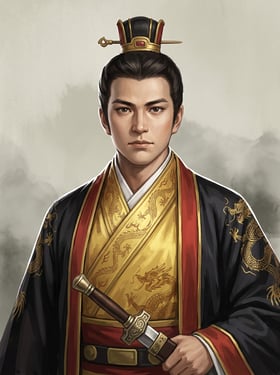
Cao Mao was of precocious talent and wisdom, fond of inquiry and given to eloquence, gentle, reverent, and yielding. Unwilling to endure disgrace, he wept and said, "If this can be borne, what cannot be borne?" and, sword in hand, led the palace guards to attack Sima Zhao.

Life
In the novel: 5 chapters · In the Records: 8 volumes
Life241–260
254 CE (Zhengyuan 1)
- Deposition of Cao FangLuoyangParticipant
257 CE (Ganlu 2)
260 CE (Jingyuan 1)
Allegiance
- Cao Wei
- Life event
- Death
List all 3 stops
On the boards
Compare with someone →Where this person ranks on each board.
Who they were
Character profile
- Character
- Cao Mao was of precocious talent and wisdom, fond of inquiry and given to eloquence, gentle, reverent, and yielding. Unwilling to endure disgrace, he wept and said, "If this can be borne, what cannot be borne?" and, sword in hand, led the palace guards to attack Sima Zhao.
- Manner of speech
- Learned and eloquent in the classics, he compared himself to Shaokang and Emperor Gao of Han. When faced with Sima Zhao's coercion, he once declined, saying, "The Grand General commands the armies and horses of all under heaven, to be dispatched at will—why need I go myself?"
- Life
- Cao Mao was a grandson of Emperor Wen and the son of Lin, the Ding Prince of Donghai. In the fifth year of Zhengshi he was enfeoffed as Duke of the Gaogui District of Qi County. After the Prince of Qi was deposed, he was welcomed and installed as the new sovereign, and changed the era name to Zhengyuan. In the fifth year of Ganlu, he personally led his servants to attack Sima Zhao, and was assassinated by Cheng Ji below the Southern Gate-tower, aged only twenty.
- Anecdotes
- Zhong Hui appraised him: "In talent the equal of Chensi, in valor resembling the Grand Progenitor." As the fourth emperor of Cao Wei (the Duke of the Gaogui District), during his reign he advanced Lu Yu to Marquis of Daliang District and Rou to Marquis of Anguo, and issued edicts commending Deng Ai and Zhong Hui.
Historical Record
Cao Mao, courtesy name Yanshi, was the grandson of Emperor Wen of Wei, Cao Pi, and the son of Cao Lin, Prince Ding of Donghai. In the fifth year of the Zhengshi era (244), he was enfeoffed as the Noble Duke of Gaogui of Qixian. After the Deposition of Cao Fang, the ministers welcomed Cao Mao and installed him as emperor. When he entered Luoyang, the assembled officials greeted him with bows at the West Ye Gate. He got down from his carriage and returned their bows, saying, “I am a subject.” After meeting the Empress Dowager at the East Hall of Taiji, he ascended the throne in Taiji’s Front Hall, changed the era name, and granted a general amnesty. He issued an edict reducing the expenses of the imperial carriage and inner palace, and eliminating extravagant, useless craftwork.
Cao Mao was fond of learning. He once went in person to the Imperial College, where he questioned the erudite Chunyu Jun and others about the Book of Changes. He also discussed the Book of Documents with Yu Jun and lectured on the Book of Rites with Ma Zhao, repeatedly analyzing the meanings of the classics. After the lectures, he ordered the assembled officials to compose poems, saying that he valued refinement and would invite a wide range of poetry and prose to learn what was going well and what was not. During his reign, he also issued an edict consoling the soldiers defeated at Taoxi and their families, and ordered that the remains of the fallen be sought out, collected, and buried. When Zhuge Dan rebelled, he and the Empress Dowager temporarily took command of the troops together.
Cao Mao’s imperial authority was constrained by the power of the Sima clan. In the fifth year of the Ganlu era (260), he summoned the palace attendant Wang Chen, Minister of Works Wang Jing, and Regular Mounted Attendant Wang Ye. He declared frankly, “Sima Zhao’s intentions are known to everyone, even ordinary passersby,” and resolved no longer to sit passively and suffer deposition and humiliation. Wang Jing urged him to exercise caution, but Cao Mao still led several hundred attendants out of the palace and fought Jia Chong’s men at the Southern Watchtower Gate, wielding a sword himself. Cheng Ji stepped forward and stabbed him to death. Cao Mao died at the age of twenty. The Grand Preceptor Sima Fu rushed to his side and wept with Cao Mao’s head resting on his legs. Afterward, the Empress Dowager ordered that he be buried according to the rites for a commoner and accused him of rebellion. The relevant events are recorded in historical sources such as the Annals of Han and Jin.
Quotes
44 lines in the books · 3 featured
「司馬昭將懷篡逆,人所共知!朕不坐受廢辱,卿等可助朕討之!」
Cao Mao openly denounces Sima Zhao's treasonous ambition, displaying his imperial integrity and spirit of resistance.
「是可忍也,孰不可忍也!朕意已決,便死何懼!」
'If this can be endured, what cannot be endured?' quotes the classics to express Cao Mao's grief and indignation at being pushed past all endurance.
「匹夫敢無禮乎!」
'How dare a common churl be so insolent!' is Cao Mao's furious rebuke on the verge of death, manifesting his unyielding imperial dignity.
- Family
- Lord & vassal
- Enemies
- Teacher & student
- Other
Who is Cao Mao connected to?
Pick someone to see how many steps lie between them and Cao Mao.
History vs. novel
6 points
| History | Novel |
|---|---|
| Welcoming and enthroning the new rulerNovel embellishes | |
After the Deposition of Cao Fang, the officials deliberated and agreed to welcome Cao Mao to the throne. He insisted on returning the assembled officials’ bows, then walked to the Eastern Hall of Taiji Palace, where he was enthroned that very day. vol. 4 | The novel says that Sima Shi initially wanted to enthrone Cao Ju, but the Empress Dowager insisted on Cao Mao, with Sima Fu supporting her. Cao Mao returned the formal bows and declined the carriage, walking instead; the Empress Dowager praised him as having the bearing of an emperor. ch. 109 |
| Debating the classics at the Imperial AcademyHistory only | |
At the Imperial Academy, Cao Mao repeatedly questioned the scholars about difficulties in the Book of Changes and the Book of Documents, pressing them on contradictions in their interpretations of the texts. Most of the Erudits were unable to answer. vol. 4 | — |
| Personally leading the campaign against HuainanNovel embellishes | |
After Zhuge Dan took up arms, Cao Mao issued an edict declaring that he would go to war alongside the Empress Dowager. The imperial entourage halted at Xiangcheng, and he ordered Pei Xiu and Zhong Hui to accompany Sima Zhao on the campaign. vol. 4 | The novel says that Sima Zhao invoked the pretext of honoring the previous ruler to force Cao Mao and the Empress Dowager to campaign in person. Afraid of Sima Zhao’s power, Cao Mao had no choice but to set out. The novel also elaborates on the army’s attack on Huainan. ch. 111 |
| Campaign against Sima ZhaoNovel embellishes | |
Cao Mao summoned Wang Chen, Wang Jing, and Wang Ye and declared that he would raise troops to campaign against Sima Zhao. Wang Jing tried to dissuade him, but Cao Mao remained determined to act. Wang Chen and Wang Ye subsequently informed on him. vol. 4 | The novel expands on Cao Mao’s grief and indignation at Sima Zhao’s coercion to accept the Nine Bestowments, and adds defiant lines such as “If this can be tolerated, what cannot?” Wang Chen and Wang Ye are also portrayed as voluntarily going over to Sima Zhao to inform on Cao Mao. ch. 114 |
| Leaving the palace and being killedNovel embellishes | |
Cao Mao led several hundred attendants out of the palace. Jia Chong confronted him beneath the Southern Gate, and Cheng Ji stabbed Cao Mao, the blade piercing his back. On hearing the news, Sima Zhao cried out, asking what the world would think of him. vol. 4 | The novel says that Cao Mao led more than three hundred palace guards out through the Southern Gate. Jia Chong urged Cheng Ji on, and Cheng Ji stabbed Cao Mao twice with a halberd, killing him. Sima Zhao then feigned shock, struck the carriage, and wept. ch. 114 |
| Disposition after deathHistory only | |
The Empress Dowager ordered Cao Mao buried according to commoner rites, describing him as violent by nature and plotting regicide. The edict also ordered the arrest of Wang Jing and his family. vol. 4 | — |
- Welcoming and enthroning the new rulerNovel embellishes
- History
After the Deposition of Cao Fang, the officials deliberated and agreed to welcome Cao Mao to the throne. He insisted on returning the assembled officials’ bows, then walked to the Eastern Hall of Taiji Palace, where he was enthroned that very day.
vol. 4
- Novel
The novel says that Sima Shi initially wanted to enthrone Cao Ju, but the Empress Dowager insisted on Cao Mao, with Sima Fu supporting her. Cao Mao returned the formal bows and declined the carriage, walking instead; the Empress Dowager praised him as having the bearing of an emperor.
ch. 109
- Debating the classics at the Imperial AcademyHistory only
- History
At the Imperial Academy, Cao Mao repeatedly questioned the scholars about difficulties in the Book of Changes and the Book of Documents, pressing them on contradictions in their interpretations of the texts. Most of the Erudits were unable to answer.
vol. 4
- Personally leading the campaign against HuainanNovel embellishes
- History
After Zhuge Dan took up arms, Cao Mao issued an edict declaring that he would go to war alongside the Empress Dowager. The imperial entourage halted at Xiangcheng, and he ordered Pei Xiu and Zhong Hui to accompany Sima Zhao on the campaign.
vol. 4
- Novel
The novel says that Sima Zhao invoked the pretext of honoring the previous ruler to force Cao Mao and the Empress Dowager to campaign in person. Afraid of Sima Zhao’s power, Cao Mao had no choice but to set out. The novel also elaborates on the army’s attack on Huainan.
ch. 111
- Campaign against Sima ZhaoNovel embellishes
- History
Cao Mao summoned Wang Chen, Wang Jing, and Wang Ye and declared that he would raise troops to campaign against Sima Zhao. Wang Jing tried to dissuade him, but Cao Mao remained determined to act. Wang Chen and Wang Ye subsequently informed on him.
vol. 4
- Novel
The novel expands on Cao Mao’s grief and indignation at Sima Zhao’s coercion to accept the Nine Bestowments, and adds defiant lines such as “If this can be tolerated, what cannot?” Wang Chen and Wang Ye are also portrayed as voluntarily going over to Sima Zhao to inform on Cao Mao.
ch. 114
- Leaving the palace and being killedNovel embellishes
- History
Cao Mao led several hundred attendants out of the palace. Jia Chong confronted him beneath the Southern Gate, and Cheng Ji stabbed Cao Mao, the blade piercing his back. On hearing the news, Sima Zhao cried out, asking what the world would think of him.
vol. 4
- Novel
The novel says that Cao Mao led more than three hundred palace guards out through the Southern Gate. Jia Chong urged Cheng Ji on, and Cheng Ji stabbed Cao Mao twice with a halberd, killing him. Sima Zhao then feigned shock, struck the carriage, and wept.
ch. 114
- Disposition after deathHistory only
- History
The Empress Dowager ordered Cao Mao buried according to commoner rites, describing him as violent by nature and plotting regicide. The edict also ordered the arrest of Wang Jing and his family.
vol. 4
Combat
On the field
Duels, kills and executions as the texts tell them, counted separately for the Records and the Romance.
- RomanceCh. 114Struck downCheng JiLost「被成濟一戟刺中髦前胸」
Events
Events (6)
Battles and events the texts place this person in, by date.
Battles
Other events
- 249The Sima Clan's Seizure of Power
- 254Deposition of Cao Fang
- 257Zhuge Dan's RebellionWitness
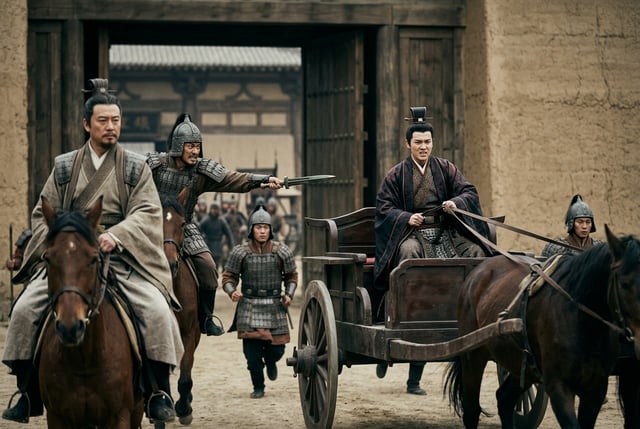
- 260Cao Mao Rides Out in His Chariot to BattleCommander
- 260Ganlu IncidentVictim
Places
- Moved to
- LuoyangRecords
Continue
Ganlu Incident
Relationship timeline6 entries ▸
History · vol. 4
- Sima Zhao§65
Enemy
led servants noisily out to attack him
History · vol. 20
- Cao Lin§116
Kin
Lin’s son; succeeded to the main line of the family (that is, Gaogui Xianggong)
Novel · ch. 109
Novel · ch. 114
- Sima Zhao§11
Betrayer
Entered the hall with a sword and forced the abdication; instigated Jia Chong and Cheng Ji to assassinate the emperor
- Sima Zhao§11
Enemy
unwilling to suffer humiliation, took up a sword and led the palace guards in an attack on Zhao, shouting, "You have burst into the palace—do you intend to murder the ruler?"
Inner monologues · AI-generated3 monologues ▸
- I was chosen in accordance with the late emperor’s final wishes to succeed to the principal line. Though young, I occupi
- The imperial entourage was stationed at Xiangcheng, where the sounds of the Huainan armies could be heard. As Son of Hea
- I was born in the third year of Zhengshi. My courtesy name was Yanshi, and I was the grandson of Wen Di and the son of L